

Main Points :
- Eric Trump has reiterated a bold forecast that Bitcoin could reach $1,000,000 within the next several years.
- The thesis rests on institutional adoption, post-halving supply constraints, inflation hedging demand, and political support narratives.
- Achieving $1 million implies a ~10x increase from current levels (~$95,000), requiring massive capital inflows.
- Regulatory risk, volatility, and market structure concerns remain significant obstacles.
- For investors seeking new crypto assets and blockchain revenue streams, understanding scenario probabilities is essential.
1. Conclusion: A Powerful Narrative, But Not a Guarantee
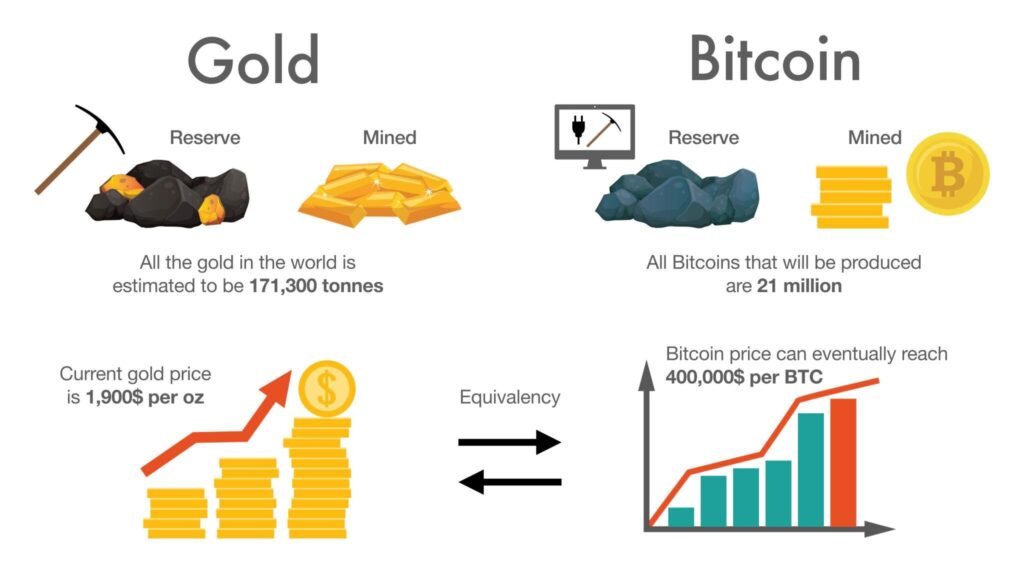
In February 2026, Eric Trump publicly reaffirmed his belief that Bitcoin could eventually reach $1,000,000. The statement immediately reignited debate across crypto markets and traditional financial circles alike.
While celebrity-backed forecasts can move sentiment, they do not guarantee price outcomes. Bitcoin’s historical trajectory shows extraordinary growth — but also violent drawdowns. A $1 million target would require transformational structural changes in capital allocation, regulatory clarity, and macroeconomic conditions.
For investors exploring new digital assets, yield opportunities, and real-world blockchain adoption, the key is not whether the forecast is dramatic — but whether it is structurally plausible.
2. Current Market Context: Where Bitcoin Stands Today
As of February 2026:
- Bitcoin trades between $90,000 and $100,000.
- Market capitalization is approximately $1.8–$2.0 trillion.
- Spot ETF assets under management continue to expand.
- Institutional participation is significantly higher than in prior cycles.
To reach $1,000,000, Bitcoin would need:
- Roughly a 10x price increase
- A market capitalization approaching $18–20 trillion
- Comparable scale to the global gold market (currently ~$13–15 trillion equivalent)
This is not impossible — but it implies systemic capital rotation at a global level.
3. Foundations of the Bull Case
3.1 Long-Term Historical Growth
Bitcoin has historically appreciated exponentially over multi-year cycles. From under $1 in 2010 to nearly $100,000 in 2026, it has already demonstrated 100,000%+ cumulative growth.
Each halving cycle has reduced supply issuance, tightening structural inflation.
3.2 Institutional Capital Inflows
The approval and normalization of spot Bitcoin ETFs marked a structural turning point.
Pension funds, asset managers, and sovereign wealth funds can now allocate indirectly through regulated instruments. Even a 1–3% allocation shift from global portfolios could generate trillions in demand.
This is particularly relevant for readers exploring yield generation or portfolio diversification strategies.
3.3 Post-Halving Supply Constraints
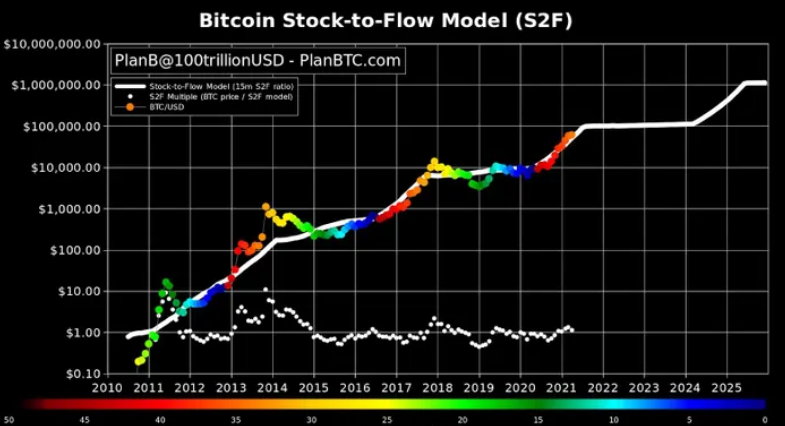
The 2024 halving reduced block rewards from 6.25 BTC to 3.125 BTC. Annual issuance continues to decline.
In environments of increasing demand, supply compression amplifies price elasticity. Historically, major bull markets followed halving events within 12–18 months.
3.4 Inflation and Fiat Debasement Narrative
Persistent global debt expansion and periodic inflation spikes reinforce Bitcoin’s appeal as “digital gold.”
If fiat currencies continue long-term depreciation trends, capital preservation demand may accelerate.
For investors interested in blockchain as a macro hedge, this narrative remains central.
3.5 Political and Strategic Asset Framing
Recent policy discussions in multiple jurisdictions have floated the concept of treating Bitcoin as a strategic reserve asset.
Even partial sovereign adoption would represent a paradigm shift in global monetary architecture.
4. The Skeptical View: Major Risks
4.1 Forecasts Have Failed Before
High-profile figures have previously predicted extreme targets that never materialized within projected timelines.
Market psychology is powerful — but timing matters.
4.2 Regulatory Risk
Regulatory tightening remains one of the largest systemic risks.
Potential threats include:
- Stablecoin oversight crackdowns
- Capital controls
- Tax policy changes
- Exchange compliance constraints
Institutional capital depends on regulatory clarity.
4.3 Volatility
Bitcoin remains highly volatile relative to traditional assets.
Drawdowns of 50–80% have occurred in prior cycles. A $1M target does not eliminate interim crashes.
4.4 Market Structure Concerns
Debates persist around:
- Stablecoin transparency
- Liquidity concentration
- Leverage in derivatives markets
- Counterparty risk
Structural fragility can amplify downside moves.
5. Scenario Modeling: How Realistic Is $1,000,000?
● Bull Case: $1,000,000
Requires:
- Sovereign reserve adoption
- ETF assets expanding to multi-trillion scale
- Prolonged inflation or currency instability
- Severe supply shortage
Probability: Low but non-zero over long horizon (5–15 years).
● Base Case: $200,000–$500,000
More realistic under:
- Gradual institutional allocation
- Continued halving cycle dynamics
- Regulatory clarity
- Moderate macro uncertainty
This scenario implies continued maturation without systemic crisis.
● Bear Case: Stagnation or Decline
Triggered by:
- Global liquidity tightening
- Aggressive regulation
- Loss of confidence
- Improved macro stability reducing hedge demand
Bitcoin could remain range-bound or retrace significantly.
6. Conflict of Interest and Transparency
It is important to note that political families and associated entities may have indirect exposure to crypto-related ventures.
Statements from influential figures can impact market psychology.
Investors should evaluate:
- Incentive alignment
- Business interests
- Market timing motivations
Critical thinking is essential.
7. Implications for Investors Seeking New Opportunities
For readers focused on:
- Discovering new crypto assets
- Identifying next revenue streams
- Applying blockchain practically
The key lessons are:
- Bitcoin’s macro thesis remains intact but cyclical.
- Institutionalization reduces tail risk but does not remove volatility.
- Diversification across sectors (Layer 1, infrastructure, DeFi, AI-integrated chains) may offer asymmetric upside.
- Security (self-custody, hardware wallets, multi-sig) is foundational.
- Position sizing matters more than predictions.
8. Visual Scenario Projection (Insert Below)
[Bitcoin Price Projection Scenarios in USD]
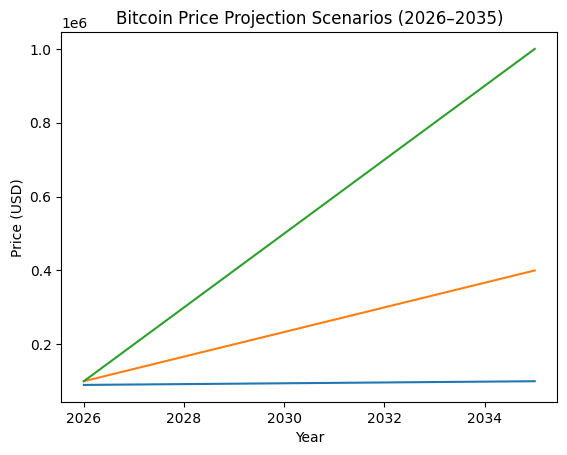
- X-axis: Years (2026–2035)
- Y-axis: Price in USD
- Three curves: Bear ($80k–$120k range), Base ($200k–$500k), Bull ($1M trajectory)
[Market Cap Comparison in USD]
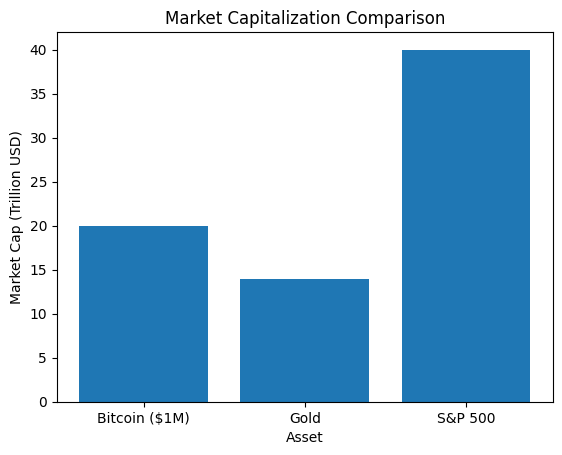
- Bitcoin at $1M ≈ $20T
- Gold ≈ $14T
- S&P 500 ≈ $40T
[Supply Reduction Post-Halving]
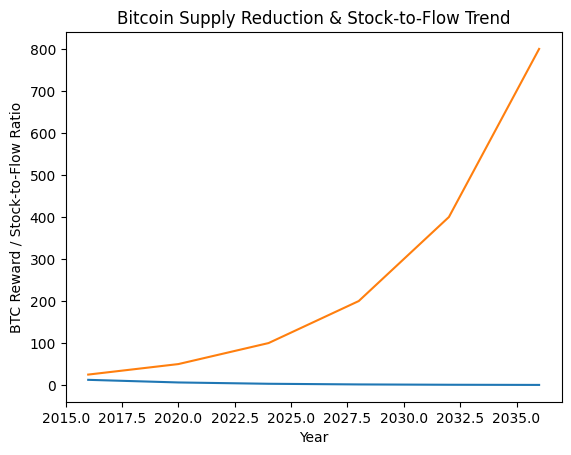
- Annual issuance decline trend
- Stock-to-flow comparison
(Charts should be prepared as clear, labeled USD-based PNG images.)
9. Final Assessment
A $1,000,000 Bitcoin is not mathematically absurd — but it is structurally demanding.
It requires:
- Global capital reallocation
- Policy accommodation
- Continued technological trust
- Persistent macro instability or strategic adoption
Eric Trump’s statement functions as a catalyst for debate, not a price guarantee.
For serious investors and blockchain practitioners, the correct response is not blind optimism nor outright dismissal — but disciplined probabilistic thinking.
Bitcoin’s future remains one of the most consequential financial experiments of the 21st century.
