
Main Points :
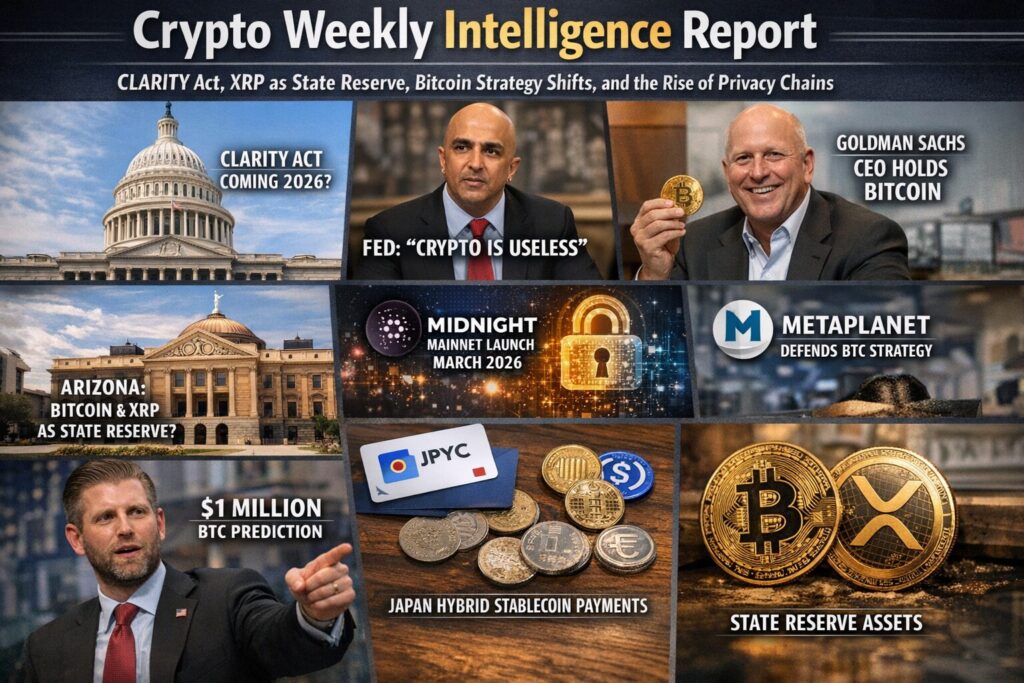
- U.S. CLARITY Act may pass as early as April 2026, potentially reshaping digital asset market structure and compliance standards.
- Federal Reserve skepticism persists, with Minneapolis Fed President dismissing crypto and stablecoins as “useless.”
- Goldman Sachs CEO publicly confirms personal Bitcoin holdings, signaling a psychological shift in traditional finance.
- Cardano-linked Midnight privacy blockchain to launch mainnet in March 2026, marking a major milestone in compliant privacy infrastructure.
- Arizona Senate advances bill to hold Bitcoin and XRP as state reserve assets, introducing sovereign-level digital asset integration.
- Corporate Bitcoin strategy debates intensify, with Japanese-listed Metaplanet defending disclosure practices.
- Hybrid stablecoin payment infrastructure (JPYC + USDC) emerges in Japan, pointing toward practical blockchain-finance integration.
- Eric Trump reiterates $1,000,000 Bitcoin forecast, reinforcing political alignment with pro-crypto capital narratives.
1. U.S. CLARITY Act: Toward Market Structure Definition
In a CNBC interview on February 19, 2026, Brian Armstrong, CEO of Coinbase, alongside U.S. Senator Bernie Moreno, suggested that the long-awaited CLARITY Act could pass as early as April 2026.
The CLARITY Act seeks to define market structure rules for digital assets in the United States—specifically clarifying regulatory jurisdiction between the SEC and CFTC, defining what constitutes a commodity vs. security token, and establishing disclosure and exchange compliance frameworks.
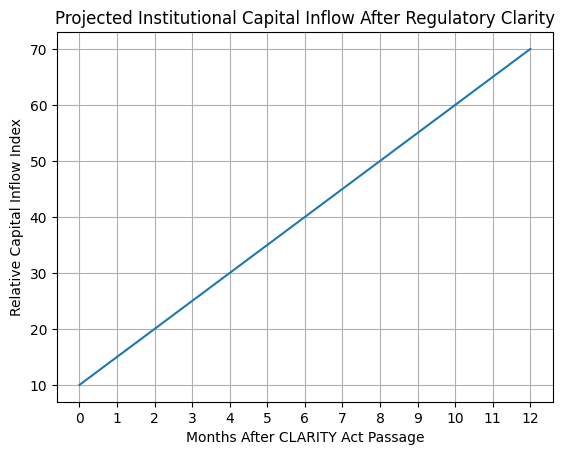
For investors and builders, this is not merely procedural. Regulatory clarity historically unlocks institutional capital. We saw similar capital influx dynamics after:
- U.S. spot Bitcoin ETF approvals
- MiCA regulatory finalization in Europe
- Japan’s early exchange licensing framework
If CLARITY passes, expect:
- Exchange consolidation under federal clarity
- Increased U.S.-based token issuance
- Institutional custody expansion
- Venture funding revival in U.S. Web3 infrastructure
For yield-seeking readers, this could create asymmetric opportunities in:
- Compliance infrastructure tokens
- U.S.-aligned layer-1s
- Custody and prime brokerage platforms
- Tokenized real-world asset (RWA) markets
2. Federal Reserve Pushback: Structural Threat or Political Positioning?
On February 19, Minneapolis Federal Reserve President Neel Kashkari described cryptocurrency as “completely useless,” extending criticism to stablecoins.
Such remarks must be interpreted structurally.
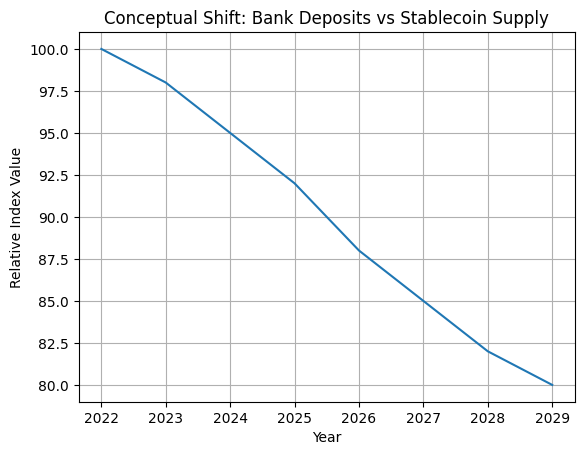
The Federal Reserve system depends on commercial bank deposits as a foundation for credit creation. Stablecoins—especially USD-backed ones—function as:
- Shadow bank deposits
- Instant settlement instruments
- Programmable dollars outside traditional banking
If capital migrates from bank deposits to tokenized stablecoins, commercial banks lose funding base liquidity.
Thus, the critique is not technological—it is systemic.
Paradoxically, criticism from central bankers often validates perceived threat magnitude.
Investors should watch:
- Stablecoin legislation progress
- Treasury issuance tokenization pilots
- FedNow integration vs. stablecoin competition
3. Goldman Sachs CEO Confirms Personal Bitcoin Holdings
At the World Liberty Forum in Florida, David Solomon confirmed he personally owns Bitcoin.
This is symbolically significant.
Goldman Sachs historically oscillated between skepticism and tactical crypto exposure. However, executive-level personal allocation signals:
- Portfolio hedge recognition
- Reputation-risk recalibration
- Institutional normalization
When skeptics convert quietly, capital cycles shift subtly before markets react.
Historically, these moments preceded:
- Corporate treasury allocations
- Prime brokerage expansion
- Crypto derivatives growth
4. Midnight Mainnet Launch: Privacy Infrastructure Evolves
The privacy-focused blockchain Midnight (NIGHT) will launch its mainnet in March 2026, announced by Charles Hoskinson, founder of Cardano.
Midnight aims to balance:
- Confidential smart contracts
- Regulatory compatibility
- Enterprise deployment
The “Kūkolu phase” milestone focuses on infrastructure reliability and operational resilience.
Privacy infrastructure is entering its second wave:
- First wave: pure anonymity (e.g., early privacy coins)
- Second wave: selective disclosure & compliance integration
The real opportunity may lie not in speculative price action, but in enterprise adoption of privacy-enabled compliance tools.
5. Arizona Moves to Hold Bitcoin and XRP as State Reserve Assets
Arizona’s Senate Finance Committee passed SB1649, allowing digital assets including Bitcoin and XRP to be managed as state reserve assets.
Bitcoin and XRP would be included under a strategic digital asset reserve framework.
This is structurally transformative.
When sovereign or state entities:
- Hold BTC as treasury hedge
- Recognize XRP in liquidity reserves
The narrative shifts from “speculative asset” to “strategic reserve instrument.”
Watch for:
- Municipal bond tokenization pilots
- State-level mining initiatives
- Custody outsourcing contracts
6. Japan: Corporate Bitcoin Strategy & Disclosure Debate
Metaplanet CEO Simon Gerovich defended the firm’s Bitcoin acquisition strategy following criticism regarding unrealized losses.
The company reported approximately $1.021 billion in valuation loss due to Bitcoin price decline, yet operating profit increased significantly.
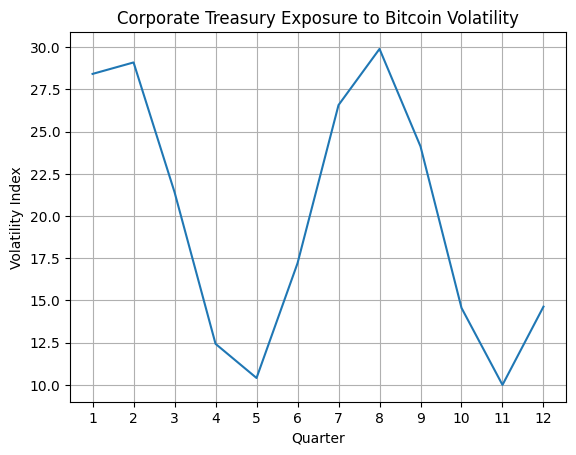
This highlights a core strategic shift:
- Operating business vs. treasury hedge separation
- Volatility tolerance frameworks
- Capital market communication risk
Corporate Bitcoin strategies increasingly resemble:
- Long-duration option positions
- Macro hedge overlays
- Equity-volatility amplifiers
For investors, this creates arbitrage between:
- Corporate equity exposure
- Direct BTC holding
- Derivative overlays
7. Hybrid Payment Infrastructure: JPYC + USDC
Japan’s emergence of hybrid payment infrastructure combining JPYC and USDC indicates real-world blockchain integration.
Stablecoin rails are moving from speculative trading to:
- Cross-border settlements
- Merchant processing
- On/off ramp liquidity bridges
This infrastructure layer may generate more sustainable returns than volatile L1 speculation.
8. $1,000,000 Bitcoin Forecast: Political Capital Meets Digital Scarcity
At Mar-a-Lago, Eric Trump reiterated that Bitcoin could reach $1,000,000.
While price forecasts are speculative, political alignment with digital assets is no longer fringe.
Digital asset narratives now intersect:
- Sovereign competition
- Monetary sovereignty
- Capital market innovation
Strategic Conclusion
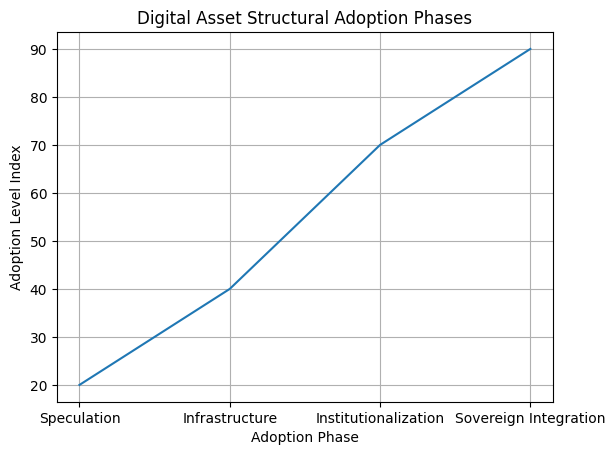
This week reflects structural convergence:
- Regulatory clarity approaching in the U.S.
- Central bank resistance intensifying
- Traditional finance normalization accelerating
- Privacy infrastructure maturing
- State-level digital reserve experimentation
- Corporate treasury Bitcoin adoption expanding
For investors seeking:
- New crypto assets
- Yield opportunities
- Practical blockchain applications
The alpha may lie less in hype cycles and more in infrastructure, compliance, privacy, and sovereign integration.
