
Key Points :
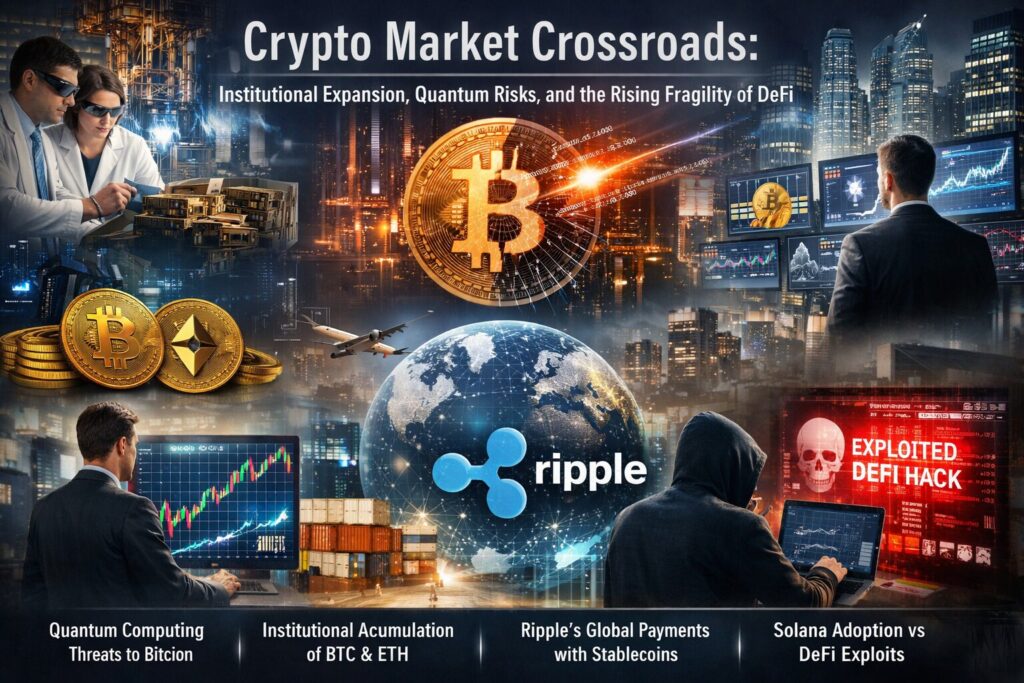
- Bitcoin faces emerging quantum computing risks, now taken seriously by both research institutions and industry leaders
- Institutional accumulation continues, with large-scale BTC and ETH purchases signaling long-term confidence
- Ripple expands into enterprise-grade global payments using stablecoins
- Solana ecosystem shows dual nature: institutional adoption vs major DeFi exploit
- The market reflects a transition phase between infrastructure maturity and systemic vulnerability
Weekly Crypto Price Performance
Introduction: A Market Defined by Contradictions
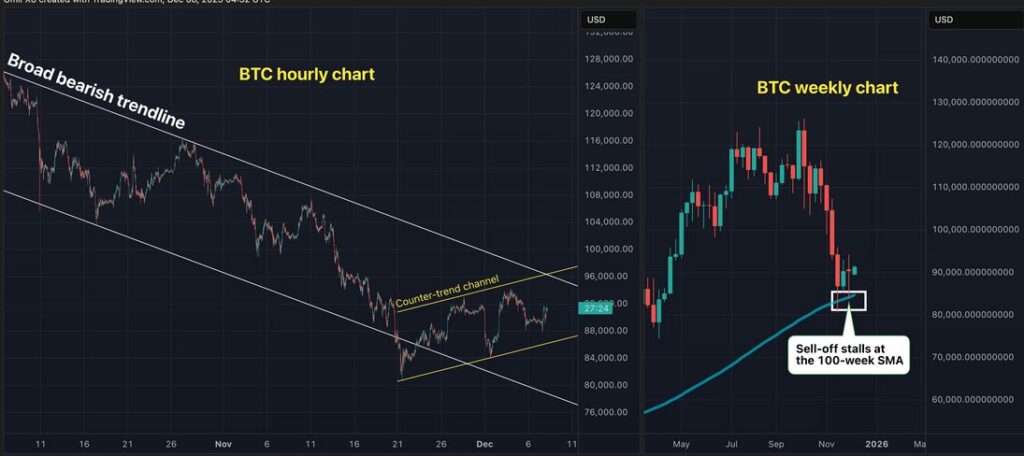
The cryptocurrency market this week presents a paradox: while institutional adoption deepens and technological innovation accelerates, systemic risks—both theoretical and realized—are becoming increasingly visible. Bitcoin trades around $66,956 (-2.8% weekly), Ethereum at $2,059 (-0.4%), XRP at $1.32 (-3.7%), and Solana at $79.06 (-8.9%), reflecting a cautious market sentiment amid significant developments.
This week’s narrative is not about price volatility alone. Instead, it is about structural evolution. The market is simultaneously strengthening its foundations while exposing critical weaknesses—particularly in cryptography, DeFi security, and execution layers.
Bitcoin: Institutional Confidence Meets Existential Threats
Quantum Computing Enters the Conversation
A major development comes from Google Research, which released a groundbreaking white paper demonstrating that quantum computing models for breaking cryptographic systems are far more efficient than previously estimated—by as much as 10x.
This is not merely theoretical. The decision to withhold detailed circuit designs due to potential misuse signals a shift: quantum risk is no longer speculative—it is a strategic concern.
At the same time, Coinbase CEO Brian Armstrong publicly stated he is personally allocating time to address Bitcoin’s quantum resistance, elevating the issue to executive priority.
Implication
Bitcoin’s long-term security model—based on elliptic curve cryptography—may require upgrades such as post-quantum signatures. This introduces a new layer of governance and coordination risk across the network.
Institutional Flows Continue
Despite these concerns, institutional accumulation remains strong:
- Bhutan’s sovereign investment arm Druk Holding & Investments moved ~374.9 BTC (~$27M)
- Galaxy Digital appears linked to these flows
- MicroStrategy (referred to as Strategy) signals renewed accumulation
Interpretation
Institutions are effectively saying:
“Quantum risk is real—but still far from immediate.”
Bitcoin continues to function as a macro asset, increasingly resembling digital gold with asymmetric upside.
Ethereum: Capital Consolidation and Yield Infrastructure
Massive Institutional Accumulation
Bitmine Immersion Technologies purchased 71,179 ETH (~$147M), marking one of the largest weekly acquisitions in 2026.
Simultaneously, the Ethereum Foundation staked 45,034 ETH (~$93M), reinforcing Ethereum’s role as a yield-generating asset.
The Rise of Staking as Financial Infrastructure
Ethereum is no longer just a smart contract platform—it is evolving into a programmable bond market:
- Staking yields function as on-chain interest rates
- Institutional players are treating ETH as productive capital
- Liquidity staking derivatives continue to expand
Strategic Insight
Ethereum’s trajectory aligns with traditional finance:
| Traditional Finance | Ethereum Equivalent |
|---|---|
| Government bonds | ETH staking |
| Interest rates | Staking yield |
| Clearing systems | Smart contracts |
This positions Ethereum as a backbone for future financial systems.
XRP: Enterprise Payments and Stablecoin Strategy
Ripple × Convera Partnership
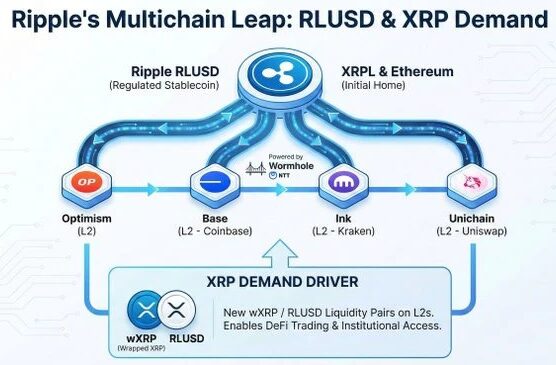
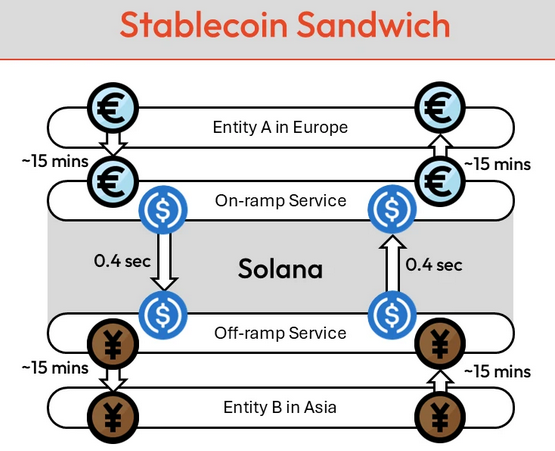
Ripple partnered with Convera to deploy a new international remittance model using the RLUSD stablecoin.
“Stablecoin Sandwich Model”
- Entry: Fiat
- Middle: RLUSD (on-chain settlement)
- Exit: Fiat
This architecture preserves regulatory familiarity while leveraging blockchain efficiency.
Real-World Impact of RLUSD
Ripple also demonstrated practical use cases:
- $15M RLUSD donated to Accion Opportunity Fund
- Result:
- 905 small business loans
- ~1,000 jobs created
Key Insight
This is critical:
Crypto is moving beyond speculation into measurable economic impact.
Stablecoin Sandwich Model Diagram
Solana: High-Speed Growth, High-Risk Reality
Drift Protocol Exploit
The Solana-based DeFi platform Drift Protocol suffered a major exploit:
- Estimated loss: $200M–$270M
This ranks among the largest DeFi hacks in recent months.
Institutional Adoption Continues
At the same time:
- B2C2 partnered with the Solana Foundation
- Solana selected as a core settlement network for stablecoins (USDC, USDT, PYUSD, etc.)
Dual Narrative: Growth vs Risk
Solana exemplifies the current crypto paradox:
| Strength | Weakness |
|---|---|
| High throughput | Security vulnerabilities |
| Institutional adoption | Smart contract risk |
| Low fees | Ecosystem immaturity |
Solana Ecosystem Map (DeFi vs Institutional Layer)
Macro Trend: The Two Extremes of Crypto Evolution
This week reinforces a broader thesis:
1. Asset-Backed Representation (Institutional Layer)
- Bitcoin treasury strategies
- Ethereum staking yields
- Ripple enterprise payments
2. Autonomous Trust Systems (Decentralized Layer)
- Solana DeFi
- On-chain trading protocols
- Permissionless innovation
The tension between these two extremes is increasing.
Opportunities for Investors and Builders
1. Infrastructure Plays
- Quantum-resistant cryptography
- Institutional custody solutions
- Cross-chain settlement layers
2. Yield Strategies
- ETH staking
- Stablecoin arbitrage
- On-chain liquidity provisioning
3. Risk-Aware DeFi Participation
- Focus on audited protocols
- Monitor liquidity concentration
- Avoid unaudited high-yield traps
Conclusion: A Market Growing Up Under Pressure
This week’s developments show that crypto is entering a new phase:
- More capital than ever is entering the system
- More real-world use cases are emerging
- More risks are being exposed simultaneously
The market is no longer driven purely by hype. It is being shaped by:
- Institutional discipline
- Technological breakthroughs
- Security failures
For investors and builders, the message is clear:
The next phase of crypto will reward those who understand both opportunity and fragility.
