
Key Points :
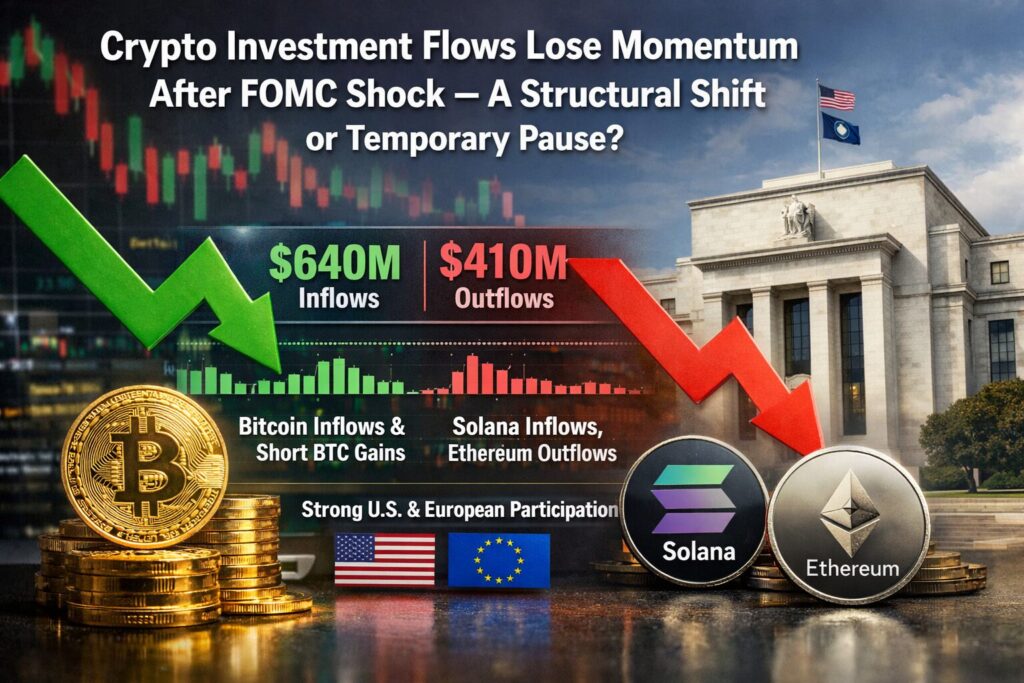
- Digital asset investment products saw $230 million net inflows, but momentum weakened late in the week
- FOMC tightening concerns triggered outflows after early strong inflows (~$640M in, ~$410M out)
- Bitcoin led inflows, but short-BTC products also gained—indicating divided sentiment
- Solana extended a 7-week inflow streak, while Ethereum reversed into outflows
- The U.S. dominated inflows, with strong participation from Europe
1. Market Overview: Strong Start, Weak Finish
The digital asset investment landscape experienced a mixed week, reflecting both resilience and fragility in investor sentiment. According to CoinShares, digital asset investment products—including ETFs and institutional funds—recorded net inflows of approximately $230 million over the past week. While this figure appears positive at first glance, a deeper examination reveals a significant deceleration compared to previous weeks.
[Digital Asset Investment Flows Trend]
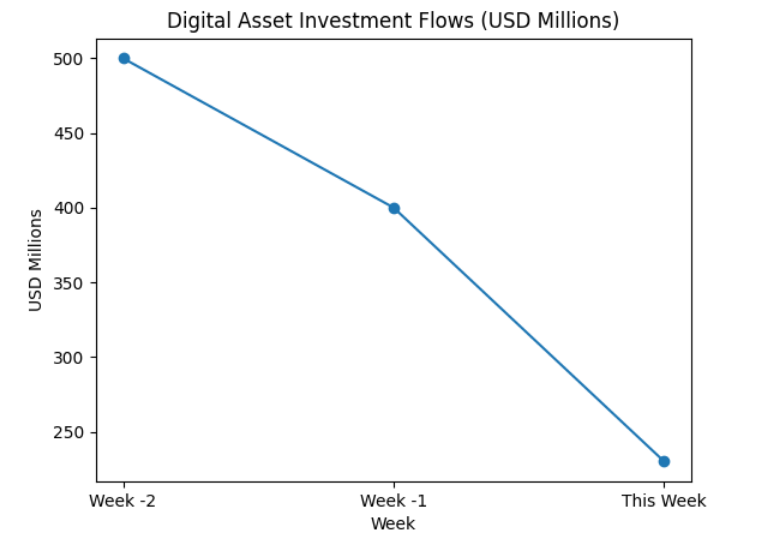
The chart above illustrates the declining momentum in weekly inflows. While earlier weeks showed stronger capital allocation, the most recent data highlights a clear slowdown.
The week began with strong investor confidence. On March 16 and 17 alone, inflows reached approximately $640 million, suggesting bullish positioning ahead of macroeconomic developments. However, this optimism quickly faded. By the latter half of the week, the market experienced outflows totaling around $410 million, erasing a substantial portion of earlier gains.
This sharp reversal underscores a critical reality: crypto markets remain highly sensitive to macroeconomic signals, particularly monetary policy.
2. The FOMC Effect: Liquidity Still Rules Crypto
The primary catalyst behind the mid-week reversal appears to be the Federal Open Market Committee (FOMC) meeting and subsequent commentary from Federal Reserve Chairman Jerome Powell.
Markets interpreted Powell’s stance as leaning toward continued monetary tightening, reinforcing expectations of higher interest rates for longer. This has profound implications for crypto assets.
Crypto markets are fundamentally liquidity-driven. When global liquidity expands, risk assets—including cryptocurrencies—tend to perform well. Conversely, tightening monetary conditions reduce available capital for speculative investments.
The FOMC outcome triggered a classic risk-off reaction:
- Institutional investors reduced exposure
- Short-term traders locked in profits
- Risk appetite declined across digital asset markets
Interestingly, while geopolitical tensions (such as prolonged instability in the Middle East) contributed to uncertainty, CoinShares emphasized that FOMC policy expectations had a more immediate and measurable impact on flows.
3. Bitcoin: Still the Core, But Not Without Doub
Bitcoin once again dominated inflows among digital asset investment products, reaffirming its status as the primary institutional gateway into crypto.
However, a notable development is the simultaneous inflow into short-Bitcoin products. This indicates that investors are increasingly hedging their positions rather than taking outright directional bets.
This dual flow dynamic suggests:
- Long-term investors remain confident in Bitcoin’s structural role
- Short-term participants are cautious about price volatility
- Institutions are employing more sophisticated strategies (e.g., hedging, derivatives exposure)
This divergence reflects a maturing market. Unlike previous cycles dominated by retail speculation, current flows indicate institutional risk management behavior.
4. Altcoins Diverge: Solana Strength vs Ethereum Weakness
One of the most striking trends is the divergence among major altcoins.
[Asset-Specific Fund Flows]
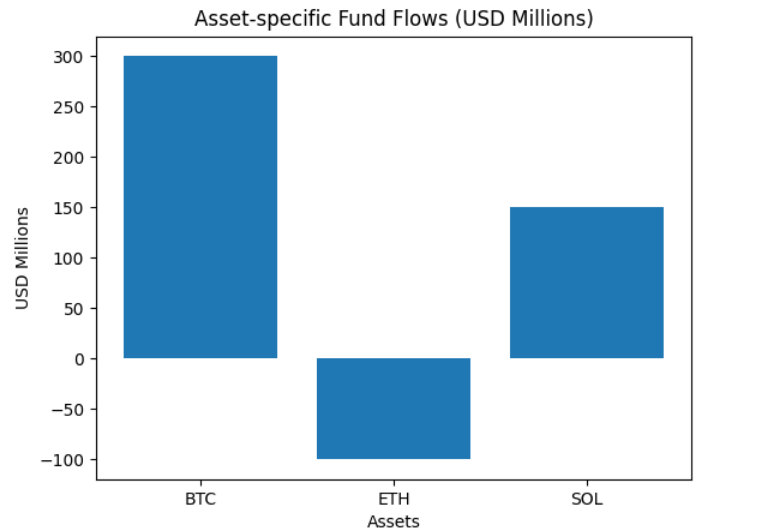
Solana (SOL) continues to outperform, recording its 7th consecutive week of inflows. This sustained interest highlights growing institutional confidence in Solana’s ecosystem, particularly in areas such as:
- High-performance DeFi infrastructure
- NFT and gaming ecosystems
- Low-cost, high-speed transaction capabilities
In contrast, Ethereum (ETH) experienced net outflows, breaking a three-week streak of positive inflows.
Several factors may explain this shift:
- Profit-taking after recent ETH strength
- Uncertainty surrounding Ethereum’s scaling roadmap
- Competitive pressure from faster Layer 1 alternatives like Solana
This divergence signals an important shift: capital is becoming more selective within the altcoin space.
5. Regional Flows: The U.S. Leads, Europe Follows
From a geographical perspective, the United States remained the dominant source of inflows. This is consistent with the increasing institutionalization of crypto through regulated investment vehicles such as spot Bitcoin ETFs.
Europe also showed strong participation, particularly in Germany and Switzerland—regions known for progressive crypto regulation and institutional adoption.
Notably, no major region recorded net outflows. This suggests that while momentum slowed, global demand for digital asset exposure remains intact.
6. Broader Trends: What This Means for Investors
Beyond the weekly data, several structural trends are emerging:
1. Institutionalization Continues
The dominance of ETF flows indicates that crypto is increasingly being integrated into traditional financial systems.
2. Macro Sensitivity Is Increasing
Crypto is no longer isolated. It is now deeply tied to:
- Interest rates
- Inflation expectations
- Global liquidity conditions
3. Capital Rotation Within Crypto
The divergence between SOL and ETH highlights a key theme:
investors are rotating capital toward perceived growth narratives.
4. Hedging and Sophistication
The rise of short products suggests that investors are no longer purely speculative—they are actively managing risk.
7. Forward Outlook: Temporary Pause or Structural Shift?
The key question is whether the recent slowdown represents:
- A temporary reaction to macro uncertainty
or - The beginning of a broader risk-off phase
Several indicators suggest this is more likely a pause rather than a reversal:
- Continued net inflows (despite volatility)
- Strong institutional participation
- Persistent interest in high-growth ecosystems like Solana
However, risks remain:
- Further monetary tightening
- Geopolitical instability
- Liquidity contraction
Investors should monitor upcoming macro events closely, particularly future Fed guidance.
Conclusion
The latest CoinShares report paints a nuanced picture of the crypto investment landscape. While net inflows remain positive, the sharp mid-week reversal highlights the growing influence of macroeconomic forces.
Bitcoin continues to anchor institutional interest, but the rise of hedging strategies signals caution. Meanwhile, the divergence between Solana and Ethereum reflects a more selective and mature market.
Ultimately, crypto is entering a new phase—one defined not by hype, but by capital discipline, macro awareness, and strategic allocation.
For investors seeking the next opportunity, the message is clear:
the era of indiscriminate growth is over—precision matters more than ever.
