
Key Points :
- Crypto ETFs remain in an extremely early adoption phase, despite growing visibility
- Most inflows today come from self-directed investors, not managed portfolios
- Financial advisors are still evaluating how to integrate crypto into traditional asset allocation models
- Institutional adoption could accelerate once formal portfolio allocation frameworks (1–4%) are standardized
- The transition from “self-directed” to “advisor-managed” capital marks a critical structural turning point
1. The Early Stage of Crypto ETF Adoption
The global financial system is undergoing a subtle but profound transformation. According to Amy Oldenburg, Head of Digital Assets Strategy at Morgan Stanley, the adoption of cryptocurrency exchange-traded funds (ETFs) is still in what can only be described as its infancy.
Speaking at the DC Blockchain Summit 2026, Oldenburg emphasized that while headlines may suggest rapid growth, the underlying structural integration of crypto ETFs into mainstream finance remains limited. The majority of current demand is driven not by institutional portfolio allocation, but by self-directed investors—individuals making independent decisions without formal advisory oversight.
This distinction is critical. Self-directed capital tends to be more reactive, volatile, and sentiment-driven. In contrast, advisor-managed capital represents long-term, structured investment flows, typically governed by risk models, fiduciary responsibilities, and regulatory compliance frameworks.
In other words, while crypto ETFs have captured attention, they have not yet fully penetrated the core machinery of global asset management.
2. The Structural Gap: Self-Directed vs. Managed Capital
To understand why this matters, one must examine the structural divide between two types of capital:
Capital Flow Composition in Crypto ETFs (2026)
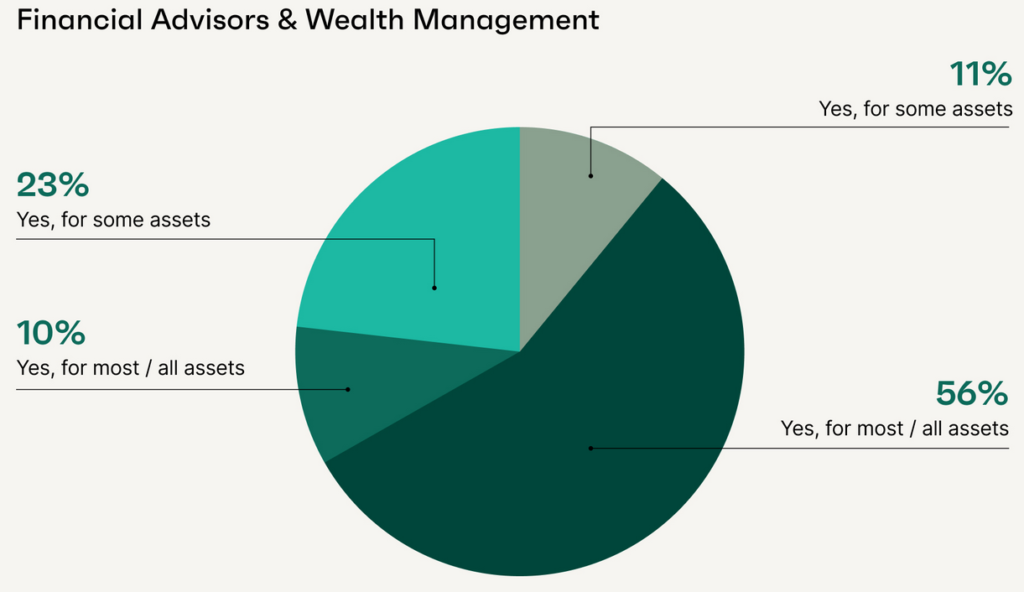
Description: Pie chart showing ~80–90% self-directed vs. ~10–20% advisor-managed inflows
Today, the crypto ETF market is dominated by self-directed investors. This reflects a broader hesitation among financial advisors, who are still grappling with how to incorporate digital assets into traditional portfolio frameworks.
Most advisory models are built around the classic “60/40 portfolio”—60% equities and 40% fixed income. Introducing crypto into this framework raises several complex questions:
- How should volatility be modeled?
- What is the appropriate correlation assumption with other asset classes?
- How should risk-adjusted returns be evaluated?
Until these questions are formally resolved, large-scale advisor-driven capital allocation will remain constrained.
3. The Advisor Bottleneck: Why Institutional Capital Is Waiting
The hesitation from advisors is not due to a lack of interest—but rather a lack of standardized frameworks.
Financial advisors operate under strict fiduciary obligations. Any inclusion of a new asset class must pass rigorous due diligence:
- Historical performance validation
- Regulatory clarity
- Custody and security assurances
- Portfolio optimization modeling
Crypto, as an asset class, is still maturing across all these dimensions.
Even firms like Morgan Stanley—which filed for spot Bitcoin and Solana ETF offerings in January 2026—are proceeding with what Oldenburg described as “managed rollout steps.” This cautious approach reflects the reality that institutional adoption is not just about product availability, but about integration into existing financial systems.
4. The 1%–4% Allocation Thesis: A Trillion-Dollar Catalyst
One of the most important insights from the discussion is the expectation that institutional portfolios may eventually allocate between 1% and 4% to crypto assets.
At first glance, this may seem modest. However, when applied to the global asset management industry—estimated at over $100 trillion—this translates into a potential inflow of $1 trillion to $4 trillion into crypto markets.
Impact of Institutional Allocation to Crypto (1%–4%)
Description: Bar chart showing potential capital inflow scenarios
This is why the “formalization” process—where advisors begin systematically incorporating crypto into portfolios—is seen as the true inflection point.
Family offices and high-net-worth portfolios are expected to lead this transition. Unlike retail investors, these entities prioritize diversification, long-term returns, and strategic exposure. Their adoption signals legitimacy and often precedes broader institutional flows.
5. From Alternative Asset to Core Portfolio Component
Another key theme emerging from Oldenburg’s remarks is the gradual reclassification of crypto—from a speculative alternative asset to a core portfolio component.
This transition involves three stages:
- Exploratory Phase
Investors experiment with small allocations (typically <1%) - Validation Phase
Advisors begin incorporating crypto into model portfolios - Formalization Phase
Crypto becomes a standardized allocation across portfolios
Currently, the market is transitioning between stages one and two.
This evolution mirrors the historical trajectory of other asset classes, such as emerging market equities and real estate investment trusts (REITs), which initially faced skepticism before becoming mainstream.
6. Market Signals: ETF Inflows and Product Expansion
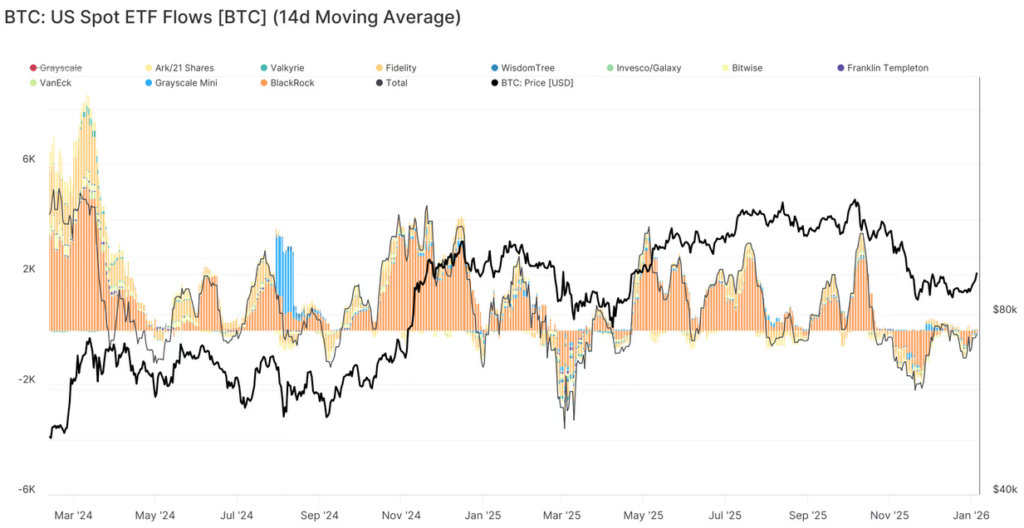
Recent market data supports the thesis of gradual but steady adoption.
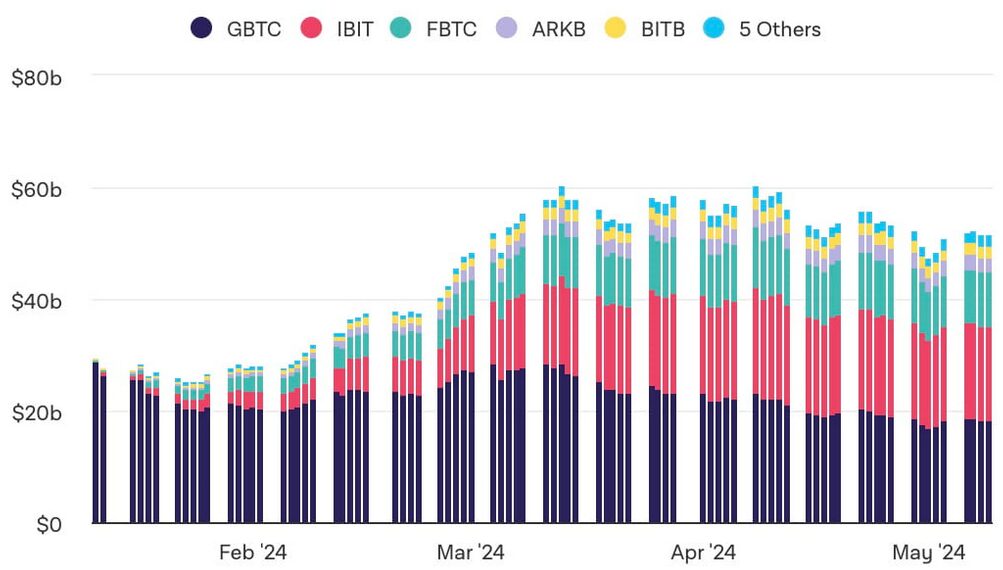
Bitcoin spot ETFs have recorded multiple consecutive weeks of net inflows, including a five-day streak earlier in 2026—the first of its kind for the year. These flows indicate sustained investor interest, even amid market volatility.
At the same time, product expansion is accelerating:
- Bitcoin ETFs are now widely accessible
- Ethereum ETF discussions continue to gain traction
- New filings include Solana-based ETFs, signaling diversification beyond BTC
Crypto ETF Net Inflows Trend (2025–2026)
Description: Line chart showing increasing inflows over time
This expansion reflects a broader shift: crypto is no longer a single-asset story dominated by Bitcoin, but an emerging asset class with multiple investable instruments.
7. Strategic Implications for Investors and Builders
For readers seeking new crypto assets, revenue opportunities, and practical blockchain applications, the implications are profound.
For Investors
- Early positioning ahead of institutional flows could yield asymmetric returns
- ETF accessibility lowers technical barriers to entry
- Diversification across multiple crypto assets (BTC, ETH, SOL) becomes increasingly relevant
For Builders and Entrepreneurs
- Infrastructure supporting ETF flows (custody, compliance, liquidity) will see increased demand
- Tokenization of traditional assets may follow similar adoption pathways
- Integration between DeFi and traditional finance (TradFi) will accelerate
In essence, the ETF narrative is not just about passive investment vehicles—it is about the convergence of two financial worlds.
8. The Bigger Picture: A Controlled and Healthy Evolution
Oldenburg emphasized that the current slow pace of adoption should not be interpreted as weakness. On the contrary, it represents a healthy maturation process.
Rapid, unstructured adoption could introduce systemic risks. Instead, the gradual integration of crypto into traditional finance ensures:
- Better risk management
- Stronger regulatory alignment
- More sustainable long-term growth
This perspective is particularly important for institutional stakeholders, who prioritize stability over speed.
9. Conclusion: The Real Inflection Point Is Still Ahead
Crypto ETFs have crossed an important milestone—but the real transformation is yet to come.
The transition from self-directed investing to advisor-managed allocation represents a structural shift that could redefine the entire crypto market. Once financial advisors begin systematically allocating capital—even at modest levels—the resulting inflows could reshape valuations, liquidity, and market dynamics.
In this sense, today’s market is not the peak—but the foundation.
For forward-looking investors and builders, the message is clear:
The window before full institutional adoption may represent one of the most significant opportunities in the history of digital assets.
