

Main Points :
- Arrest of CoinDCX founders linked to alleged fraud case involving ~$14,500 (≈ $14.5K)
- Exchange claims incident was caused by impersonation via fake domain (coindcx.pro)
- Over 1,200 fake websites mimicking CoinDCX reported
- India sees rapid increase in crypto-related scams due to regulatory gaps
- Global authorities (U.S., UK, Canada) escalating anti-crypto fraud operations
- Implications for investors: trust, custody risk, and platform due diligence
- Emerging opportunity: infrastructure for anti-scam, identity verification, and compliance layers
1. The CoinDCX Incident: Arrests, Allegations, and Immediate Market Shock
The recent arrest of CoinDCX co-founders Sumit Gupta and Neeraj Khandelwal has sent ripples across the global cryptocurrency ecosystem. The case originated from a complaint filed by a 42-year-old insurance consultant, who alleged that he had been defrauded of approximately ₹716,000—equivalent to around $14,500—through promises of high-yield returns and franchise opportunities associated with CoinDCX.
According to the complainant, the fraudulent engagement spanned from August 2025 to February 2026. During this period, he was convinced to transfer funds under the belief that he was participating in a legitimate investment program tied to the exchange.
Authorities responded swiftly, leading to the arrest of the founders and their presentation before a magistrate court. The founders were placed under police custody pending further investigation.
However, what initially appeared to be a direct fraud case involving the exchange quickly evolved into something far more complex.
2. CoinDCX’s Defense: A Case of Sophisticated Impersonation
CoinDCX strongly denied any involvement in the alleged fraud, issuing an official statement asserting that the incident was the result of a third-party impersonation scam.
According to the company, the fraud was conducted through a fake domain—coindcx.pro—which mimicked the branding, structure, and communication style of the legitimate CoinDCX platform. The victim, reportedly, had not contacted the official exchange before filing the complaint.
This case highlights a growing and dangerous trend: brand impersonation in crypto, where attackers leverage trust in established exchanges to deceive users.
CoinDCX further revealed that:
- Over 1,212 fake websites impersonating the platform had been reported between April 2024 and January 2026
- The company has been actively cooperating with authorities to combat cybercrime
- Such attacks are becoming increasingly common across digital finance ecosystems
3. Visual Breakdown: How Crypto Impersonation Scams Work
[“Crypto Impersonation Scam Flow”]
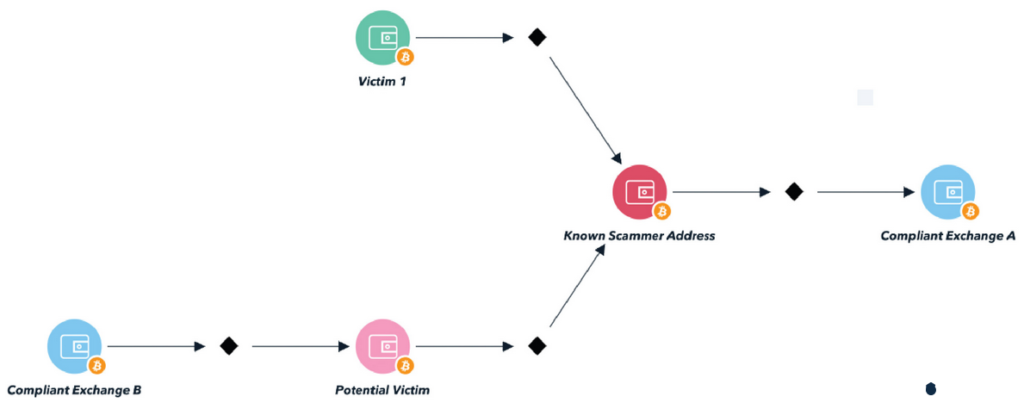
Explanation:
- Attacker creates fake domain (e.g., coindcx.pro)
- Copies branding/UI of legitimate exchange
- Promotes fake investment offers (high yield, franchise, etc.)
- Victim transfers funds
- Funds disappear / routed via mixers or offshore wallets
4. CoinDCX in Context: A Major Player Under Pressure
CoinDCX is not a minor exchange. Founded in 2018 by IIT graduates, it has grown into one of India’s largest crypto platforms:
- 20+ million users
- Annual trading volume of approximately $165 billion
- Backed by major investors including Coinbase
- Valuation reached around $2.3 billion (≈ $2.3B)
Despite its scale, the exchange has faced multiple security and reputational challenges:
- July 2025 Hack: ~$45 million loss (≈ $45M), covered by company reserves
- Attack vector: malware installed via fake job recruitment targeting internal engineers
This demonstrates a critical insight:
Even large, well-funded exchanges remain vulnerable—not only externally, but internally.
5. India’s Crypto Fraud Explosion: A Regulatory Gap
India has seen a dramatic surge in online financial fraud:
- Over 2.4 million complaints in 2025
- Total losses: approximately $2.7 billion (≈ $2.7B)
The core issue, according to academic institutions such as Gujarat National Law University, is the lack of a clear crypto regulatory framework.
This creates three systemic vulnerabilities:
- Legal ambiguity → scammers exploit undefined areas
- Weak investor protection mechanisms
- Limited enforcement coordination
6. Global Trend: Crypto Fraud is No Longer Local
This issue is not confined to India.
Recently, the United States Secret Service announced a multinational operation with Canada and the UK to combat crypto phishing and fraud networks.
This signals a shift:
- Crypto crime is now treated as international financial crime
- Governments are coordinating across borders
- Exchanges are expected to play an active role in enforcement
7. Market Impact: Trust, Risk, and User Behavior
Short-Term Effects
- Increased fear among retail investors
- Temporary outflows from exchanges
- Reputation damage—even if exchange is not at fault
Medium-Term Effects
- Higher demand for:
- Self-custody wallets
- Hardware wallets
- On-chain verification tools
Long-Term Effects
- Emergence of “Trust Infrastructure” as a core industry layer
- Exchanges evolving into regulated financial institutions
8. Visual Trend: Global Crypto Fraud Growth
[“Crypto Fraud Growth 2024–2026”]
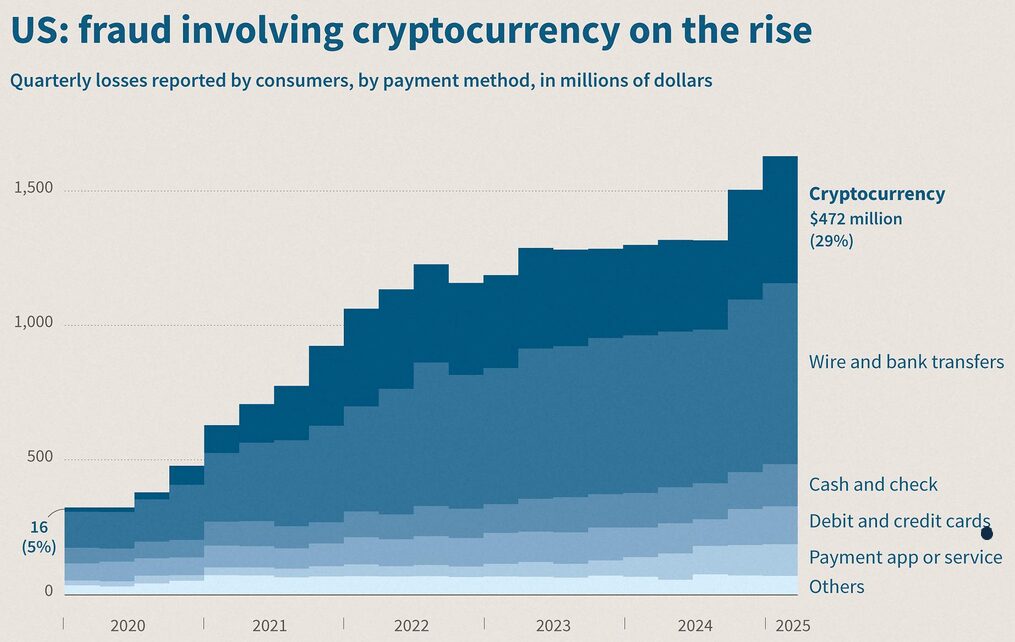
Key Insight:
Crypto fraud is not slowing—it is scaling alongside adoption.
9. Strategic Insight for Investors and Builders
This case reveals a critical opportunity.
Emerging Opportunity Sectors
- On-chain identity verification (DID / zk-KYC)
- Anti-phishing infrastructure
- Wallet-level security layers
- AI-based fraud detection
- Transaction monitoring (Travel Rule compliance)
For a company like WIBS PHP (EMI + VASP), this aligns directly with:
- AML frameworks
- Transaction monitoring
- Compliance-driven UX
10. Final Analysis: The Real Risk is Not Exchanges—It’s Trust Leakage
The CoinDCX case is not simply about whether the founders are guilty or innocent.
It represents a deeper structural issue:
In crypto, trust is the primary attack surface.
Even if exchanges are secure:
- Users can still be deceived
- Brand identity can still be hijacked
- Funds can still be lost outside the system
Conclusion
The CoinDCX incident illustrates a critical turning point in the crypto industry. As adoption accelerates globally, so too does the sophistication of fraud. Impersonation attacks, phishing networks, and regulatory gaps are converging to create a high-risk environment—not just for users, but for platforms themselves.
For investors, the lesson is clear:
Due diligence must extend beyond assets and into infrastructure.
For builders and operators, the opportunity is even clearer:
The next wave of crypto innovation will not be defined by tokens—but by trust, security, and compliance layers.
