

Main Points :
- Chile’s presidential election signals a pro-market shift, but not a radical “Bitcoin as legal tender” path.
- The country’s $229–230 billion pension fund system is the real structural driver of crypto adoption.
- Bitcoin exposure is likely to come through regulated instruments such as ETFs, bank custody, and compliant funds.
- Chile’s approach contrasts with El Salvador’s political model, favoring institutional, bottom-up integration.
- For investors and builders, Chile represents a blueprint for regulated, infrastructure-led crypto growth in emerging markets.
1. A Political Turning Point Without Radicalism
The victory of José Antonio Kast in Chile’s presidential runoff has been widely interpreted by markets as a return to fiscal discipline, stronger security policies, and a more business-friendly regulatory environment. Yet, despite comparisons with Nayib Bukele, the implications for Bitcoin adoption in Chile point toward a fundamentally different trajectory.
Unlike El Salvador, where Bitcoin was introduced as legal tender through top-down political decision-making, Chile’s financial ecosystem is deeply institutionalized. Pension funds, banks, and capital markets play a central role in shaping asset allocation. As a result, any meaningful Bitcoin exposure will almost certainly emerge through regulated financial channels, rather than symbolic or populist policy announcements.
From the perspective of global crypto markets, this distinction matters. It signals not spectacle, but durability.
2. The Structural Giant: Chile’s $230 Billion Pension System
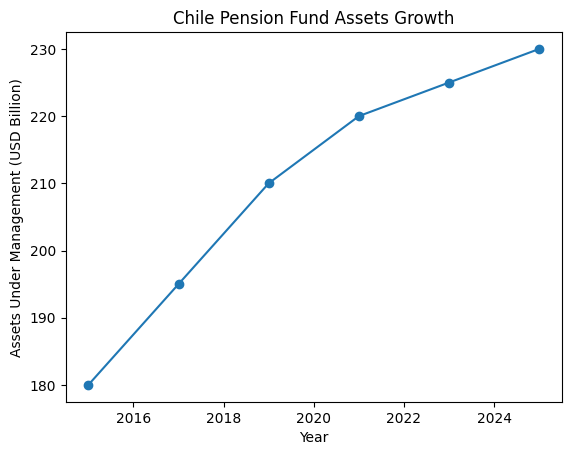
At the heart of the discussion lies Chile’s pension system, which as of October stands at approximately $229.6 billion in assets under management. This pool of capital dwarfs the size of Chile’s domestic equity market and represents one of the most influential institutional forces in Latin America.
[“Chile Pension Fund Assets Growth Chart”]
These pension funds are governed by strict fiduciary duties, risk controls, and custody requirements. They cannot simply buy Bitcoin directly on offshore exchanges. Instead, exposure requires:
- Regulated custody frameworks
- Clear valuation and risk models
- Approved investment vehicles such as ETFs or structured funds
This means that even a 1–2% allocation would represent billions of dollars flowing into Bitcoin via compliant instruments—an outcome far more impactful than retail-driven speculation.
3. Why Chile Is Not El Salvador: Institutions Over Politics
The frequent comparison between Kast and Bukele overlooks a critical difference: financial architecture.
Chile’s economy is built around:
- Independent regulators
- A sophisticated banking sector
- Long-established pension fund administrators (AFPs)
This structure limits the scope for unilateral executive action in financial markets. Bitcoin adoption, therefore, must pass through legal, technical, and institutional filters. While this slows down the process, it significantly increases legitimacy and long-term sustainability.
For institutional investors globally, this model is far more familiar—and investable.
4. The ETF Effect: Lessons from the United States
According to Mauricio Di Bartolomeo, co-founder of Ledn, Chile’s regulators have maintained a cautious stance. However, he points to the U.S. experience as a clear precedent.
The approval of spot Bitcoin ETFs by asset managers such as BlackRock transformed Bitcoin from a fringe asset into an institutionally accessible product. Pension funds, endowments, and insurance companies could finally gain exposure without handling private keys or unregulated exchanges.
[“US Bitcoin ETF Institutional Inflows”]
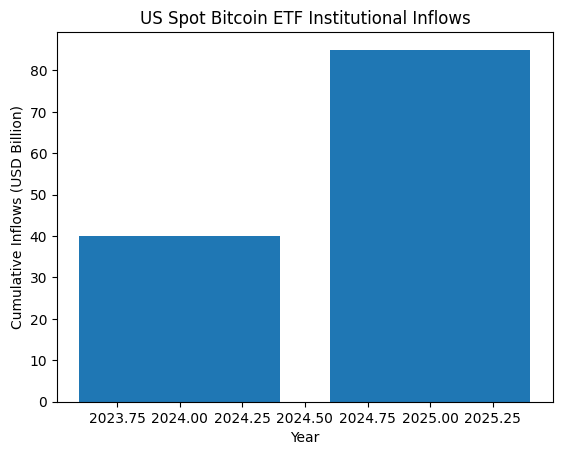
A similar pathway in Chile—domestic ETFs combined with bank-provided custody—would unlock pension capital while maintaining regulatory integrity.
5. Banks, Custody, and the Role of the Central Bank
Chile’s banking sector is expected to play a pivotal role. Rather than bypassing banks, Bitcoin integration is likely to occur through them. This includes:
- Custody services compliant with pension fund standards
- Risk-managed exposure products
- Integration with existing settlement and reporting systems
The Central Bank of Chile has so far emphasized financial stability and consumer protection. While this cautious approach may frustrate crypto-native investors, it aligns well with the requirements of pension funds and insurers.
In practice, this creates a “regulated rail” for Bitcoin—slower, but structurally sound.
6. Stablecoins, Fintech Law, and Payments Use Cases
Beyond Bitcoin as an investment asset, Chile’s fintech regulatory framework is gradually clarifying the legal status of stablecoins. Under existing fintech laws, payment-oriented crypto assets are being evaluated within defined compliance boundaries.
This opens the door to:
- Stablecoin-based settlement
- Cross-border remittances
- On-chain payment infrastructure integrated with banks
For builders, this is arguably more important than price appreciation. It signals a future where blockchain is embedded into everyday financial operations, rather than existing at the fringes.
7. What This Means for Global Investors and Builders
Chile’s case offers a valuable counterpoint to more ideological crypto experiments. Instead of asking whether Bitcoin should replace fiat currency, Chile is asking how Bitcoin can fit within existing financial systems without compromising stability.
For investors:
- Pension-driven adoption implies long-term capital, not speculative flows
- Regulated products reduce counterparty and custody risk
For entrepreneurs:
- Opportunities lie in custody, compliance tech, ETFs, and infrastructure
- Alignment with regulators is a competitive advantage, not a constraint
8. Conclusion: Quiet Capital, Lasting Impact
Chile’s new administration does not herald a dramatic Bitcoin revolution. Instead, it points toward something potentially more powerful: institutional normalization.
If even a fraction of the country’s $230 billion pension system gains regulated exposure to Bitcoin, the implications will extend far beyond Chile. It would validate a model where crypto adoption is driven not by political spectacle, but by fiduciary logic and financial infrastructure.
In the long run, this may prove to be the more transformative path.
