
Main Takeaways :
- Global bank deposits in Japan and Europe still earn around 1–2%, and even U.S. short-term products often stay near 4%, pushing yield-hungry investors toward riskier credit and bond markets.
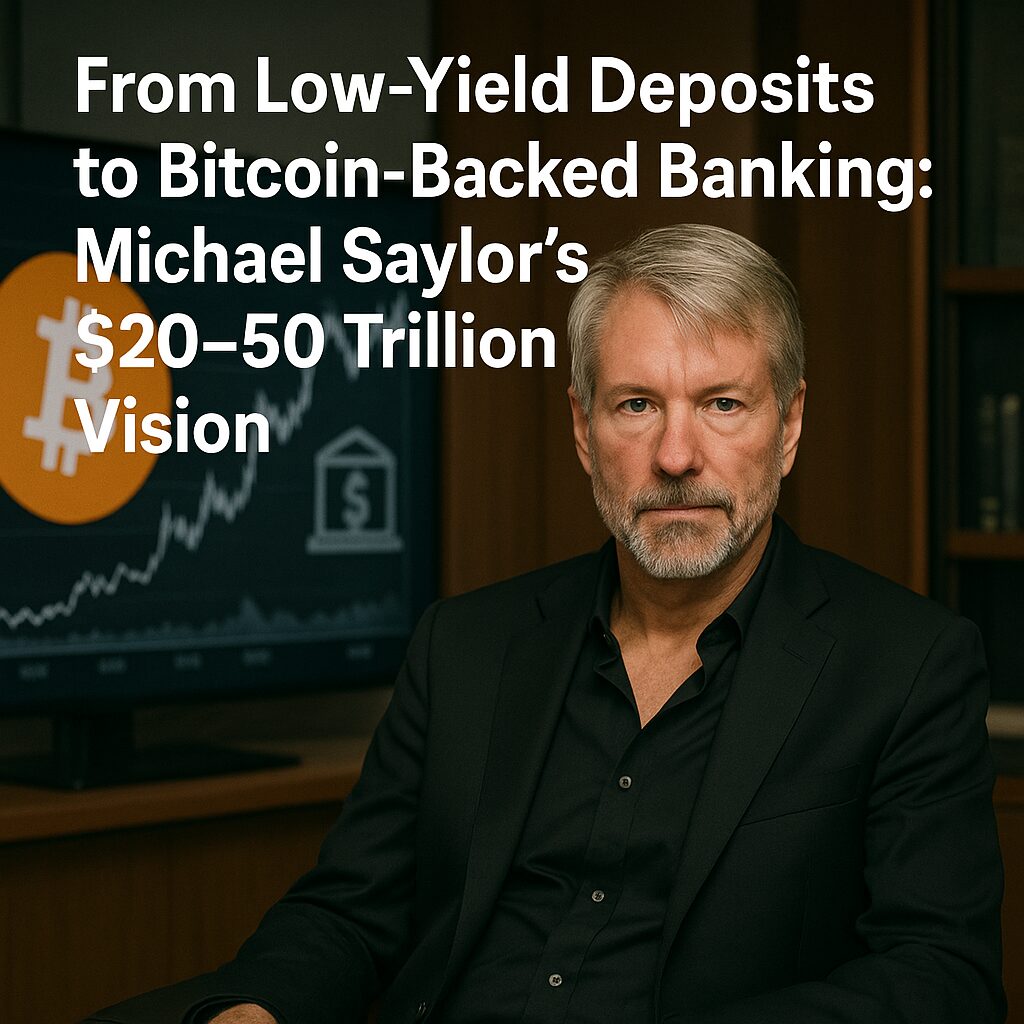
- Michael Saylor, chairman of Strategy (formerly MicroStrategy), is now pitching Bitcoin-backed digital bank accounts to governments and sovereign wealth funds, with an account structure of roughly 80% digital credit assets, 20% fiat currency, plus a 10% reserve buffer.
- Strategy’s STRC bitcoin-collateralized preferred shares already target a dividend yield of about 10.75%, more than 2–4× typical bank deposit yields.
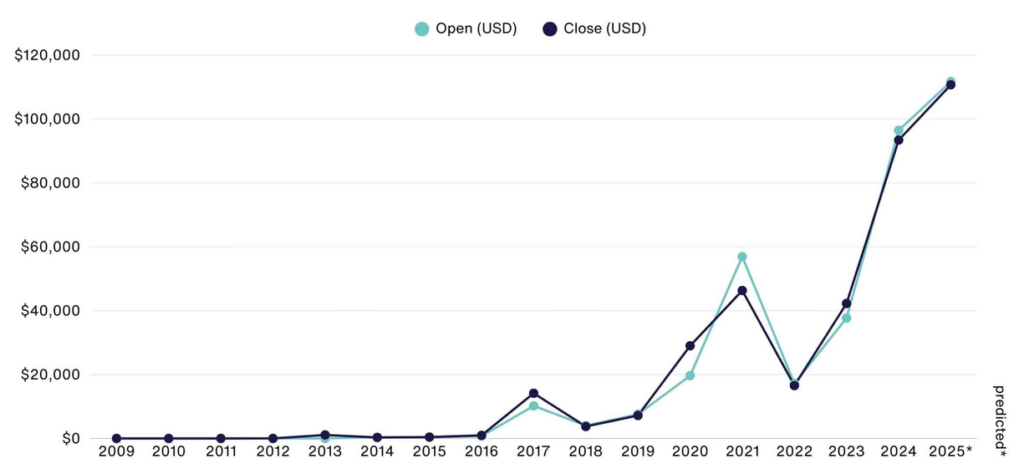
- Bitcoin remains highly volatile: after reaching an all-time high above $126,000 in October 2025, it has slid to roughly $90,000–$92,000 as of December 9, 2025.
- Strategy has doubled down, expanding its holdings to around 660,624 BTC, worth roughly $59–61 billion at current prices, even as its own equity has underperformed and critics warn of liquidity risk.
- For yield-seeking crypto investors and builders, Saylor’s “Bitcoin-backed banking” is both a huge opportunity (new yield products, tokenized credit, sovereign-level deals) and a serious risk (price crashes, no deposit insurance, complex regulation).
Introduction: Why Depositors Are Looking Beyond Banks
For more than a decade, savers in Japan and Europe have lived in a world of near-zero interest rates. Even today, typical retail deposits in the euro area hover near 1–2%, while many short-term products in the United States still cluster around 4% despite recent rate hikes. At the same time, inflation and asset price volatility have made “safe” bank deposits feel like a slowly melting ice cube.
Against this backdrop, Michael Saylor – chairman of Strategy, the world’s largest corporate holder of Bitcoin – is proposing a radically different model: a nation-level Bitcoin-backed banking system. At the recent Bitcoin MENA conference in Abu Dhabi, Saylor described a world where governments and regulated banks offer digital bank accounts that are ultimately collateralized by Bitcoin, promising yields several times higher than traditional deposits while still targeting capital protection.
For investors searching for new crypto assets, yield opportunities, and practical blockchain use cases, this proposal is not just theory. It sits on top of very concrete moves: Strategy’s issuance of STRC, a Bitcoin-backed preferred share; the company’s relentless accumulation of BTC; and an ongoing campaign to bring sovereign wealth funds, regulators, and Wall Street into Bitcoin-backed credit products.
Inside Saylor’s Bitcoin-Backed Banking Proposal
Saylor’s core idea is to blend the conservative structure of a money-market-style fund with the high return potential of Bitcoin. In his Abu Dhabi remarks, he outlined a model in which:
- Digital credit instruments (such as tokenized short-term loans or credit exposures) make up around 80% of the asset pool.
- Fiat currency – dollars, euros, or local legal tender – accounts for about 20%.
- On top of this, there is a 10% “reserve buffer”, creating roughly 5:1 over-collateralization relative to depositors’ claims.
In practice, the depositor sees a digital bank account denominated in their local currency. Behind the scenes, the bank or treasury entity holds Bitcoin and digital credit assets structured so that:
- Yield comes primarily from lending, repo, or credit spreads in the digital credit portion, potentially enhanced by Bitcoin-related strategies.
- Liquidity comes from the fiat and reserve buffer, which can absorb short-term withdrawals without having to liquidate Bitcoin at distressed prices.
- Security comes from over-collateralization: for every $1 of depositor liability, there might be $5 worth of high-quality collateral, largely in BTC.
Saylor argues that if such a structure is operated by regulated banks or sovereign wealth funds, it could attract $20–50 trillion in global capital that is currently trapped in low-yield deposits and government bonds.

Yield: Why Investors Care
The entire pitch stands or falls on yield. In Saylor’s view, investors are fleeing traditional bank accounts because they fail to compensate for inflation or risk. Even if a euro deposit pays 1.5% and a U.S. money-market fund pays 4%, the real return after inflation and taxes is often close to zero.
By contrast, Strategy’s STRC – a Bitcoin-collateralized preferred share – is currently guiding for a dividend yield of around 10.75%, after a series of recent hikes announced to support the instrument’s trading price near par. That is more than 2× U.S. bank deposit yields and up to 7× those available to many Japanese and European savers.
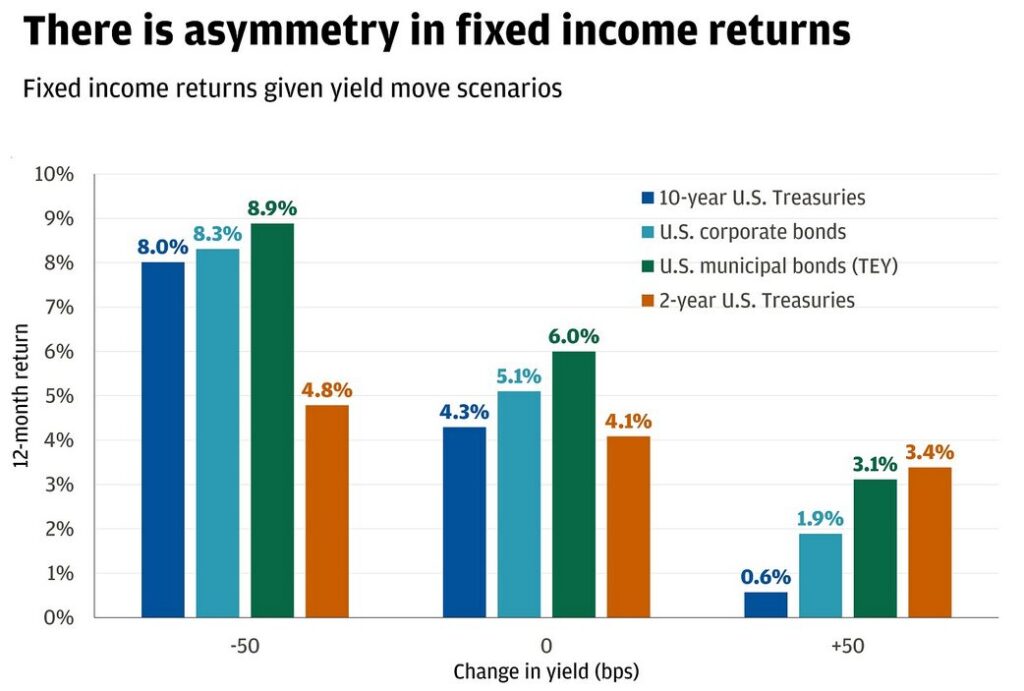
If a government-backed digital bank account could deliver something like 8–12% annual yield, with explicit over-collateralization and transparent on-chain reserves, it would immediately become one of the most compelling savings products in the world. That is the essence of Saylor’s “Bitcoin-backed banking” vision.
Bitcoin’s Volatility Problem
The obvious objection is Bitcoin’s volatility. In 2025 alone, Bitcoin rocketed to a new all-time high above $126,000 in early October before suffering a sharp correction. As of December 9, it trades in the $90,000–$92,000 range, a drawdown of roughly 28–30% from the peak and leaving the asset slightly down over the last 12 months.
This rollercoaster has not gone unnoticed. Former Salomon Brothers bond and derivatives trader Josh Mann (and other critics like him) argue that any bank-like structure backed by such a volatile asset is inherently fragile. The logic is simple:
- Traditional banks rely on deposit insurance, central bank backstops, and regulatory liquidity requirements to prevent bank runs.
- Even then, history is littered with bank failures when confidence evaporates.
- In a Bitcoin-backed system without explicit government guarantees, a sharp crash in BTC could trigger a wave of withdrawals. Even a generous yield might not stop panicked depositors from rushing to cash.
Mann’s critique is essentially that liquidity risk, not just market risk, is fatal: if everyone wants dollars today, a promise to pay a high yield tomorrow is not comforting.
This is why Saylor emphasizes over-collateralization and reserve buffers. A 5:1 collateral ratio and 10% cash reserves are designed so that, even with a 50% BTC drawdown, depositors remain whole and withdrawals can be honored – at least in theory. But the proof of this concept would likely require real-world stress tests, not just slides at a conference.
Strategy’s Mega-Bitcoin Balance Sheet
Saylor’s credibility – or recklessness, depending on one’s view – comes from the way Strategy has turned itself into a quasi-Bitcoin ETF plus leveraged treasury. According to public disclosures and third-party trackers, the company now holds roughly:
- 660,624 BTC, acquired at an average cost around $74,000 per coin.
- At a spot price near $90,000, that stack is worth approximately $59–61 billion, giving Strategy one of the largest single BTC treasuries on the planet.
The firm continues to raise capital through equity, convertible notes, and preferred shares such as STRC and then deploys the proceeds into more Bitcoin. Even in 2025, after several steep drawdowns, Strategy has stuck to this playbook, most recently announcing the purchase of more than 10,000 BTC in early December.
For crypto-native investors, this is both a validation of Bitcoin as “digital gold” and a cautionary tale:
- On the positive side, a major U.S. public company has effectively bet its entire treasury strategy on BTC and survived multiple bear markets.
- On the negative side, Strategy’s stock price has lagged Bitcoin itself, and analysts warn that a severe BTC downturn could leave the company’s equity deeply underwater relative to its net asset value.
This tension mirrors the broader question facing any Bitcoin-backed bank: can you capture the upside of BTC while insulating depositors (and shareholders) from its downside?
Sovereign Wealth Funds and the Middle East Angle
A key new element in Saylor’s narrative is direct engagement with governments and sovereign wealth funds, especially in the Middle East. At Bitcoin MENA in Abu Dhabi and other recent events, Saylor claims to have met with “all the sovereign wealth funds in the region,” along with banks and regulators, to pitch Bitcoin-backed credit products and custody solutions.
Why the Middle East?
- Oil and gas wealth has created enormous pools of capital seeking long-term, inflation-hedged assets.
- Several Gulf states are explicitly positioning themselves as crypto-friendly financial hubs, competing with places like Singapore and Hong Kong.
- Sovereign funds in the region already invest heavily in infrastructure, real estate, and tech; Bitcoin-backed credit could be framed as a new form of digital infrastructure investment.
For builders working on tokenization, custody, or lending platforms, this opens up a potential market measured not in billions but in trillions of dollars of institutional capital. Any team that can help governments structure, audit, and regulate Bitcoin-backed savings products – while keeping user experience as simple as a normal bank app – stands to benefit.
What This Means for Yield Hunters and Builders
For readers who are actively searching for new crypto assets, revenue streams, and real-world blockchain applications, Saylor’s Bitcoin-backed banking vision suggests several concrete opportunity zones:
- Bitcoin-Collateralized Yield Products
Beyond STRC, we can expect more on-chain representations of Bitcoin-backed credit, such as tokenized tranches of lending pools, stablecoin-like instruments with BTC reserves, or DeFi protocols that mimic money-market funds but use Bitcoin as core collateral. - Institutional-Grade Custody and Reporting
Governments and large funds will demand segregated cold storage, real-time proof-of-reserves, and audited flows. Startups that can deliver institutional-grade custody, multi-jurisdiction KYC/AML, and transparent dashboards will be vital. - Risk Management and Hedging Infrastructure
Any serious BTC-backed bank will need derivatives, futures, and options strategies to hedge price risk, plus sophisticated liquidity stress-testing. There is room for specialized risk-tech providers who can model BTC drawdowns under different macro scenarios. - Regulatory and Compliance Tooling
Because these products blur the line between banks, securities, and crypto exchanges, regulators will move cautiously. Tools that allow real-time monitoring of reserves, flows, and customer behavior – while integrating travel-rule, sanctions, and AML checks – will be differentiators. - Retail UX That Hides the Complexity
Ultimately, Saylor’s dream only works if ordinary savers can open an account, deposit dollars, and see a clear, stable yield – without dealing with seed phrases, hardware wallets, or DeFi jargon. Front-end wallets and neobank-style apps that abstract away these complexities will be key.
For investors, the question is whether to buy BTC directly, allocate to BTC-backed yield instruments like STRC or similar products, or invest in the infrastructure companies that will build these systems for governments and banks.
Conclusion: A High-Yield Vision Built on a Volatile Foundation
Michael Saylor’s proposal for a Bitcoin-backed digital banking system is a bold attempt to solve a real problem: trillions of dollars sitting in low-yield bank deposits while inflation, sovereign debt, and currency risk slowly erode purchasing power. By offering over-collateralized, BTC-backed accounts with yields in the high single or low double digits, he hopes to redirect $20–50 trillion of global capital into a new digital credit layer.
Yet the foundation of this vision remains Bitcoin itself, an asset that can fall 30% in a month and has become increasingly correlated with broader risk markets and Federal Reserve policy. Over-collateralization, reserve buffers, and sophisticated risk management may mitigate this volatility, but they cannot eliminate it.
For our readership – investors chasing the next crypto opportunity and builders focused on practical blockchain deployments – the takeaway is twofold:
- Opportunity: Bitcoin-backed banking could spawn an entire ecosystem of new assets, from tokenized credit instruments to yield-bearing stablecoins, as well as the infrastructure and compliance rails to support them.
- Responsibility: Any involvement in such systems must respect the hard lessons of traditional banking: liquidity crunches, confidence crises, and regulatory surprises can destroy even well-designed products.
In other words, Saylor’s Bitcoin-backed future might indeed become one of the great income engines of the digital age – but only for those who understand that higher yield always comes with higher, and often more complex, risk.
