
Key Points :
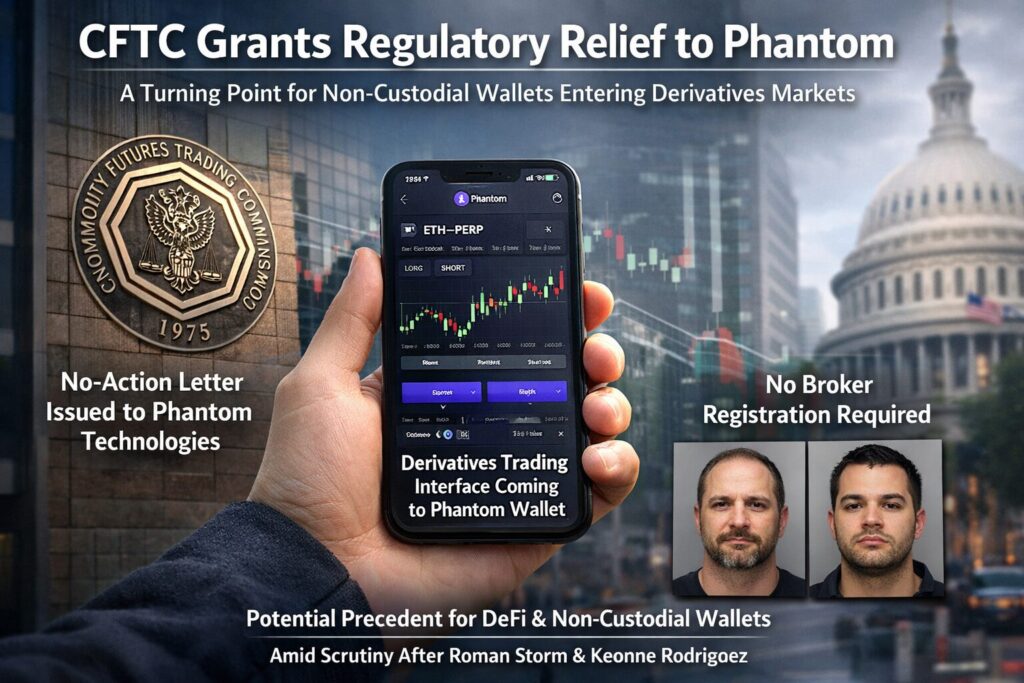
- The Commodity Futures Trading Commission (CFTC) issued a no-action letter to Phantom Technologies
- Phantom Technologies plans to integrate a derivatives trading interface into its wallet
- Phantom will not be required to register as a broker, as it only provides a front-end interface
- The decision may set a regulatory precedent for non-custodial wallets and DeFi applications
- It comes amid increasing scrutiny following cases like Roman Storm and Keonne Rodriguez
1. A Landmark Decision: What the CFTC Actually Approved
The recent move by the Commodity Futures Trading Commission represents one of the most important regulatory clarifications in the evolution of decentralized finance (DeFi) and self-custodial crypto infrastructure.
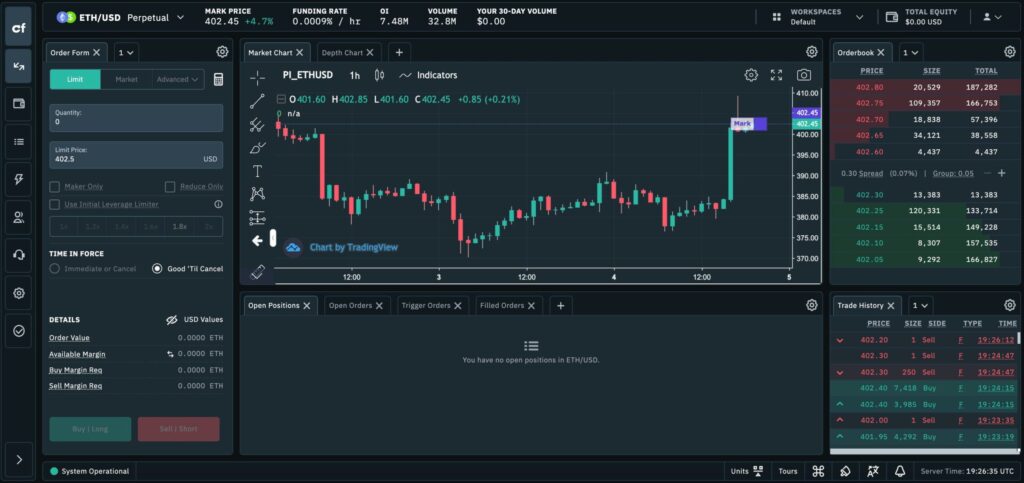
Through its Market Participants Division, the CFTC issued a no-action letter to Phantom Technologies, effectively stating that it will not recommend enforcement action if Phantom proceeds with its planned product expansion. Specifically, Phantom intends to introduce a derivatives trading interface within its wallet.
This interface would allow users to:
- View derivatives market data
- Monitor positions
- Submit orders
However, the key legal distinction lies in execution:
all trade orders are transmitted directly to registered exchanges or brokers already linked by the user, rather than being processed or intermediated by Phantom itself.
This seemingly subtle architectural choice is, in reality, the foundation of the regulatory exemption.
2. The Architecture That Changed the Outcome
At the core of the CFTC’s decision is a fundamental concept: control and custody determine regulatory classification.
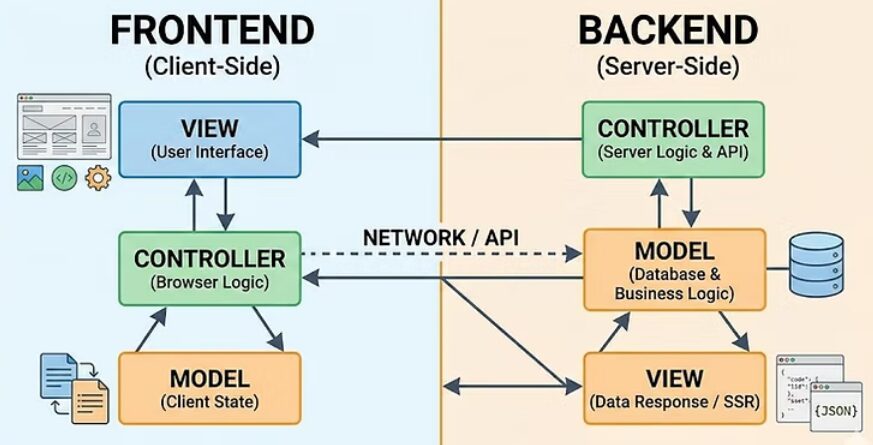
Phantom operates as a non-custodial wallet, meaning:
- It does not hold user funds
- It does not execute trades on behalf of users
- It does not act as an intermediary in settlement
Instead, it functions purely as:
A user interface layer that facilitates interaction between users and external trading venues.
This distinction aligns with a broader industry argument:
“Code that enables access is not the same as a financial intermediary.”
The CFTC appears to have accepted this argument—at least in this specific implementation.
3. Why This Matters for DeFi and Wallet Developers
This decision could become a defining regulatory precedent for the entire crypto ecosystem.
For years, developers of:
- Non-custodial wallets
- DeFi frontends
- Smart contract interfaces
have faced uncertainty over whether they might be classified as:
- Brokers
- Exchanges
- Financial intermediaries
The Phantom case introduces a clearer boundary:
| Function | Regulatory Risk |
|---|---|
| Custody of assets | High |
| Order execution | High |
| UI-only interaction layer | Lower (based on this precedent) |
This creates a potential safe design pattern for builders:
Build interfaces, not intermediaries.
For a user like yourself—designing a non-custodial wallet with swap and trading capabilities (e.g., dzilla Wallet)—this is particularly relevant. It suggests that:
- Front-end aggregation + direct user execution
may be the most compliance-resilient architecture.
4. The Shadow of Enforcement: Tornado Cash and Samourai
The importance of this ruling becomes clearer when contrasted with recent enforcement actions.

Cases involving Roman Storm and Keonne Rodriguez have raised concerns that developers could be held liable for how users interact with decentralized tools.
Key concerns included:
- Whether writing code could be interpreted as facilitating illegal financial activity
- Whether developers have “control” over decentralized systems
The Phantom ruling suggests a more nuanced regulatory view:
- Intent + functionality + control all matter
- Pure software interfaces may not automatically trigger licensing requirements
However, this does not eliminate legal risk—it simply clarifies one viable path.
5. Expanding Beyond Solana: Multi-Chain Derivatives Access
Phantom is already known as a leading wallet in the Solana ecosystem, but it has increasingly expanded into:
- Ethereum
- Polygon
- Other EVM-compatible chains
The addition of derivatives trading signals a broader strategic shift:
From wallet → to full financial operating system
This aligns with a wider industry trend where wallets evolve into:
- Trading terminals
- Yield platforms
- Identity layers
In practical terms, this means:
- Users may soon access spot, derivatives, staking, and lending
from a single interface—without ever relinquishing custody.
6. Industry Trends: The Rise of “Interface-Only Finance”
The Phantom case reflects a macro trend emerging across crypto:
Interface-Only Financial Infrastructure
Instead of centralized platforms:
- Execution happens elsewhere
- Liquidity is external
- Custody remains with the user
The wallet becomes:
A control panel for decentralized financial activity
We are seeing similar patterns in:
- DEX aggregators
- Cross-chain bridges
- Intent-based trading systems
This model offers several advantages:
- Lower regulatory burden (potentially)
- Reduced custodial risk
- Greater composability
But also introduces challenges:
- Fragmented liquidity
- UX complexity
- Dependency on external protocols
7. Strategic Implications for Builders and Investors
For Builders (like dzilla Wallet)
This ruling suggests a clear compliance strategy:
- Avoid custody
- Avoid direct execution
- Route orders to licensed entities
- Maintain transparency in user flow
A possible architecture:
User → Wallet UI → Signed Transaction → External Exchange/Broker
Not:
User → Wallet → Internal Matching Engine → Settlement
For Investors
This opens a new narrative:
Wallets as revenue-generating platforms
Potential monetization models:
- Order routing fees
- Premium analytics
- API integrations
- Cross-chain execution layers
Wallets are no longer just storage—they are distribution channels.
8. Regulatory Outlook: What Comes Next
CFTC leadership, including Chair Michael Selig, has indicated that further guidance is coming regarding:
- Non-custodial software
- DeFi applications
- Broker definitions
Key questions remain:
- Where is the line between UI and intermediation?
- Does revenue sharing create regulatory exposure?
- How will global regulators align or diverge?
For jurisdictions like the Philippines (relevant to your EMI/VASP operations), this trend may influence:
- BSP interpretations of custody
- Licensing requirements for wallet-integrated services
- Risk classification of hybrid models
Conclusion: A Blueprint for the Next Generation of Crypto Platforms
The CFTC’s no-action letter to Phantom is more than a regulatory footnote—it is a blueprint for compliant innovation.
It signals that:
- Non-custodial design matters
- Architecture determines regulation
- Interfaces can scale without becoming intermediaries
For the industry, this may mark the beginning of a new phase:
Where financial functionality expands—but regulatory exposure does not scale linearly with it.
For builders, the message is clear:
Design carefully, separate control from access, and you may unlock both compliance and innovation.
