

Main Points :
- Prominent investors are quietly positioning for deep market drawdowns, treating crashes as strategic accumulation windows rather than disasters.
- BlackRock’s move toward income-oriented ETFs using covered call strategies signals a structural shift in how returns are generated in crypto-adjacent markets.
- Gold’s historic surge, contrasted with crypto’s stagnation, reflects capital flight—particularly from China—driven by liquidity stress and macro uncertainty.
- These trends together reveal a broader transformation in global capital behavior, redefining risk, yield, and long-term value preservation.
1. The Calculated Calm of Investors Waiting for the Bottom
In today’s fragile and emotionally charged markets, the contrast between retail investors and seasoned capital allocators could not be sharper. While many individual participants capitulate under volatility, selling assets in fear of further losses, well-known institutional and high-net-worth investors are observing the same price action with a fundamentally different mindset.
Their focus is not on daily price swings or sensational headlines, but on historically significant support levels—zones where long-term value and price divergence becomes extreme. These levels represent moments when markets temporarily overshoot to the downside, often driven by forced liquidations, leverage unwinds, and emotional selling rather than changes in fundamental value.
For these investors, a crash is not a tragedy. It is a long-anticipated discount window.
Market data repeatedly shows that at moments of peak pessimism, massive buy walls quietly form beneath the surface. These orders, placed well in advance, are designed to activate precisely when sentiment collapses. The discipline required here is not analytical brilliance, but emotional detachment: executing pre-defined strategies without hesitation when fear dominates the market narrative.
Legendary investors have long emphasized that future returns are mathematically enhanced when assets are acquired at depressed prices. As prices fall, expected long-term yields rise. This inverse relationship—so often ignored by emotionally driven participants—is deeply internalized by experienced capital.
What retail investors often perceive as chaos, these players recognize as redistribution. Wealth does not disappear during crashes; it changes hands. Those prepared with liquidity, patience, and conviction absorb assets from those forced to sell.
As we move toward 2026 and beyond, this mindset shift becomes essential. Surviving the coming era of volatility requires redefining crashes not as existential threats, but as structural features of a market that periodically transfers wealth to the prepared.
2. BlackRock and the Quiet Revolution of Income-Based Crypto Exposure
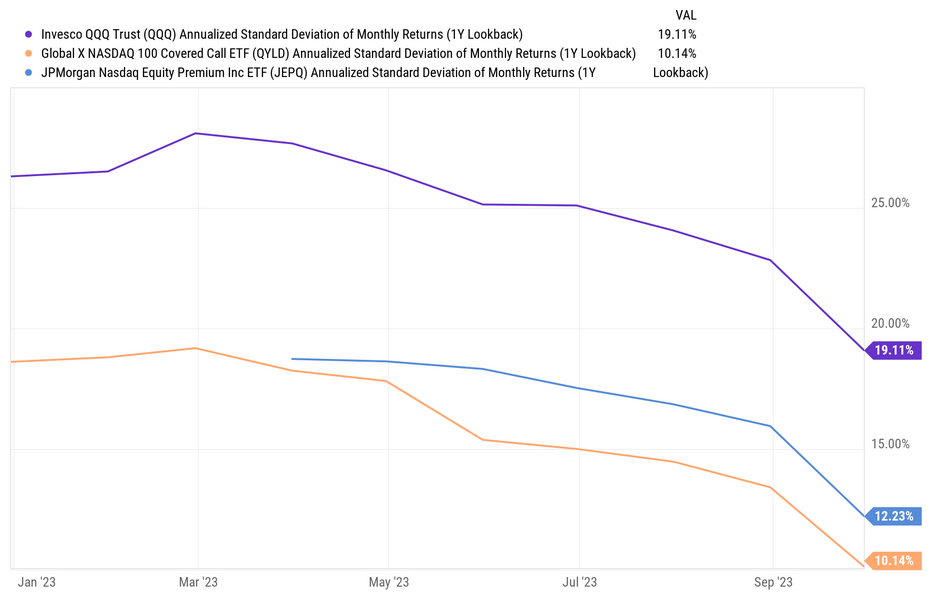
The world’s largest asset manager, BlackRock, has never been known for impulsive experimentation. When it moves, it does so after years of research, regulatory alignment, and institutional demand assessment. That is precisely why its recent filings and strategic direction toward income-oriented ETFs deserve close attention.
Unlike traditional crypto exposure that relies almost entirely on price appreciation, income-based ETFs—particularly those employing covered call strategies—represent a fundamental shift in return generation. Instead of passively holding assets and waiting for price increases, these products actively monetize volatility itself.
A covered call strategy involves holding an underlying asset while selling call options against it, collecting option premiums as income. In volatile markets, these premiums can be substantial. For conservative institutions previously deterred by crypto’s price instability, this mechanism transforms volatility from a liability into a revenue source.
This approach signals a broader paradigm shift: from speculative capital gains to structured, repeatable cash flow. For pension funds, endowments, and insurance-linked portfolios, yield stability matters more than exponential upside. BlackRock’s entry effectively lowers the psychological and structural barriers for such capital to engage with crypto-adjacent markets.
More importantly, BlackRock brings not just capital, but financial engineering expertise refined in traditional markets. As derivatives-based income strategies become normalized, crypto markets themselves may evolve—becoming deeper, more liquid, and less dominated by short-term speculative flows.
This development also forces individual investors to reconsider outdated assumptions. Profitability no longer depends solely on bullish price trajectories. Instead, investors must learn to operate across multiple market regimes, generating income whether prices rise, stagnate, or even decline moderately.
In this sense, crypto assets are maturing—from instruments of pure speculation into components of sophisticated, income-generating portfolios.
3. Gold’s Ascent and Crypto’s Silence: Capital Flight and the China Factor
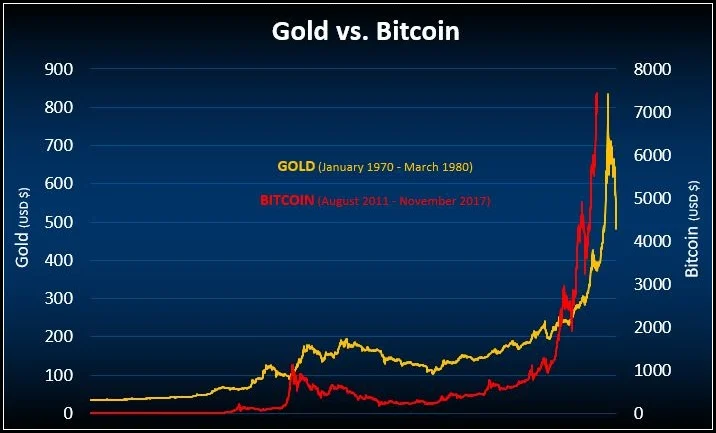
The simultaneous surge in gold prices and the relative stagnation of cryptocurrencies is not coincidental. It reflects a deeper shift in global liquidity flows, particularly originating from East Asia and China.
As global financial conditions tighten, capital seeks perceived safety. Cross-border flow analysis shows that when liquidity contracts, money prioritizes assets with long historical credibility. Gold, with thousands of years of monetary precedent, becomes the default refuge.
China’s internal pressures amplify this trend. The collapse of its real estate bubble, combined with currency instability and capital controls, has driven affluent households and institutions toward defensive asset allocation. Gold—physical, globally recognized, and politically neutral—fits this requirement perfectly.
This migration creates a vacuum elsewhere. Cryptocurrencies, once the primary destination for speculative capital, now face liquidity scarcity. Trading volumes thin, volatility compresses, and prices stagnate—not due to a failure of the technology, but because capital has temporarily retreated.
This phenomenon should not be misinterpreted as a terminal decline. Liquidity cycles ebb and flow like tides. Periods of capital withdrawal are often followed by explosive reallocations once macro conditions stabilize or policy reversals occur.
Importantly, gold and crypto are not permanent adversaries. They alternate roles depending on macro stress, risk appetite, and monetary policy. What we are witnessing is not replacement, but rotation.
When liquidity eventually returns—through monetary easing, fiscal stimulus, or geopolitical shifts—the question becomes where capital will flow next. Historically, assets that endured periods of neglect often experience the most violent re-pricing once attention returns.
Understanding this cycle allows investors to position not based on current popularity, but on future capital movement.
Conclusion: Reading the Intent of Capital, Not the Noise of Prices
The current market environment reveals a fundamental truth: prices are symptoms, not causes. Behind every movement lies intention—capital allocating itself according to risk, yield, and survival.
Seasoned investors prepare for crashes. Institutions engineer yield from volatility. Capital flees to gold when uncertainty peaks, only to return elsewhere when conditions shift. These are not isolated events, but interconnected signals of a system adapting under stress.
For those seeking new crypto assets, future income streams, or practical blockchain applications, the lesson is clear. Success does not come from reacting to headlines, but from understanding capital behavior across cycles.
Those who learn to read these signals—and act before liquidity returns—will find themselves positioned not merely to survive the next phase, but to define it.
