
Main Points :
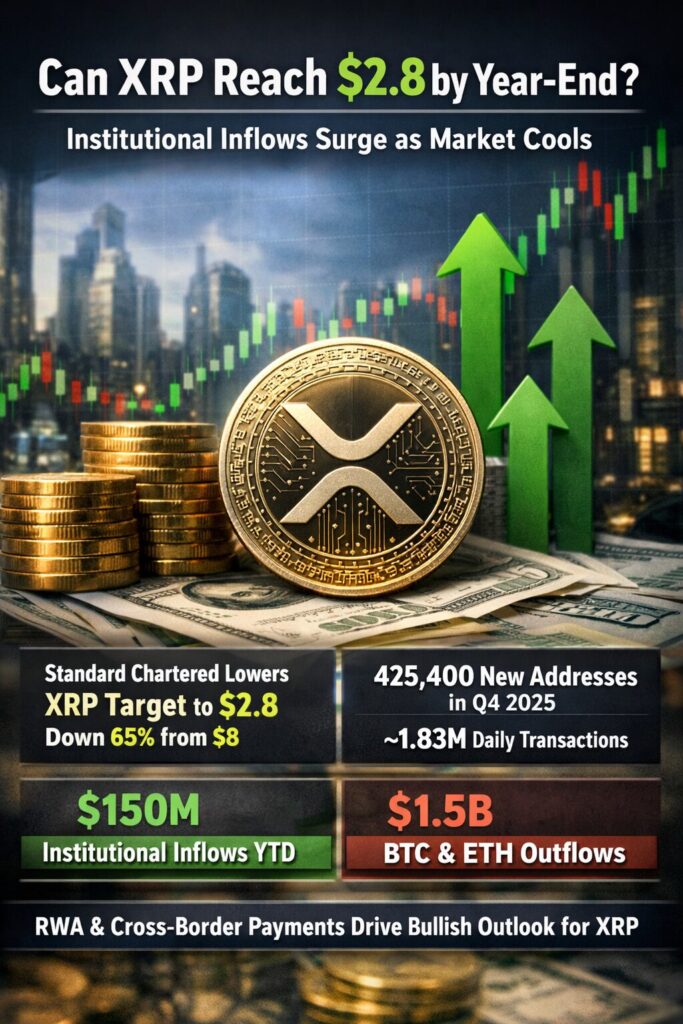
- Standard Chartered revises XRP year-end forecast to $2.8, down 65% from its prior $8 target amid broader crypto weakness.
- XRP Ledger activity remains resilient, with 425,400 new addresses in Q4 2025 and ~1.83 million daily transactions.
- Institutional capital rotates into XRP, with approximately $150 million in net inflows year-to-date while Bitcoin and Ethereum see $1.5 billion in combined outflows.
- Bullish sentiment remains elevated, despite macro risk-off conditions and mild declines in network growth metrics.
- RWA (Real-World Asset) tokenization and cross-border payments continue to position XRP as a potential infrastructure-layer beneficiary.
1. Standard Chartered Cuts XRP Target to $2.8: Realism or Hidden Opportunity?
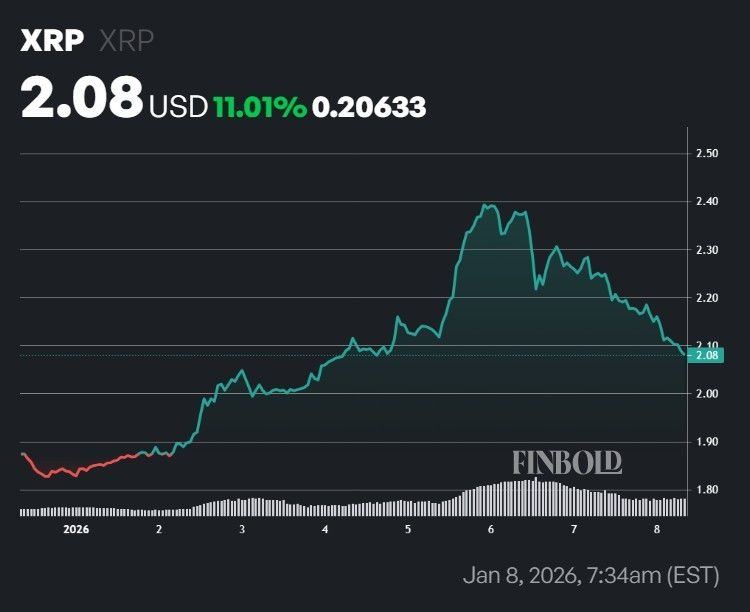
In a notable shift, Standard Chartered revised its year-end forecast for XRP from $8 down to $2.8 — a 65% reduction. The revision reflects broader crypto market deterioration rather than XRP-specific structural collapse.
At first glance, such a downgrade appears bearish. Yet context matters. The global digital asset market has entered a pronounced cooling phase. Bitcoin trades well below prior cyclical highs, Ethereum has struggled to sustain breakouts, and liquidity across altcoins has thinned considerably.
Importantly, the revised $2.8 target still implies meaningful upside from current depressed levels in a risk-off market environment. In traditional finance, target revisions often align expectations with macro conditions rather than invalidate long-term theses.
The key question for investors is whether $2.8 represents:
- A ceiling in a shrinking liquidity environment
- A conservative baseline amid institutional accumulation
- A stepping stone toward a longer-term structural revaluation
From a macro perspective, tightening financial conditions, cautious ETF flows, and geopolitical uncertainty have reduced speculative appetite. Yet XRP’s positioning differs from purely narrative-driven tokens. Its investment thesis remains tied to payments infrastructure and liquidity rails.
In prior cycles, XRP has displayed asymmetric volatility during periods of regulatory clarity and institutional adoption waves. The forecast cut may signal caution — but it also implicitly acknowledges continued viability.
2. XRP Ledger Network Activity: Slowing Growth, Not Collapse
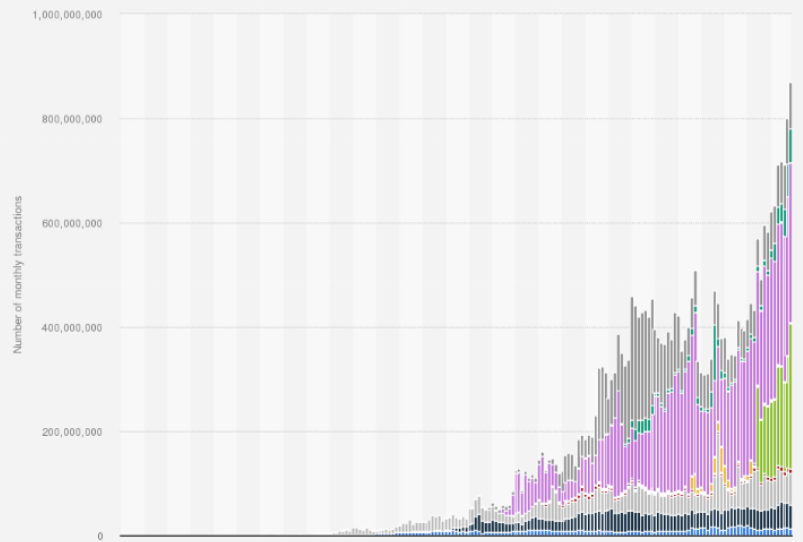
The latest quarterly data from the XRP Ledger reveals:
- 425,400 new addresses in Q4 2025 (–4.9% quarter-over-quarter)
- ~49,000 average daily active addresses
- ~1.83 million average daily transactions
The 4.9% decline in new addresses reflects broader market contraction rather than protocol deterioration. Transaction counts remain robust, suggesting existing users continue utilizing the network at scale.
For investors focused on fundamentals, several observations matter:
A. Transaction Stability
1.83 million daily transactions is not a trivial throughput figure. It places XRP among actively used Layer-1 networks.
B. Active Address Resilience
Nearly 49,000 daily active addresses suggests steady engagement, not abandonment.
C. Address Growth Moderation
A slowdown in new address creation is typical during crypto winter phases. Historically, explosive address growth tends to follow price breakouts rather than precede them.
Network fundamentals do not currently suggest structural decay. Instead, XRP appears to be stabilizing at a meaningful operational baseline.
3. Institutional Capital Rotation: XRP as a Defensive Altcoin?
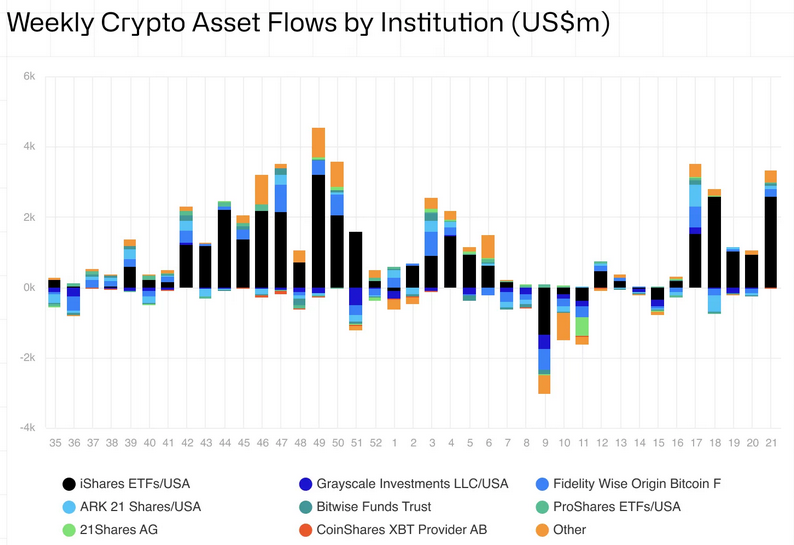
According to digital asset manager CoinShares, approximately $1.5 billion flowed out of Bitcoin and Ethereum products combined, while XRP attracted roughly $150 million in net inflows year-to-date.
This divergence is striking.
In risk-off environments, capital typically consolidates into Bitcoin. However, current flows suggest selective institutional positioning. Several interpretations are possible:
1. Regulatory Positioning
Following partial legal clarity in previous litigation cycles, XRP may be perceived as having reduced regulatory overhang compared to smaller altcoins.
2. Infrastructure Thesis
XRP’s association with cross-border payments and potential RWA settlement rails gives it a utility-driven narrative beyond speculative trading.
3. Relative Valuation
With other major tokens experiencing valuation compression, some asset managers may view XRP as asymmetrically positioned for rebound relative to downside risk.
Institutional flows are not always predictive of short-term price action. However, they are significant indicators of medium-term positioning.
4. The RWA Angle: Could XRP Dominate Real-World Asset Settlement?
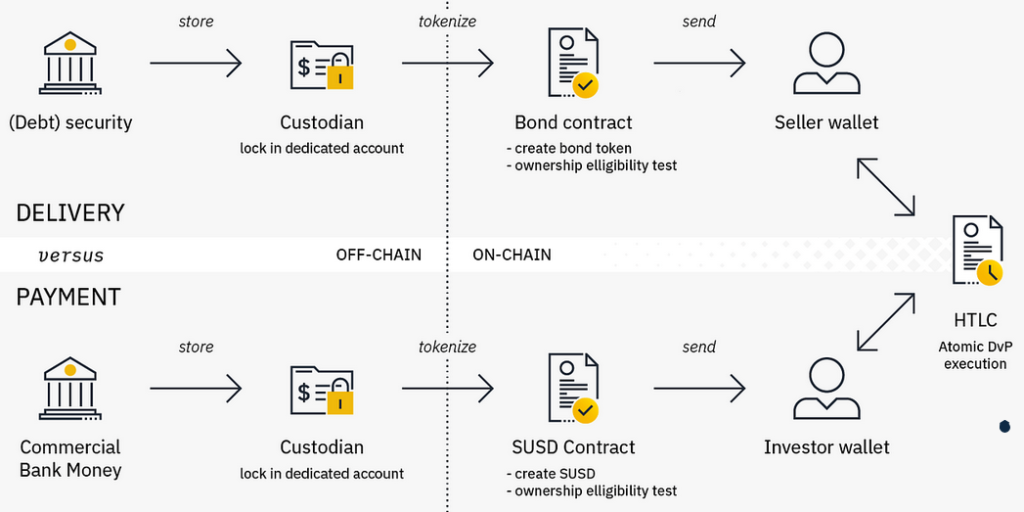
One emerging structural theme in crypto is RWA tokenization — digitizing bonds, treasuries, commodities, and other assets onto blockchain rails.
If financial institutions increasingly tokenize assets, settlement efficiency becomes critical. XRP’s design — fast finality, low fees, deterministic transaction structure — aligns with high-frequency liquidity bridging.
Unlike DeFi-native chains focused on composability, XRP’s value proposition centers on settlement speed and interoperability.
For readers exploring new revenue streams and blockchain utility:
- RWA platforms may integrate settlement layers.
- Liquidity hubs may require bridge assets.
- Institutional corridors could prioritize networks with operational history.
XRP’s opportunity lies less in retail speculation and more in infrastructure embedding.
5. Sentiment vs. Fundamentals: Why Bullishness Remains Elevated
Despite macro caution, bullish sentiment toward XRP remains high.
This paradox reflects three overlapping forces:
- Institutional accumulation signals
- Survivorship narrative through prior legal challenges
- Infrastructure adoption potential in RWA and cross-border finance
However, investors must weigh:
- Slowing address growth
- Reduced speculative liquidity
- Broader macro tightening
Sentiment alone does not guarantee appreciation. But capital inflows combined with operational stability create a platform for potential recovery.
Title: XRP Institutional Inflows vs. BTC/ETH Outflows (2026 YTD)
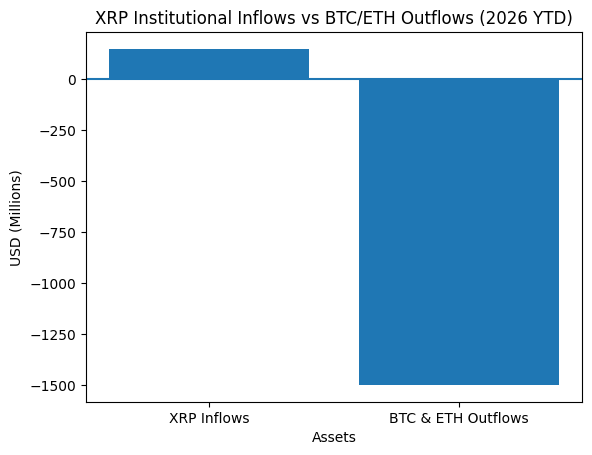
(Bar chart comparing +$150M XRP vs –$1.5B BTC/ETH)
Title: XRP Ledger Network Activity Q3–Q4 2025
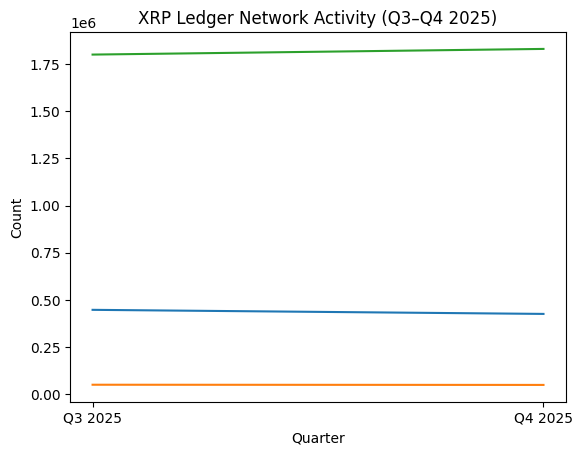
(Line graph: New Addresses, Active Addresses, Daily Transactions)
Forward Outlook: Can $2.8 Become a Launchpad Instead of a Ceiling?
If macro conditions stabilize and liquidity returns, XRP could benefit disproportionately from:
- Institutional capital rotation
- RWA infrastructure buildout
- Renewed retail participation
$2.8 may represent conservative modeling rather than peak-cycle potential.
For investors searching for:
- Undervalued infrastructure-layer assets
- Tokens with institutional sponsorship
- Exposure to tokenized real-world finance
XRP presents a hybrid profile: partially speculative, partially structural.
Conclusion
XRP’s current position is nuanced. A major bank slashed forecasts. Network growth slowed modestly. The broader market remains fragile.
Yet institutional capital flows diverge positively. Transaction activity remains substantial. Infrastructure narratives strengthen.
In a cooling crypto market, XRP stands not as a high-beta speculative mania token — but as a potential infrastructure beneficiary.
Whether $2.8 becomes a ceiling or a foundation will depend less on sentiment and more on liquidity cycles and institutional integration.
The coming quarters will determine if XRP transitions from resilience to resurgence.
