
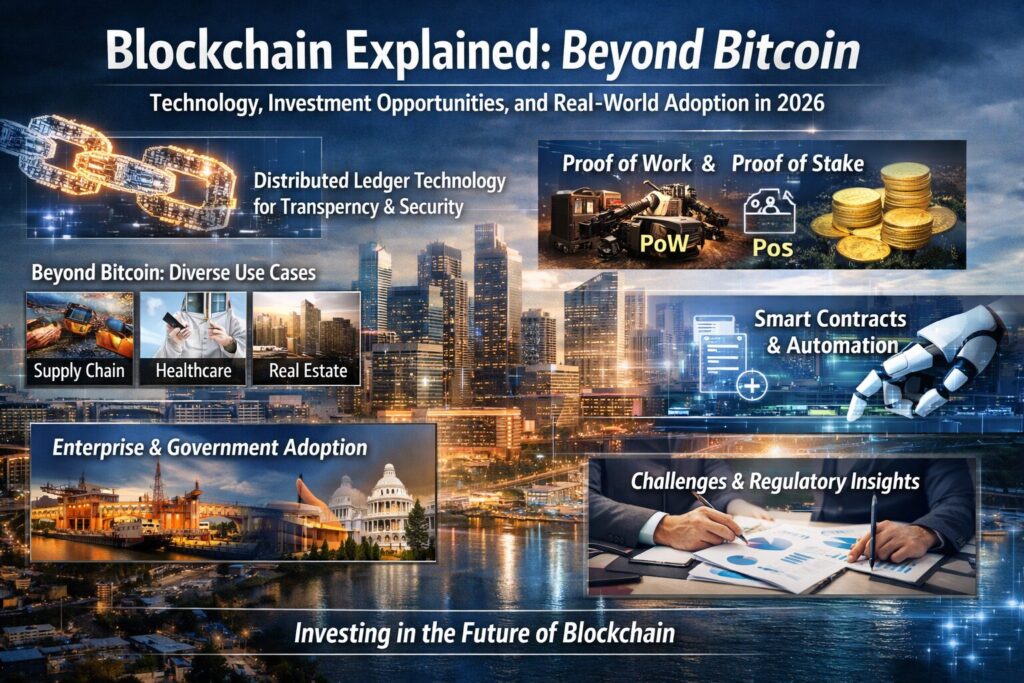
Main Points :
- Blockchain is a distributed ledger technology designed to enhance transparency and tamper resistance.
- Bitcoin is only one application built on blockchain infrastructure.
- Consensus mechanisms such as Proof of Work (PoW) and Proof of Stake (PoS) define security and economic incentives.
- Enterprise adoption is expanding into supply chains, healthcare, real estate, and government digitalization.
- Smart contracts enable programmable finance and automation.
- The technology is powerful but not universally applicable.
- Investors and builders must understand use cases, regulatory trends, and scalability limits.
1. What Is Blockchain? A Clear Explanation for Beginners
Blockchain is a distributed ledger system in which transaction data is grouped into “blocks” and linked chronologically to form a “chain.” Unlike traditional databases controlled by a central authority, blockchain copies of the ledger are maintained by multiple network participants (nodes).
Each new transaction must be validated according to predefined rules. Once confirmed, it becomes extremely difficult to alter previous records without changing all subsequent blocks.
At its core, blockchain solves a fundamental digital problem: how to establish trust without a central intermediary.
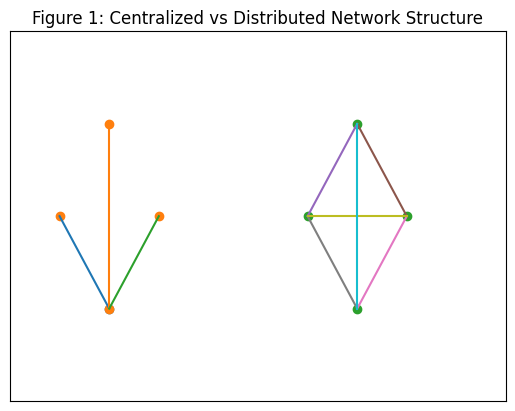
(Conceptual Diagram: Traditional Centralized Database vs Distributed Ledger)
2. Blockchain vs Bitcoin: Understanding the Difference
Blockchain is the infrastructure. Bitcoin is an application.
Bitcoin is a decentralized digital currency operating on blockchain technology. It enables peer-to-peer value transfer without banks.
Think of blockchain as the internet protocol and Bitcoin as an email application running on top of it.
Bitcoin’s value is currently expressed in USD terms and fluctuates based on supply, demand, macroeconomic conditions, and institutional flows. While originally conceptualized as digital cash, it is increasingly viewed as digital gold.
3. The Three Core Components of Blockchain
3.1 Distributed Ledger (P2P Network)
No single server controls the ledger. Nodes independently verify and store copies.
Advantages:
- Reduced single point of failure
- Greater resilience
- Transparent transaction history
3.2 Hashing and Chain Structure
Each block contains:
- Transaction data
- Timestamp
- Hash of previous block
A hash functions like a digital fingerprint. Even a tiny data modification produces a completely different hash.
This chained structure ensures tamper detection.
3.3 Consensus Mechanism
Consensus determines which transactions are valid.
Two major mechanisms:
Proof of Work (PoW)
Used by Bitcoin.
Miners compete using computational power. High energy consumption but strong security through economic cost.
Proof of Stake (PoS)
Used by Ethereum after its transition.
Validators stake tokens to participate. Energy usage is significantly lower compared to PoW.
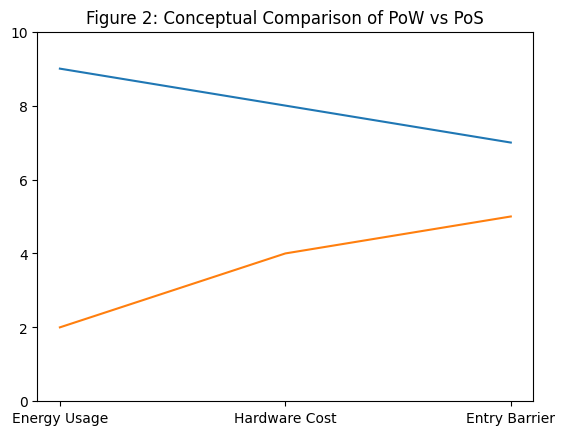
(Comparison Chart: PoW vs PoS Energy & Security Tradeoffs)
4. Advantages of Blockchain
- High tamper resistance
- Transparent auditing
- Reduced need for intermediaries
- Automation via smart contracts
- Cross-border transaction efficiency
5. Limitations and Risks
- Scalability constraints
- Transaction fees during congestion
- Data privacy complexity
- Governance disputes
- Regulatory uncertainty
- Code vulnerabilities in smart contracts
Blockchain is not automatically faster or cheaper than centralized systems.
6. Types of Blockchain
Public
Open participation (e.g., Ethereum)
Private
Permissioned networks for internal enterprise use.
Consortium
Shared governance among multiple organizations.
7. Real-World Applications Beyond Cryptocurrency
7.1 Supply Chain Traceability
Companies use blockchain to verify product origin and reduce fraud.
7.2 Healthcare Data Sharing
Controlled medical record exchange while preserving integrity.
7.3 Real Estate and Contracts
Tokenization of property and smart contract automation.
7.4 Government Digitalization
Digital identity and certificate issuance experiments.
8. Smart Contracts: Programmable Agreements
Smart contracts are self-executing code deployed on blockchain.
Example:
“If payment of $1,000 is confirmed, transfer digital asset.”
However, coding flaws can result in loss of funds. Auditing is critical.
9. Regulatory Trends in Japan and Globally
Japan has historically taken a structured approach to crypto regulation under the Financial Services Agency (FSA).
Globally:
- US ETF approvals increased institutional participation.
- Europe implemented MiCA regulatory framework.
- Asian markets continue exploring CBDCs.
Regulation influences capital inflow and market stability.
10. Blockchain for Investment and Revenue Opportunities
For readers seeking new crypto assets and revenue streams:
10.1 Layer 1 Ecosystems
Ethereum, Bitcoin
10.2 Layer 2 Scaling
Rollups reducing fees
10.3 Tokenization of Real-World Assets (RWA)
10.4 Staking Yield Models
Each carries risk depending on market volatility.
11. When Blockchain Is Suitable
Suitable:
- Multi-party trust problems
- Transparent auditing environments
- Asset tokenization
Not suitable:
- High-speed internal databases
- Systems requiring data deletion
- Centralized governance workflows
12. FAQ
Is Blockchain Truly Secure?
It depends on network design and economic incentives.
How Is It Different from a Database?
Traditional databases rely on trust in a central administrator. Blockchain distributes trust among participants.
13. Final Summary
Blockchain represents a structural evolution in digital trust architecture. Bitcoin introduced it to the world, but its potential reaches far beyond digital currency.
However, it is not a universal solution. Its effectiveness depends on governance design, scalability choices, economic modeling, and regulatory alignment.
For investors, developers, and institutions, the opportunity lies not in speculation alone, but in understanding where blockchain genuinely improves efficiency, transparency, and resilience.
The next phase of blockchain will likely combine:
- Institutional integration
- Real-world asset tokenization
- Improved scalability
- Regulatory clarity
- Hybrid enterprise models
Understanding both strengths and limitations is the foundation for sustainable innovation.
