

Main Points :
- Bitmine, led by Tom Lee, acquired 45,759 ETH last week, bringing total holdings to 4,371,497 ETH.
- The company now holds 3.62% of Ethereum’s total supply, valued at approximately $8.7 billion (ETH at $1,998).
- Over 3,040,000 ETH are staked, reinforcing long-term conviction in Ethereum’s network.
- Despite a roughly 60% price decline from Ethereum’s all-time high of $4,946, Bitmine continues to accumulate.
- Tom Lee argues that 2026 will be a defining year for Ethereum, citing tokenization, AI agent usage, and Layer 2 human verification systems.
- The company aims to reach 5% of total ETH supply ownership, having already achieved over 72% of that goal.
1. Bitmine’s Expanding Ethereum Treasury Strategy
Bitmine, an Ethereum-focused crypto treasury firm chaired by Tom Lee, announced on February 17 that it acquired an additional 45,759 ETH during the previous week. This brings its total holdings to 4,371,497 ETH.
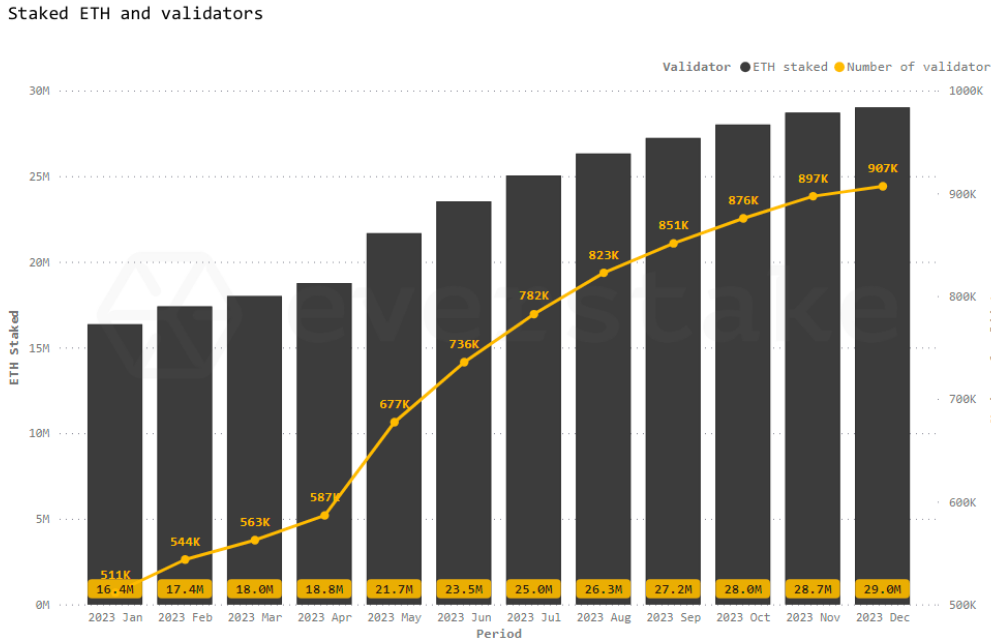
At an ETH price of $1,998 (as of February 16), the company’s Ethereum position is valued at approximately $8.7 billion. Out of this total, about 3,040,000 ETH are currently staked, signaling that Bitmine is not merely holding ETH as a speculative asset but actively participating in Ethereum’s Proof-of-Stake ecosystem.
Ethereum’s total supply currently stands at approximately 120,700,000 ETH. Bitmine’s holdings represent 3.62% of the entire supply — an extraordinary concentration in a decentralized network. The company has set a target to accumulate 5% of total supply, and with current holdings, it has achieved more than 72% of that objective.
In addition to ETH holdings, Bitmine reports total assets (crypto, cash, and investments) of roughly $9.6 billion. The scale of this treasury strategy positions Bitmine among the most influential corporate holders in the Ethereum ecosystem.
2. Buying Through a 60% Drawdown: Conviction or Risk?
Ethereum reached a historical peak of $4,946 in August of last year. Since then, prices have declined approximately 60%, creating significant unrealized losses for large holders. According to market data sources, Bitmine’s unrealized loss could be as high as $7.9 billion relative to peak valuations.
Yet Tom Lee has maintained a consistent message: accumulation will continue regardless of short-term price trends.
This strategy mirrors that of Strategy (formerly MicroStrategy) under Michael Saylor, which accumulated Bitcoin through volatility cycles. In both cases, the thesis is based on long-term network adoption rather than quarterly price movements.
The question for investors is whether this approach represents visionary positioning or concentrated exposure risk. Historically, major crypto accumulation during bear phases has often preceded structural bull cycles. However, the scale here — 3.62% of total ETH supply — introduces systemic considerations.
3. Supply Shock Dynamics and Market Impact
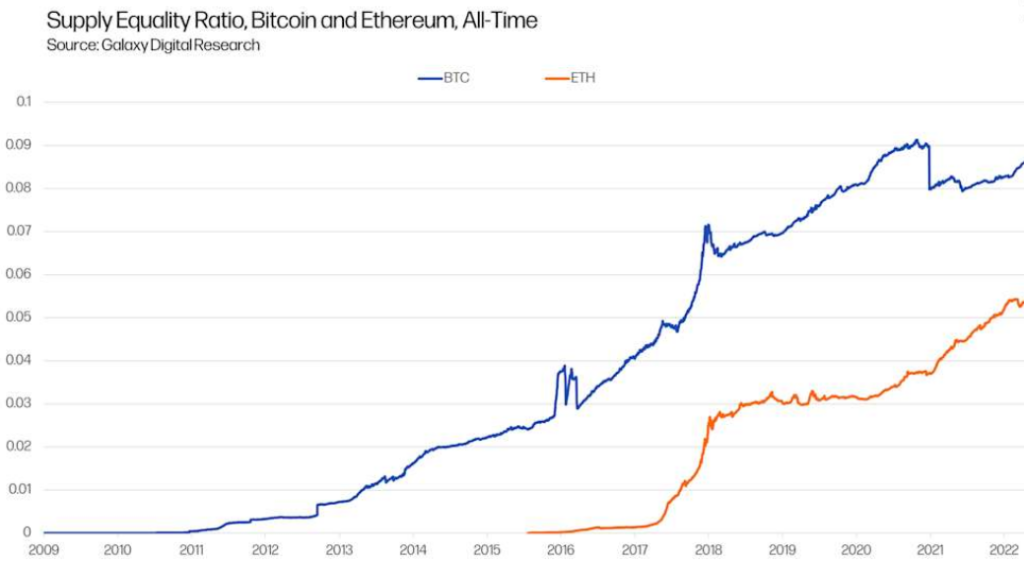
When a single entity accumulates over 3% of a major network’s supply, the concept of a supply shock becomes relevant.
Key mechanisms include:
- Reduced circulating liquidity due to staking.
- Decreased available exchange supply.
- Increased perception of scarcity.
- Potential price floor reinforcement.
Ethereum already exhibits deflationary tendencies due to EIP-1559 fee burns combined with staking lockups. If Bitmine continues toward its 5% target, circulating supply constraints may intensify.
However, this concentration also introduces counterparty sentiment risk. Markets may interpret aggressive treasury accumulation as a bullish signal — until price stagnation tests investor patience.
Institutional ETF inflows into ETH-related products, increasing tokenization experiments by major financial institutions, and Layer 2 growth all contribute to long-term demand-side support. The question becomes whether supply contraction and institutional demand converge in 2026.
4. Why 2026 Could Be Ethereum’s “Defining Year”
After attending Consensus Hong Kong last week, Tom Lee stated that 2026 would be a defining year for Ethereum. His thesis rests on three structural trends:
A. Wall Street Tokenization and Privacy Demand
Major financial institutions are increasingly experimenting with tokenized assets — from treasuries to private funds. Ethereum remains the primary settlement layer for real-world asset tokenization.
Privacy-preserving financial infrastructure is becoming essential for institutional adoption. Zero-knowledge technologies and Layer 2 scaling solutions are advancing rapidly.
If tokenized securities markets scale meaningfully, Ethereum’s role could resemble that of a global programmable settlement network.
B. AI Agents and On-Chain Verification
The rise of AI agents capable of executing payments and verifying transactions autonomously introduces a new transactional layer. Machine-to-machine economic activity requires programmable, secure, decentralized settlement.
Ethereum’s smart contract architecture makes it a candidate infrastructure for AI-driven micropayments, automated verification, and digital identity systems.
C. “Proof of Human” Expansion on Layer 2 Networks
Layer 2 ecosystems such as World Chain and others are integrating proof-of-human mechanisms to differentiate real users from bots. As digital identity becomes critical in AI-saturated environments, Ethereum-based L2 systems may become foundational.
This aligns with broader Web3 identity narratives and the intersection of decentralized finance, social systems, and artificial intelligence.
5. Parallels to Corporate Bitcoin Strategies
Bitmine’s approach draws parallels to corporate Bitcoin strategies seen in previous cycles. When companies accumulated BTC aggressively during downturns, they were criticized for concentration risk.
However, these moves later became defining narratives of conviction-led investing.
The key distinction lies in Ethereum’s programmable nature. While Bitcoin is digital gold, Ethereum is infrastructure. Accumulating ETH represents not only a macro hedge but a stake in decentralized computation and financial architecture.
For investors seeking new income streams, staking yield — currently embedded in Bitmine’s 3 million staked ETH — adds a productive dimension absent in passive BTC holding.
6. Risks and Open Questions
Despite the bullish structural case, risks remain:
- Regulatory developments affecting staking.
- Competition from alternative Layer 1s.
- Layer 2 fragmentation.
- Concentration risk perception.
- Macro tightening cycles.
Moreover, unrealized losses of billions create psychological and governance pressure. Sustained drawdowns could test treasury resilience.
Yet historically, large-scale accumulators often shape sentiment itself. Markets watch these actors as barometers of institutional conviction.
Conclusion: Accumulation as Signal
Bitmine’s Ethereum treasury strategy represents one of the most aggressive corporate ETH accumulation campaigns in history. Holding 3.62% of total supply — and targeting 5% — transforms the company into a structural market participant rather than a passive investor.
For readers exploring new crypto assets, yield strategies, or practical blockchain adoption, the key takeaway is this: Ethereum is increasingly viewed not merely as a speculative token, but as programmable infrastructure for tokenization, AI integration, and decentralized identity.
Whether 2026 becomes Ethereum’s defining year will depend on the convergence of tokenized finance, AI transaction layers, and Layer 2 scalability. If these trends accelerate, supply concentration may amplify price impact. If adoption stalls, treasury strategies will be stress-tested.
In either case, Bitmine’s continued accumulation serves as a high-conviction signal that major players are positioning for structural transformation rather than cyclical recovery.
The market will be watching closely.
