

Key Points :
- Over 60% of Bitcoin supply has remained unmoved for more than a year, creating structural support
- ETF flows have rebounded, reducing net outflows to approximately $364 million
- Institutional ownership (ETF + corporates + governments) now accounts for ~14% of total supply
- Bitcoin has outperformed gold by ~25% during geopolitical stress
- Strategy (formerly MicroStrategy) continues aggressive accumulation, reinforcing a supply squeeze narrative
1. A Market Reset, Not a Collapse
Recent market movements in Bitcoin have led many participants to question whether the asset has already reached its cyclical bottom. According to analysis from Bernstein, the answer is increasingly leaning toward yes. Rather than signaling the beginning of a prolonged downturn, the recent correction appears to represent a temporary reset in market sentiment—one that has historically preceded significant upward trends.
Bitcoin’s price volatility in early 2026 has been shaped by a combination of macroeconomic tightening, geopolitical tensions, and shifting institutional positioning. However, beneath this surface turbulence lies a fundamentally different market structure compared to previous cycles. Unlike earlier phases driven primarily by retail speculation, the current environment is anchored by long-term holders and institutional capital.
One of the most compelling indicators supporting this thesis is the behavior of long-term holders. Data suggests that approximately 60% of Bitcoin’s circulating supply has not moved for over one year. This level of dormancy is unprecedented and reflects a strong conviction among investors who are unwilling to sell even during periods of price weakness.
Long-Term Holder Supply vs Price Stability
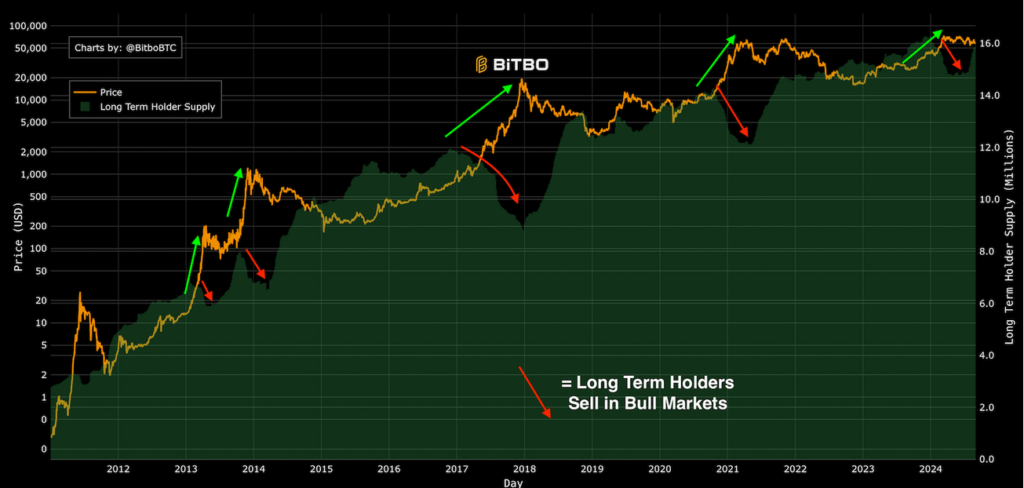
Figure Explanation:
This chart illustrates the increasing share of dormant Bitcoin supply alongside price stabilization. As long-term holder dominance rises, available liquidity decreases, reducing downside volatility.
2. Institutional Flows Are Quietly Reversing
Another key driver behind the bullish outlook is the resurgence of institutional flows into Bitcoin ETFs. Over the past four weeks, approximately $2.2 billion has flowed into Bitcoin exchange-traded funds, significantly offsetting earlier outflows and reducing the year-to-date net outflow to just $364 million.
This shift is critical. ETFs serve as the primary gateway for traditional finance participants to gain exposure to Bitcoin. When flows turn positive, it often signals renewed confidence from institutional investors such as pension funds, asset managers, and hedge funds.
The current trend suggests that institutions are not exiting the market but rather rebalancing positions. The reduction in net outflows indicates that selling pressure has largely been absorbed, paving the way for a potential upward move.
Furthermore, ETFs now hold approximately 6.1% of Bitcoin’s total supply. When combined with holdings from corporations, governments, and other institutional entities, the total institutional share rises to around 14%.
Institutional Ownership Growth
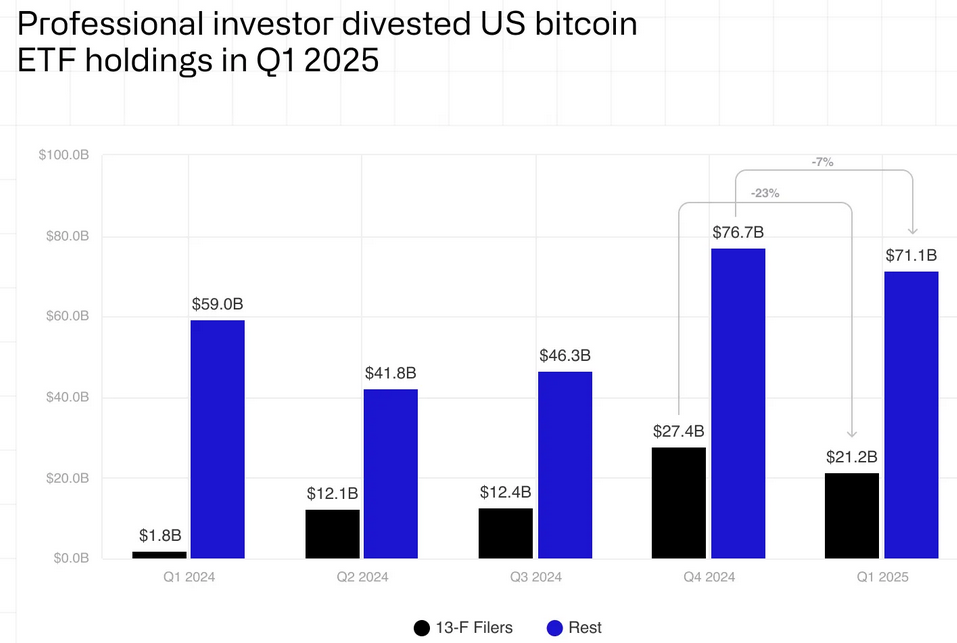
Figure Explanation:
This figure shows the rapid increase in institutional ownership of Bitcoin, highlighting the structural shift from retail-driven cycles to institutionally anchored markets.
3. Bitcoin as a Geopolitical Asset
One of the most notable developments in recent months has been Bitcoin’s performance during periods of geopolitical instability. Amid escalating tensions in the Middle East, Bitcoin has reportedly outperformed gold by approximately 25%.
This divergence is significant. Traditionally, gold has been the go-to safe-haven asset during times of uncertainty. However, Bitcoin’s recent performance suggests that it is increasingly being viewed as a viable alternative.
The reasons for this shift are rooted in Bitcoin’s unique properties:
- Portability: Bitcoin can be transferred across borders instantly without reliance on traditional banking systems
- Censorship Resistance: Transactions cannot be easily blocked or reversed by centralized authorities
- No Counterparty Risk: Unlike bank deposits or financial instruments, Bitcoin ownership does not depend on a third party
These characteristics make Bitcoin particularly attractive in scenarios involving capital controls, sanctions, or financial system disruptions.
4. Strategy: The “Central Bank” of Bitcoin
A major contributor to the current market structure is Strategy (formerly MicroStrategy), which has positioned itself as a dominant corporate holder of Bitcoin. The company currently holds over 762,000 BTC, valued at tens of billions of dollars.
Strategy’s approach goes beyond simple accumulation. It has effectively created a financial model that allows it to continuously acquire Bitcoin through capital markets. By issuing a combination of common stock and preferred shares, the company raises funds to purchase additional BTC.
Notably, Strategy continued to accumulate Bitcoin even during periods of price decline, adding nearly 90,000 BTC despite a 19% drop in Bitcoin’s price earlier this year.
This behavior reinforces a key narrative: supply is being systematically removed from the market and locked into long-term holdings.
Bernstein has described Strategy as the “central bank” of the Bitcoin ecosystem—a lender of last resort that provides liquidity and stability during market downturns.
Supply Shock Model
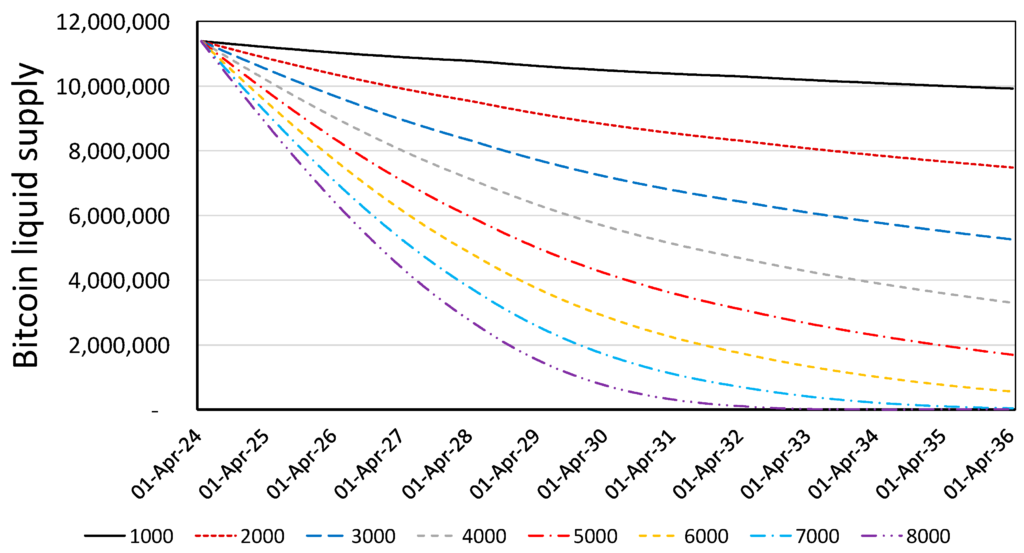
Figure Explanation:
This diagram demonstrates how continuous accumulation by institutions and long-term holders reduces liquid supply, creating upward pressure on price over time.
5. The Path to $150,000 and Beyond
Based on these structural factors, Bernstein maintains its price target of $150,000 for Bitcoin by the end of 2026. Looking further ahead, the firm projects a potential cycle peak of $200,000 in 2027.
These targets are not based solely on speculative enthusiasm but rather on measurable changes in market dynamics:
- Reduced liquid supply due to long-term holding behavior
- Increasing institutional ownership
- Growing recognition of Bitcoin as a geopolitical hedge
- Continued accumulation by large entities like Strategy
In addition, the broader macro environment may further support Bitcoin’s rise. With global debt levels increasing and fiat currencies facing inflationary pressures, investors are actively seeking alternative stores of value.
Bitcoin, with its fixed supply of 21 million coins, stands out as a digital asset uniquely suited to this role.
6. Implications for Investors and Builders
For investors, the current environment presents both opportunity and risk. While the structural outlook is bullish, short-term volatility remains a defining feature of the market.
For builders and entrepreneurs, the implications are equally significant. As institutional adoption grows, the demand for infrastructure—custody solutions, compliance tools, and cross-border payment systems—will continue to expand.
This creates opportunities in areas such as:
- Non-custodial wallets with enhanced transparency
- Travel Rule compliance solutions
- Cross-chain liquidity protocols
- Institutional-grade custody platforms
In many ways, Bitcoin is transitioning from a speculative asset to a foundational layer of the global financial system.
Conclusion
The current Bitcoin market is not merely experiencing another cyclical downturn. Instead, it is undergoing a structural transformation driven by long-term holders and institutional capital.
The combination of reduced liquid supply, increasing institutional participation, and growing geopolitical relevance suggests that Bitcoin’s role in the global economy is expanding.
While short-term fluctuations are inevitable, the long-term trajectory appears increasingly clear. If current trends persist, the path toward $150,000—and potentially beyond—may not be a question of if, but when.
