
Key Takeaways :
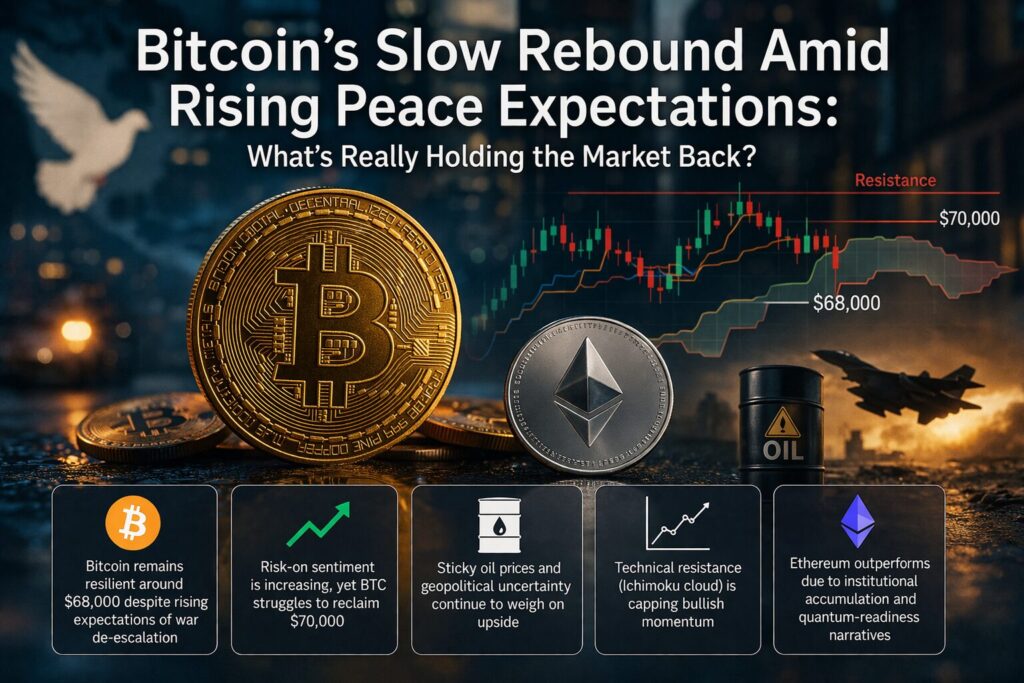
- Bitcoin remains resilient around $68,000 despite rising expectations of war de-escalation
- Risk-on sentiment is increasing, yet BTC struggles to reclaim $70,000
- Sticky oil prices and geopolitical uncertainty continue to weigh on upside
- Technical resistance (Ichimoku cloud) is capping bullish momentum
- Ethereum outperforms due to institutional accumulation and quantum-readiness narratives
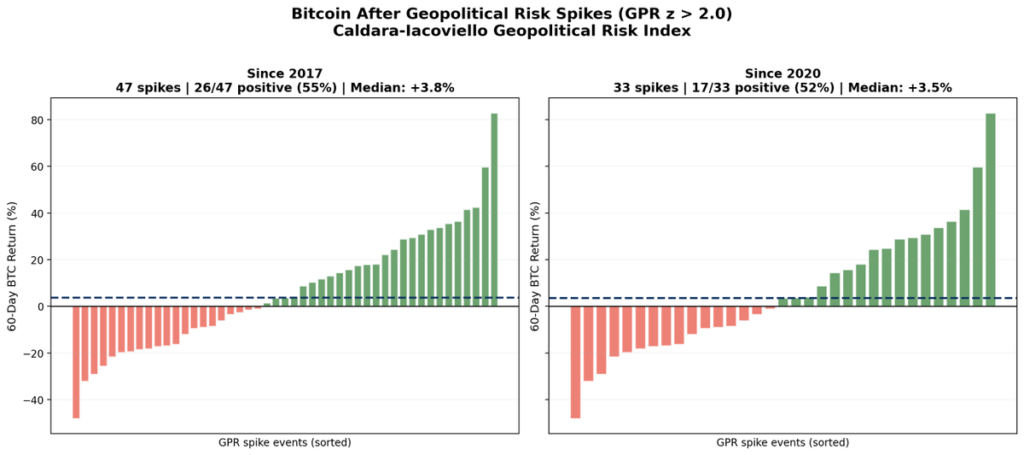
Bitcoin Price vs Oil Price Correlation (2026 March–April)
1. Market Overview: Stability Without Breakout
Bitcoin (BTC) has demonstrated notable resilience in recent sessions, stabilizing near $68,000 despite significant geopolitical developments suggesting a potential end to the Iran-related conflict.
Following a dip to approximately $66,000, BTC rebounded quickly, briefly pushing toward $68,500. This price behavior reflects a market that is neither panicking nor fully committing to a bullish breakout.
Historically, geopolitical easing—especially involving energy corridors such as the Strait of Hormuz—has triggered strong “risk-on” rallies across equities and crypto markets. However, this time, Bitcoin’s muted response suggests a deeper structural hesitation.
The contrast is striking:
When tensions escalated in late February, BTC surged from roughly $63,000 to $76,000. Yet now, even as credible signals of conflict resolution emerge, BTC fails to retest $70,000.
This divergence is the core puzzle.
2. Geopolitics and Macro Signals: Why Risk-On Isn’t Fully Pricing In
The geopolitical backdrop is evolving rapidly.
Statements attributed to Donald Trump indicate a possible resolution timeline of 2–3 weeks, while Iranian leadership has hinted at conditional ceasefire readiness. Simultaneously, reports from The Wall Street Journal suggest that a war termination without reopening the Strait of Hormuz is plausible.
This is critical.
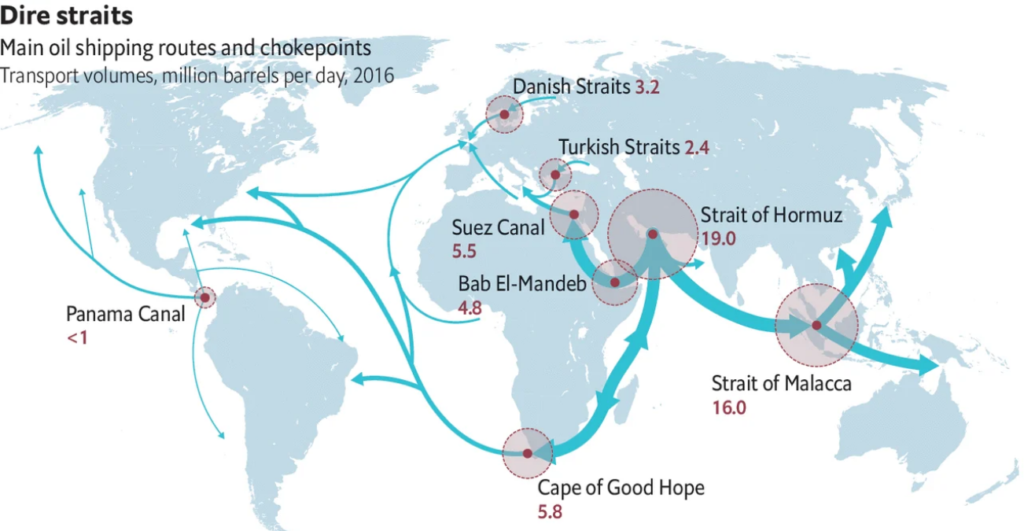
The Strait of Hormuz is responsible for a significant share of global oil flows. Even if hostilities cease, continued Iranian control over the strait introduces lingering uncertainty. Markets are therefore pricing a “partial peace,” not a full normalization.
As a result:
- Oil prices remain elevated near $100+ per barrel
- Inflation expectations remain sticky
- Central bank easing expectations are delayed
For Bitcoin, which increasingly trades as a macro-sensitive asset, this creates a paradox:
Peace signals exist—but macro risk has not fully dissipated.
Strait of Hormuz Strategic Importance Map
3. Oil Prices: The Hidden Anchor on Bitcoin
One of the most overlooked dynamics in the current market is the role of oil.
Despite expectations of de-escalation, crude prices have not meaningfully declined. This is due to:
- Continued Iranian leverage over shipping routes
- Risk of asymmetric or retaliatory disruptions
- Structural supply constraints in global energy markets
Oil acts as a proxy for geopolitical risk. As long as it remains elevated, it signals:
- Persistent inflation pressure
- Risk premium embedded in global markets
- Reduced appetite for aggressive capital deployment
Bitcoin, often described as “digital gold,” behaves differently in such environments. It thrives under liquidity expansion, not uncertainty-driven inflation.
Thus, instead of rallying aggressively, BTC is absorbing macro friction.
4. Technical Analysis: The Ichimoku Barrier
Bitcoin Ichimoku Cloud Resistance Chart
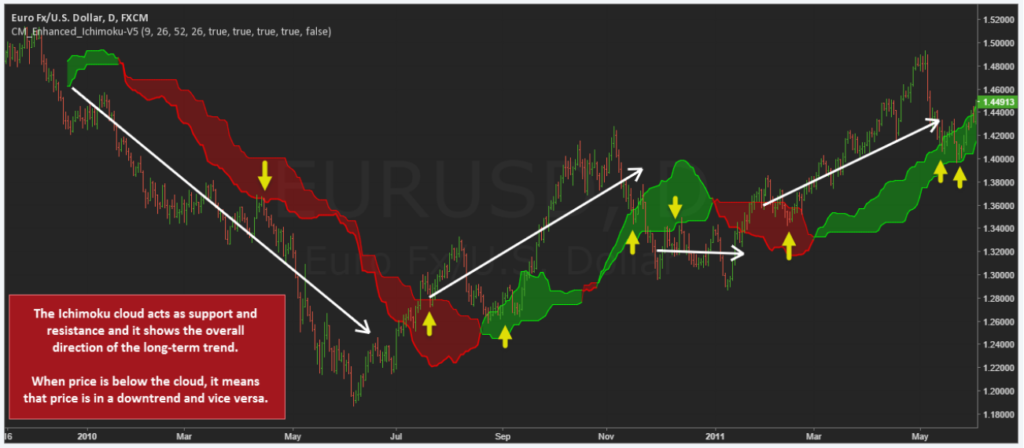
From a technical perspective, Bitcoin’s price action is constrained by a key indicator:the Ichimoku Cloud.
The lower boundary of the cloud is currently acting as a strong resistance level, preventing BTC from breaking above the $69,000–$70,000 range.
Additional factors:
- A previously formed descending flag pattern has technically resolved
- However, follow-through buying is weak
- Momentum indicators suggest hesitation rather than accumulation
In essence, the market lacks a decisive catalyst to break through resistance.
This aligns with the macro picture: uncertainty is declining—but not fast enough.
5. Ethereum’s Outperformance: A Shift in Narrative
While Bitcoin struggles to reclaim momentum, Ethereum (ETH) is showing relative strength.
Several factors explain this divergence:
Institutional Accumulation
Reports indicate significant purchases by entities such as Bitmine, suggesting strategic positioning in ETH rather than BTC.
Quantum Computing Narrative
Emerging discussions around quantum computing risks—highlighted by developments from Google—have brought attention to blockchain security.
Ethereum is increasingly perceived as:
- More adaptable to post-quantum upgrades
- More flexible due to its evolving architecture
Although the actual threat remains speculative, narrative momentum matters in crypto markets.
Use-Case Expansion
Ethereum continues to dominate in:
- DeFi
- Tokenization
- Enterprise blockchain applications
This aligns with investor demand for practical blockchain utility, not just store-of-value narratives.
6. Structural Market Insight: Why Bitcoin Feels “Heavy”
Putting all factors together, Bitcoin’s slow rebound can be explained by three structural forces:
1. Incomplete Risk Resolution
Markets are pricing a “ceasefire scenario,” not a full return to stability.
2. Macro Overhang
Oil, inflation, and monetary policy expectations continue to suppress aggressive risk-taking.
3. Capital Rotation
Funds are selectively rotating into assets with:
- Higher growth narratives (ETH)
- Stronger technological positioning
- Institutional accumulation signals
Bitcoin is no longer the only macro hedge—it is now one of many.
7. Forward Outlook: What Needs to Happen for $70K+
For Bitcoin to decisively reclaim $70,000 and beyond, several conditions must align:
- Oil prices decline meaningfully below $90
- Clear confirmation of geopolitical resolution
- Breakout above the Ichimoku cloud resistance
- Renewed institutional inflows into BTC (not just ETH)
Absent these, BTC is likely to remain in a range-bound consolidation between $65,000–$69,000.
Conclusion: A Market Waiting for Conviction
Bitcoin’s current behavior is not weakness—it is indecision under complex macro conditions.
The market is simultaneously:
- Pricing in peace
- Hedging against incomplete resolution
- Reallocating capital toward emerging narratives
This creates a temporary equilibrium where BTC holds firm—but cannot break out.
For investors and builders, this environment is critical.
It signals a transition phase:
- From macro-driven speculation
- To utility-driven differentiation
Understanding this shift will define the next wave of crypto opportunities.
