

Main Points :
- Since October 2025, Bitcoin market liquidity has deteriorated sharply following a historic liquidation event.
- A massive deleveraging wiped out excessive leverage but also removed depth from order books.
- Thin order books mean even modest sell pressure can now cause disproportionate price declines.
- Spot Bitcoin ETF outflows, especially from institutional vehicles, signal weakening risk appetite.
- The current market regime is defensive, macro-sensitive, and structurally fragile.
- Recovery depends on restored ETF inflows, deeper order books, and sustainable leverage rebuilding.
1. Introduction: A Market That No Longer Absorbs Shock
Since October 2025, the cryptocurrency market—led by Bitcoin—has entered a distinctly different phase. Price volatility has returned, but unlike previous cycles driven by exuberant leverage, this instability stems from a lack of liquidity rather than excess speculation.
Following a historic liquidation cascade on October 10, the market underwent what many analysts describe as a structural transformation. This was not merely a price correction. It was a systemic reset that permanently altered how Bitcoin trades under stress.
Market participants have begun to describe this shift as a “change in market character.” Crucially, this is not anecdotal sentiment. It is supported by measurable data: shrinking order book depth, falling leverage ratios, and persistent outflows from spot Bitcoin ETFs.
In this environment, Bitcoin has become dangerously sensitive. Moves that would once have been absorbed smoothly by deep liquidity now ripple through the market, triggering outsized price swings.
2. The October 10 Event: The Great De-Leveraging
On October 10, Bitcoin experienced one of the largest liquidation events in its history. According to analysis by Coin Metrics, more than $19 billion in leveraged positions were forcibly closed within a short time window.
The catalyst was not crypto-native. Statements by former U.S. President Donald Trump regarding tariffs reignited macroeconomic fears, particularly around inflation, interest rates, and global trade stability. Risk assets sold off sharply—and crypto, still tightly correlated with macro liquidity, followed.
This event has since been labeled “The Great De-Leveraging.” Importantly, analysts argue that it functioned as a form of systemic cleansing. Excessive leverage that had accumulated quietly over months was flushed out in a matter of hours.
However, while leverage was removed, so too was liquidity.
3. Liquidity Drought: Thin Order Books Across Major Exchanges
One of the clearest indicators of the current fragility is the visible thinning of order books on major exchanges such as Binance.
Under normal market conditions, sell orders are absorbed by layers of buy-side liquidity clustered near the current price. Today, those bids are noticeably sparse.
This phenomenon—often described as a “liquidity drought”—means that sell orders which would previously cause minimal slippage now cascade through price levels, amplifying volatility.
Bitcoin Order Book Depth (Pre- vs Post-October 10)
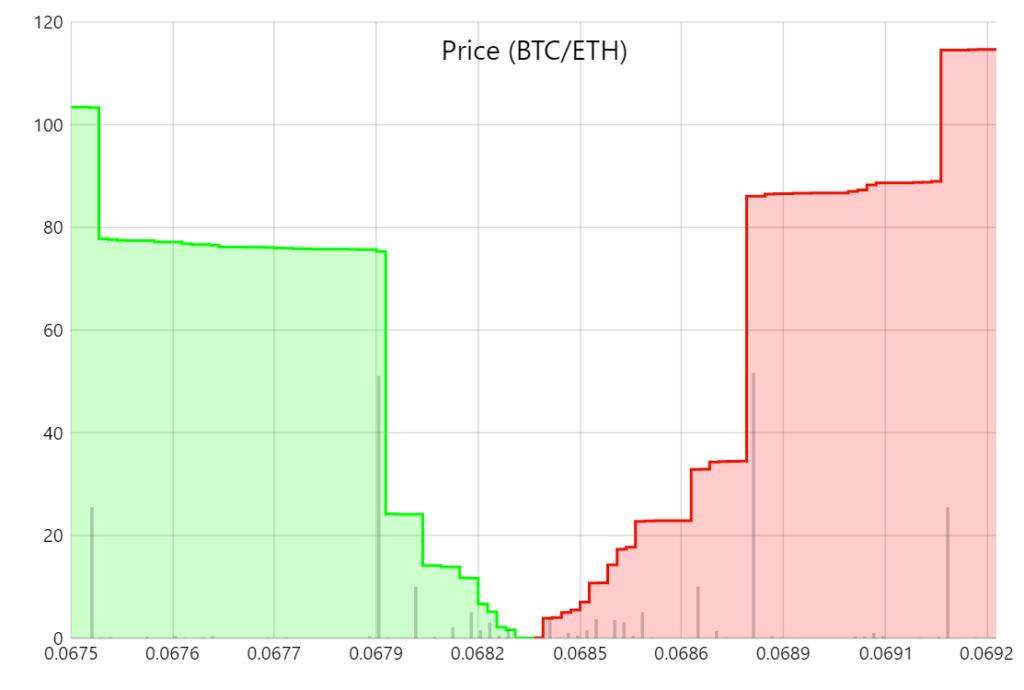
This structural weakness has a self-reinforcing effect:
- Traders hesitate to place large bids due to volatility risk.
- Thin liquidity increases volatility further.
- Increased volatility drives more capital to the sidelines.
The result is a market that struggles to stabilize itself.
4. ETF Outflows: Institutional Sentiment Turns Defensive
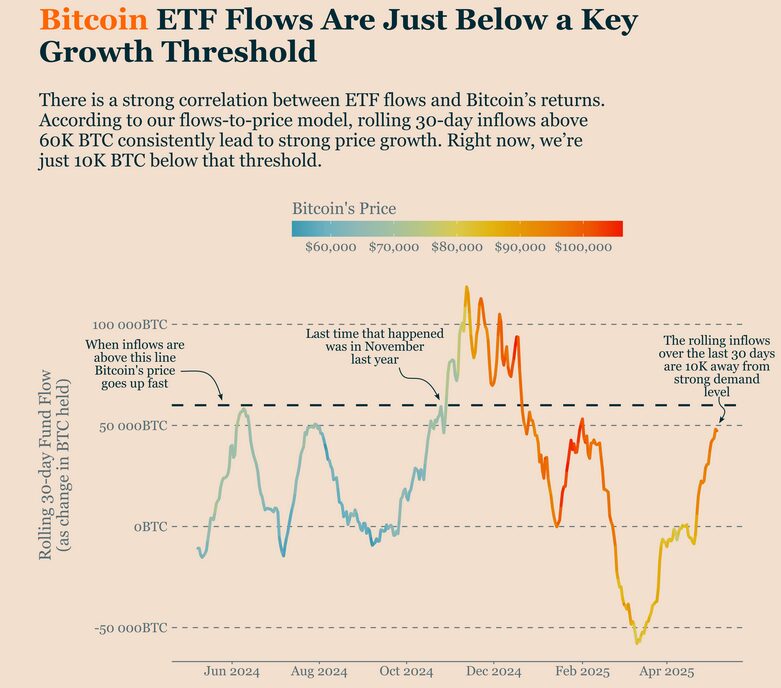
Compounding the liquidity issue is a sustained outflow from spot Bitcoin ETFs. Throughout December, net flows remained negative, signaling a clear retreat by institutional investors.
Most notably, BlackRock’s spot Bitcoin ETF, IBIT, recorded its largest single-day outflow on record, measured in hundreds of millions of dollars (all figures referenced here are USD-denominated).
ETF flows matter because they represent:
- Long-term capital rather than short-term trading.
- Passive demand that stabilizes price action.
- Institutional confidence in Bitcoin as a macro asset.
Their absence leaves the market dominated by cautious traders and algorithmic liquidity providers—neither of which offer durable price support.
Spot Bitcoin ETF Net Flows (Last 3 Months)
5. Why Small Selling Pressure Is Now Dangerous
The most critical implication of today’s market structure is asymmetry. Upside moves require coordinated demand, while downside moves need only modest selling.
This imbalance arises from three concurrent factors:
- Reduced leverage limits momentum-driven buying.
- Shallow order books magnify price impact.
- ETF outflows remove passive absorption capacity.
In practical terms, this means:
- A single large seller can move the market.
- Stop-loss cascades trigger faster than before.
- Volatility spikes without warning.
This is not a panic market—it is a brittle one.
6. Macro Sensitivity: Bitcoin as a High-Beta Risk Asset Again
Another defining feature of the current regime is heightened macro sensitivity. Bitcoin is once again trading as a high-beta expression of global liquidity expectations.
Key macro drivers include:
- U.S. interest rate policy
- Inflation trajectory
- Geopolitical trade tensions
- Dollar strength and bond yields
Until macro uncertainty eases, risk appetite is unlikely to return in force. This places Bitcoin in a holding pattern, vulnerable to sudden repricing rather than gradual trend formation.
7. What Needs to Change for Recovery
Analysts broadly agree that stabilization—and eventual recovery—requires three structural improvements:
1. ETF Flow Reversal
Sustained inflows into spot ETFs would restore a base layer of demand.
2. Order Book Depth Recovery
Market makers must regain confidence to deploy capital closer to spot price.
3. Healthy Leverage Reconstruction
Not excessive leverage, but measured risk-taking that supports liquidity provision.
Until these conditions are met, Bitcoin remains exposed.
8. Strategic Implications for Investors and Builders
For investors seeking new crypto assets or yield opportunities, this environment demands selectivity and patience. Volatility does not automatically imply opportunity when liquidity is impaired.
For builders and operators, however, the message is different. Periods of structural stress often precede innovation:
- More efficient market-making models
- On-chain liquidity solutions
- Risk-managed yield strategies
Those building infrastructure rather than chasing price may find this period unusually fertile.
9. Conclusion: A Market at a Crossroads
Bitcoin is not collapsing—but it is fragile.
The Great De-Leveraging removed systemic excess but left behind a thinner, more reactive market. Liquidity has not yet returned, and institutional confidence remains cautious.
In this regime, small events can have outsized consequences. Until liquidity, leverage, and long-term capital flow back in, Bitcoin will remain susceptible to sharp moves triggered by surprisingly little.
The next phase of the market will not be defined by hype, but by structure.
