

Main Points :
- Ricardo Salinas, Mexico’s third-richest man, remains aggressively bullish on Bitcoin despite market volatility.
- He views Bitcoin as “modern gold” and a long-term hedge against fiat currency debasement.
- Regulatory tensions in the United States are intensifying as the SEC Chair appears at a crypto-industry-backed event.
- Japan’s Financial Services Agency (FSA) signals major reform, including potential 20% separate taxation for crypto and the creation of a “Child NISA.”
- Global regulatory evolution may reshape capital flows, tax efficiency, and practical blockchain adoption opportunities.
Ricardo Salinas: Betting Big on Bitcoin in the Face of Volatility
Ricardo Salinas Pliego, chairman of Grupo Salinas and widely regarded as Mexico’s third-richest individual, has once again reaffirmed his unwavering conviction in Bitcoin — even as markets experience sharp corrections.
While many investors panic during price drawdowns, Salinas publicly reiterated via social media that Bitcoin represents long-term value preservation rather than short-term speculation. He has previously disclosed that a substantial portion of his liquid assets is held in Bitcoin, and recent declines appear, in his view, to represent opportunity rather than danger.
This philosophy aligns with his broader macroeconomic critique: distrust in inflationary fiat systems. As central banks around the world continue managing debt burdens and currency supply expansion, Salinas frames Bitcoin as a structural alternative. In his words, Bitcoin is “modern gold.”
For investors searching for new crypto assets and emerging income streams, Salinas’ stance reflects a strategic thesis rather than emotional optimism. The thesis rests on three pillars:
- Monetary debasement risk remains structurally elevated.
- Hard digital scarcity has global portability.
- Institutional and sovereign adoption continues to expand.
In this context, volatility becomes a feature — not a flaw.
Bitcoin as “Modern Gold”: A Macro Hedge in the Age of Debt
Salinas’ comparison of Bitcoin to gold is not rhetorical flourish; it reflects a growing macro narrative.
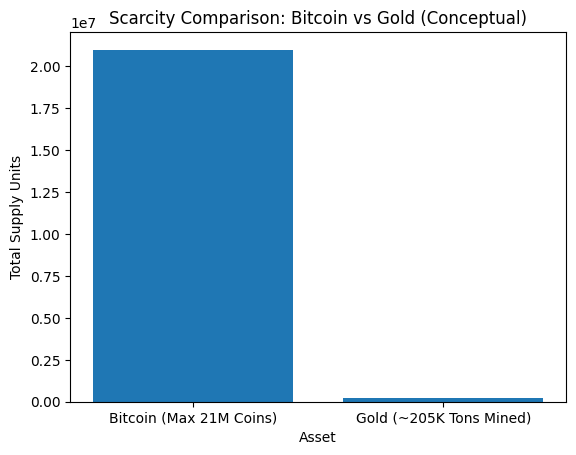
Gold has historically functioned as a hedge against inflation and sovereign instability. However, Bitcoin introduces digital scarcity capped at 21 million coins, borderless transferability, and programmable custody.
Unlike gold:
- Bitcoin can be transferred globally in minutes.
- Custody can be self-sovereign.
- Settlement is final without intermediary trust.
For capital allocators in emerging markets, especially those experiencing currency instability, Bitcoin offers an asymmetric hedge. The Mexican peso, while relatively stable compared to some Latin American currencies, still operates within a global fiat framework vulnerable to systemic shocks.
Institutional participation, including ETFs in multiple jurisdictions and corporate treasury allocations, has expanded Bitcoin’s role from fringe speculation to portfolio component. Even during market downturns, long-term holders (often referred to as “strong hands”) have historically accumulated.
For readers seeking next-generation yield opportunities, this macro framing is essential. Bitcoin itself may not generate yield natively, but it functions as collateral, liquidity base, and reserve layer for:
- Decentralized finance (DeFi) lending
- Structured yield products
- Cross-border settlement layers
- Tokenized asset backing
The practical use case expansion transforms Bitcoin from static store-of-value into programmable financial infrastructure.
A Regulatory Paradox: The SEC and the Crypto Industry
In a surprising development, the Chair of the U.S. Securities and Exchange Commission (SEC) is reportedly scheduled to appear as a headline speaker at an event sponsored by a cryptocurrency company currently facing regulatory scrutiny.
This has sparked intense debate.
The SEC has aggressively pursued enforcement actions against various crypto entities, arguing many tokens qualify as securities. Yet appearing at an industry-backed event creates optics that critics describe as contradictory — or even ethically ambiguous.
Market observers are asking:
- Is this a sign of softening regulatory posture?
- Is it strategic engagement to shape policy direction?
- Or does it signal internal shifts within U.S. financial governance?
For investors, regulatory tone shifts can drive capital inflows or trigger risk-off cycles. A perceived thaw between regulators and industry could unlock innovation pipelines previously stalled by litigation fears.
At minimum, this episode highlights that crypto regulation is entering a transitional phase. Enforcement-first models may gradually give way to structured frameworks.
Japan’s Potential Tax Revolution: Separate Taxation at 20%
The Financial Services Agency (FSA) of Japan has taken a major step by publicly discussing the possibility of transitioning crypto taxation from progressive miscellaneous income (up to 55%) to a flat 20% separate taxation model — similar to equities.
If implemented, this would represent a seismic shift.
Under the current system, crypto gains in Japan can be taxed at marginal rates up to 55%. A shift to 20% would:
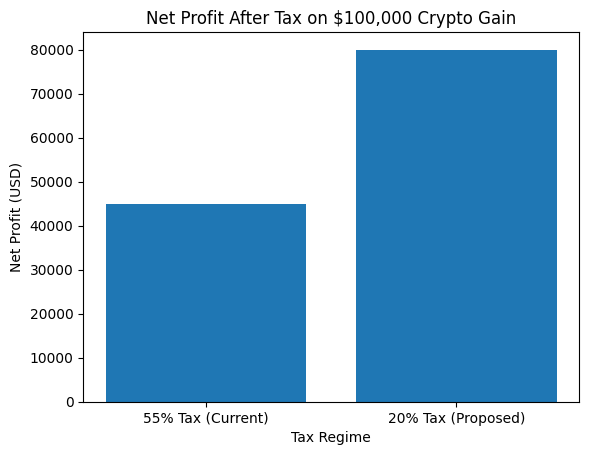
- Dramatically improve net investor returns
- Increase reporting clarity
- Encourage domestic capital retention
- Potentially attract offshore crypto entrepreneurs back to Japan
Simultaneously, the proposed “Child NISA” (a tax-advantaged investment account for minors) signals long-term structural encouragement of asset formation. While primarily focused on traditional assets, regulatory openness could extend indirectly to crypto exposure via ETFs or tokenized instruments.
For global crypto builders, Japan’s move matters. Regulatory certainty combined with favorable tax treatment can rapidly reposition a country as a digital asset hub.
Capital Flow Implications: Where the Smart Money May Move
Crypto markets are not isolated; they respond to regulatory arbitrage and tax efficiency.
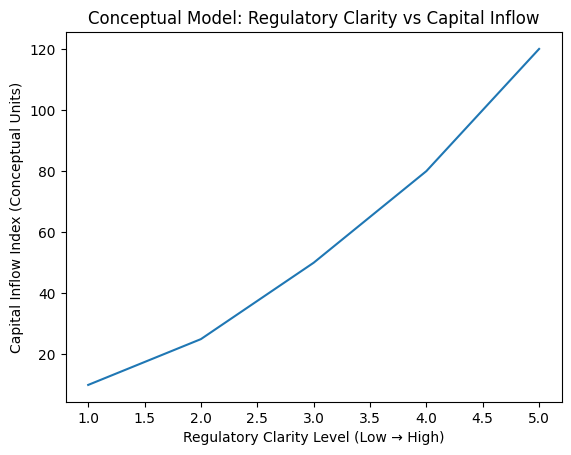
If:
- The U.S. softens enforcement hostility,
- Japan reduces taxation friction,
- Emerging market billionaires continue accumulating,
then capital allocation patterns may shift toward jurisdictions offering clarity and cost efficiency.
Investors seeking yield and blockchain utility should watch three structural vectors:
- Tax competitiveness
- Custody regulation clarity
- Institutional onramps (ETFs, tokenized bonds, stablecoin frameworks)
Bitcoin remains the reserve layer, but opportunity increasingly expands into:
- Tokenized real-world assets (RWAs)
- Stablecoin-based remittance systems
- Sovereign blockchain integration
- Regulated DeFi hybrids
Conclusion: Conviction, Regulation, and the Next Cycle
Ricardo Salinas’ unshaken smile during Bitcoin’s downturn is not mere bravado. It represents conviction rooted in macroeconomic skepticism and long-term structural thinking.
Simultaneously, regulatory environments are evolving:
- The United States shows signs of engagement complexity.
- Japan signals tax modernization.
- Institutional frameworks continue maturing globally.
For readers searching for the next revenue stream, the lesson is not simply “buy the dip.” It is to understand structural positioning:
Bitcoin as reserve asset.
Regulation as capital gatekeeper.
Tax policy as competitive advantage.
Blockchain as infrastructure, not hype.
Volatility will continue. But structural adoption appears to deepen.
The next cycle may not be driven purely by speculation — but by regulatory clarity, capital efficiency, and real-world integration.
