
Main Points :
- Expected Federal Reserve rate cuts ignite a surge in Bitcoin, pushing it to $94,000, reflecting the market’s aggressive pricing of future liquidity expansion.
- Bitcoin is increasingly treated not as a speculative outlier but as a core macro-sensitive asset linked to global liquidity cycles.
- The market’s strong bullish sentiment suggests that a structural shift is underway, positioning Bitcoin as a leading beneficiary of monetary easing and institutional capital flows.
- Broader crypto markets—ETH, SOL, and emerging sectors like real-world asset (RWA) tokenization—show reinforced momentum under the same macro backdrop.
- If liquidity expansion continues, Bitcoin may establish a new long-term price range and drive the next wave of innovation and yield-generating opportunities across the digital asset ecosystem.
1. Global Liquidity Expectations and the Surge Toward $94,000
The sudden surge of Bitcoin to $94,000 on the eve of the anticipated Federal Reserve rate cut represents far more than a simple price rally. It signals a profound shift in how global markets interpret monetary policy, liquidity flows, and the role of digital assets in the modern financial system.
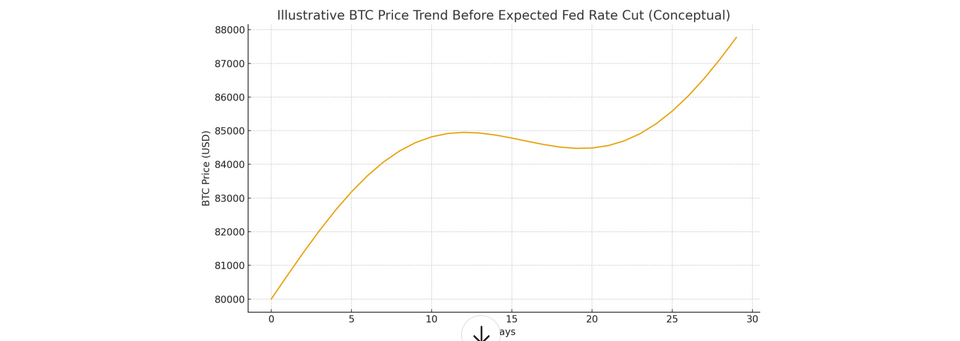
Historically, Bitcoin has thrived during periods of expanding liquidity. When the Federal Reserve lowers interest rates, borrowing becomes cheaper, capital becomes more mobile, and investors increasingly rotate out of low-yield assets—such as government bonds—and into risk-on assets that offer higher return potential.
Today, Bitcoin has emerged as the front-runner of this risk-on category.
This rally suggests several important dynamics:
- Market participants strongly expect the Fed’s pivot from tightening to easing.
Such pivots often mark the beginning of multi-year liquidity expansion cycles. - Bitcoin is increasingly viewed as the most direct beneficiary of new liquidity.
Not technology stocks, not commodities—Bitcoin. - Global investors are pricing in a structural shift, not merely a short-term reaction.
Bitcoin’s ascent toward $94,000 reflects confidence in a new liquidity cycle, comparable to past monetary expansions that lifted BTC from $1,000 → $20,000 (2017) and $10,000 → $69,000 (2021).
Liquidity as the Ultimate Driver
To understand why Bitcoin reacts so aggressively to central bank decisions, it is essential to recognize its relationship with global liquidity, which includes:
- Central bank balance sheets
- Banking system reserves
- Cross-border capital flows
- Institutional asset allocation patterns
Bitcoin historically shows a high correlation with these liquidity indicators. Thus, the expectation of easier monetary policy naturally fuels demand for Bitcoin and other digital assets.
2. What the $94,000 Level Reveals About Structural Market Shifts
Bitcoin’s rally to $94,000 is not merely a speculative spike—it is evidence of broader structural transformation in how institutional and global investors classify the asset.
2.1 Bitcoin Is Becoming a Macro Asset
A decade ago, Bitcoin was a niche asset driven mostly by retail speculation. Today:
- Major asset managers (BlackRock, Fidelity, Vanguard indirectly through ETFs)
- Hedge funds
- Corporate treasuries
- Family offices
…all hold or actively trade Bitcoin.
This structural shift has changed the behavior of the asset:
| Era | Investor Base | Market Characteristics |
|---|---|---|
| 2013–2017 | Retail-driven | High volatility, sentiment-driven |
| 2018–2021 | Institutional entry | Correlation with macro cycles |
| 2022–2025 | Macro-integrated asset | Liquidity-sensitive, ETF flows, institutional strategies |
Bitcoin today behaves more like gold with leverage—a global monetary hedge—and less like a fringe experiment.
Institutional conviction strengthens long-term price floors
Institutions are not merely buying Bitcoin; they are integrating it into:
- Macro hedge portfolios
- Alternative asset baskets
- Treasury diversification strategies
- Yield-enhancing strategies using derivatives
This trend supports the notion that Bitcoin’s price floor is rising structurally. A $94,000 level may represent not a peak, but a mid-range price in the new cycle.
2.2 Bitcoin as Prime Beneficiary of Capital Rotation
Rate cuts reduce returns on fixed-income assets. Historically:
- When yields fall, investors chase higher-return assets.
- Bitcoin, due to its asymmetric upside, becomes highly attractive.
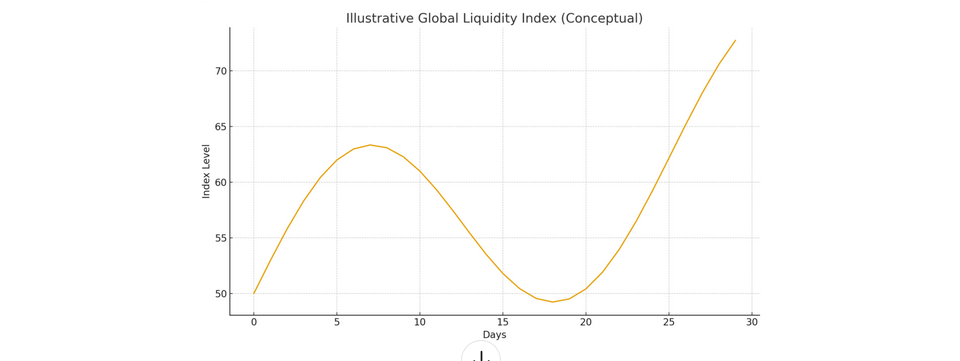
This liquidity rotation strengthens BTC in multiple ways:
- Institutional capital enters ETFs
ETFs continue to break inflow records after each macro easing announcement. - Corporate treasuries allocate bitcoin
Corporations facing declining bond yields increasingly explore BTC allocations. - Global adoption accelerates
Europe, Japan, South Korea, the Philippines, and Dubai all demonstrate improving regulatory clarity.
Bitcoin’s sensitivity to liquidity is no longer a weakness—it is what makes it one of the strongest macro trades available.
3. Bullish Market Sentiment and the Path to Future Growth
The price surge is accompanied by strong bullish sentiment, but the sentiment itself is rooted in fundamentals, not hype.
1. Why Sentiment Is So Strong Heading Into the Fed Decision
Several factors reinforce investor optimism:
1. Bitcoin Supply Dynamics (Halving Effect)
The 2024 halving reduced BTC’s new supply by 50%, tightening the market and amplifying the impact of new demand.
2. ETF Expansion Continues
ETFs are absorbing billions in weekly inflows—behavior typically seen in mature commodities like gold.
3. Institutions Are Building Infrastructure
Custody services, derivatives, settlement infrastructure, and tokenization frameworks position BTC as part of future financial rails.
4. Real-World Asset Tokenization (RWA) Supports Crypto Demand
RWAs such as tokenized U.S. Treasury bills, yields, and corporate credit are booming, indirectly strengthening the overall crypto ecosystem.
4. Additional Market Trends from Other Sources (2024–2025 Data)
To provide broader context, here are key developments shaping BTC’s current momentum:
4.1 Ethereum ETFs Expected to Launch in Additional Countries
Regulatory progress indicates Ethereum spot ETFs may soon appear in:
- Japan
- Singapore
- South Korea
- The UK
This deepens institutional engagement across the wider crypto market.
4.2 Stablecoin Expansion Accelerates
Visa, PayPal, and several major fintech platforms continue to develop:
- USDC payment rails
- On-chain remittance networks
- Tokenized cash equivalents
Greater stablecoin adoption increases on-chain liquidity and indirectly strengthens BTC as the anchor asset of digital money.
4.3 Miners Accumulating BTC Instead of Selling
Glassnode’s miner activity reports show:
- Miner reserves increasing
- Reduced sell pressure
- Higher long-term confidence
In past cycles, such miner accumulation has preceded large price expansions.
4.4 Whale Addresses Increasing Their Holdings
On-chain data shows wallets holding 1,000+ BTC have increased significantly over the past 90 days. This is consistent with periods before major breakouts in 2020 and 2021.
5. Forward-Looking Scenarios: What Happens After the Fed Cuts Rates?
Scenario A: Liquidity Expansion Continues (Most Likely)
- BTC establishes a new range between $95,000 and $120,000
- Institutions increase ETF allocations
- Derivatives volume increases
- Retail re-enters the market, driving broader altcoin rallies
Scenario B: Fed Cuts but Signals Caution
- BTC consolidates between $85,000 and $95,000
- Still bullish but slower growth
Scenario C: Unexpected Macro Shock
- Price temporarily falls, but long-term structure remains intact
- Institutional presence prevents severe crashes seen in early cycles
Overall, the most probable outcome is that Bitcoin enters a multi-quarter expansion phase supported by global liquidity, ETF demand, and macro alignment.
Conclusion
Bitcoin’s surge to $94,000 is a clear sign that the market is preparing for a new era of monetary easing and expanding global liquidity. What was once a volatile niche asset has matured into a macro-sensitive financial instrument capable of attracting large-scale institutional capital.
As the Federal Reserve prepares for rate cuts, Bitcoin stands at the center of the next liquidity cycle—ready not only to set new all-time highs but also to boost growth across the entire digital asset ecosystem, including emerging tokens, RWAs, and blockchain-based financial rails.
For investors seeking new crypto assets, yield opportunities, and practical blockchain applications, the coming cycle may offer some of the largest opportunities since the early 2020s.
