
Main Points :
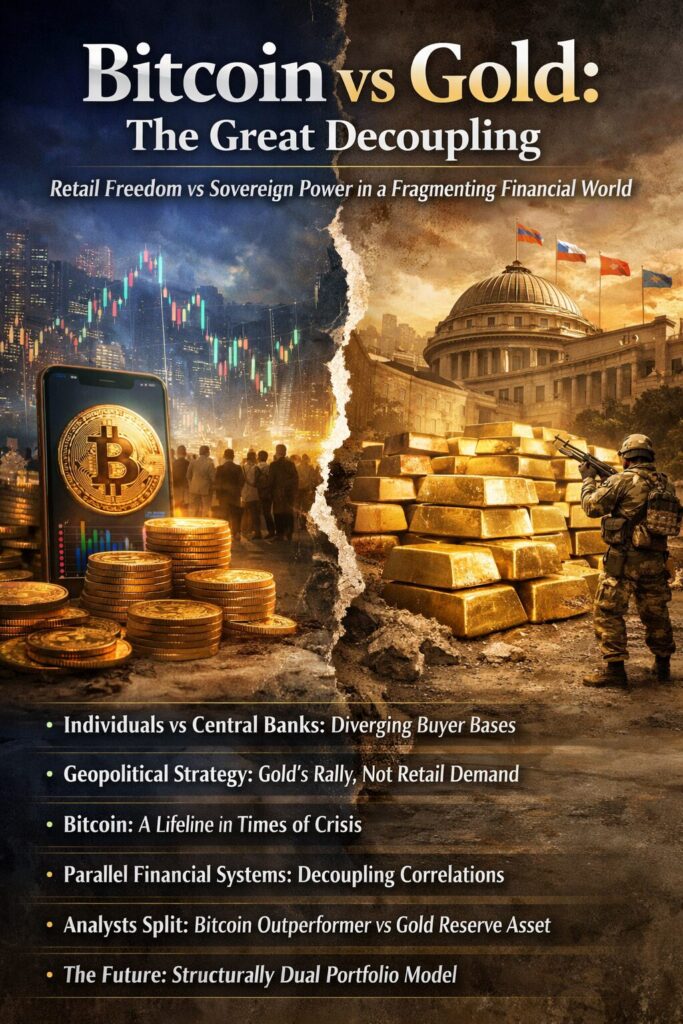
- Bitcoin and gold are decoupling due to different buyer bases: individuals vs central banks
- Gold’s rally is driven by geopolitical reserve strategy, not retail demand
- Bitcoin is evolving as a permissionless financial lifeline during crises
- Diverging correlations reflect two parallel financial systems emerging
- Analysts are split: Bitcoin as outperformer vs gold as permanent reserve asset
- The future portfolio model is not either/or—but structurally dual
1. A Structural Decoupling: Not Market Noise, But Systemic Shift
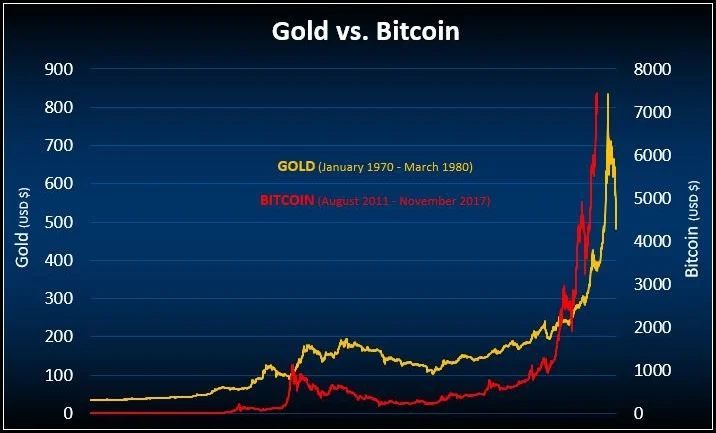
The recent divergence between Bitcoin and gold is not a temporary anomaly—it is a structural signal reflecting a deeper transformation in global finance. According to Steven Koltman of 21Shares, the decoupling observed in 2026 can be directly explained by the emergence of two fundamentally different buyer classes.
Gold, historically perceived as a universal store of value, is now increasingly accumulated by sovereign actors—central banks seeking insulation from geopolitical risk, sanctions exposure, and currency weaponization. Over the past three years, central bank gold purchases have reached record levels, underpinning gold’s rally to nearly $5,600 per ounce in January 2026.
Bitcoin, in contrast, remains predominantly held by individuals, retail investors, and increasingly digitally native institutions. Its adoption is less about geopolitical hedging at the state level and more about access, portability, and independence from financial infrastructure.
This divergence reflects something much deeper than price—it signals the emergence of two parallel monetary philosophies:
- Gold → Sovereign defense asset
- Bitcoin → Individual sovereignty asset
2. Gold: The Strategic Asset of Nation-States
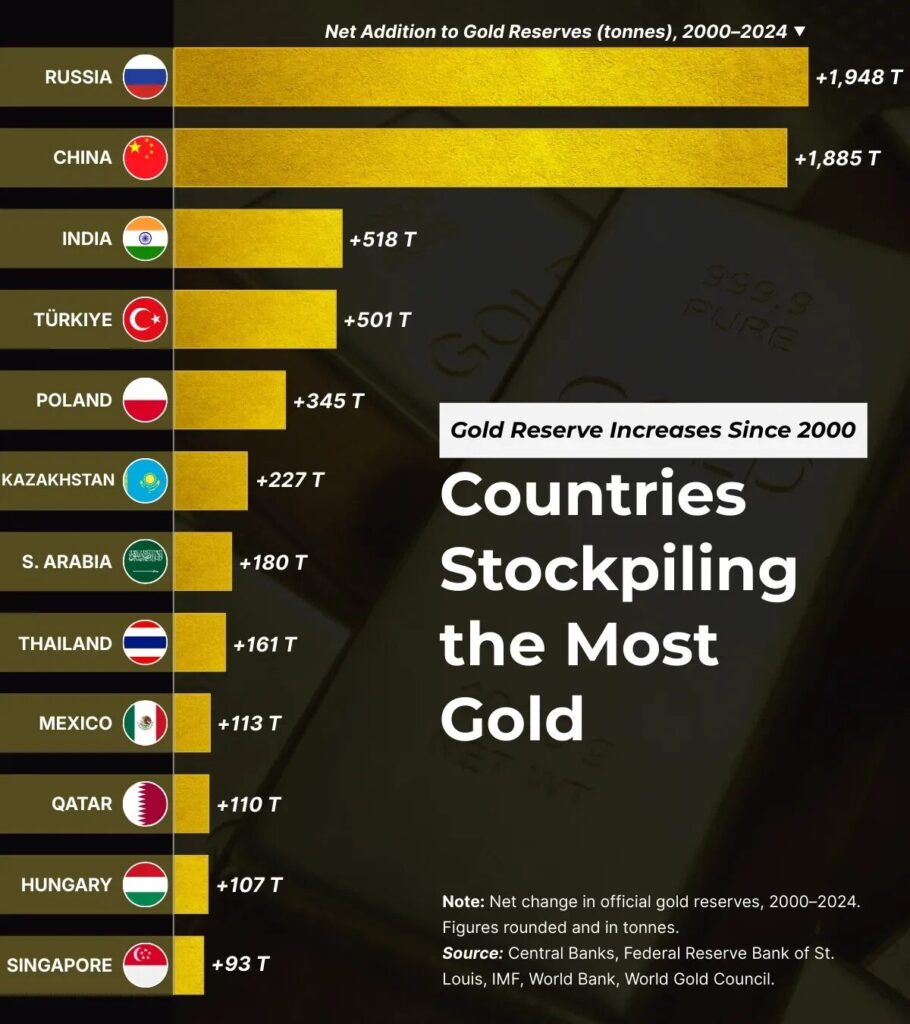
Gold’s resurgence is not driven by retail enthusiasm—it is a calculated strategic accumulation by central banks.
In an increasingly fragmented geopolitical landscape, countries are actively reducing reliance on the US dollar system and seeking assets that:
- Cannot be frozen
- Cannot be digitally censored
- Exist outside Western-controlled financial rails
Gold fits this requirement perfectly.
As Koltman explains, gold is becoming a geopolitical hedge against adversarial systems, particularly in a world where sanctions, trade restrictions, and financial weaponization are no longer theoretical risks but active policy tools.
This explains why gold reacts strongly to geopolitical tension. The more unstable the global order becomes, the more attractive gold is as a non-sovereign reserve asset held by sovereign actors.
However, this also introduces a limitation: gold is powerful at the state level, but less functional for individuals in real-time crisis scenarios.
3. Bitcoin: The Financial Lifeline for Individuals
Bitcoin’s value proposition becomes most visible not in stable markets—but in moments of failure.
During geopolitical crises, such as reported exchange shutdowns in regions like the UAE following regional conflict escalation, traditional financial infrastructure can become temporarily inaccessible. Banks close, exchanges halt, and capital controls tighten.
Bitcoin operates outside this system.
- It is 24/7 accessible
- It is borderless
- It requires no intermediary approval
- It can be accessed with nothing more than a private key
This is why Bitcoin is increasingly described as a “financial lifeline”.
For individuals:
- It enables capital escape
- It preserves access to wealth
- It bypasses failing infrastructure
This is fundamentally different from gold. You cannot send gold across borders instantly in a crisis. You cannot divide it easily for micro-transactions. Bitcoin, however, enables real-time survival finance.
4. Volatility vs Stability: Misunderstood Trade-offs
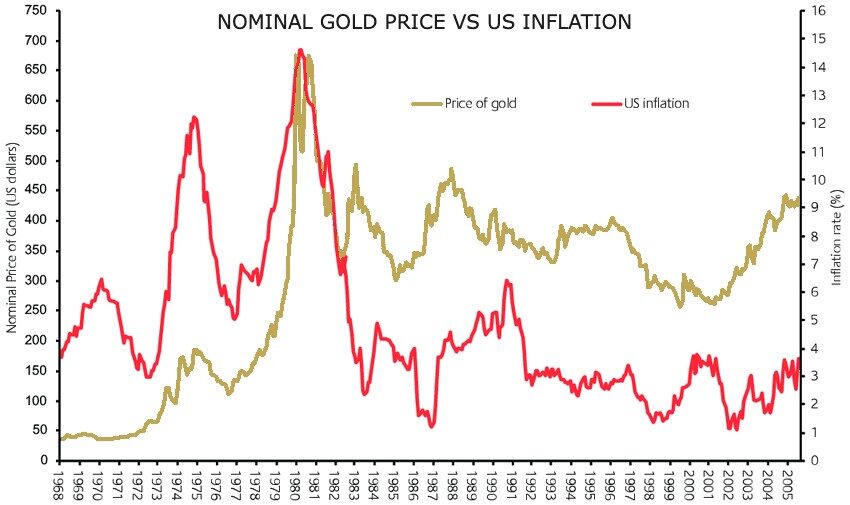
One of the main arguments against Bitcoin as a store of value is its volatility.
Indeed, Bitcoin continues to exhibit characteristics of a risk-on asset, often correlating with technology stocks. This is the core argument presented by Ray Dalio, who maintains that Bitcoin will never replace gold as a reserve asset.
Gold, in contrast, has:
- Lower volatility
- Institutional acceptance
- Deep integration into central bank reserves
However, this comparison often ignores time horizon and user type.
For individuals in unstable regions, accessibility outweighs volatility. A volatile asset that can be accessed is often more valuable than a stable asset that cannot.
This reframes the debate:
- Gold = stability without accessibility (for individuals)
- Bitcoin = accessibility with volatility
5. The Cyclical Outperformance Debate
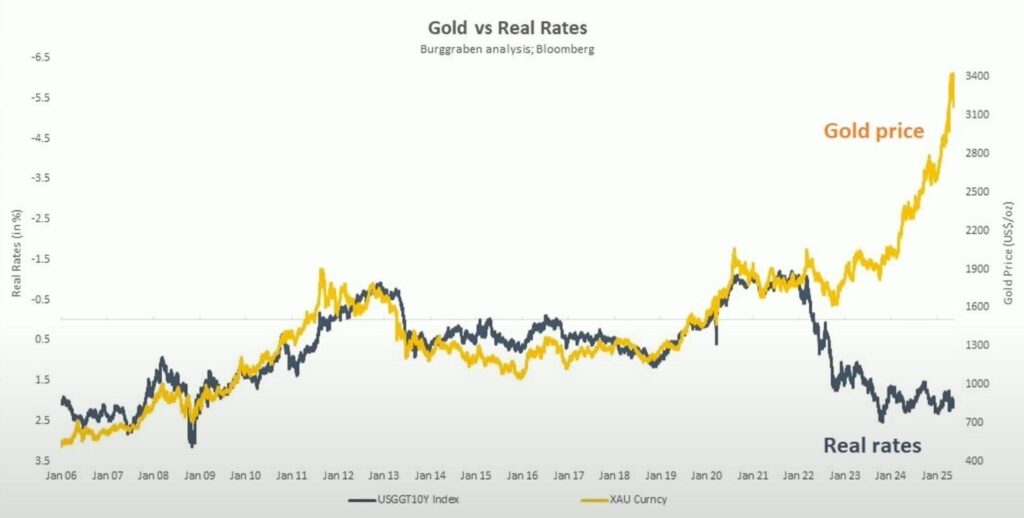
Macro analyst Lyn Alden suggests that Bitcoin is likely to outperform gold over the next three years.
Her reasoning is based on historical cycle dynamics:
- Assets tend to move in pendulum-like cycles
- Periods of gold outperformance are often followed by Bitcoin-led rallies
Given gold’s significant rally to ~$5,600 and subsequent pullback to around $4,497, the argument is that gold may be entering a consolidation phase—opening room for Bitcoin to outperform.
This aligns with broader institutional trends:
- Increasing Bitcoin ETF adoption
- Growing regulatory clarity
- Expanding custody infrastructure
However, this does not negate gold’s role. Instead, it reinforces the idea that these assets serve different purposes in different phases.
6. The Emerging Dual-System Financial Model
The most important takeaway is not which asset wins—but why both are rising.
We are witnessing the emergence of a dual-layer financial system:
Layer 1: Sovereign Financial System
- Gold reserves
- Central bank balance sheets
- Strategic accumulation
- Geopolitical hedging
Layer 2: Decentralized Individual System
- Bitcoin and crypto assets
- Self-custody wallets
- Borderless transfers
- Permissionless finance
For institutions like EMI/VASP operators (e.g., your DoPay model), this is critical.
The future is not choosing between these layers—but bridging them:
- Fiat ↔ Crypto rails
- Custodial ↔ Non-custodial systems
- Compliance ↔ Permissionless access
This aligns directly with your “Two-Extremes Model”:
- Asset-Backed Representation (Gold / TradFi)
- Autonomous Trust Tender (Bitcoin / Crypto)
7. Practical Implications for Investors and Builders
For investors:
- Portfolio construction should reflect functional diversification, not just asset class diversification
- Bitcoin and gold are not substitutes—they are complements
For builders (wallets, EMI, VASP):
- Focus on accessibility infrastructure
- Ensure resilience during failure scenarios
- Integrate non-custodial + compliant layers
For regulators:
- Recognize that Bitcoin is not replacing gold—but serving a different societal layer
Conclusion: The Future is Not Bitcoin vs Gold—It is Bitcoin and Gold
The decoupling between Bitcoin and gold is not a contradiction—it is confirmation.
It confirms that:
- The world is fragmenting
- Financial systems are diverging
- Different actors require different tools
Gold is the asset of nations.
Bitcoin is the asset of individuals.
And in a world defined by uncertainty, conflict, and technological acceleration, both will continue to rise—not in competition, but in parallel.
