

Main Points :
- Bitcoin treasury companies accumulated over 21,000 BTC in one week, even as their combined market capitalization fell by more than $1.24 billion.
- Strategy led the buying with its largest single-day purchase since mid-2025, reinforcing long-term conviction despite geopolitical uncertainty.
- Bitcoin remains below $90,000, but technical indicators suggest consolidation rather than structural breakdown.
- Corporate “Digital Asset Treasuries (DATs)” are increasingly acting as long-term shock absorbers, absorbing supply from short-term traders.
- The trend highlights Bitcoin’s emerging role as a strategic balance-sheet asset, not merely a speculative instrument.
1. Bitcoin Under Pressure: Markets React to Politics, Not Fundamentals
After seven consecutive trading days of decline, Bitcoin briefly touched a 22-day low near $87,100 before rebounding approximately 2%.
This recovery followed an unexpected geopolitical development: U.S. President Donald Trump withdrew tariff threats against Europe linked to negotiations over Greenland.
Despite the rebound, Bitcoin remains capped below $90,000, reflecting continued caution among short-term traders. Global markets are pricing in geopolitical risk, policy uncertainty, and macro volatility—forces that typically suppress speculative appetite.
However, beneath this surface-level hesitation, a structurally important trend is unfolding: Bitcoin treasury companies are aggressively buying the dip.
2. Bitcoin Treasury Firms: Buying Through the Drawdown
Bitcoin treasury companies—often referred to as Digital Asset Treasuries (DATs)—have emerged as some of the most conviction-driven participants in the crypto market.
According to data from The Block, the combined market capitalization of publicly listed Bitcoin treasury firms fell from $101.04 billion on January 17 to $99.8 billion by January 21, a decline of approximately $1.24 billion. This drawdown coincided with a 12% drop in Bitcoin’s price over the same seven-day period.
Yet, instead of reducing exposure, these firms increased it.
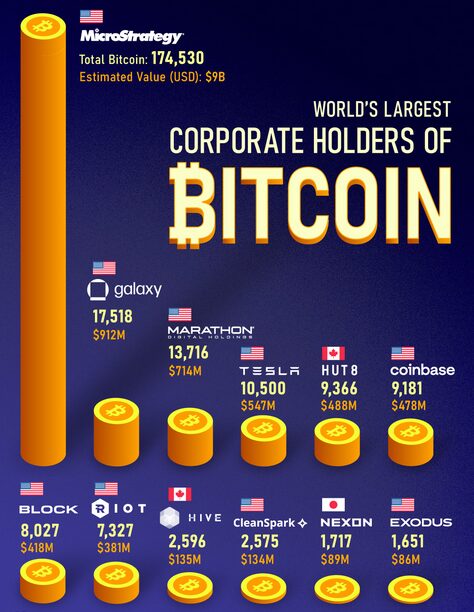
Total corporate Bitcoin holdings rose from 855,680 BTC to 877,580 BTC in just one week. At current prices, that represents more than $2 billion in additional Bitcoin accumulation.
This divergence—falling equity valuations alongside rising Bitcoin holdings—reveals a crucial insight:
corporate treasuries are prioritizing long-term Bitcoin exposure over short-term market optics.
**Bitcoin Treasury Holdings vs. Combined Market Capitalization**
3. Strategy Leads the Charge: Liquidity Over Fear
The most significant buyer during the week was Strategy, which announced on January 20 that it had acquired 22,305 BTC, worth approximately $2.1 billion.
This purchase brought the company’s total holdings to 709,715 BTC, marking its largest single-day acquisition since July 2025, when it bought over 21,000 BTC at an average price exceeding $117,000.
What makes this move particularly notable is the context.
In Q4 2025, Strategy faced skepticism around leverage, solvency, and potential liquidation risk should Bitcoin fall below its average acquisition cost (currently around $78,000). Critics argued that prolonged downside volatility could pressure the company’s balance sheet.
In response, Strategy proactively established a $1.44 billion USD liquidity reserve on December 1, 2025, explicitly earmarked for interest and dividend obligations.
The January purchase sends a clear signal:
the company believes its liquidity position is strong enough to withstand volatility—and that current prices represent long-term value.
This is not speculative bravado. It is balance-sheet strategy.
4. Treasury Strategy Is Evolving: From Speculation to Capital Structure
The behavior of Bitcoin treasury firms increasingly resembles institutional asset-liability management, rather than directional trading.
These companies are:
- Holding Bitcoin as a long-duration strategic reserve
- Using capital markets and structured financing to manage volatility
- Treating drawdowns as accumulation windows, not existential threats
This mirrors how corporations historically approached gold reserves or foreign currency exposure—but with a digitally native, globally liquid asset.
The implication is profound:
Bitcoin demand is becoming structurally less sensitive to short-term price movements.
5. Rebranding the Bitcoin Corporate Narrative: Nakamoto Inc.
Another notable development came from a Bitcoin treasury firm backed by David Bailey, CEO of BTC Inc.
The company announced a rebrand to Nakamoto Inc. (NASDAQ: NAKA) following its merger with healthcare provider KindlyMD. The healthcare business will continue operating as a wholly owned subsidiary under the name Kindly LLC.
According to Bailey, the rebrand reinforces the company’s identity as a Bitcoin-native enterprise built for the future.
This move reflects a broader narrative shift:
Bitcoin-focused firms are no longer framing themselves as experimental or opportunistic—they are positioning themselves as permanent fixtures in the digital capital markets.
6. Technical Outlook: Consolidation, Not Collapse
From a technical perspective, Bitcoin’s daily chart suggests stabilization rather than breakdown.
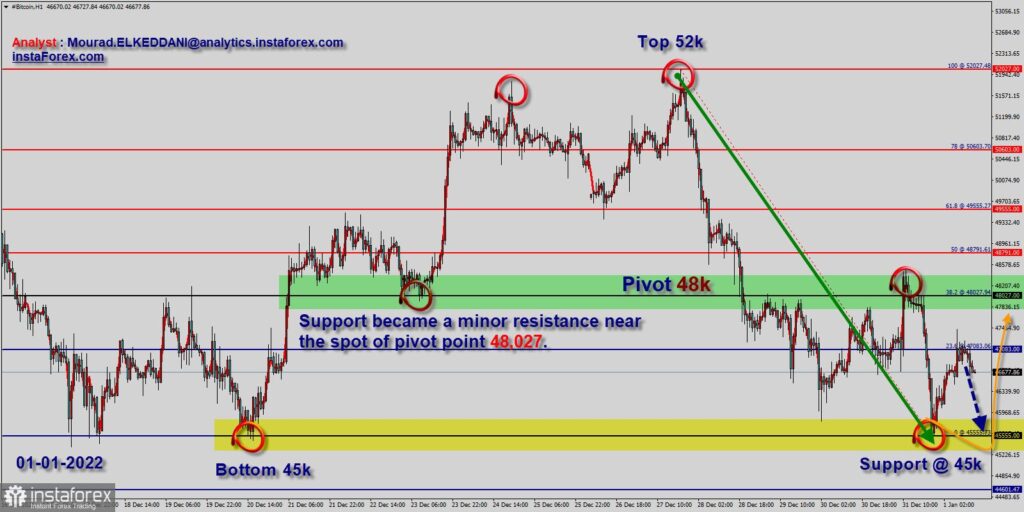
After completing a short-term descending wedge, Bitcoin rebounded from the lower Bollinger Band near $87,700.
Key technical observations include:
- The Bollinger Band midline near $92,400 acts as immediate resistance
- Upper resistance remains near $97,000
- Parabolic SAR dots have flipped below price, indicating reduced downside momentum
- MACD remains slightly negative but is flattening, signaling weakening bearish pressure
As long as Bitcoin holds above $87,000, the structure supports a consolidation phase.
A reclaim of $92,500 would likely open a path toward $97,000, while a breakdown below $87,000 could expose downside risk toward $84,500.
**Bitcoin Technical Analysis (Daily Chart)**
7. Why This Matters for Investors and Builders
For readers searching for new crypto assets, yield opportunities, or practical blockchain use cases, this trend offers an important lesson.
Bitcoin’s role is changing.
It is no longer driven solely by retail speculation or macro narratives. Instead, it is increasingly anchored by corporate treasuries with multi-year horizons, formal risk management, and capital market access.
This shift:
- Dampens extreme downside volatility over time
- Increases Bitcoin’s credibility as a reserve asset
- Creates second-order opportunities in infrastructure, custody, derivatives, and treasury tooling
For builders, this means demand for enterprise-grade Bitcoin solutions will continue to grow.
For investors, it suggests that price weakness driven by short-term fear may increasingly be met by long-term capital.
Conclusion: Corporate Conviction Is Reshaping Bitcoin’s Market Structure
The past week’s price action tells only part of the story.
While Bitcoin dipped below $90,000 amid geopolitical uncertainty, corporate Bitcoin treasury firms responded not with caution—but with conviction.
By accumulating more than 21,000 BTC during a period of falling valuations, these firms demonstrated a structural belief in Bitcoin’s long-term role as a strategic asset.
As digital asset treasuries mature, Bitcoin’s market behavior will continue to evolve—less reactive, more resilient, and increasingly shaped by balance-sheet logic rather than emotional trading.
For those looking beyond the next candle, the message is clear:
Bitcoin’s long-term narrative is being written by institutions that buy when others hesitate.
