

Key Takeaways :
- Strategy Inc. accumulated ~45,000 BTC (~$3.15B) in the past 30 days
- Non-Strategy corporate BTC purchases dropped ~99% from peak levels
- Strategy now holds ~76% of all corporate treasury BTC
- Market demand from institutions is becoming highly concentrated and fragile
- Metaplanet Inc. continues aggressive accumulation targeting 210,000 BTC
- Centralization introduces systemic risk despite price support
1. A New Phase in Bitcoin Treasury Strategy: From Broad Adoption to Concentration
The corporate adoption of Bitcoin as a treasury asset has entered a new and highly asymmetric phase. According to recent market analysis, the once-diversified landscape of corporate Bitcoin buyers is rapidly consolidating into a single dominant player: Strategy Inc..
Over the past 30 days alone, Strategy acquired approximately 45,000 BTC, equivalent to roughly $3.15 billion at an assumed price of $70,000 per Bitcoin. This marks the company’s most aggressive accumulation phase since April 2025, reinforcing its position as the primary institutional driver of Bitcoin demand.
In contrast, all other corporate treasury participants combined purchased only about 1,000 BTC (~$70 million) during the same period. This represents a 99% decline from the peak in August 2025, when corporate Bitcoin accumulation was widely distributed across multiple firms.
This dramatic shift signals a transition from what was once referred to as the “Bitcoin Treasury Summer” into a “single-buyer dominance phase”, where market structure is increasingly dependent on one entity.
2. Collapse of Broad Corporate Demand
Historically, corporate Bitcoin adoption followed a pattern of gradual expansion. Multiple firms—ranging from technology companies to emerging crypto-native businesses—allocated portions of their balance sheets to Bitcoin as a hedge against inflation and currency debasement.
However, recent data reveals that this broad-based demand has effectively collapsed:
- Total purchase events dropped from 54 transactions (Aug 2025) to 13 transactions (recent 30 days)
- Non-Strategy participation now accounts for only 2% of total corporate buying activity
This sharp decline reflects several underlying factors:
2.1 Rising Interest Rates and Capital Cost
As global monetary conditions tightened, companies became less willing to allocate capital to volatile assets like Bitcoin. The opportunity cost of holding non-yielding assets increased significantly.
2.2 Accounting and Volatility Concerns
Despite improvements in accounting treatment, Bitcoin still introduces balance sheet volatility. Many firms have reconsidered whether such exposure aligns with fiduciary responsibilities.
2.3 Strategic Fatigue
The initial wave of corporate adoption was driven partly by signaling effects—being seen as innovative or forward-thinking. That momentum has faded, leaving only conviction-driven players.
3. Strategy Inc.: The “Bitcoin Sovereign” of Corporate Treasuries
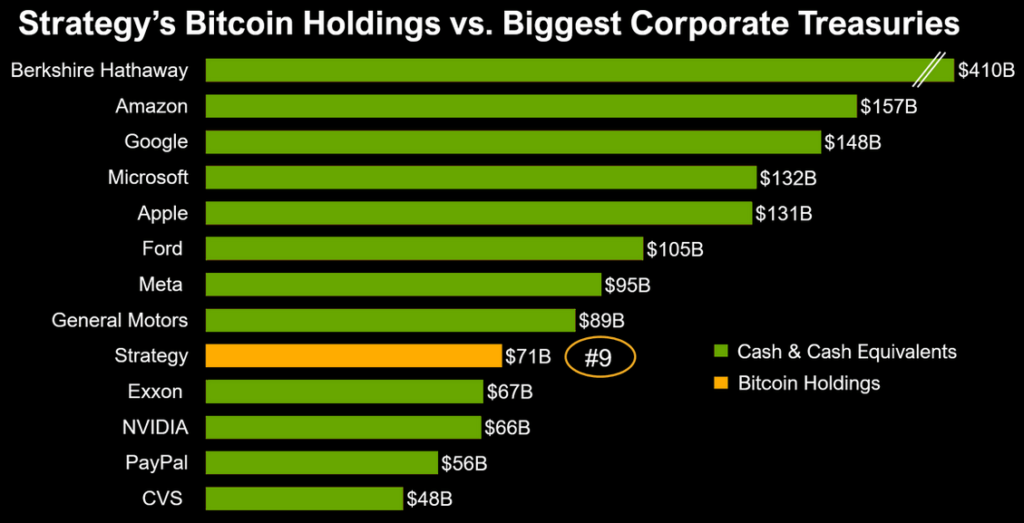
Strategy Inc. now holds approximately 762,000 BTC, equivalent to over $53 billion. This represents about 76% of all Bitcoin held by corporate treasury entities.
For comparison:
- Twenty One Capital: ~43,000 BTC (~$3.0B) → 4.3%
- Metaplanet Inc.: ~35,000 BTC (~$2.45B) → 3.5%
This concentration effectively transforms Strategy into a quasi-sovereign actor within the Bitcoin ecosystem. Its balance sheet decisions now have measurable macro-level impact on market dynamics.
3.1 Capital Raising Engine
Strategy continues to fund Bitcoin purchases through:
- Equity issuance
- Convertible debt
- Structured financing
In December, the company raised funds and increased its USD reserves to approximately $2.19 billion, ensuring liquidity even during prolonged bear markets.
3.2 Accumulation Discipline
Unlike speculative buyers, Strategy maintains a consistent accumulation pattern of 4–5 purchases per month, reinforcing long-term conviction rather than opportunistic timing.
4. Visualization: Collapse of Non-Strategy Demand
[Corporate BTC Purchase Volume Comparison]
This chart illustrates the near-total disappearance of non-Strategy demand, contrasted with sustained accumulation by Strategy.
5. Market Implications: Support vs Systemic Risk
The dominance of a single buyer introduces a paradox:
5.1 Positive Impact: Price Support
Strategy’s continuous buying acts as a structural bid in the market, helping stabilize prices even during weak retail demand phases.
This effect is particularly important in periods of:
- Low liquidity
- Weak ETF inflows
- Declining retail participation
5.2 Negative Impact: Concentration Risk
However, this concentration creates a new systemic vulnerability.
If Strategy were forced to:
- Liquidate holdings
- Pause accumulation
- Restructure debt
…the impact on Bitcoin’s price could be disproportionately large.
This introduces a single point of failure in what is otherwise designed as a decentralized asset system.
6. The Rise of Secondary Players: Metaplanet and Beyond
While most companies have retreated, some players continue to expand aggressively.
6.1 Metaplanet’s Ambition
Metaplanet Inc. has reaffirmed its goal of holding 210,000 BTC (~$14.7B).
The company plans to allocate up to ¥56.9 billion (~$380M) toward Bitcoin purchases between April 2026 and March 2028.
6.2 Strategic Implications
Metaplanet represents a regional counterweight to Strategy, particularly in Asia. If successful, it could:
- Diversify institutional demand
- Reduce concentration risk
- Encourage other firms to re-enter the market
7. Visualization: Treasury Holdings Distribution
[Corporate BTC Holdings Distribution Pie Chart]
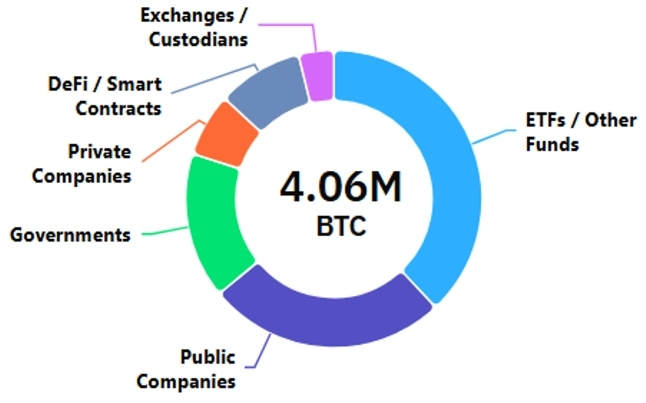
This visualization highlights how overwhelmingly concentrated corporate Bitcoin ownership has become.
8. Broader Market Context: Institutional Evolution in 2026
The current trend aligns with a broader shift in institutional crypto participation:
8.1 ETF vs Treasury Divergence
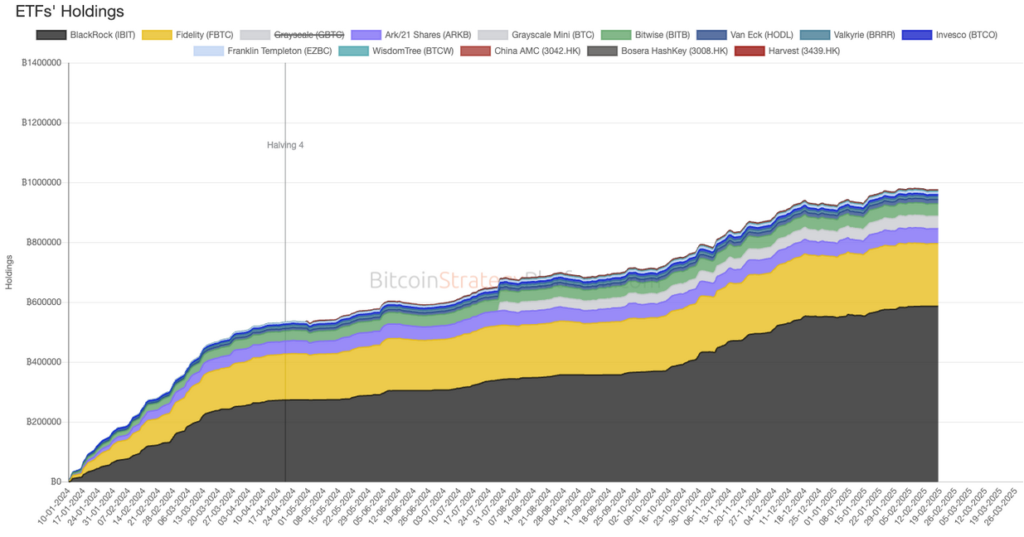
While Bitcoin ETFs have attracted capital, corporate treasury adoption is declining. Institutions prefer liquid, regulated exposure rather than direct balance sheet risk.
8.2 Sovereign and Corporate Convergence
Strategy’s behavior resembles that of a sovereign wealth fund, blurring the line between corporate treasury management and macro asset allocation.
8.3 Emergence of Hybrid Models
New models are emerging where companies:
- Hold Bitcoin indirectly via funds
- Use derivatives instead of spot accumulation
- Integrate Bitcoin into operational payment systems
9. Visualization: Market Structure Shift
[Institutional Participation Evolution Timeline]
This diagram shows the transition from distributed corporate adoption to concentrated ownership and ETF-driven exposure.
10. Strategic Interpretation for Investors and Builders
For readers seeking new crypto assets, revenue streams, and practical blockchain applications, this shift offers several actionable insights:
10.1 Watch the Marginal Buyer
Bitcoin’s price is increasingly influenced by a single marginal buyer. Monitoring Strategy’s activity becomes critical.
10.2 Look for Undervalued Narratives
As Bitcoin becomes institutionally dominated, opportunities may emerge in:
- Layer 2 ecosystems
- Infrastructure tokens
- Real-world asset (RWA) tokenization
10.3 Build Around Utility, Not Speculation
The decline in broad corporate participation suggests that utility-driven adoption will define the next phase.
Conclusion: A Strong but Fragile Foundation
The current Bitcoin market is supported by one of the strongest institutional conviction stories in financial history—Strategy’s relentless accumulation. However, this strength comes with fragility.
A decentralized asset is now partially dependent on a centralized actor. This contradiction defines the next chapter of Bitcoin’s evolution.
If new participants—like Metaplanet and emerging global firms—step in to diversify demand, Bitcoin could enter a more stable and mature phase. If not, the market may remain structurally vulnerable despite its apparent strength.
