

Main Points :
- The crypto market may be entering a “supercycle”, breaking away from the traditional four-year halving-driven pattern.
- Regulatory clarity, institutional capital, and tokenization of real-world assets are reshaping market structure.
- Bitcoin’s fixed supply vs. expanding global demand supports a long-term thesis toward $1,000,000 per BTC.
- ETFs, stablecoin regulation, and on-chain financial infrastructure are reducing speculative volatility.
- The coming years may define crypto not as a speculative asset class, but as financial infrastructure.
1. From Cycles to Structure: Why 2026 May Mark a Turning Point
Changpeng Zhao, widely known as CZ and the founder of Binance, has recently reiterated a bold long-term outlook for Bitcoin: a possible path toward $1 million per BTC, not driven by hype, but by structural change.
In interviews conducted around global economic forums and media appearances such as CNBC, CZ argued that the cryptocurrency market is gradually detaching from the classic four-year halving cycle that has historically defined Bitcoin bull and bear phases.
Instead, the market may be entering what he describes as a “supercycle”—a prolonged growth phase driven less by retail speculation and more by institutional adoption, regulatory normalization, and real-world integration of blockchain technology.
This shift is particularly relevant as analysts increasingly point to 2026 as a year when these structural forces may fully converge.
2. Bitcoin’s Supply Constraint and the $1 Million Narrative
Bitcoin remains fundamentally different from any traditional financial asset. Its maximum supply is capped at 21 million BTC, with issuance decreasing over time via halvings.
CZ’s long-term thesis is straightforward:
- Supply is fixed and mathematically enforced.
- Demand is expanding across governments, institutions, corporations, and retail users.
- Fiat currencies continue to expand in supply, diluting purchasing power.
In this context, a $1 million Bitcoin is not framed as a short-term price target, but as a logical outcome of long-term adoption.
Crucially, CZ avoided specifying a precise timeline. Instead, he emphasized that degree of adoption, not calendar years, will determine price milestones.
3. Regulation as a Catalyst, Not a Constraint
One of the most notable changes since the previous crypto cycles is the regulatory posture of governments worldwide.
Across the US, EU, Asia, and the Middle East:
- Stablecoin frameworks are being codified.
- Crypto custody rules are clarified.
- Tokenized securities and funds are being tested and approved.
- Compliance expectations for exchanges and VASPs are formalized.
Rather than suppressing growth, this regulatory clarity reduces uncertainty, allowing institutional investors to deploy capital at scale.
This maturation weakens the dominance of the Bitcoin halving as the sole market driver. As CZ noted, when trillions of dollars of professionally managed capital enter the ecosystem, market behavior inevitably changes.
4. Institutional Capital and the ETF Effect
A defining feature of the current cycle is the rise of Bitcoin spot ETFs and other regulated investment vehicles.
Major asset managers—including BlackRock, Fidelity, and others—have enabled:
- Pension funds
- Endowments
- Family offices
- Sovereign-linked entities
to gain Bitcoin exposure without direct custody risk.
This has several consequences:
- Reduced reliance on speculative leverage.
- More predictable capital inflows.
- Long-term holding behavior replacing short-term trading.
Industry researchers, including voices from Fidelity’s innovation arms, argue that ETFs represent a structural bridge between traditional finance and crypto-native assets.
5. Beyond Bitcoin: Tokenization and On-Chain Finance
While Bitcoin remains the anchor asset, CZ and other industry leaders increasingly emphasize tokenization of real-world assets (RWAs) as the next major growth engine.
These include:
- Tokenized government bonds
- On-chain money market funds
- Tokenized equities and commodities
- Blockchain-based settlement infrastructure
This evolution transforms blockchains from speculative trading venues into financial rails.
For investors seeking the “next revenue source,” this shift is critical: yield generation, collateralization, and programmable finance may ultimately rival simple price appreciation.
6. CZ After Binance: Long-Term Vision Over Short-Term Cycles
Since stepping down as Binance CEO in 2023, CZ has redirected his focus toward:
- Giggle Academy, an education initiative
- Advising governments on crypto regulation
- Supporting the BNB Chain ecosystem
- Long-term industry infrastructure
He has publicly stated that personal experiences—including legal challenges—have reinforced his commitment to long-term value creation rather than short-term market cycles.
Importantly, CZ disclosed that his personal crypto exposure remains concentrated in Bitcoin and BNB, reflecting conviction over diversification for speculation.
7. Volatility, Maturity, and the End of Extreme Boom-Bust Cycles?
A recurring theme in the supercycle thesis is reduced volatility.
While crypto will likely remain more volatile than traditional assets, several stabilizing forces are emerging:
- Institutional risk management practices
- Regulatory oversight
- Transparent on-chain data
- Broader participation across jurisdictions
If these trends continue, the market may gradually move away from dramatic boom-and-bust cycles toward sustained, infrastructure-driven growth.
8. Practical Implications for Investors and Builders
For readers seeking new crypto assets, income opportunities, or practical blockchain use cases, the implications are clear:
- Long-term positioning may outperform short-term trading.
- Infrastructure tokens, L2s, and RWA platforms warrant attention.
- Compliance-aligned projects may capture disproportionate institutional capital.
- Bitcoin increasingly behaves as digital macro collateral, not merely a speculative asset.
9. Suggested Visuals and Charts (Insertion Points)
Bitcoin Supply vs. Global Institutional Demand (USD)
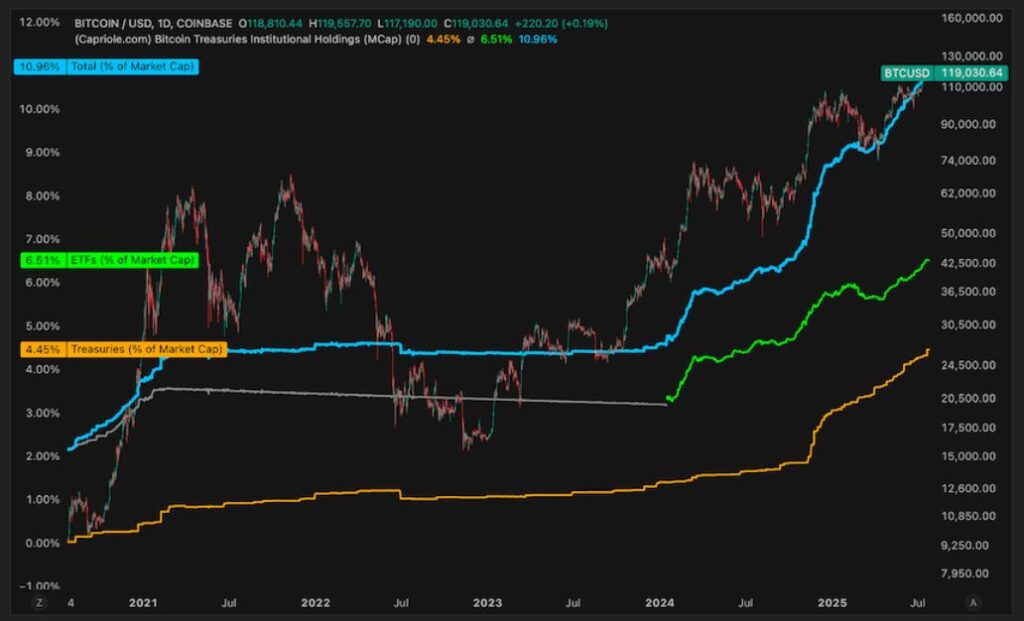
A chart comparing BTC issuance decline with rising ETF and institutional inflows.
Evolution of Crypto Market Structure (2013–2026)
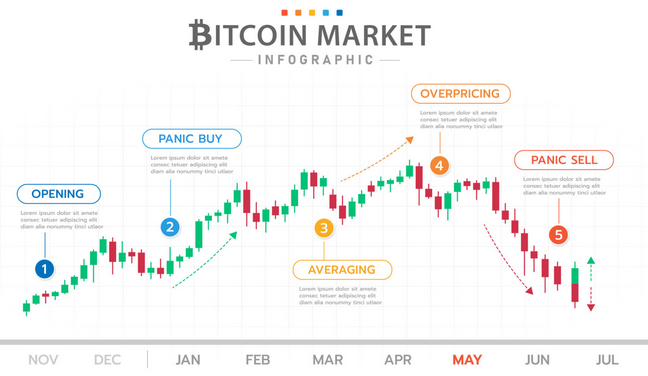
Retail-driven cycles vs. institution-driven supercycle.
10. Conclusion: From Speculation to Financial Infrastructure
CZ’s $1 million Bitcoin thesis should not be interpreted as a price prediction detached from reality. Instead, it reflects a broader observation: crypto is transitioning from a speculative market to a structural component of global finance.
Whether Bitcoin reaches $1 million or not, the forces now shaping the market—regulation, institutions, tokenization, and infrastructure—are fundamentally different from past cycles.
For those seeking long-term opportunity rather than short-term hype, the coming years, particularly around 2026, may define the next era of blockchain-based finance.
