

Key Takeaways :
- U.S. President Donald Trump announced a two-week ceasefire with Iran, easing geopolitical tensions
- Bitcoin (BTC) surged approximately 5%, briefly reclaiming the $72,000 level
- Over 70,000 BTC (~$4.5 billion) were accumulated by major institutions and exchanges
- The total crypto market cap expanded by approximately $130 billion, signaling renewed risk appetite
- The $74,000 resistance level remains the key breakout threshold for bullish continuation
- Oil prices declined as the Strait of Hormuz reopening reduced supply concerns
Bitcoin Price Reaction to Ceasefire Announcement
1. A Sudden Macro Shift: Ceasefire Sparks Risk-On Sentiment
On April 8, 2026, global markets were jolted by a geopolitical announcement that rapidly shifted investor sentiment. President Donald Trump declared a two-week bilateral ceasefire with Iran, following mediation efforts led by Pakistan’s leadership.
The agreement included a critical condition: Iran’s commitment to ensure the “complete, immediate, and safe reopening” of the Strait of Hormuz—a chokepoint responsible for a significant portion of global oil supply.
This development removed a major overhang that had driven capital away from risk assets. For weeks, escalating tensions had triggered defensive positioning across markets, including crypto. The ceasefire effectively reversed that flow, reigniting demand for high-beta assets like Bitcoin.
Bitcoin responded immediately, rallying nearly 5% intraday and reclaiming the psychologically significant $72,000 level.
2. Institutional Accumulation: The Hidden Engine Behind the Rally
While macro news triggered the initial move, the scale of the rally was amplified by aggressive institutional buying.
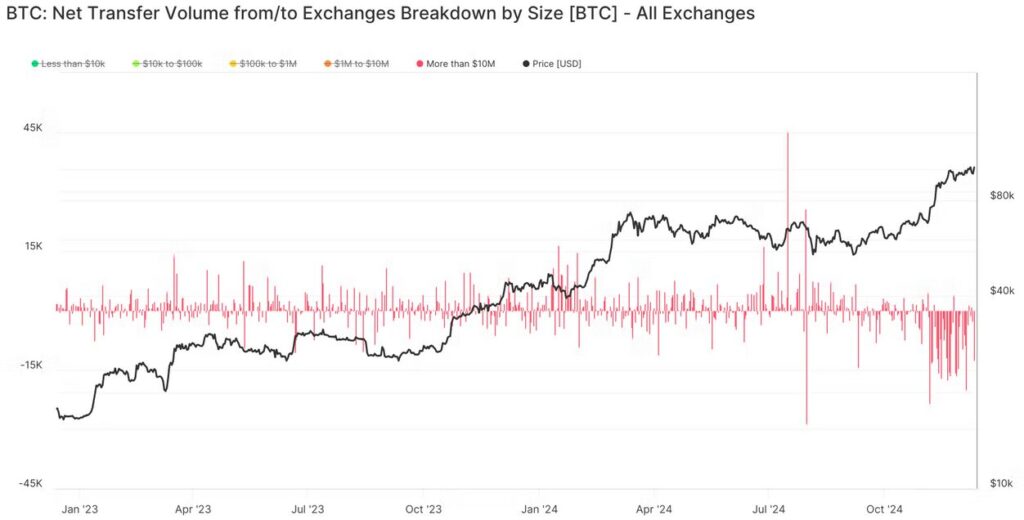
Within hours of the announcement, major exchanges and market makers accumulated over 70,000 BTC, equivalent to approximately $4.5 billion. Notable participants included:
- Binance — 29,344 BTC
- Coinbase — 20,756 BTC
- Kraken — 8,611 BTC
- Wintermute — 7,188 BTC
- Bybit — 5,191 BTC
This synchronized accumulation suggests more than opportunistic trading—it reflects coordinated liquidity positioning.
From a market structure perspective, this type of buying typically indicates:
- Anticipation of continued upside volatility
- Preparation for derivatives market expansion
- Potential inventory build-up for client demand or ETF flows
In other words, institutions were not merely reacting—they were positioning for what comes next.
Institutional BTC Accumulation Breakdown
3. Market-Wide Expansion: Capital Flows Return to Crypto
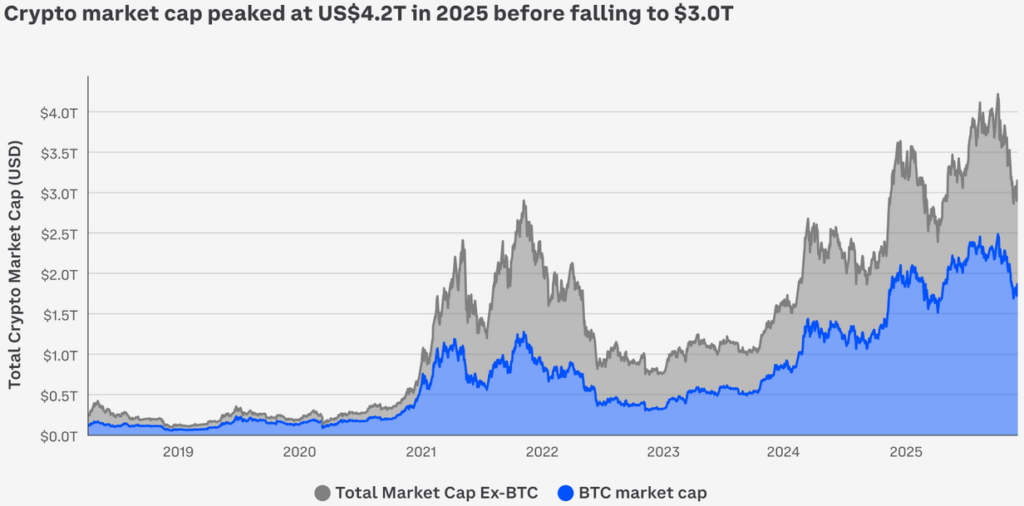
The broader crypto market mirrored Bitcoin’s strength. Total market capitalization expanded from approximately $2.30 trillion to $2.43 trillion, adding $130 billion in value within a short window.
This is significant for several reasons:
3.1 Correlation with Macro Risk Cycles
Crypto markets are increasingly tied to global liquidity conditions. The easing of geopolitical tension:
- Reduced demand for safe havens (e.g., USD, gold)
- Encouraged reallocation into risk-on assets, including crypto
3.2 Oil Price Decline as a Secondary Catalyst
With the reopening of the Strait of Hormuz, oil supply concerns eased, pushing prices downward.
Lower oil prices contribute to:
- Reduced inflation expectations
- Improved macro outlook
- Increased liquidity appetite
All of which indirectly support crypto valuations.
3.3 Structural Shift Toward Digital Assets
Beyond short-term flows, this event reinforces a broader trend:
Crypto is increasingly acting as a macro-sensitive asset class, not merely a speculative instrument.
4. The Critical Technical Barrier: $74,000
Despite the rally, Bitcoin has not yet confirmed a full bullish breakout.
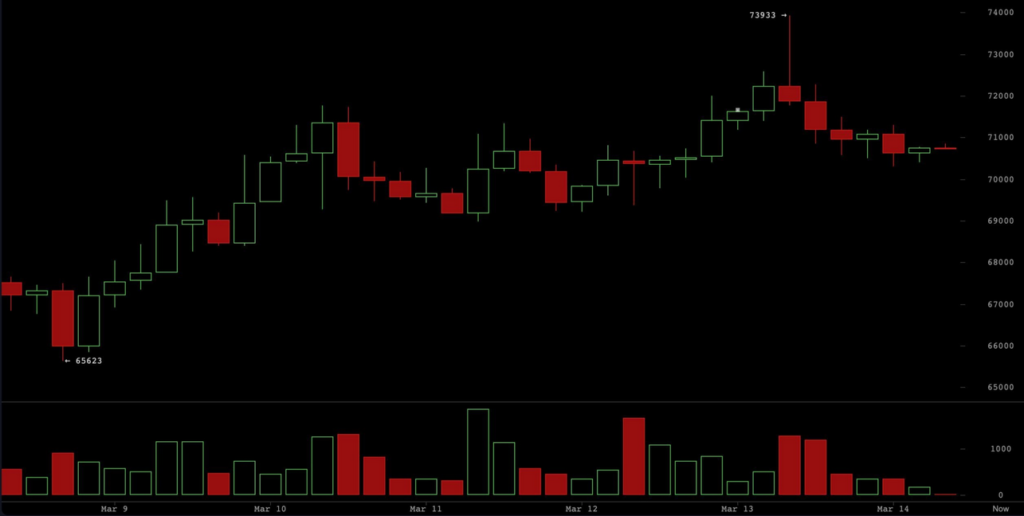
The $74,000 level remains a critical resistance, having capped price action for the past two months.
Scenario Analysis
Bullish Case:
- Clear breakout above $74,000
- Increased institutional inflows
- Momentum-driven rally toward new highs
Bearish Case:
- Rejection at resistance
- Profit-taking by early buyers
- Return to consolidation or retracement below $70,000
From a trading and infrastructure standpoint (especially for exchange builders like your project), this level is crucial for:
- Liquidity provisioning strategies
- Spread management
- Risk engine calibration
BTC Resistance at $74,000
5. Why This Matters for Builders and Investors
For readers seeking new crypto assets, revenue streams, and practical blockchain use cases, this event is more than a price spike—it’s a signal.
5.1 Timing of Capital Cycles
Macro-driven rallies often mark the early phase of capital rotation into crypto.
Opportunities typically emerge in:
- Mid-cap altcoins
- Infrastructure tokens
- DeFi protocols tied to liquidity expansion
5.2 Exchange and Liquidity Business Opportunities
Large-scale accumulation by exchanges suggests:
- Anticipation of higher trading volumes
- Expansion of derivatives and structured products
- Increased need for cross-chain liquidity solutions
This aligns directly with your interest in:
- Non-custodial wallet UX
- BTC ↔ ETH swap infrastructure
- Transparent liquidity routing
5.3 Geopolitics as a Trading Signal
This event reinforces a key insight:
Geopolitical developments are now first-class trading signals in crypto.
Monitoring:
- Middle East developments
- Energy markets
- Central bank responses
is no longer optional—it is essential.
6. Risks: Why This Rally May Still Be Fragile
Despite optimism, several risks remain:
6.1 Temporary Nature of the Ceasefire
The agreement is limited to two weeks, leaving uncertainty around:
- Final diplomatic outcomes
- Potential re-escalation
6.2 Dependency on Hormuz Stability
If the Strait of Hormuz fails to remain open:
- Oil prices could spike again
- Risk sentiment could reverse rapidly
6.3 Overextension of Market Positioning
Rapid institutional accumulation can lead to:
- Short-term overheating
- Liquidation cascades if momentum stalls
7. Forward Outlook: A Defining Moment for Q2 2026
Looking ahead, three factors will determine the trajectory of Bitcoin and the broader crypto market:
- Breakout or rejection at $74,000
- Progress toward a permanent U.S.–Iran agreement
- Sustained institutional inflows
If all three align, this could mark the beginning of a new expansion phase in crypto markets.
Conclusion
The surge of Bitcoin to $72,000 following the ceasefire announcement is not an isolated event—it represents the convergence of geopolitics, institutional capital, and macro liquidity cycles.
For investors, it highlights the importance of timing and narrative-driven flows.
For builders, it signals an impending wave of demand for scalable, transparent, and user-friendly crypto infrastructure.
The next decisive moment lies at $74,000.
Whether Bitcoin breaks through or retreats will define the tone of the market in the months ahead.
