
Why the Crypto Market’s Drop Below $3 Trillion Matters More Than It Appears

Key Takeaways :
- The global cryptocurrency market has fallen below $3 trillion in total capitalization for the third time in a month, signaling sustained selling pressure rather than a one-off correction.
- Bitcoin (BTC), Ethereum (ETH), and XRP are leading the decline, driven largely by institutional portfolio rebalancing rather than retail panic selling.
- Assets with high ETF exposure are under disproportionate pressure as year-end risk assessments intensify.
- While Asian equity markets are rising on expectations of Chinese fiscal stimulus, crypto assets are diverging sharply from traditional risk markets.
- Market sentiment has collapsed into “Extreme Fear”, with technical and liquidity indicators pointing to further downside risk before a durable recovery.
1. A Market Slipping Below $3 Trillion—Again
On December 17, the global cryptocurrency market once again slipped below the psychologically critical $3 trillion mark, marking the third such breach in just one month. At first glance, this may look like another routine pullback in a historically volatile asset class. However, the structure and drivers of this decline suggest something more consequential.
Unlike earlier short-lived corrections seen in February and April, the current downturn is broader and more technically significant. Several large-cap cryptocurrencies have broken through intermediate support levels simultaneously, indicating that the market is no longer simply digesting gains but reassessing risk more fundamentally.
This shift is especially important for investors and builders looking for the next generation of crypto assets, revenue models, and real-world blockchain use cases. Understanding why the market is falling is far more valuable than merely observing that it is falling.
2. Institutional Investors, Not Retail Panic, Are Driving the Sell-Off
One of the most striking features of the current decline is where the selling pressure is concentrated. Data shows that large-cap tokens with heavy exposure to exchange-traded funds (ETFs) are bearing the brunt of the downturn.
This strongly suggests that the move is being driven by institutional investors adjusting their portfolios, rather than retail traders capitulating en masse. Bitcoin, Ethereum, and XRP—three of the most institutionally held crypto assets—are all down in tandem.
Bitcoin fell approximately 1.5% to around $86,580, erasing part of the previous day’s gains. Ethereum slid from a local high near $2,980 to around $2,930, while XRP’s recovery stalled near $1.90.
Ironically, these are the same assets that benefited the most from institutional inflows earlier in the year. Now, as sentiment cools and year-end balance sheet considerations take precedence, they are also leading the market lower.
According to Alex Kuptsikevich, Chief Market Analyst at FxPro, major cryptocurrencies are becoming “casualties of shifting institutional sentiment” as investors reassess risk exposure ahead of the new year.
3. Crypto vs. Asia: A Rare and Telling Divergence
Perhaps the most intriguing aspect of the current market environment is the stark divergence between cryptocurrencies and Asian equity markets.
On the same day that Bitcoin and other major cryptocurrencies declined, leading Asian stock indices—including the Hang Seng, Shanghai Composite, KOSPI, and Indonesia’s IDX—posted modest gains. These gains were largely fueled by expectations of additional fiscal stimulus from Beijing, following a series of weak economic indicators in November.
Historically, cryptocurrencies have often traded in line with broader “risk-on” assets. However, this divergence suggests that crypto is currently responding to a different set of macro and structural forces—namely institutional de-risking and liquidity contraction—rather than global growth optimism.
For blockchain entrepreneurs and long-term investors, this underscores an uncomfortable but important reality: crypto markets are no longer insulated niche ecosystems. They are increasingly embedded in global capital flows—and vulnerable to the same portfolio decisions that affect traditional markets.
4. The Dollar’s Quiet Comeback and Its Impact on Crypto
Adding another layer of pressure is the recovery of the U.S. dollar index (DXY), which rebounded to around 98.30 after hitting a two-and-a-half-month low near 97.87.
The rebound followed U.S. employment data showing job growth of approximately 64,000, exceeding expectations of 50,000, even as the unemployment rate unexpectedly rose to 4.6%, its highest level since 2021.
A stronger dollar typically weighs on dollar-denominated assets such as Bitcoin and gold. While gold has remained resilient around $4,300 per ounce, cryptocurrencies have not enjoyed the same safe-haven bid—highlighting their continued classification as risk assets in institutional portfolios.
5. Sentiment Collapses Into “Extreme Fear”
Beyond price action, market psychology has deteriorated sharply. The widely followed Crypto Fear and Greed Index plunged to 11, its lowest level in a month and firmly within the “Extreme Fear” zone.
This matters because sentiment often acts as both a lagging and leading indicator. While extreme fear can eventually signal buying opportunities, it also reflects a market that is deeply uncertain and prone to exaggerated price movements.
“Illustrative Crypto Fear & Greed Scale”
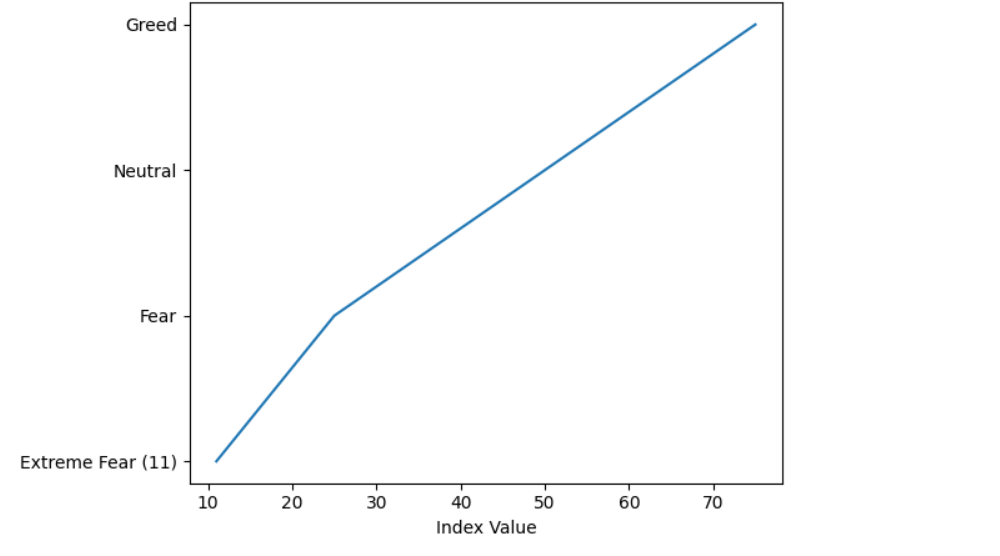
The speed of this sentiment shift suggests that the market is grappling with more than short-term volatility. It is confronting questions about liquidity, valuation, and the sustainability of recent institutional demand.
6. Technical Levels: Where Could Bitcoin Go Next?
From a technical perspective, Bitcoin’s next key support zone lies around $81,000, where November’s lows intersect with prior consolidation levels.
“Illustrative Bitcoin Support Zones”

If this level fails to hold, attention will likely shift to a broader $60,000–$70,000 range. This zone carries significant historical importance, having acted as a major resistance area during both the 2021 and 2024 market cycles.
A move into this range would not necessarily invalidate the long-term bullish thesis for Bitcoin, but it would represent a deeper and more psychologically damaging correction—especially for newer institutional participants.
7. Liquidity Is Drying Up—and That Amplifies Volatility
Another critical factor exacerbating the downturn is declining market liquidity. Data from FlowDesk indicates that market depth is thinning as the year draws to a close. Traders are closing positions, reducing leverage, and prioritizing capital preservation.
Lower liquidity does not just reduce trading volumes; it amplifies price swings, particularly during U.S. trading hours. Even relatively modest sell orders can trigger outsized moves when order books are thin.
This environment is especially challenging for algorithmic strategies, DeFi liquidity providers, and on-chain market makers—many of whom depend on stable liquidity conditions to operate profitably.
8. On-Chain Signals Tell a More Nuanced Story
While price and sentiment indicators paint a grim short-term picture, on-chain data reveals a more complex backdrop.
According to CryptoQuant, Bitcoin’s recent rally has likely exhausted itself, and the market may require a deeper correction before the next sustainable uptrend can emerge.
At the same time, Glassnode reports continued long-term accumulation by corporations and financial institutions, extending beyond traditional mining entities. A notable example is Strategy’s recent purchase of 10,624 BTC, valued at approximately $1.0 billion.
This selective accumulation suggests that while short-term momentum is weakening, long-term conviction among certain institutional players remains intact.
9. What This Means for Builders and Forward-Looking Investors
For readers seeking new crypto assets, alternative revenue streams, and practical blockchain applications, the current downturn should not be viewed solely as a threat.
Periods of institutional de-risking often coincide with:
- Increased focus on fundamentals over hype
- Greater scrutiny of real-world utility and cash-flow generation
- Opportunities to build infrastructure, protocols, and services at lower capital costs
Historically, many of the most successful crypto ventures were conceived or refined during market downturns—not at euphoric peaks.
Conclusion: A Necessary Reset, Not the End of the Story
The drop below $3 trillion in total crypto market capitalization is not just another headline—it reflects a broader reset in institutional risk appetite, liquidity conditions, and market structure.
While the near-term outlook remains fragile, with technical and sentiment indicators pointing to further volatility, the longer-term picture is far from bleak. Selective institutional accumulation, ongoing blockchain adoption, and the maturation of crypto market infrastructure continue beneath the surface.
For those willing to look beyond price charts and fear indices, this phase may ultimately prove to be a foundation-building period—one that separates speculative excess from sustainable innovation in the blockchain economy.
