

Main Points :
- Bitcoin fell sharply between March 6 and March 7 amid macroeconomic pressure.
- Rising oil prices above $90 per barrel raised fears of renewed monetary tightening.
- Weak U.S. employment data intensified recession and stagflation concerns.
- Despite selling pressure, order-book liquidity and options data indicate investors remain bullish.
- Geopolitical tensions and institutional adoption continue to support Bitcoin’s long-term thesis.
- Upcoming macro indicators such as U.S. CPI and the FOMC meeting may determine the next major move in crypto markets.
1. Bitcoin Declines Amid Macro Shock
Between March 6 and March 7, 2026, Bitcoin experienced a noticeable decline, briefly losing roughly ¥500,000 in value (approximately $3,300) during intraday trading.
While price volatility is common in cryptocurrency markets, the recent decline reflects a broader shift in macroeconomic sentiment rather than a purely crypto-specific event.
Two key factors drove the decline:
- A surge in global oil prices
- Weak U.S. employment data
Together these developments triggered a risk-off sentiment across financial markets, including cryptocurrencies.
Bitcoin has increasingly become integrated with the global macroeconomic environment. As institutional participation has expanded over the past several years—through ETFs, hedge funds, and treasury allocations—the asset’s short-term price movements often correlate with traditional financial indicators.
Thus, the current decline is less a reflection of Bitcoin’s fundamentals and more a reaction to global macroeconomic uncertainty.
2. Oil Prices Above $90 Trigger Inflation Concerns
One of the most immediate catalysts for the decline was the surge in crude oil futures prices above $90 per barrel, reaching levels not seen in more than two years and five months.
Higher oil prices have several economic consequences.
First, energy costs directly influence global inflation. When oil prices rise, transportation, manufacturing, and electricity costs increase across the economy.
Second, higher inflation may force central banks—particularly the U.S. Federal Reserve—to maintain or reintroduce tighter monetary policy.
If inflation remains persistent, policymakers may delay interest-rate cuts or even tighten financial conditions again.
For risk assets such as equities and cryptocurrencies, this possibility is generally negative in the short term.
Impact on Bitcoin Mining
Rising energy prices also have a direct impact on Bitcoin mining profitability.
Mining operations rely heavily on electricity, and when power costs increase, profit margins shrink.
This dynamic historically leads to several market reactions:
- Reduced mining profitability
- Potential selling pressure from miners
- Increased operational stress on smaller mining firms
During the 2022 energy crisis, similar concerns contributed to significant volatility in the crypto market.
The current environment echoes that period, although the industry today is far more resilient due to:
- Improved mining efficiency
- Geographic diversification of mining operations
- Greater access to renewable energy sources
Bitcoin Price vs Oil Price Correlation (2022–2026)
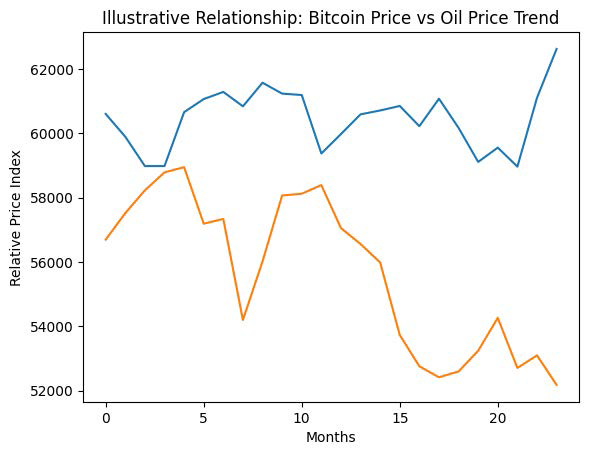
This chart should illustrate how spikes in energy prices historically coincide with short-term corrections in Bitcoin markets.
3. Weak U.S. Employment Data Raises Recession Fears
Adding to the pressure was the latest U.S. employment report, which revealed labor market conditions deteriorating to their weakest level in roughly five years.
Employment data is a critical indicator of economic health.
When hiring slows, it can signal that businesses expect weaker demand in the future. Investors often interpret this as an early warning sign of a potential economic slowdown.
In the current case, the data has raised fears of stagflation, a particularly difficult economic scenario where:
- Inflation remains high
- Economic growth stagnates
- Unemployment increases
Stagflation creates a challenging environment for policymakers because the usual tools to stimulate growth—such as lowering interest rates—may worsen inflation.
As a result, financial markets often react cautiously.
Risk-sensitive assets, including cryptocurrencies, can experience temporary sell-offs during such periods.
However, Bitcoin’s long-term narrative as a non-sovereign store of value may become more attractive in precisely this kind of macro environment.
4. Market Structure Shows Continued Buying Interest
Despite the price drop, deeper market indicators suggest that the broader crypto market remains structurally healthy.
Spot Market Flow
Order flow data shows continued selling pressure in the spot market, indicating that some traders are reducing exposure.
However, this selling has not triggered a cascade of liquidations.
Order Book Liquidity
A review of exchange order books shows large buy orders stacked at lower price levels.
This means significant liquidity exists below the current market price.
Such liquidity cushions the market against sudden crashes.
In practical terms, this indicates that institutional buyers and large traders may be preparing to accumulate Bitcoin during dips.
Bitcoin Order Book Depth Analysis
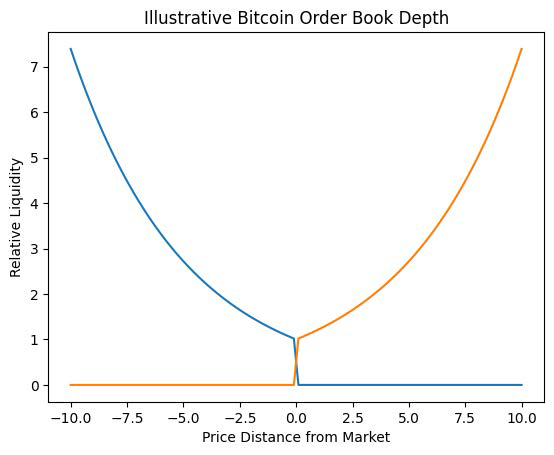
This visualization should highlight strong buy-side liquidity below the current price.
5. Options Market Signals Bullish Sentiment
Another important signal comes from the options market, specifically the Put-Call Ratio (PCR).
The PCR compares the volume of bearish put options with bullish call options.
A low PCR generally indicates that traders expect prices to rise rather than fall.
Current data shows the PCR remains relatively low.
This suggests that professional traders and institutional investors are still positioning for upside potential despite the recent correction.
Historically, crypto markets often experience short-term corrections within broader bull cycles.
During these periods, derivatives markets can reveal whether the market expects further downside or a rebound.
In the present case, sentiment appears cautiously optimistic rather than fearful.
6. Geopolitical Risks Reinforce Bitcoin’s Hedge Narrative
Another notable factor supporting Bitcoin’s resilience is the current geopolitical landscape.
Tensions involving Iran and Middle Eastern energy markets have contributed to the recent spike in oil prices.
Geopolitical uncertainty tends to increase demand for assets perceived as independent from government control.
Bitcoin fits this description.
Unlike fiat currencies, Bitcoin operates on a decentralized network and cannot be manipulated by central banks or political authorities.
As a result, some investors view Bitcoin as a hedge against geopolitical instability.
This dynamic has appeared in several previous crises:
- The Russia-Ukraine war
- Banking sector instability in 2023
- Currency crises in emerging markets
Although Bitcoin has not yet fully achieved “digital gold” status, the narrative continues to strengthen.
7. Institutional Trends Continue to Support Crypto
Beyond short-term macro pressures, structural developments continue to support the crypto ecosystem.
Sovereign Adoption
Several governments are beginning to explore strategic crypto reserves.
For example, Kazakhstan’s central bank recently proposed allocating up to $370 million to crypto-related assets.
Such moves signal a gradual normalization of digital assets within national financial systems.
Institutional Capital
Large financial institutions are also expanding their crypto exposure.
Asset managers such as BlackRock, Fidelity, and others have introduced or expanded digital asset products.
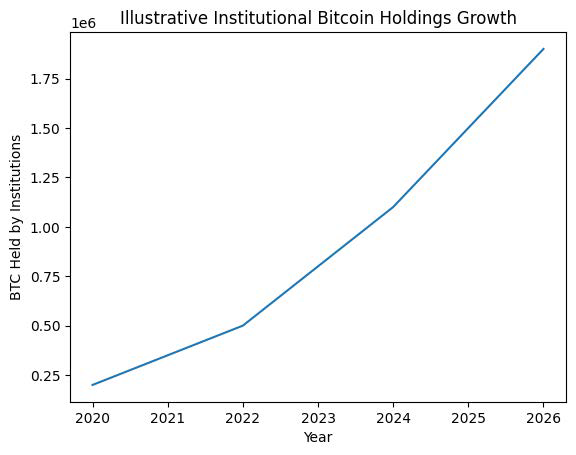
Institutional participation tends to stabilize markets over time because these investors operate with longer investment horizons than retail traders.
Institutional Bitcoin Holdings Growth (2020–2026)
8. Key Economic Events to Watch
Several major macroeconomic events in the coming weeks could influence the direction of crypto markets.
March 11 — U.S. Consumer Price Index (CPI)
Inflation data will be closely watched.
A higher-than-expected CPI reading could reinforce fears that the Federal Reserve must maintain tight monetary policy.
March 12 — U.S. Industrial Production
This indicator measures economic activity in the manufacturing sector and provides insight into economic momentum.
March 19 — Federal Open Market Committee (FOMC)
The Federal Reserve’s policy meeting will be the most important event.
Investors will analyze:
- Interest rate decisions
- Forward guidance
- Inflation expectations
Crypto markets often react strongly to changes in global liquidity conditions.
Conclusion
The recent decline in Bitcoin prices reflects a macro-driven correction rather than a structural collapse of the crypto market.
Several factors contributed to the downturn:
- Rising oil prices above $90
- Weak U.S. employment data
- Renewed fears of inflation and stagflation
However, deeper market signals suggest that investor confidence remains intact.
Order-book liquidity, options market positioning, and geopolitical dynamics all indicate continued interest in Bitcoin as both an investment asset and a macro hedge.
At the same time, structural trends—including institutional adoption and sovereign interest in digital assets—continue to strengthen the long-term case for cryptocurrencies.
In the coming weeks, key macroeconomic indicators such as the U.S. CPI release and the FOMC meeting will likely determine the next major direction for the crypto market.
For investors seeking the next generation of digital assets or new blockchain-driven revenue opportunities, the current environment represents both a challenge and an opportunity.
Corrections driven by macro events often create entry points for long-term investors.
As the crypto ecosystem continues to mature and integrate with global finance, understanding the intersection between macroeconomics and blockchain markets will become increasingly essential for identifying the next wave of opportunity.
