

Key Takeaways :
- Bitcoin surged past $75,000 (~¥12M equivalent) amid renewed geopolitical tension
- Falling oil prices removed a key pressure on mining economics
- Spot-driven buying signals real demand, not speculative leverage
- Bitcoin is increasingly behaving as an uncorrelated macro asset
- Regulatory clarity (especially U.S. legislation) could define the next phase
- Whale accumulation and post-loss recovery cycles support bullish continuation
1. Market Overview: Bitcoin Reclaims Strength Above $75,000
Bitcoin has once again demonstrated resilience, climbing above the $75,000 level, marking a significant psychological and technical milestone in the current cycle. This move corresponds roughly to $75K globally, despite local currency variations such as the Japanese yen reaching ¥12 million levels.
The recent rally is not merely a continuation of speculative momentum but reflects a deeper structural shift in how Bitcoin is perceived within global markets. Increasingly, Bitcoin is acting as what analysts describe as a “sovereign-free asset”—an asset detached from centralized government control and monetary policy.
Unlike previous bull runs driven by retail euphoria or leveraged derivatives, this upward movement appears rooted in broader macroeconomic dynamics and institutional positioning.
2. Geopolitical Risk and Bitcoin’s Emerging Narrative
One of the primary drivers behind the recent price surge is the prolonged geopolitical instability in the Middle East. As tensions persist and global uncertainty increases, capital is seeking refuge in alternative stores of value.
Traditionally, gold has fulfilled this role. However, Bitcoin is now increasingly entering that narrative. Interestingly, recent correlation data shows:
- S&P 500 correlation: -0.09
- Gold correlation: -0.25
- Oil correlation: -0.24
These figures suggest that Bitcoin is not simply behaving like a “digital gold” proxy, but rather as a distinct, independent asset class.
This decoupling is critical. It implies that Bitcoin is maturing beyond being a risk-on speculative instrument and is instead developing characteristics of a macro hedge asset.
Bitcoin vs Traditional Assets Correlation (2-Month Basis)
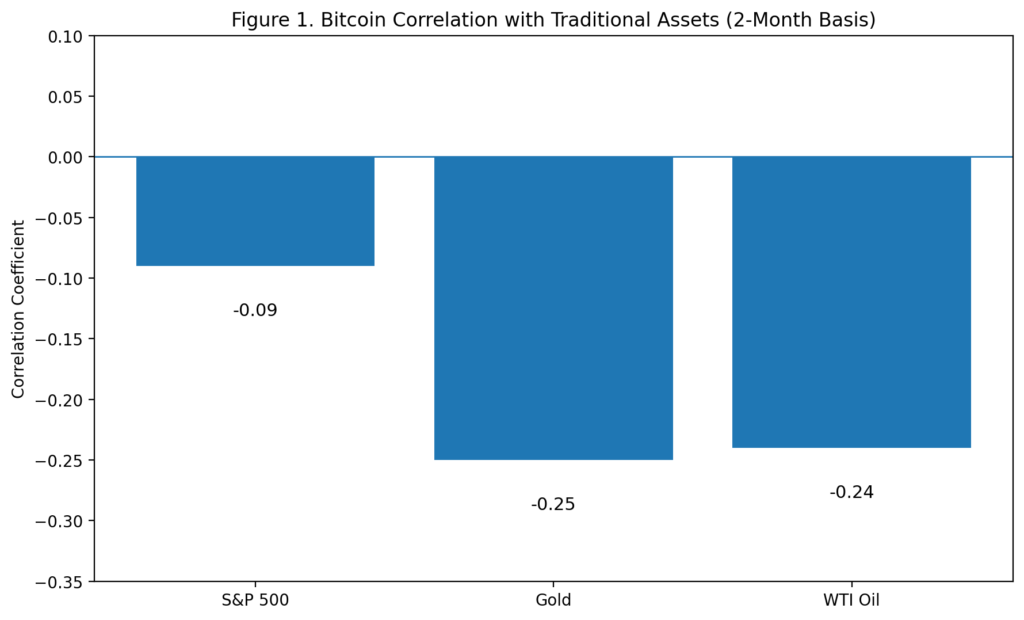
Description: Bar chart showing correlation values of BTC vs S&P 500, Gold, Oil
Purpose: Visualize Bitcoin’s independence from traditional markets
3. Oil Price Decline: A Hidden Catalyst for Bitcoin
A less obvious but equally important factor is the recent decline in WTI crude oil prices, which fell back to the low $90 range after concerns around tanker disruptions eased.
This matters for Bitcoin in a very practical way.
High oil prices typically translate into higher electricity costs globally. Since Bitcoin mining is energy-intensive, rising energy costs directly impact miner profitability. When margins compress, miners may sell BTC holdings to maintain operations, creating downward pressure on price.
The recent oil price pullback has therefore:
- Reduced operational stress on miners
- Lowered forced selling pressure
- Enabled stronger price support
This dynamic is often overlooked but is critical in understanding Bitcoin’s supply-side behavior.
4. Spot-Led Buying: Evidence of Real Demand
Market data between March 16–17 reveals a crucial detail: buying activity is dominated by spot markets rather than futures.
This distinction is vital.
- Futures-driven rallies are often short-lived and prone to liquidation cascades
- Spot-driven rallies indicate genuine capital inflow and long-term positioning
The current rally shows strong spot accumulation, suggesting that investors—possibly including institutions and high-net-worth individuals—are actively acquiring Bitcoin as a strategic asset.
Additionally, on-chain analytics (e.g., whale wallet activity) indicate a return to net accumulation after nearly two months, reinforcing the bullish outlook.
Spot vs Futures Volume Comparison (March 16–17)
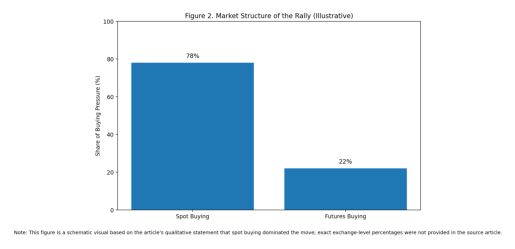
Description: Stacked bar chart showing dominance of spot buying
Purpose: Highlight structural strength of current rally
5. Sentiment Shift: From Extreme Fear to Cautious Recovery
The Crypto Fear & Greed Index has improved from “Extreme Fear” to “Fear.”
While still cautious, this shift is meaningful:
- Extreme Fear → indicates capitulation and panic
- Fear → indicates stabilization and early recovery
Historically, transitions out of extreme fear zones often precede sustained upward trends.
This aligns with broader behavioral finance patterns, where markets bottom out when pessimism peaks.
6. Post-Loss Recovery and Corporate Positioning
Another supporting factor is the completion of corporate earnings cycles, particularly for firms that reported losses following the October flash crash.
With negative news now fully priced in, markets are seeing:
- Short covering
- Portfolio rebalancing
- Strategic re-entry by institutions
This “bad news exhaustion” effect often marks the transition from consolidation to expansion phases.
7. Regulatory Outlook: The Next Major Catalyst
Looking ahead, regulatory developments—especially in the United States—will play a pivotal role.
The proposed “Clarity Act” and related stablecoin yield frameworks could:
- Define legal boundaries for crypto assets
- Enable institutional participation
- Reduce regulatory uncertainty
For a company like yours (operating EMI/VASP structures), this is particularly important. Regulatory clarity directly impacts:
- Cross-border remittance flows
- Stablecoin usage
- Treasury strategies involving crypto
In short, regulation is shifting from being a risk factor to becoming a potential growth catalyst.
8. Macro Events to Watch
Several upcoming macroeconomic events could influence Bitcoin’s trajectory:
- FOMC Meeting (March 19)
- Bank of Japan Policy Decision (March 19)
- ECB Meeting (March 19)
- U.S. PMI Data (March 24)
Interest rate signals, liquidity conditions, and global economic outlook will all shape risk appetite across markets—including crypto.
9. Strategic Implications for Crypto Investors and Builders
For readers seeking new crypto assets, yield opportunities, and practical blockchain applications, several strategic insights emerge:
1. Bitcoin as Core Treasury Asset
Bitcoin is increasingly suitable as a balance sheet hedge, similar to digital gold but with higher growth potential.
2. Energy-Macro Awareness
Understanding oil and energy markets is becoming essential for crypto investing—especially for mining-related exposure.
3. Spot Accumulation Strategy
The current market favors gradual accumulation over leveraged trading.
4. Regulatory Positioning
Projects aligned with regulatory clarity (stablecoins, compliant exchanges, payment rails) will likely outperform.
Bitcoin Market Drivers Framework
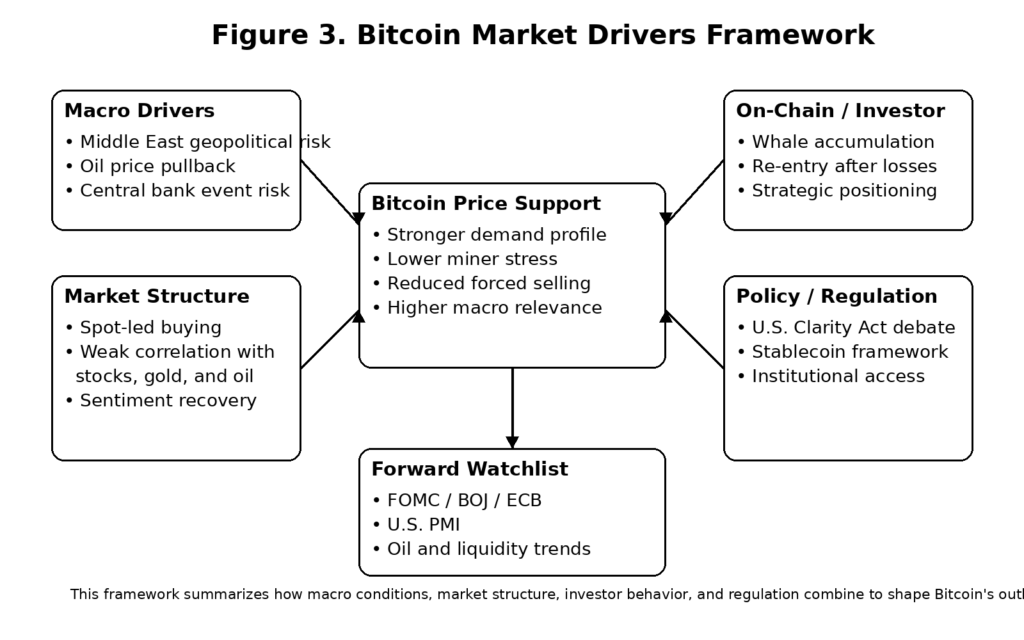
Description: Diagram linking macro (oil, geopolitics), micro (miners, whales), and regulatory factors
Purpose: Provide holistic understanding of BTC price drivers
10. Conclusion: Bitcoin’s Evolution into a Global Macro Asset
Bitcoin’s recent surge above $75,000 is not an isolated event. It reflects a convergence of:
- Geopolitical uncertainty
- Energy market shifts
- Structural demand from spot buyers
- Improving sentiment
- Regulatory evolution
More importantly, it signals Bitcoin’s transition into a global macro asset class, distinct from traditional financial instruments.
For investors and builders alike, the opportunity lies not just in price speculation, but in understanding how Bitcoin integrates into broader financial systems—from treasury management to cross-border payments.
As the market continues to evolve, one thing is clear: Bitcoin is no longer just an experiment—it is becoming a core pillar of the future financial architecture.
