
Main Points :
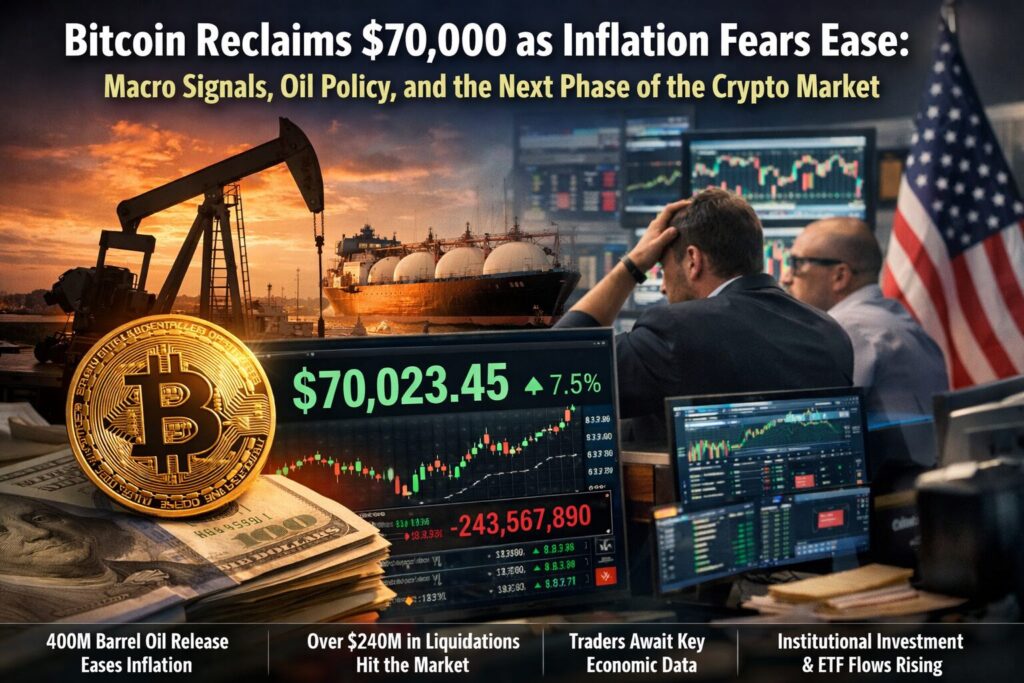
- Bitcoin reclaimed the $70,000 level after U.S. inflation data matched expectations, easing macroeconomic concerns.
- A massive 400 million-barrel emergency oil release helped stabilize energy prices, reducing inflation pressure.
- Traders remain cautious, with Bitcoin still trading inside a macro range rather than entering a clear bull breakout.
- Market liquidations exceeded $240 million, largely driven by short positions.
- The next decisive move for Bitcoin may depend on March inflation data, geopolitical developments, and institutional flows.
- Long-term trends continue to favor Bitcoin adoption due to institutional investment, ETF flows, and growing macro uncertainty.
1. Bitcoin Climbs Back Above $70,000
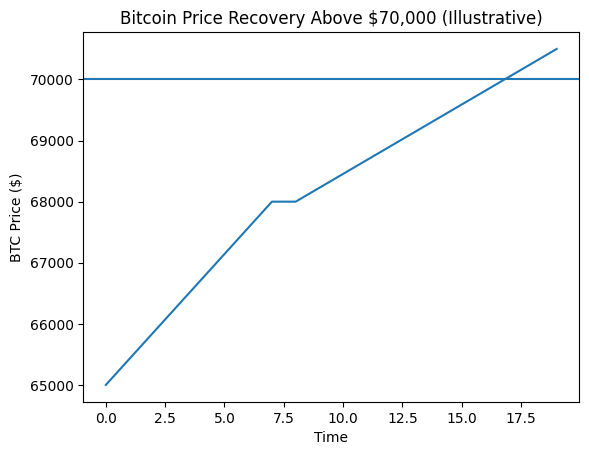
Bitcoin regained the psychologically important $70,000 price level as global markets responded positively to the latest U.S. inflation data.
According to market data from TradingView and major cryptocurrency exchanges, Bitcoin rose modestly ahead of the opening of U.S. equity markets on Wednesday. Although the rally was not strong enough to exceed the previous day’s peak, the move was still significant because it restored market confidence after a period of volatility.
The recovery occurred at a moment when investors were closely watching macroeconomic indicators. In recent weeks, uncertainty surrounding inflation, geopolitical tensions, and energy prices had triggered cautious sentiment across financial markets.
Bitcoin’s return above $70,000 suggests that investors are beginning to regain confidence in risk assets.
Bitcoin Price Recovery Above $70,000
2. U.S. CPI Data Meets Expectations
One of the most important catalysts for the market recovery was the latest U.S. Consumer Price Index (CPI) report.
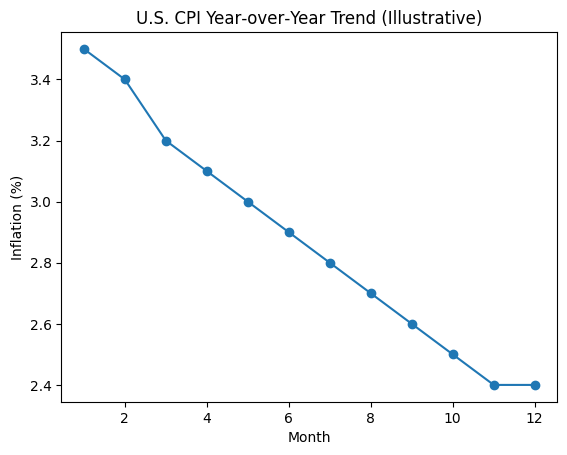
Data released by the U.S. Bureau of Labor Statistics (BLS) showed that the CPI increased 2.4% year-over-year in February, exactly matching market expectations.
For financial markets, this result was significant for several reasons.
First, inflation coming in exactly as expected reduces uncertainty. Financial markets tend to react negatively when inflation surprises to the upside because it increases the likelihood of tighter monetary policy from the Federal Reserve.
Second, the data indicated that inflation pressures are not accelerating dramatically, which reassured investors that central banks may not need to implement aggressive interest-rate increases.
This stabilization of macroeconomic expectations provided a supportive backdrop for risk assets such as stocks, technology companies, and cryptocurrencies.
Bitcoin, often viewed as a high-beta risk asset, benefited from this shift in sentiment.
U.S. Inflation Trend (CPI YoY)
3. Oil Policy Plays a Critical Role
Another factor easing market anxiety was a dramatic decision in the energy sector.
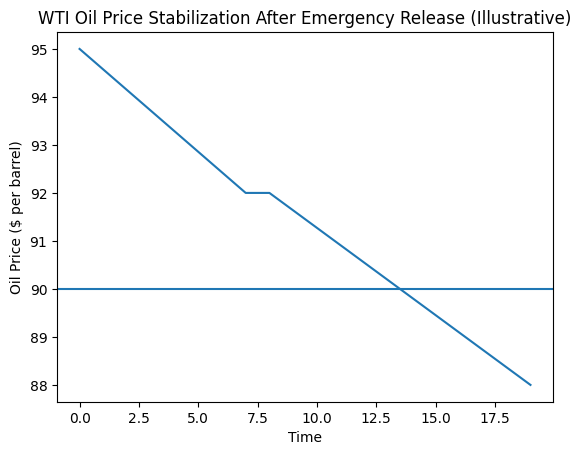
The International Energy Agency (IEA) approved an emergency release of approximately 400 million barrels of crude oil, the largest coordinated release in history.
This intervention helped keep crude oil prices below approximately $90 per barrel, preventing energy prices from spiking further.
Energy prices are a crucial component of inflation because they influence transportation costs, manufacturing expenses, and consumer prices across the entire economy.
If oil prices rise sharply, inflation can accelerate quickly, forcing central banks to tighten monetary policy.
The oil release therefore played a stabilizing role in financial markets, indirectly supporting Bitcoin and other risk assets.
WTI Oil Price Stabilization After Emergency Release
4. Traders Continue to Use Range Strategies
Despite Bitcoin’s move back above $70,000, traders are not yet fully convinced that a new bullish breakout is imminent.
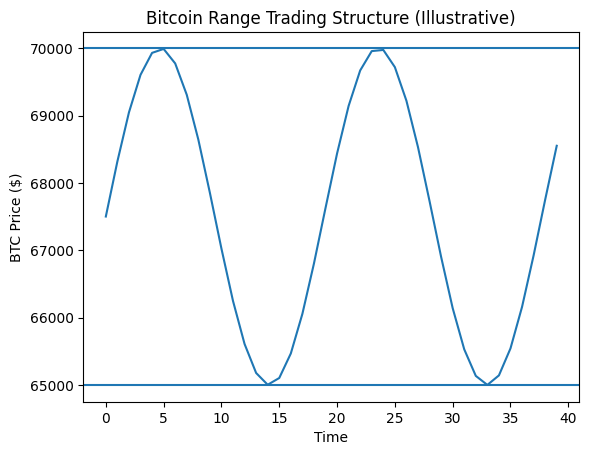
Market analysts widely agree that Bitcoin is currently trading inside a range-bound structure, meaning prices fluctuate between support and resistance levels rather than trending strongly in one direction.
Cryptocurrency analyst Michaël van de Poppe summarized the prevailing strategy among traders:
“The strategy is simple. Buy the bottom of the range and sell the top.”
In other words, traders are capitalizing on short-term price swings rather than betting aggressively on a breakout.
Van de Poppe also suggested that Bitcoin could still test higher levels later in the month if bullish momentum returns. However, he noted that if prices fall, lower levels could present new buying opportunities.
Range trading remains common during periods when macroeconomic uncertainty has not yet been resolved.
Bitcoin Range Trading Structure
5. Key Support Level Near $65,000
Another important observation from market analysts is the presence of strong liquidity near $65,000.
Trader Rekt Capital and other market observers have highlighted that large clusters of buy orders exist near this level. These liquidity zones often act as temporary price floors because buyers step in aggressively when prices fall.
Trader Renato Snyder also noted that downside liquidity could create a local bottom near this region.
If Bitcoin were to decline toward $65,000, it could attract strong buying interest from both traders and institutional investors.
Such liquidity structures often influence short-term market movements.
6. Liquidations Reveal Market Positioning
Data from the market analytics platform Coinglass showed that approximately $240 million worth of cryptocurrency positions were liquidated in the previous 24 hours.
Interestingly, the majority of these liquidations were short positions.
Short liquidations occur when traders betting on price declines are forced to close their positions as prices rise.
This phenomenon often amplifies upward price movements because closing a short position requires buying the asset back.
Therefore, the recent liquidations likely contributed to Bitcoin’s push above $70,000.
7. Institutional Interest Remains Strong
Beyond short-term market movements, Bitcoin continues to benefit from long-term structural trends.
Over the past year, the cryptocurrency market has seen a surge in institutional participation, particularly through Bitcoin exchange-traded funds (ETFs).
Large asset managers have launched spot Bitcoin ETFs that allow traditional investors to gain exposure to the asset without directly holding cryptocurrency.
These ETFs have attracted billions of dollars in inflows.
Institutional demand has historically played a crucial role in sustaining Bitcoin bull markets.
As more capital flows into regulated investment products, Bitcoin becomes increasingly integrated into the global financial system.
8. Macro Trends Supporting Crypto Adoption
Bitcoin’s price movements are also influenced by broader macroeconomic dynamics.
Several trends are particularly relevant:
Inflation Hedging
Even though inflation has moderated recently, many investors continue to view Bitcoin as a long-term hedge against currency debasement.
Monetary Policy Uncertainty
Central banks around the world face difficult choices regarding interest rates and liquidity.
Periods of monetary instability often increase demand for alternative assets.
Digital Asset Infrastructure Growth
The cryptocurrency ecosystem has matured significantly in recent years.
Developments such as:
- Layer-2 scaling networks
- decentralized finance (DeFi)
- tokenized assets
- stablecoin payment infrastructure
are expanding the practical use cases of blockchain technology.
These developments strengthen the long-term investment case for cryptocurrencies.
9. What Comes Next for Bitcoin?
The next major catalyst for Bitcoin may come from March inflation data.
If inflation continues to decline or remain stable, risk assets could see renewed momentum.
However, several risks remain.
Geopolitical tensions, particularly those involving Middle Eastern energy markets, could disrupt inflation trends.
Similarly, shifts in U.S. monetary policy could influence liquidity conditions in financial markets.
For now, Bitcoin appears to be consolidating within a broad trading range while waiting for clearer macro signals.
Conclusion
Bitcoin’s recovery above $70,000 reflects a temporary easing of macroeconomic fears following the latest U.S. inflation data and the stabilization of oil prices.
However, the market remains cautious.
Traders continue to rely on range-trading strategies, while analysts closely monitor key support levels near $65,000.
At the same time, long-term structural trends — including institutional investment, ETF inflows, and expanding blockchain adoption — continue to strengthen Bitcoin’s position within the global financial system.
In the coming months, the cryptocurrency market will likely be shaped by the intersection of macroeconomic policy, geopolitical developments, and technological innovation.
For investors seeking new opportunities in digital assets, understanding these macro drivers may be just as important as analyzing blockchain technology itself.
Bitcoin’s latest move above $70,000 may not yet signal the start of the next bull run — but it reinforces the asset’s resilience in an increasingly complex financial world.
