
Main Points :
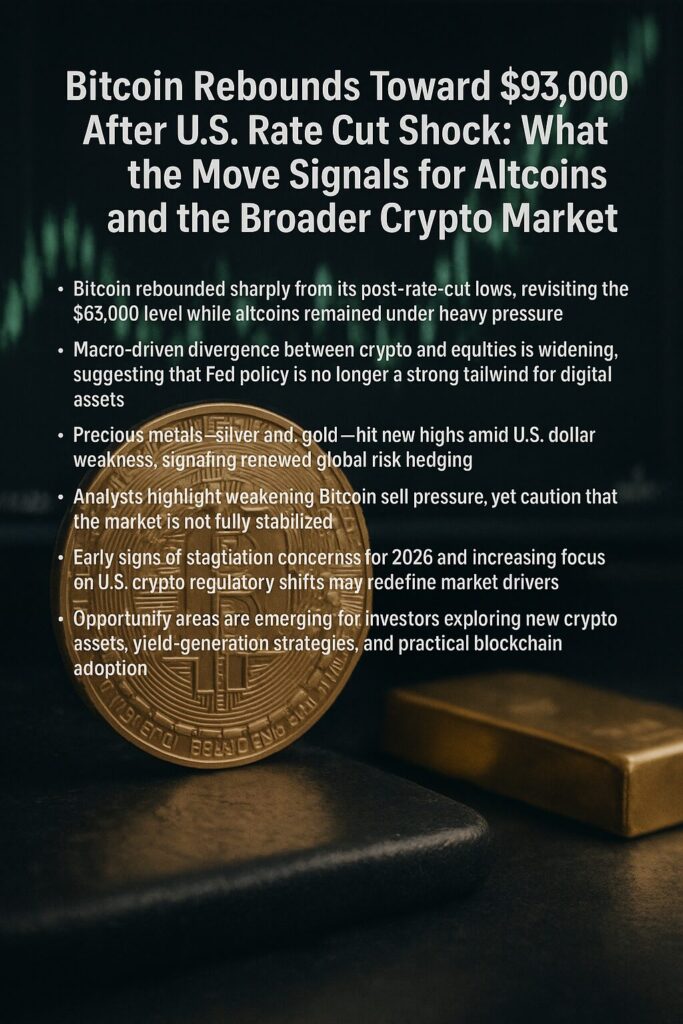
- Bitcoin rebounded sharply from its post–rate-cut lows, revisiting the $93,000 level while altcoins remained under heavy pressure.
- Macro-driven divergence between crypto and equities is widening, suggesting that Fed policy is no longer a strong tailwind for digital assets.
- Precious metals—silver and gold—hit new highs amid U.S. dollar weakness, signaling renewed global risk hedging.
- Analysts highlight weakening Bitcoin sell pressure, yet caution that the market is not fully stabilized.
- Early signs of stagflation concerns for 2026 and increasing focus on U.S. crypto regulatory shifts may redefine market drivers.
- Opportunity areas are emerging for investors exploring new crypto assets, yield-generation strategies, and practical blockchain adoption.
Section 1 — Bitcoin’s Surprising Recovery After the Fed’s Rate Cut Shock
Bitcoin (BTC) delivered an impressive turnaround on December 11, rebounding toward $93,000 after falling as low as $89,000 following the U.S. Federal Reserve’s anticipated rate cut. Markets initially reacted with confusion, prompting both equities and crypto to sell off before stabilizing toward the close of the U.S. trading session.
The recovery was notably aligned with a partial rebound in the Nasdaq index, which closed only 0.25% lower despite being down as much as 1.5% earlier in the day. The S&P 500 finished slightly higher, and the Dow Jones Industrial Average gained 1.3%, offering a mixed but more stable macro environment.
Yet altcoins did not follow Bitcoin’s rebound. Tokens such as Cardano (ADA) and Avalanche (AVAX) posted 6–7% losses, while Ethereum (ETH) dropped 3%, still holding above $3,200. This divergence reinforces a recurring theme: Bitcoin now behaves more like a macro asset, while altcoins respond more to liquidity cycles and risk sentiment.
Section 2 — Macro Divergence Deepens: Crypto vs Equities
Wintermute strategist Jasper De Maere highlighted a striking statistic:
In the last 12 months, Bitcoin outperformed the Nasdaq on only 18% of macro-driven trading days.
Yesterday’s performance reinforced this trend—stocks recovered, yet crypto assets remained under pressure. This suggests:
- Fed rate cuts are fully priced in
- Monetary easing is no longer a guaranteed bullish catalyst
- The market is shifting focus from macro policy to regulatory risk and stagflation fears
With early signs of slowing economic growth and sticky inflation emerging, traders may reposition ahead of 2026—especially in sectors like DeFi, tokenized assets, and real-world asset (RWA) networks that can benefit from structural rather than cyclical demand.
Section 3 — Precious Metals Surge as the Dollar Weakens
One of the most notable developments on December 11 was the sharp rally in precious metals, driven by the U.S. Dollar Index (DXY) falling to its lowest level since mid-October.
- Silver surged 5% to a record-high $64/oz
- Gold climbed over 1% toward $4,300/oz
Traditional safe havens responding this strongly reinforces that global investors are hedging macro uncertainty—yet crypto did not see the same magnitude of inflows. This decoupling may indicate that digital assets are currently viewed more as risk assets than defensive hedges.
However, historically, Bitcoin often lags gold during macro shock periods before eventually catching up. Investors seeking asymmetric upside in 2026 may find this divergence worth monitoring.
Section 4 — Institutional News: Gemini Gains Approval for U.S. Prediction Markets
One bright spot in the crypto equity sector was Gemini, which saw its stock price spike over 30% after receiving regulatory approval to offer prediction markets in the United States.
This is notable for several reasons:
- Prediction markets overlap with real-world data feeds, AI training, and on-chain governance, making them increasingly important for blockchain utility.
- Regulatory approval in the U.S. signals growing acceptance of crypto-native financial products.
- Exchanges able to integrate on-chain settlement with regulated prediction frameworks may open entirely new revenue lines.
Investors exploring new crypto assets may want to follow developments in decentralized prediction markets, AI-driven forecasting tokens, and real-world event derivatives—areas likely to expand as regulatory clarity improves.
Section 5 — Analyst View: Bitcoin Selling Pressure Weakening but Not Gone
Swissblock, a well-regarded analytics firm, observed that Bitcoin’s selling pressure appears to be losing momentum. According to their research:
- The second wave of selling was weaker than the first
- Downside momentum is not accelerating
- Early signs of stabilization are emerging
However, they emphasize caution:
“Stabilization is visible… but not confirmed.”
This aligns with on-chain trends:
- Exchange reserves remain near multi-year lows
- Long-term holders continue to accumulate
- Futures liquidation levels have cooled after recent volatility
Still, leveraged long positions remain elevated, creating risk of further unwinding if macro shocks intensify.
Section 6 — Broader Market Trend: Altcoin Pressure Creates Opportunities
Altcoins staying red even as Bitcoin rebounded may seem negative, but for strategic investors, this environment historically creates:
- Discounted entry points for high-potential projects
- Opportunities in RWA protocols, modular blockchain infrastructure, and yield-bearing tokens
- Better risk-reward profiles as weak projects get flushed out while strong networks gain market share
2025 has shown that liquidity increasingly rotates toward:
- Bitcoin as a macro hedge
- Ethereum + L2 ecosystems as settlement and computation layers
- AI-linked tokens
- RWA tokenization (especially those offering USD-denominated yields)
- Interoperability and cross-chain liquidity protocols
Investors searching for new income streams should monitor these sectors closely heading into 2026.
Section 7 — Data Visualizations (Insert Images Here)
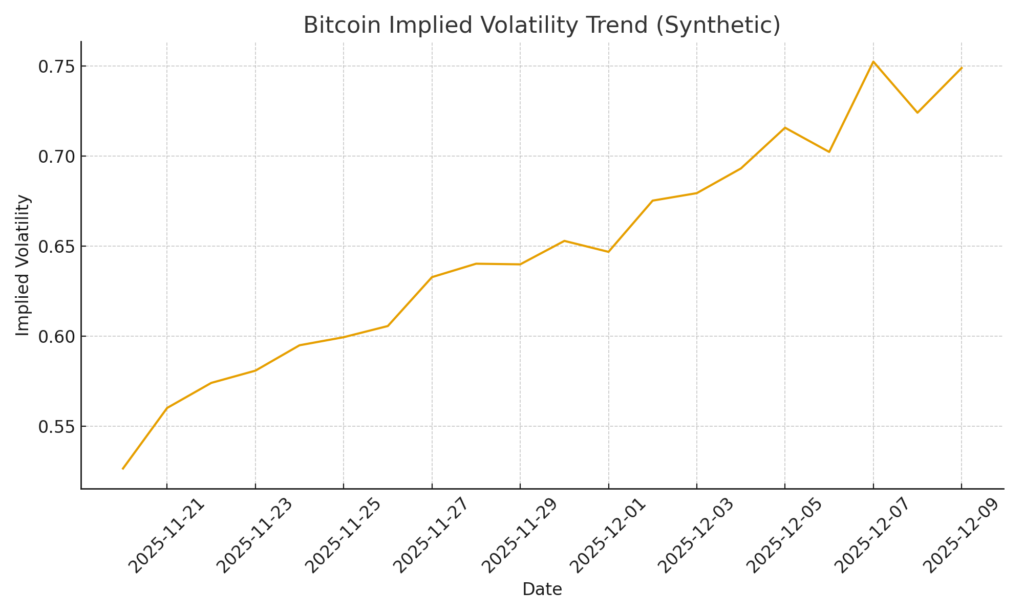
Implied Volatility Trend
Bitcoin Seasonality Pattern
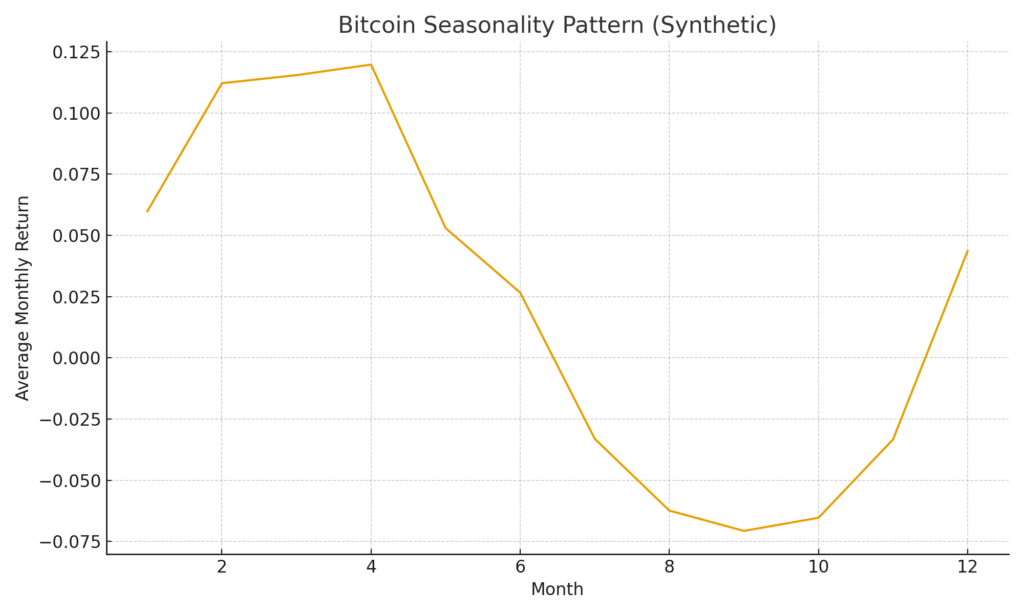
These charts illustrate synthetic data for conceptual understanding—helpful for visualizing volatility shifts, open interest positioning, and seasonal return tendencies investors typically evaluate.
Section 8 — What This Means for Investors Seeking New Crypto Opportunities
For readers specifically looking for:
- New crypto assets
- Next potential income sources
- Practical blockchain use cases
the current market environment offers a rare mix of volatility and structural growth.
Key Areas Worth Monitoring in 2026:
| Sector | Why It Matters |
|---|---|
| RWA Tokenization | Tokenized treasuries & yield-bearing assets will expand regardless of Fed policy. |
| Modular Blockchains | Lower cost & higher throughput → ideal for enterprise and real-world integration. |
| AI + Blockchain Convergence | Prediction markets, data marketplaces, decentralized compute. |
| Cross-Chain Liquidity Networks | Improved user experience will unlock multi-chain retail adoption. |
| Bitcoin Layer 2 Ecosystems | Stacks, Babylon, BitVM offer new utility beyond “digital gold.” |
Alongside these sectors, liquidity stress in altcoins often precedes strong rallies during recovery phases, making this an important accumulation period for high-quality fundamentals-driven projects.
Conclusion — The Market Is Stabilizing, but Not Safe Yet
Bitcoin’s rebound to $93,000 after the rate cut shock signals resilience, but divergences across crypto, equities, and commodities highlight a market in transition. The weakening U.S. dollar boosted precious metals, while crypto investors remain cautious, particularly in altcoin markets.
Analysts agree that selling pressure is weakening—but also insist that the market has not yet entered a confirmed safety zone. Stagflation concerns and U.S. regulatory shifts will likely dominate the next phase of price action.
For investors seeking new opportunities, this transitional period is often when the next generation of winners emerges—particularly across RWAs, AI-linked protocols, modular layers, and Bitcoin L2 ecosystems.
Crypto is shifting from macro-driven speculation toward structural adoption—and those who position early may capture the industry’s next major growth cycle.
