
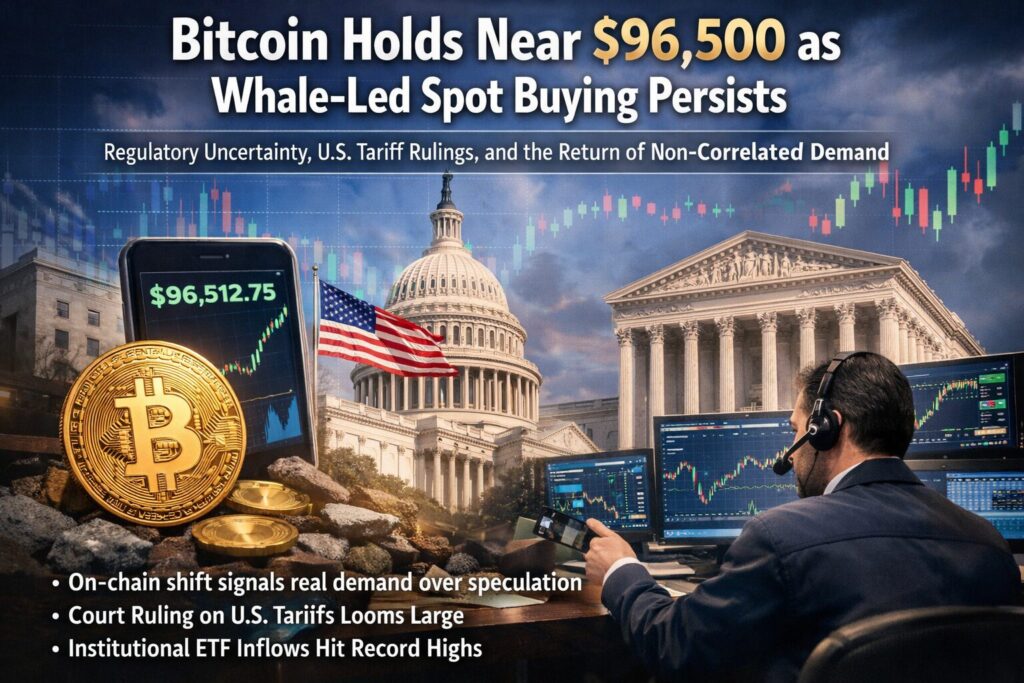
Main Points :
- Bitcoin rebounded strongly from the $84,000–$90,000 zone, driven primarily by spot-market whale accumulation rather than leveraged derivatives.
- On-chain indicators confirm a structural shift from speculative leverage to real demand.
- Retail participation is rising, but remains concentrated in futures markets—typical of early-stage bullish continuation.
- Regulatory uncertainty in the U.S. has intensified following Coinbase’s withdrawal of support for the revised CLARITY Act.
- Markets are increasingly focused on a potential Supreme Court ruling on U.S. tariffs, with indirect implications for monetary policy, liquidity, and crypto inflows.
- Bitcoin’s role as a non-correlated asset is strengthening, supported by record inflows into institutional ETFs.
1. Bitcoin Price Action: Reclaiming Structure Above $90,000
Bitcoin (BTC) continues to trade around $96,500, marking a daily gain of approximately +1.3%, as the market consolidates above a psychologically and technically significant support zone near $90,000.
After a corrective phase earlier this month, BTC successfully defended the $89,000–$92,000 range between January 10 and 12. From January 13 onward, buyers consistently stepped in near $90,000, confirming the level as a firm demand zone. This shift coincided with a broader reduction in risk aversion following the latest U.S. Consumer Price Index (CPI) release, which eased fears of renewed monetary tightening.
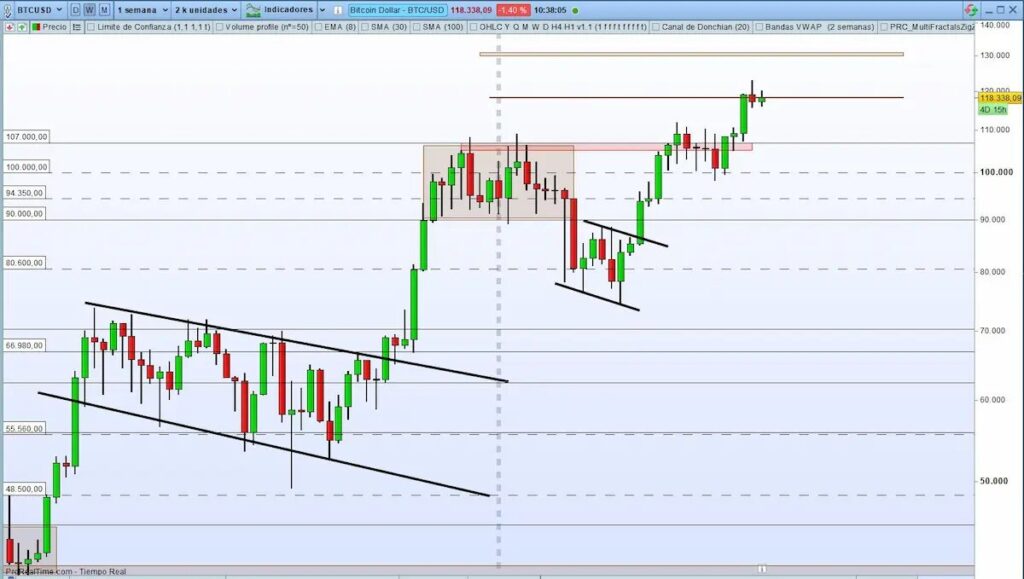
From a technical perspective, the 50-day simple moving average (SMA) on the daily chart has turned upward, reinforcing the view that the recent pullback was corrective rather than trend-breaking. Higher lows are now forming, and the market is once again testing upside resistance near the $97,000–$98,000 area.
BTC/USD Daily Chart showing $90,000 support and rising 50-day SMA
2. Spot Market Takes the Lead: Whale Accumulation Returns
One of the most important characteristics of the current rally is where the buying is coming from.
According to on-chain data from CryptoQuant, Bitcoin’s recent rebound from approximately $84,400 to above $96,000 was not driven by derivatives or excessive leverage. Instead, it was led by large spot-market participants, commonly referred to as “whales.”
The 90-day Spot Taker Cumulative Volume Delta (CVD) turned positive when BTC traded near $86,000. This indicates that aggressive buyers in the spot market began consistently overpowering sellers, marking a clear inflection point in demand dynamics.
At the same time, the average spot order size increased, further confirming that large players were responsible for the initial accumulation. This pattern—spot-led accumulation by whales followed by derivative participation from retail traders—is historically associated with sustainable bullish phases rather than short-lived speculative spikes.
Spot Taker CVD and Average Order Size Indicating Whale Accumulation
3. Retail Participation: Following Through Futures, Not Spot
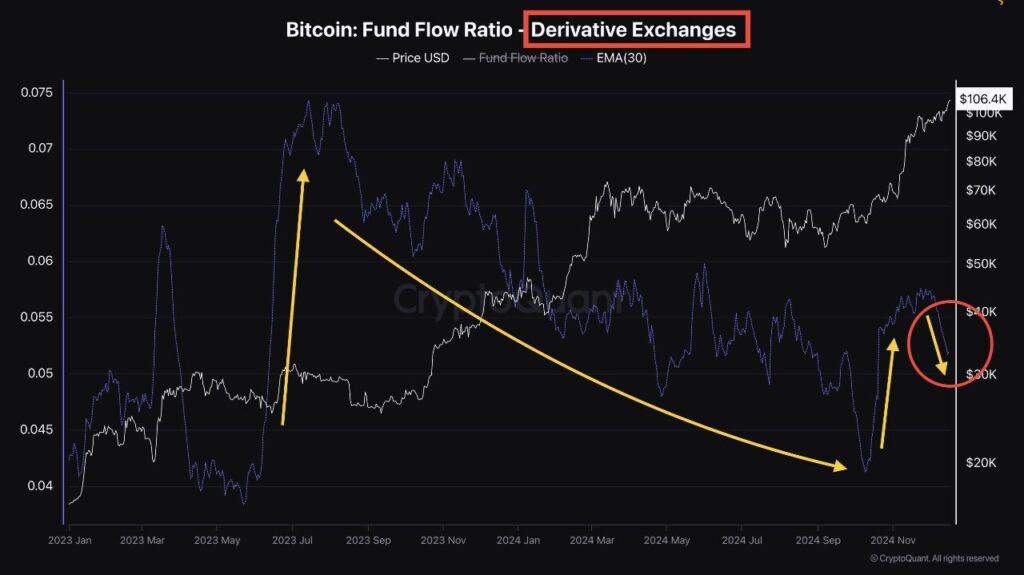
While whales dominate spot buying, retail participation is clearly increasing, but primarily through futures markets.
Data from futures volume “bubble maps” shows a rise in smaller trade sizes, suggesting growing interest from individual traders. However, this activity remains concentrated in leveraged instruments rather than direct spot purchases.
This divergence is significant. It implies that:
- Structural demand is being built by long-term capital.
- Retail traders are reacting to price momentum rather than initiating it.
- Excessive leverage, which often destabilizes rallies, has not yet become the dominant force.
In previous bull cycles, this exact sequence—spot accumulation first, retail leverage later—has often preceded multi-month continuation phases.
4. Geopolitical Undercurrents and Bitcoin’s Risk Profile
The initial catalyst for the rebound is also being linked by some analysts to rising geopolitical tensions, including renewed U.S. military activity involving Venezuela. While the direct impact is difficult to quantify, the market’s reaction highlights Bitcoin’s evolving role as a hedge against geopolitical uncertainty.
Rather than behaving purely as a risk asset, Bitcoin increasingly responds to global instability in a manner closer to alternative stores of value—particularly when fiat confidence or geopolitical predictability weakens.
5. Regulatory Shock: Coinbase Withdraws Support for the CLARITY Act
Regulatory uncertainty returned to the spotlight after Coinbase CEO Brian Armstrong announced the company’s withdrawal of support for the revised CLARITY Act, following substantial amendments by the U.S. Senate Banking Committee.
Armstrong criticized the revised bill as a step backward, citing several controversial changes:
- Effective prohibition of tokenized equities.
- Expanded DeFi oversight that could undermine privacy protections.
- Reduced authority for the CFTC.
- New restrictions on stablecoin reward and incentive programs.
Rather than providing clarity, the revised framework introduces ambiguity that may discourage innovation and institutional participation within the U.S. crypto ecosystem.
For markets, the implication is not immediate panic, but longer-term regulatory risk premium, particularly for U.S.-based projects and platforms.
6. U.S. Tariff Ruling: A Macro Wildcard for Crypto Markets
Another major focus for global markets is the pending U.S. Supreme Court ruling on the legality of former President Trump’s tariff policies.
Market-implied probabilities currently suggest a 73–76% chance that the tariffs could be ruled unconstitutional. Trump himself has warned that such a decision could force the U.S. to refund “trillions of dollars”, calling the scenario “total chaos.”
Treasury Secretary Scott Bessent, however, has downplayed the risk, stating that the U.S. Treasury has sufficient liquidity to absorb potential refunds without triggering a systemic crisis.
Analyst Nick Carter has emphasized that the ruling would likely focus on how tariffs were implemented, not on the legitimacy of tariffs as a policy tool. As a result, markets may already be pricing in an unfavorable ruling.
The greater short-term shock, paradoxically, could come from an unexpected decision to uphold the tariffs, which would force a rapid repricing across asset classes.
7. Implications for Monetary Policy and Bitcoin
If tariffs are ruled unconstitutional and refunds proceed:
- Fiscal pressure could slow the pace of rate cuts by the Federal Reserve.
- This could create short-term headwinds for crypto through tighter liquidity expectations.
- At the same time, a weaker dollar and lower import costs could stimulate consumer spending and, indirectly, speculative investment.
The largest risk is prolonged legal uncertainty. A delayed ruling could amplify volatility, weaken confidence in the dollar, and temporarily push Bitcoin back below $90,000.
Yet this same uncertainty also reinforces Bitcoin’s appeal as a non-sovereign, non-correlated asset.
8. Institutional Demand Remains Strong
Despite regulatory and macro uncertainty, institutional interest shows no signs of fading.
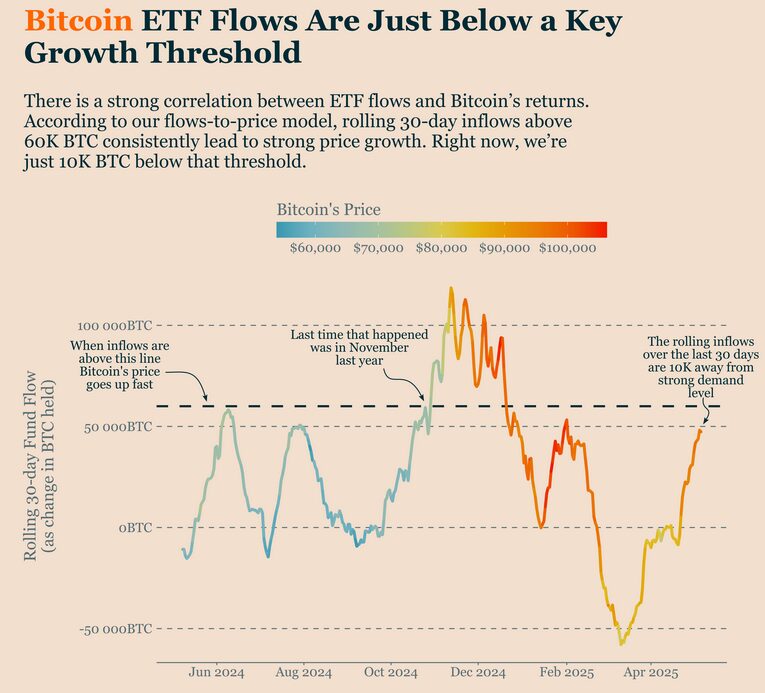
Weekly inflows into Bitcoin ETFs managed by BlackRock have reached record highs, signaling sustained demand from traditional asset allocators.
This capital is notably different from previous retail-driven cycles:
- Longer investment horizons.
- Lower sensitivity to short-term volatility.
- Strategic allocation rather than speculative trading.
This structural demand underpins the market and helps explain why pullbacks have remained shallow despite elevated headline risk.
Weekly Bitcoin ETF Inflows Showing Record Institutional Demand
9. Conclusion: A Market Repricing Bitcoin’s Role
Bitcoin’s stability near $96,500 is not accidental. It reflects a market undergoing a structural repricing of Bitcoin’s role within the global financial system.
Whale-led spot accumulation, disciplined retail participation, resilient institutional inflows, and growing macro relevance all point to a maturing asset class. Regulatory and political uncertainty remain real risks, but they are increasingly offset by Bitcoin’s emerging identity as a hedge against precisely those uncertainties.
For investors seeking new digital assets, sustainable yield opportunities, or practical blockchain exposure, the current phase may represent less a speculative peak and more a foundation-building period—one where volatility coexists with strengthening fundamentals.
