
Key Takeaways :
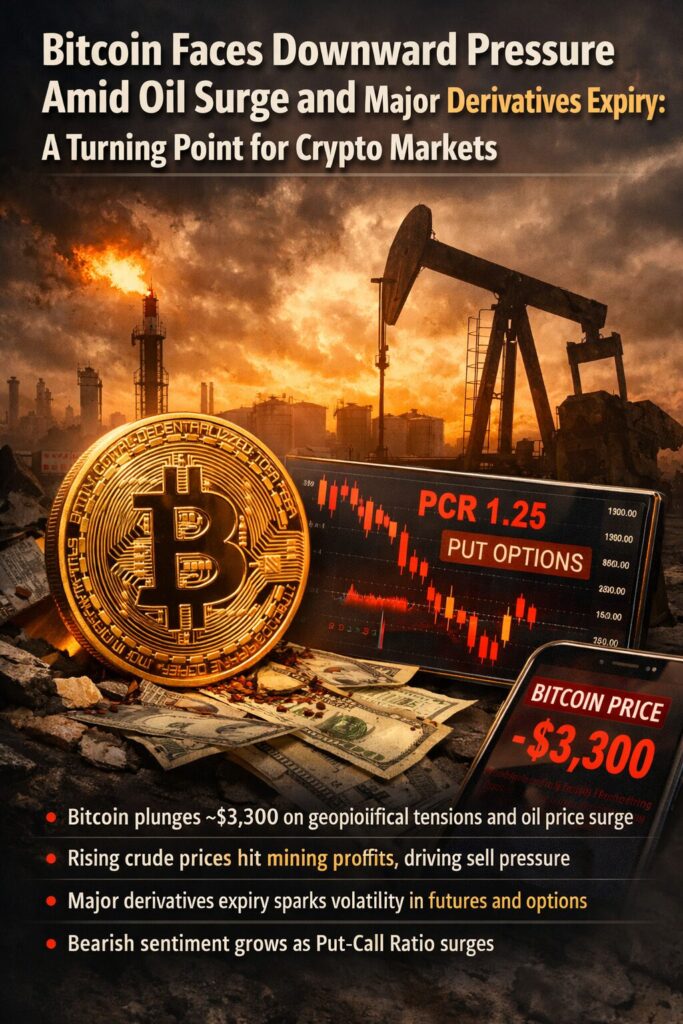
- Bitcoin experienced a sharp drop (~$3,300 equivalent) driven by rising geopolitical tensions and oil prices
- Increasing crude oil prices are negatively impacting mining economics, creating structural selling pressure
- A major derivatives expiry (“Bitcoin Major SQ”) is amplifying volatility across futures and options markets
- Bearish sentiment is rising, reflected in declining call options and increasing Put-Call Ratio (PCR)
- Institutional positioning suggests short-term downside risk but potential mid-term re-accumulation
1. Market Shock: Bitcoin Drops Amid Rising Oil Prices and Geopolitical Tensions
Bitcoin (BTC) experienced a sharp intraday decline on March 27, falling approximately $3,300 equivalent within hours. The sudden drop was not an isolated crypto event but closely tied to macroeconomic and geopolitical developments, particularly escalating tensions in the Middle East involving stalled negotiations between the United States and Iran.
As concerns over potential disruptions in the Strait of Hormuz intensified, crude oil prices surged. This created a ripple effect across global markets, including cryptocurrencies. While Bitcoin is often described as a “stateless asset,” its ecosystem remains deeply intertwined with real-world economic inputs—most notably energy costs.
Mining Bitcoin requires substantial electricity consumption. As oil prices rise, energy costs increase globally, squeezing miner profitability. Historically, when mining margins tighten, weaker miners are forced to liquidate holdings, creating additional selling pressure in the market.
This dynamic transforms what appears to be a geopolitical issue into a structural bearish factor for Bitcoin.[INSERT FIGURE 1 HERE]
Figure 1: Relationship Between Oil Prices and Bitcoin Mining Cost Pressure
2. The Hidden Impact of Mining Economics on Bitcoin Price
The connection between oil prices and Bitcoin is often underestimated by retail investors but closely monitored by institutional players.
Mining profitability depends on three variables:
- Bitcoin price
- Network difficulty
- Energy cost
When energy costs surge, even if Bitcoin’s price remains stable, margins shrink. This leads to two critical outcomes:
- Forced Selling by Miners
Mining firms may liquidate Bitcoin reserves to maintain operations and service debt. - Reduced Hash Rate Growth
Slower network expansion may impact long-term security and investor confidence.
Recent reports indicate that major mining firms have already begun reducing exposure, with some selling thousands of BTC to manage liabilities. This aligns with broader industry trends where miners act as early indicators of market stress.
3. Major SQ Event: Why Derivatives Expiry Matters
March 27 marks a significant event in the crypto derivatives market, often referred to as the “Bitcoin Major SQ” (Special Quotation).
This date coincides with:
- CME Bitcoin futures expiry
- Deribit monthly options expiry (~$13B equivalent open interest)
Such events are critical because they trigger:
- Large-scale position unwinding
- Forced hedging adjustments
- Liquidity shocks
Historically, major expiries are associated with sharp volatility spikes. Traders rebalance portfolios, close positions, or roll contracts forward, often leading to unpredictable price swings.[INSERT FIGURE 2 HERE]
Figure 2: Bitcoin Price Volatility Around Major Derivatives Expiry Dates
4. Bearish Signals from Derivatives Markets
A deeper look into derivatives data reveals a clear shift in market sentiment:
- Futures prices trading below spot (backwardation)
- Increased selling pressure in market orders
- Decline in call option positions
- Rising Put-Call Ratio (PCR)
These indicators suggest that traders are positioning defensively, anticipating further downside.
The increase in PCR is particularly important. A rising PCR indicates more put options (bets on decline) relative to calls (bets on increase), reflecting growing pessimism.
At the same time, the current structure suggests the possibility of short covering rallies, where prices temporarily rebound as bearish positions are closed.
5. Bitcoin as a “Stateless Asset” Under Stress
Bitcoin is often marketed as a hedge against geopolitical instability. In theory, rising tensions should increase demand for decentralized assets.
However, the current market reveals a more nuanced reality:
- Short-term: Bitcoin behaves like a risk asset
- Long-term: Bitcoin retains hedge characteristics
In the short term, liquidity dominates narrative. When global risk rises, investors reduce exposure across all volatile assets—including crypto.
But over longer horizons, Bitcoin’s independence from sovereign systems may still drive adoption, especially if geopolitical fragmentation persists.[INSERT FIGURE 3 HERE]
Figure 3: Bitcoin vs Traditional Assets During Geopolitical Stress
6. Broader Market Context: Institutional and Macro Trends
Beyond the immediate factors, several broader trends are shaping Bitcoin’s trajectory:
Institutional Behavior
Large players are increasingly active in derivatives rather than spot markets, amplifying volatility.
Regulatory Developments
Global regulatory clarity is improving, but uncertainty still impacts institutional flows.
Macro Liquidity
Upcoming events such as U.S. retail sales data (April 1) could influence broader risk sentiment.
Energy Transition Impact
Long-term shifts toward renewable energy may eventually decouple Bitcoin mining from oil prices—but this transition is incomplete.
7. Strategic Outlook: Risk and Opportunity
For investors seeking new opportunities and revenue streams, the current environment presents both risks and strategic entry points.
Short-Term Risks
- Elevated volatility due to derivatives expiry
- Continued downside pressure if oil prices rise further
- Weak sentiment in options markets
Medium-Term Opportunities
- Potential accumulation zones forming
- Institutional re-entry after volatility subsides
- Structural adoption trends remain intact
Key Indicators to Watch
- Oil price movements
- Miner selling activity
- Derivatives positioning (PCR, open interest)
- Macro data releases
Conclusion
Bitcoin’s recent decline highlights the increasingly complex interplay between crypto markets and global macroeconomic forces. Rising oil prices, geopolitical instability, and derivatives market dynamics are converging to create a highly volatile environment.
While short-term risks remain elevated, the broader narrative of Bitcoin as a transformative financial asset remains intact. For investors, the key lies in distinguishing between temporary dislocations and long-term structural trends.
Periods of volatility, especially around major events like derivatives expiry, often serve as inflection points. Whether this moment marks a deeper correction or the foundation for the next accumulation phase will depend on how macro and market-specific forces evolve in the coming weeks.
