
Key Takeaways:
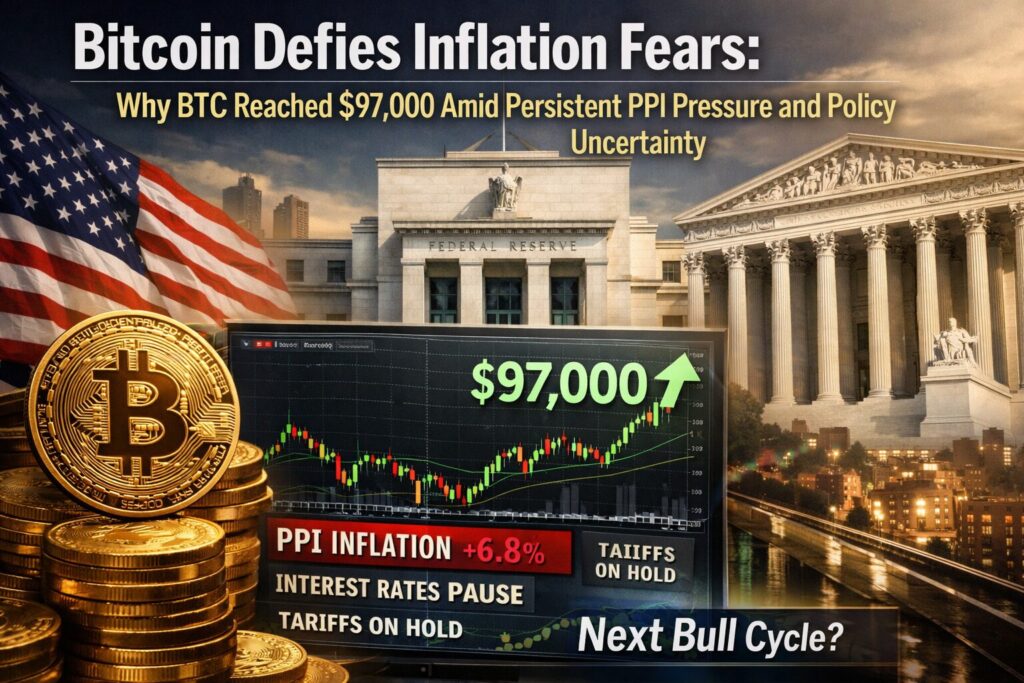
- Bitcoin surged to $97,000, marking its highest level in nearly two months, despite persistently high U.S. Producer Price Index (PPI) inflation.
- Markets largely ignored inflation data, having already priced in a pause in Federal Reserve rate cuts at the January FOMC meeting.
- The U.S. Supreme Court’s decision to withhold judgment on international tariffs removed an immediate macro risk, stabilizing risk sentiment.
- From a technical perspective, $93,500 is the critical weekly close level needed to confirm a renewed bullish cycle similar to April 2025.
- The current market structure suggests Bitcoin is increasingly behaving as a macro-resilient asset, rather than a simple high-beta risk trade.
Bitcoin Climbs to a Two-Month High Despite Inflation Headwinds
Bitcoin opened Wednesday’s U.S. trading session with strong momentum, pushing rapidly toward $97,000 and registering its highest price in roughly eight weeks. What made this move notable was not just the price itself, but the broader macroeconomic context in which it occurred.
U.S. inflation, as measured by the Producer Price Index (PPI), remained stubbornly elevated. Both headline and core PPI for November came in at 3.0% year-over-year, exceeding market expectations of 2.7%. Historically, such data would pressure risk assets, particularly cryptocurrencies, which have often been sensitive to tighter monetary conditions.
Yet Bitcoin barely flinched.
Instead of selling off, BTC absorbed the inflation surprise and continued higher, signaling a potential shift in how market participants are interpreting macroeconomic risks. This price action suggests that Bitcoin traders believe inflation risks are either already priced in or are no longer the dominant driver of crypto market dynamics.
U.S. PPI Explained: Why This Inflation Reading Matters
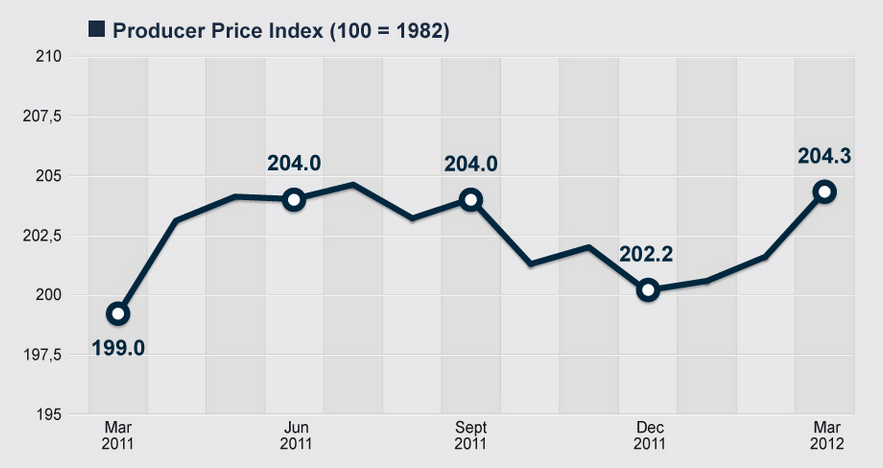
The Producer Price Index measures price changes at the wholesale level, reflecting cost pressures faced by producers before they reach consumers. In November, the U.S. Bureau of Labor Statistics reported that the rise in PPI was driven primarily by a 0.9% increase in final demand goods, while final demand services remained flat.
From a policy perspective, persistent PPI inflation complicates the Federal Reserve’s task. Elevated producer prices can eventually feed into consumer inflation, reducing the central bank’s flexibility to ease monetary policy.
Under normal circumstances, this would imply:
- Reduced liquidity
- Higher real yields
- Less appetite for speculative assets such as cryptocurrencies
However, Bitcoin’s reaction—or lack thereof—suggests that markets have shifted their focus away from inflation surprises and toward policy expectations already locked in.
Why Markets Shrugged Off Inflation: The Fed Pause Narrative
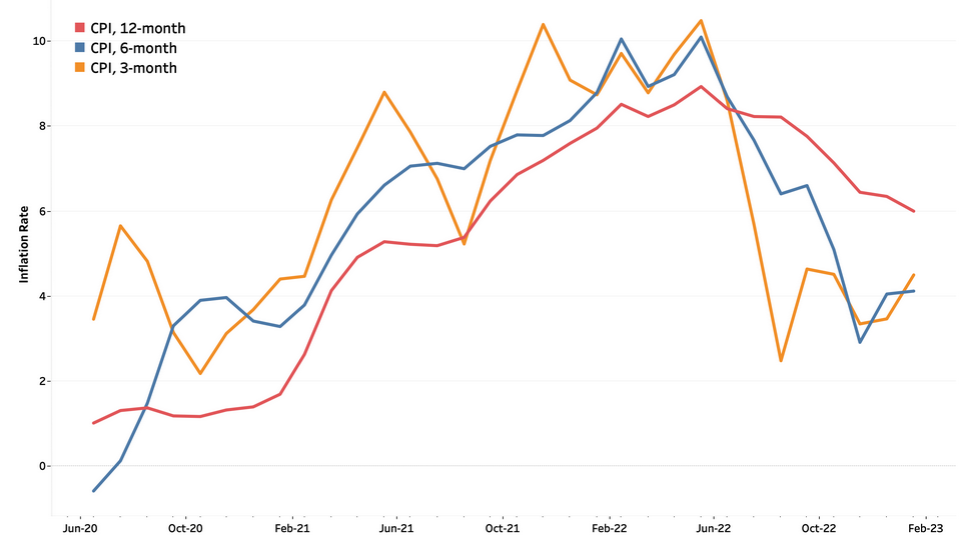
One of the key reasons Bitcoin ignored the inflation data lies in expectations surrounding the January Federal Open Market Committee (FOMC) meeting. According to interest rate futures, traders widely anticipate that the Federal Reserve will leave rates unchanged, even in the face of higher inflation prints.
In other words, the market had already accepted the idea that:
- Rate cuts are paused
- Policy is restrictive but stable
- The next major policy shift is still months away
As a result, inflation data no longer delivers the same shock value it once did. For Bitcoin, this environment can actually be supportive. Stable policy—even if tight—allows long-term positioning, especially for institutional investors seeking diversification outside traditional assets.
Supreme Court Tariff Uncertainty: A Quiet but Important Catalyst
Beyond inflation, another macro variable quietly influenced sentiment: international trade tariffs.
Leading into Wednesday’s session, some market participants anticipated a ruling from the U.S. Supreme Court regarding trade tariffs. Such a decision could have introduced renewed volatility across global markets, especially equities and currencies.
Instead, the Court issued no ruling, effectively postponing the issue.
While this may seem anticlimactic, the absence of a decision removed an immediate source of uncertainty. For Bitcoin, which increasingly trades as a hedge against geopolitical and policy instability, this lack of negative news allowed bullish momentum to continue uninterrupted.
Technical Outlook: Why $93,500 Is the Line That Matters
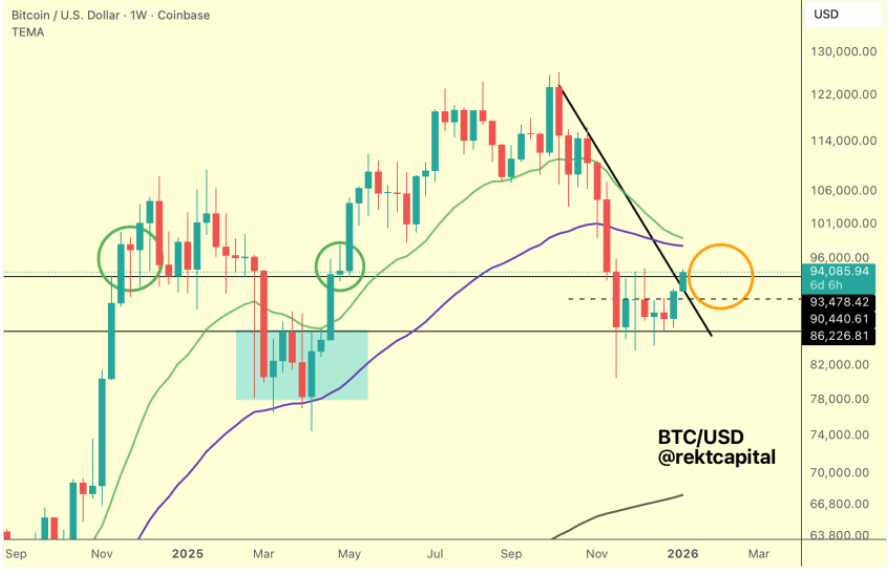
From a technical analysis standpoint, traders are now focused on a single, decisive level: $93,500 on the weekly close.
Analysts note that this level corresponds to:
- The early-2025 price base
- A former resistance zone turned potential support
- A historical pivot preceding major upside expansions
If Bitcoin can maintain weekly closes above $93,500, the market structure begins to resemble the setup seen in April 2025, when BTC rebounded from below $75,000 and rallied nearly 50% within weeks.
However, history also suggests caution. In previous cycles, Bitcoin often revisited such breakout levels before confirming a sustained trend. A short-term pullback toward $93,500 would not invalidate the bullish case, provided buyers step in to defend the level.
Bitcoin’s Evolving Role: From Risk Asset to Macro Instrument
One of the most important takeaways from this price action is not purely technical—it is structural.
Bitcoin is increasingly behaving less like a speculative tech stock and more like a macro-sensitive, but macro-resilient asset. While it still reacts to liquidity conditions, it appears less vulnerable to single data points such as monthly inflation prints.
This evolution aligns with broader trends:
- Growing institutional participation
- Use of Bitcoin as a portfolio hedge
- Recognition of BTC as a scarce, non-sovereign asset
In this context, inflation may paradoxically strengthen Bitcoin’s narrative over time, even if it delays monetary easing.
What Comes Next: Scenarios for Bitcoin in Early 2026
Looking ahead, several scenarios could shape Bitcoin’s trajectory:
- Base Case
Bitcoin consolidates above $93,500, with volatility compressing ahead of clearer guidance from the Federal Reserve. This scenario favors gradual upside. - Bullish Case
A confirmed weekly close above $97,000 opens the door toward psychological resistance near $100,000, attracting momentum-driven inflows. - Risk Case
A surprise policy shift or external shock pushes BTC below $93,500, triggering a deeper retest of the mid-$80,000 range before renewed accumulation.
At present, market behavior suggests that the base-to-bullish scenarios carry higher probability.
Conclusion: A Market That Refuses to Panic
Bitcoin’s surge to $97,000 amid elevated inflation and unresolved trade policy questions sends a clear message: the market is no longer reacting reflexively to every macro headline.
Instead, Bitcoin appears to be entering a phase where:
- Expectations matter more than surprises
- Structural demand outweighs short-term fear
- Key technical levels guide conviction
For investors seeking new digital assets, alternative income strategies, or practical blockchain exposure, Bitcoin’s resilience in this environment underscores its maturation as a global financial instrument.
