

Main Points :
- Bitcoin has fallen below the critical $80,000 support level, marking a new 2026 low near $72,945 and raising questions about whether the current bull cycle is losing momentum.
- The decline is closely linked to broader macro uncertainty, particularly volatility in U.S. equities driven by doubts over AI investment sustainability.
- Large-scale liquidations in leveraged crypto positions have amplified downside pressure, accelerating price declines across Bitcoin and Ethereum.
- Despite claims that Bitcoin is historically “undervalued,” both retail and institutional dip-buying have so far failed to halt the slide.
- Order book data suggests strong buy interest between $71,800 and $63,000, but macroeconomic forces may remain the dominant driver of price action.
1. Bitcoin’s Sharp Drop Below $80,000: What Just Happened?
Bitcoin experienced a sharp sell-off on Tuesday after failing to hold the psychologically and technically important $80,000 support level. The breakdown triggered accelerated selling, pushing prices down to approximately $72,945—marking Bitcoin’s lowest level so far in 2026. On a year-to-date basis, Bitcoin is now down roughly 15%, and the drawdown from its all-time high of $126,267 stands at around 45%.
Such a move has inevitably reignited debate about where Bitcoin stands in its broader market cycle. For many investors, the loss of $80,000 is not just another technical level—it represents a shift in sentiment. Throughout late 2025, that zone acted as a foundation for bullish expectations tied to post-halving supply dynamics, institutional adoption narratives, and optimism around digital assets as a hedge against macro instability.
The speed of the decline is also notable. Once the support gave way, selling pressure intensified rapidly, suggesting that stop-loss orders and margin calls played a significant role in accelerating the move. This pattern is consistent with previous crypto market downturns, where leverage magnifies both upside and downside volatility.
2. The Macro Backdrop: Why Stocks and Crypto Are Falling Together
One of the defining features of this downturn is the strong correlation between crypto assets and traditional financial markets. In recent sessions, U.S. equity indices—including the S&P 500, the Dow Jones Industrial Average, and the Nasdaq—have all posted declines ranging from approximately 0.7% to 1.8%.
The immediate catalyst appears to be growing skepticism around the sustainability of massive investments in artificial intelligence infrastructure. Since the end of Q4 2025, investors have increasingly questioned whether the scale of capital expenditures, fundraising rounds, and sky-high valuations in the AI sector can be justified by near-term revenues.
Major technology firms have not been immune. Shares of NVIDIA fell by roughly 3.4%, while Microsoft and Amazon each declined by about 2.7%. These moves reflect broader risk-off sentiment rather than company-specific issues alone.
More than 100 companies within the S&P 500 are scheduled to report earnings this week, adding another layer of uncertainty. Investors are increasingly sensitive to guidance related to AI monetization, cloud demand, and capital efficiency—factors that now influence not just equities, but crypto markets as well.
3. Leverage Unwinding: Liquidations Accelerate the Sell-Off
Within the crypto market itself, leverage has played a central role in amplifying losses. According to CoinGlass data, approximately $127.25 million worth of Bitcoin long positions were forcibly liquidated during the downturn. Ethereum saw even larger liquidations, with around $159.10 million in long positions wiped out.
This wave of liquidations highlights a structural vulnerability in crypto markets. During extended bull phases, leverage tends to accumulate as traders chase returns. When prices reverse sharply, forced liquidations create a feedback loop: selling pushes prices lower, triggering more margin calls and further selling.
Importantly, this phenomenon does not necessarily reflect a fundamental reassessment of Bitcoin’s long-term value. Instead, it underscores how market structure—particularly derivatives and perpetual futures—can dominate short-term price dynamics.
4. Is Bitcoin Really “Undervalued” Here?
Despite the sharp decline, many analysts argue that Bitcoin is now trading at historically attractive levels. Joe Burnett, Vice President of Bitcoin Strategy at Stripe, noted that Bitcoin’s current price action around the mid-$70,000 range remains within historical norms when viewed through the lens of prior bull market drawdowns.
According to Burnett, a 45% correction aligns closely with Bitcoin’s historical volatility profile. In previous cycles, similar or even deeper pullbacks occurred before the market eventually resumed its upward trajectory. From this perspective, volatility is not a sign of weakness but a defining characteristic of an asset undergoing rapid monetization and global adoption.
That said, the market’s reaction suggests that valuation arguments alone are insufficient to reverse momentum. Neither retail investors nor institutional players—including high-profile corporate treasuries—have yet stepped in with enough force to establish a durable bottom.
5. Order Book Signals: Where Might Buyers Step In?
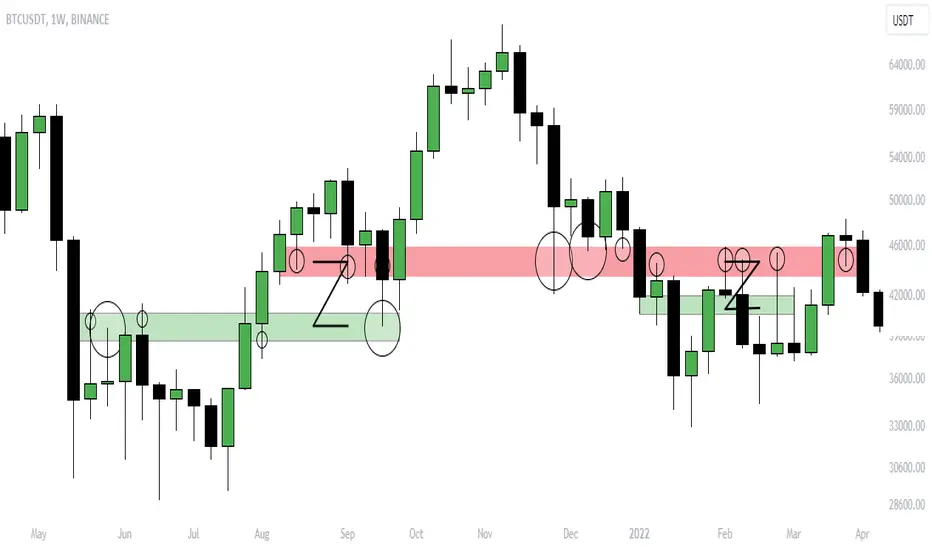
Order book data from TRDR.io provides insight into potential support zones. On the BTC/USDT pair on Binance, significant buy orders are clustered between approximately $71,800 and $63,000. This range represents a zone of interest where longer-term investors may be willing to accumulate Bitcoin at scale.
Whether these bids ultimately hold will depend less on crypto-specific narratives and more on broader macro conditions. If equity markets stabilize and risk appetite returns, these buy zones could act as a foundation for recovery. Conversely, continued weakness in stocks or negative macro surprises could see prices probe even lower levels.
“BTC/USDT 4-hour candlestick chart with highlighted support zones ($71,800–$63,000)”
6. AI, Capital Cycles, and Crypto: An Overlooked Connection
One of the more subtle dynamics at play is the relationship between AI investment cycles and crypto markets. Over the past two years, both sectors have benefited from abundant liquidity and investor appetite for high-growth narratives. As scrutiny intensifies around AI profitability, capital is being reallocated across portfolios.
For crypto, this matters because Bitcoin increasingly trades as a macro-sensitive asset rather than a purely idiosyncratic one. Hedge funds, family offices, and even corporate treasuries often view Bitcoin alongside tech equities in their risk models. When AI stocks sell off, crypto exposure is frequently reduced in tandem.
This interconnection suggests that Bitcoin’s near-term trajectory may depend as much on earnings calls and macro data as on blockchain-specific developments.
7. What This Means for Investors and Builders
For investors seeking new crypto assets or revenue opportunities, the current environment presents both risks and potential openings. Periods of heightened volatility often coincide with moments when fundamentally strong projects can be accumulated at discounted valuations.
For builders and operators focused on practical blockchain use cases—payments, settlement, tokenization, and infrastructure—the broader lesson is resilience. Market cycles will continue, but real-world adoption tends to progress regardless of short-term price action.
Conclusion: A Pause, Not Necessarily the End
Bitcoin’s drop below $80,000 and the establishment of a new 2026 low have understandably shaken market confidence. The combination of macro uncertainty, AI sector doubts, and leveraged liquidations has created a challenging environment for bulls.
However, history suggests that volatility of this magnitude is not unprecedented in Bitcoin’s evolution. Whether this phase marks the late stage of the current cycle or merely a painful consolidation will depend largely on external macro forces rather than crypto-specific factors alone.
For long-term participants, the key may lie in distinguishing between cyclical noise and structural progress—an exercise that has defined every major chapter of Bitcoin’s history.
