
Main Points :
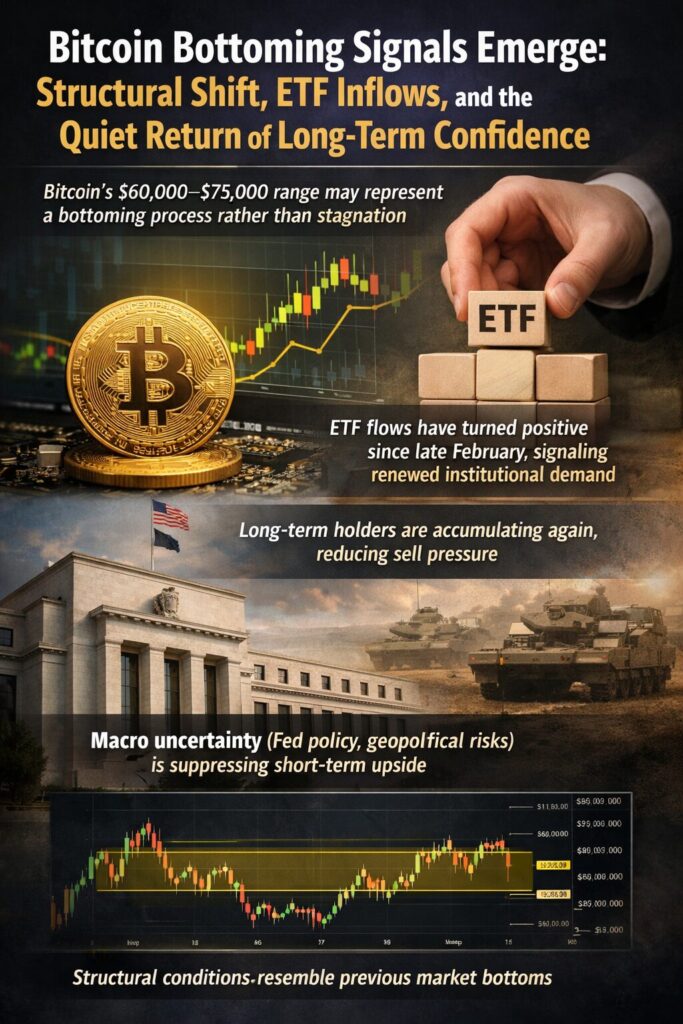
- Bitcoin’s $60,000–$75,000 range may represent a bottoming process rather than stagnation
- ETF flows have turned positive since late February, signaling renewed institutional demand
- Long-term holders are accumulating again, reducing sell pressure
- Macro uncertainty (Fed policy, geopolitical risks) is suppressing short-term upside
- Structural conditions resemble previous market bottoms
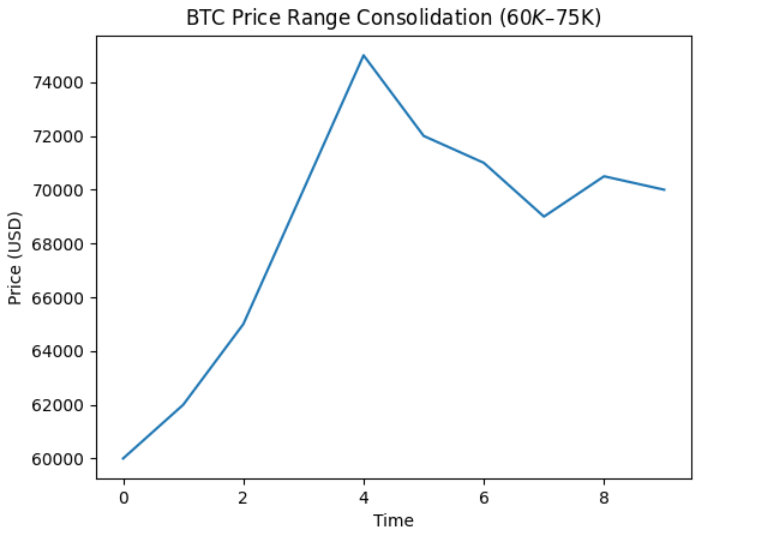
BTC Range Consolidation
1. A Market That Looks Quiet—but Isn’t
Recent analysis by crypto research firm K33 suggests that Bitcoin’s current sideways movement between approximately $60,000 and $75,000 may not be a sign of weakness, but rather a critical phase in a broader bottoming process. While many market participants interpret sideways price action as stagnation, historical cycles suggest that such ranges often precede significant trend reversals.
The current price structure reflects a transition from a distribution phase—where early investors and institutions gradually exit positions—into a re-accumulation phase. This transition is not abrupt; instead, it is characterized by declining volatility, reduced sell pressure, and increasing stability in demand.
From a structural standpoint, Bitcoin hovering around $70,000 represents a psychologically and economically important equilibrium. At this level, selling incentives diminish while long-term accumulation becomes more attractive, especially for institutional investors evaluating risk-adjusted returns.
2. ETF Flows Signal Institutional Re-Engagement
ETF Flow Recovery
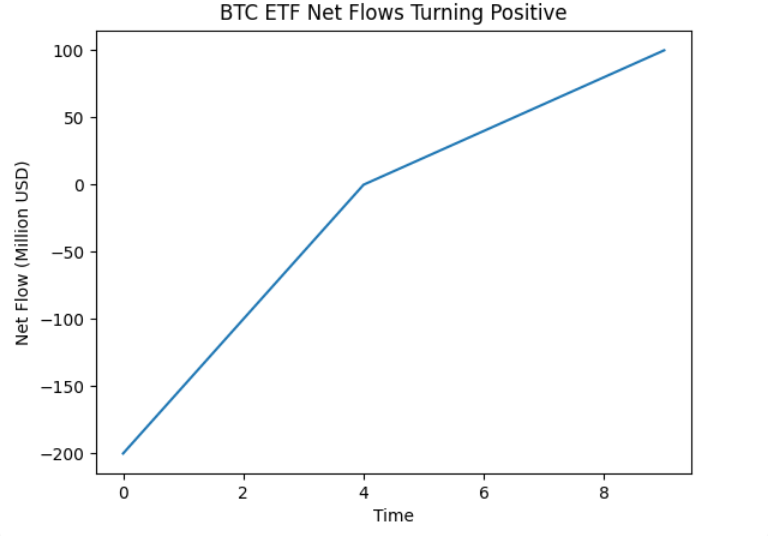
One of the strongest indicators supporting the bottoming thesis is the shift in Bitcoin ETF flows. According to K33’s research, ETF inflows turned slightly positive in late February after a prolonged period of outflows.
This reversal is subtle but significant. Institutional investors tend to move slowly, and their re-entry often begins with modest capital allocations before scaling up. The fact that ETF flows have stabilized—and begun to trend upward—suggests that institutional confidence is gradually returning.
Looking beyond K33, broader market data confirms this trend. Major asset managers have continued to expand their Bitcoin exposure through regulated products, indicating that Bitcoin is increasingly being treated as a strategic allocation rather than a speculative asset.
In previous cycles, similar inflection points in ETF or institutional flows have coincided with market bottoms. The logic is straightforward: once selling pressure from large players subsides, even modest inflows can stabilize prices and create a foundation for upward movement.
3. Long-Term Holders Are Back in Control
Long-Term Holder Supply Trend
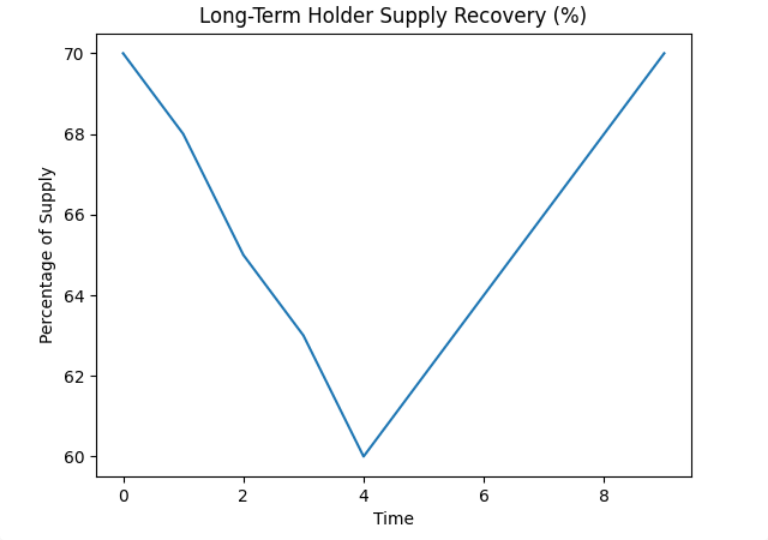
Another critical factor is the behavior of long-term holders (LTHs), typically defined as investors holding Bitcoin for more than six months or one year.
K33’s report highlights that the supply held by long-term investors, which had declined sharply toward the end of 2025, has begun to rise again. This shift indicates a reduction in selling pressure and a renewed willingness to hold Bitcoin through market uncertainty.
Supporting this observation, research from Bernstein points out that approximately 60% of Bitcoin’s circulating supply has not moved in over a year. This level of dormancy represents a powerful structural support mechanism: coins that are not moving are effectively removed from active supply, reducing downward pressure on price.
This dynamic creates a reinforcing cycle. As fewer coins are available for sale, price stability increases, which in turn encourages further long-term holding. Over time, this tightening supply environment can amplify the impact of new demand.
4. Macro Headwinds: The Invisible Ceiling
Despite these positive structural signals, Bitcoin’s upside remains constrained by macroeconomic uncertainty.
Two major factors stand out:
1. Federal Reserve Policy
The U.S. Federal Reserve has maintained a relatively hawkish stance, dampening expectations for near-term interest rate cuts. Higher interest rates reduce liquidity in financial markets and make risk assets like Bitcoin less attractive in the short term.
2. Geopolitical Tensions
Rising tensions in the Middle East and increasing oil prices have introduced additional volatility into global markets. These factors tend to drive investors toward safer assets, temporarily limiting capital inflows into cryptocurrencies.
The combination of these macro pressures explains why Bitcoin has struggled to break out of its current range despite improving internal dynamics.
5. A Familiar Pattern: Echoes of Previous Cycles
K33’s head of research, Vetle Lunde, emphasizes that the current environment mirrors patterns observed in previous market bottoms. Specifically, three elements are present:
- Declining sell pressure
- Stabilizing or improving ETF flows
- Persistent range-bound price action
These conditions have historically marked the transition from bearish to bullish phases.
Bernstein’s analysis aligns with this view, describing the current market as a “temporary sentiment reset” rather than a prolonged downturn. Notably, the firm maintains its year-end Bitcoin price target of $150,000, suggesting confidence in a medium-term bullish trajectory.
6. The Strategic Implications for Investors
For investors seeking new crypto assets or revenue opportunities, the current environment presents a nuanced but potentially rewarding landscape.
Accumulation vs. Momentum
Unlike late-stage bull markets driven by momentum, bottoming phases favor accumulation strategies. Investors who can identify structural support zones—such as the current $60,000–$75,000 range—may benefit from gradual position building.
Institutional Alignment
The return of ETF inflows indicates that institutional strategies are shifting. Aligning with these flows—rather than chasing retail-driven hype—may offer a more sustainable approach to crypto investing.
Emerging Opportunities Beyond Bitcoin
While Bitcoin remains the primary focus, similar structural dynamics may soon emerge in altcoins, particularly those tied to real-world utility, such as:
- Stablecoin infrastructure
- Tokenized assets
- Payment-focused blockchain networks
These sectors are increasingly attracting institutional attention, suggesting that the next phase of the market may extend beyond Bitcoin alone.
7. What Comes Next: Key Catalysts to Watch
The trajectory of Bitcoin’s market in 2026 will likely depend on three key factors:
1. Federal Reserve Policy Shift
A pivot toward rate cuts could inject liquidity into markets and accelerate capital inflows into crypto.
2. Geopolitical Stability
A reduction in global tensions would lower volatility and encourage risk-taking behavior among investors.
3. Institutional Capital Expansion
A significant increase in ETF inflows or new institutional products could act as a catalyst for a sustained bull run.
If these factors align, the current consolidation range may ultimately be remembered as a foundational phase for the next major upward cycle.
Conclusion
Bitcoin’s current market behavior may appear uneventful on the surface, but beneath it lies a complex and potentially transformative shift. The combination of reduced sell pressure, stabilizing ETF inflows, and renewed long-term accumulation suggests that the market is transitioning into a new phase.
While macroeconomic uncertainties continue to limit short-term upside, the structural foundation appears increasingly मजबूत. For investors willing to look beyond immediate price movements, this period may offer one of the most strategically important entry points in the current cycle.
If history is any guide, markets rarely announce their bottoms clearly. Instead, they build them quietly—through consolidation, patience, and the gradual return of confidence. Bitcoin, it seems, may be doing exactly that.
