

Main Points :
- Bitcoin has fallen below $66,000, failing to sustain a breakout above $70,000.
- The Coinbase Premium Index remains negative, signaling weak U.S. spot demand.
- Binance’s Cumulative Volume Delta (CVD) has dropped to approximately –$5.7 billion, indicating persistent spot-driven selling pressure.
- Open Interest has declined from roughly $20 billion to $17.6 billion, reflecting deleveraging rather than fresh long positioning.
- Net capital inflows have turned negative, with 30-day cumulative flows near –$2.8 billion.
- Speculative participation (young supply 0–1 month) has fallen toward 13%, suggesting reduced short-term risk appetite.
1. Failed Breakout Above $70,000: A Market Without Conviction
Bitcoin (BTC) has recorded three consecutive daily declines, slipping below $66,000 during New York trading hours. The market attempted to break above $70,000, a psychologically and technically significant resistance level, but failed to sustain momentum. This rejection is not merely technical; it reflects a deeper structural weakness in spot demand.
In previous bull cycles, failed breakouts were often followed by aggressive dip-buying. However, current price action suggests hesitation. Instead of accumulation on weakness, we are observing sustained distribution, particularly on Binance’s spot market.
From a macro perspective, this weakness comes at a time when U.S. ETF flows have moderated and global liquidity conditions remain mixed. The absence of aggressive inflows near $66,000–$68,000 implies that large buyers are either waiting for deeper discounts or reallocating capital elsewhere, possibly toward emerging altcoin narratives or yield-generating on-chain strategies.
2. Coinbase Premium: The Missing U.S. Bid
The Coinbase Premium Index measures the price difference between Bitcoin on Coinbase (a U.S.-dominated exchange) and Binance (a globally dominant exchange). A positive premium suggests strong U.S. spot demand. A negative premium suggests the opposite.
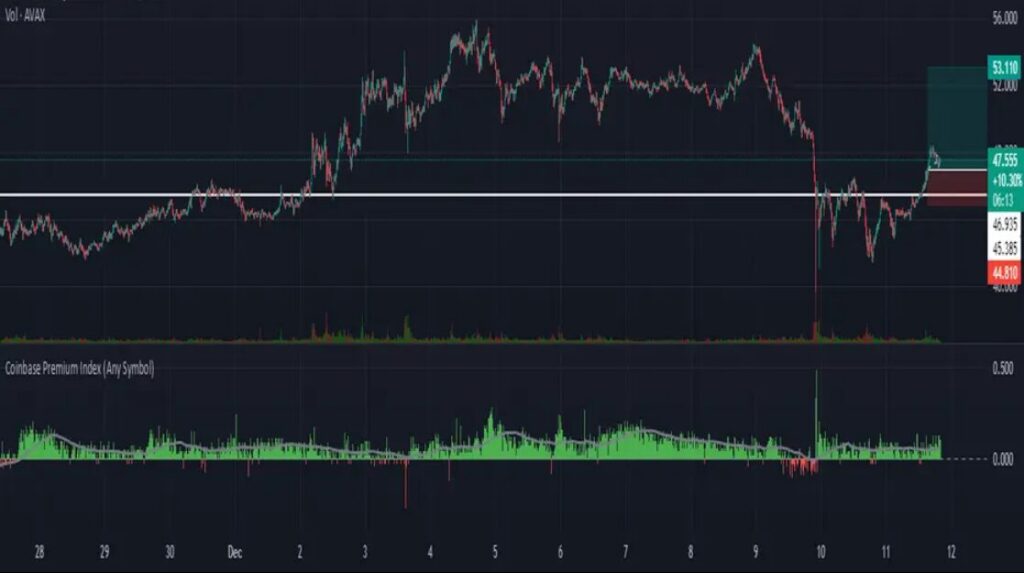
This week, the index remained in negative territory. That implies U.S. institutional and retail investors are not aggressively buying spot Bitcoin during American trading hours. In prior rallies, strong U.S. participation — especially via Coinbase — played a critical role in driving momentum.
For investors seeking early signals of renewed bullishness, this metric matters. A sustained return to positive premium territory often precedes broader upside expansion. Until then, rallies risk being short-lived.
3. Binance CVD: Spot Sellers Driving the Decline
Cumulative Volume Delta (CVD) aggregates the difference between market buy and sell orders. On Binance, Bitcoin’s CVD has expanded negatively to around –$5.7 billion.
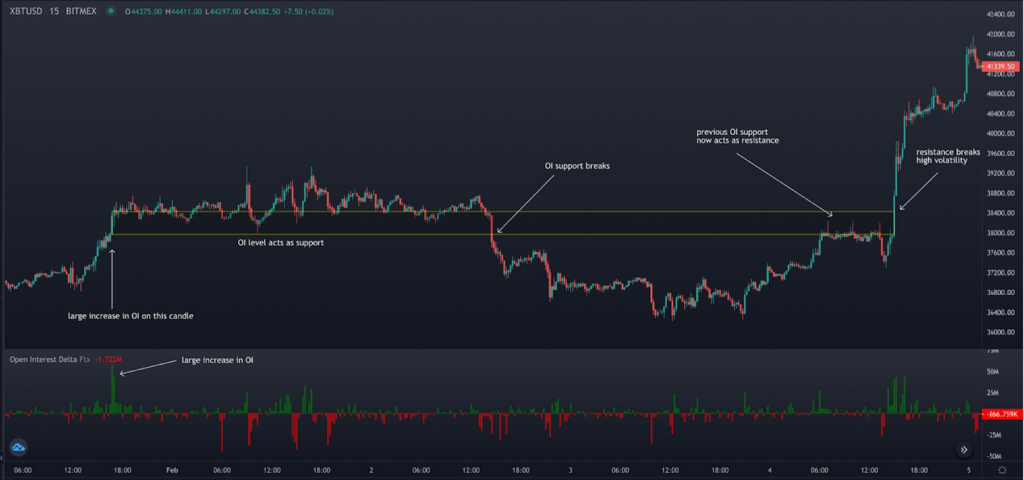
A declining CVD with lower highs signals persistent market selling rather than accumulation. Importantly, Binance remains dominant in global crypto spot volume. If selling pressure is concentrated there, it likely reflects broad global risk-off behavior.
The bid-ask ratio has also remained mostly negative. Even during short rebounds, sell orders have outweighed buy orders. A recent minor positive reading (~0.14) appears more consistent with short-term relief rather than structural buying support.
This suggests that current weakness is driven by genuine spot selling — not merely derivative liquidation cascades.
4. Futures Open Interest: Deleveraging, Not Position Building
Total open interest has declined from approximately $20 billion earlier in the week to about $17.6 billion.
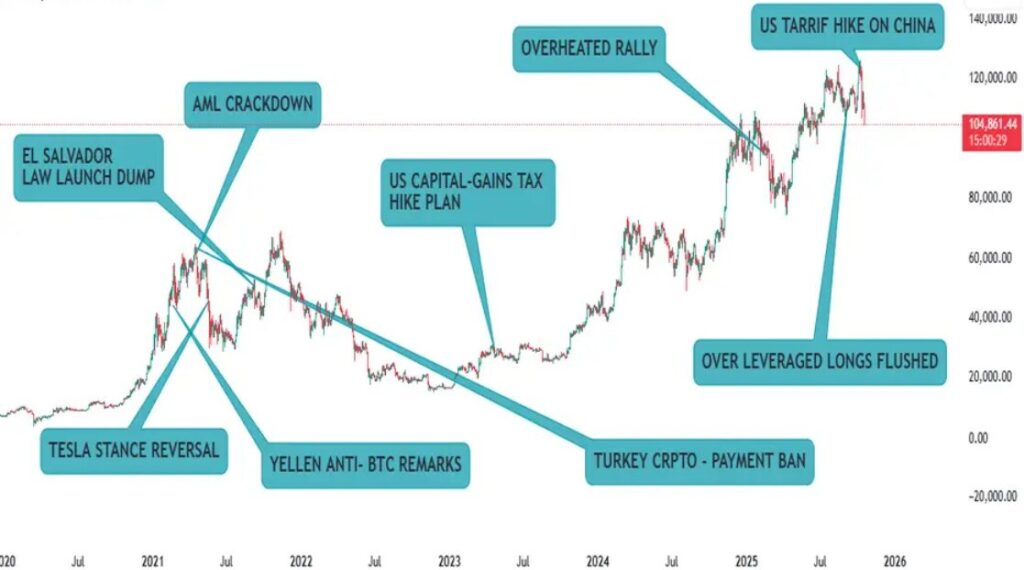
This contraction indicates deleveraging. Traders are closing positions rather than building new long exposure. In bullish expansions, price dips often coincide with rising open interest as aggressive longs accumulate. That pattern is absent.
Instead, existing longs appear to be unwinding. This reduces systemic leverage risk — which is healthy long term — but also removes fuel for immediate upside.
For sophisticated traders, this environment may favor options volatility strategies or basis trades rather than directional leverage.
5. Capital Flows Turn Negative: No Aggressive Dip Buyers
According to on-chain data providers, 30-day cumulative net inflows have turned negative, around –$2.8 billion, with recent daily flows near –$239 million.
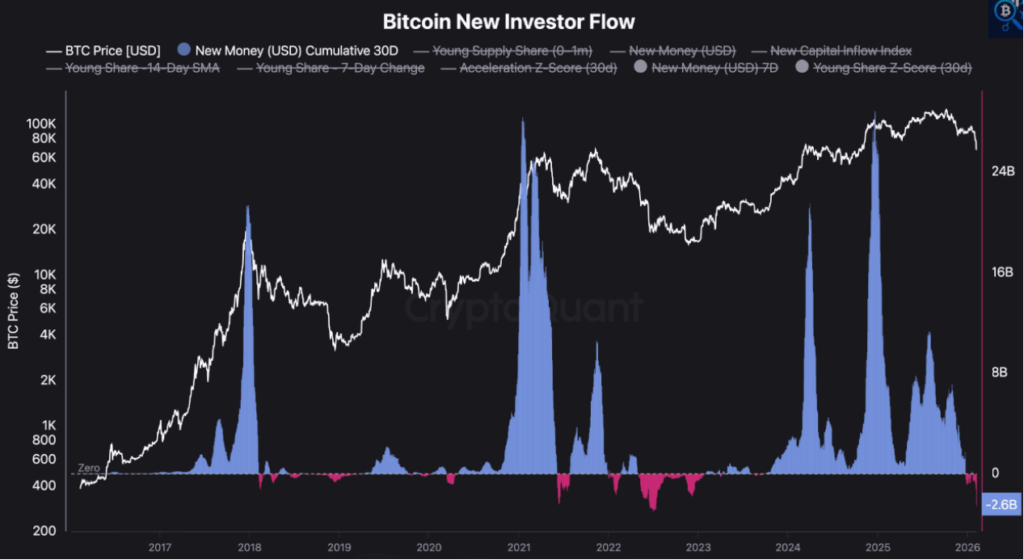
In past bull markets, pullbacks attracted fresh capital. The absence of meaningful inflows below $70,000 suggests capital rotation or risk aversion.
This does not necessarily indicate a long-term bearish regime. Instead, it suggests a consolidation phase where capital may be redeployed selectively — potentially into:
- Emerging Layer-2 infrastructure
- Real-world asset (RWA) tokenization projects
- Yield-bearing DeFi protocols
- Bitcoin-native Layer-2 scaling ecosystems
6. Young Supply Declines: Speculation Cooling Off
The proportion of recently moved coins (0–1 month supply), often called “young supply,” has fallen toward roughly 13%, near the lower bound of the recent range.
In strong bull phases, young supply rises sharply as speculative activity intensifies. Currently, participation is cooling. Reduced short-term speculation often coincides with consolidation periods.
Interestingly, such environments can create asymmetric opportunities. When speculative participation is low and leverage is reduced, downside volatility can compress — setting the stage for eventual expansion once fresh narratives emerge.
Strategic Interpretation for Investors Seeking the Next Opportunity
For readers searching for new crypto assets, income opportunities, or practical blockchain use cases, what does this environment mean?
1. Patience in Bitcoin, Exploration in Adjacent Ecosystems
Bitcoin’s structure suggests consolidation rather than immediate breakout. That often coincides with capital rotating into high-beta altcoins or infrastructure plays.
Projects focusing on:
- Bitcoin Layer-2 scaling
- Cross-chain interoperability
- Tokenized real-world assets
- Institutional custody and compliance infrastructure
may attract attention during BTC stagnation phases.
2. Yield Strategies Over Pure Directional Bets
With leverage unwinding and spot demand muted, yield-generating strategies may outperform speculative long positions:
- Staking yield on Layer-1 networks
- Structured options strategies
- Delta-neutral funding rate capture
- On-chain liquidity provisioning
3. Watching for Reversal Signals
Key signals to monitor for bullish reacceleration:
- Sustained positive Coinbase Premium
- Rising open interest alongside price strength
- Expanding positive CVD
- Renewed capital inflows exceeding $1B weekly
Until these emerge, rallies should be treated cautiously.
Conclusion: A Cooling Market, Not a Broken One
Bitcoin remains under short-term bearish control. Spot-driven selling on Binance, a negative Coinbase Premium, declining open interest, and weak capital inflows collectively signal a market in consolidation and deleveraging.
However, structural resets often precede sustainable expansions. The absence of excessive leverage reduces systemic fragility. Cooling speculative participation suggests the market is digesting gains rather than entering collapse.
For disciplined investors, this phase is not about chasing breakouts. It is about strategic positioning, capital efficiency, and identifying emerging blockchain narratives that may define the next expansion cycle.
Bitcoin below $66,000 is not necessarily a signal of structural weakness — but rather a reminder that markets move in cycles of enthusiasm and recalibration.
The bears may currently hold control, but consolidation is often the foundation upon which the next major opportunity is built.
