

Key Points :
- A $100 million Bitcoin-collateralized municipal bond has received a Ba2 rating from Moody’s
- The structure introduces zero direct taxpayer risk
- A 72.06% advance rate reflects Bitcoin volatility and liquidity considerations
- Institutional-grade custody via BitGo ensures collateral security
- Marks a historic convergence between crypto markets and public finance
Introduction: The Convergence of Crypto and Public Finance
In a landmark development that could redefine how governments access capital, the U.S. state of New Hampshire is preparing to issue the world’s first Bitcoin-collateralized municipal bond. Structured through the state’s Business Finance Authority (BFA), this $100 million issuance represents not just financial innovation, but a philosophical shift in how sovereign and sub-sovereign entities may engage with digital assets.
The bond has received a provisional Ba2 rating from Moody’s, placing it below investment grade but still within a range that signals moderate credit risk. However, what makes this issuance particularly compelling is not just its rating, but its structure: no taxpayer funds are at risk, and the entire bond is secured through Bitcoin collateral.
This initiative reflects a broader trend where digital assets are no longer treated merely as speculative instruments, but as collateralizable financial primitives capable of integrating into traditional markets.
A Closer Look at the Bond Structure
At the core of this issuance lies a carefully engineered collateral framework designed to mitigate the volatility inherent in Bitcoin.
Moody’s based its rating on a model that incorporates:
- A 72.06% advance rate
- A 2-day exposure window
- Stress-tested scenarios based on historical volatility of Bitcoin
Additionally, the bond includes:
- Initial collateral coverage: 1.60x
- Liquidation trigger (LTV): 1.40x
If the collateral value drops below the trigger threshold, a mandatory full liquidation mechanism is activated. This ensures that bondholders are protected even under adverse market conditions.
Bitcoin collateral is held in segregated custody by BitGo Bank & Trust, while liquidation operations are handled by BitGo Prime.
This separation of custody and execution is a hallmark of institutional-grade infrastructure and mirrors practices seen in traditional finance.
Bond Structure Overview
Why This Matters: Institutionalization of Bitcoin
The significance of this bond extends beyond its immediate financial implications. It represents a formal recognition of Bitcoin as a credible collateral asset.
Historically, sovereign and municipal bonds have relied on:
- Tax revenues
- Infrastructure cash flows
- Government guarantees
This issuance breaks from that tradition by introducing purely market-driven collateral.
Moreover, Moody’s explicitly acknowledged:
- Bitcoin’s long-term operational resilience
- Its deep liquidity across global markets
At the same time, risks remain:
- Dependence on market infrastructure
- Execution risk during liquidation events
Nevertheless, the very act of rating such a bond signals a major shift in institutional attitudes toward crypto assets.
Bitcoin Volatility and Risk Management
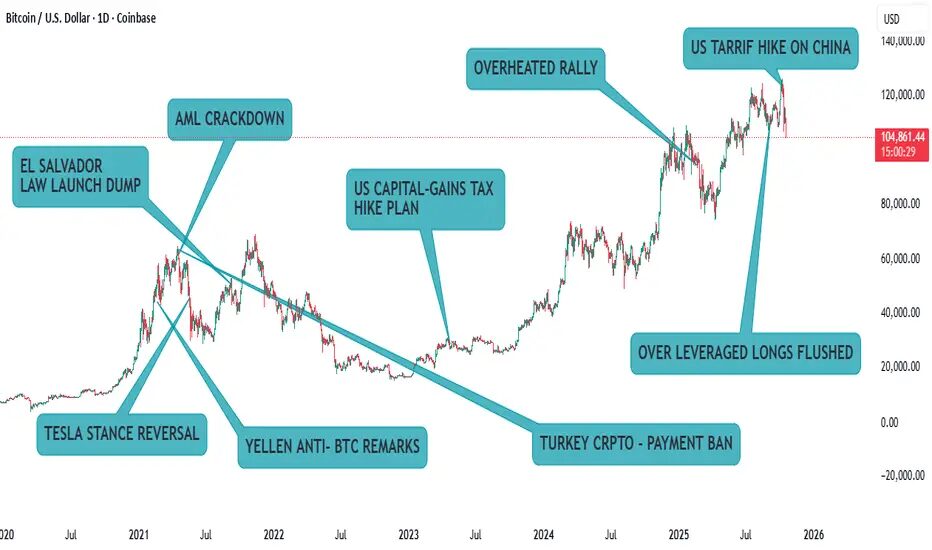
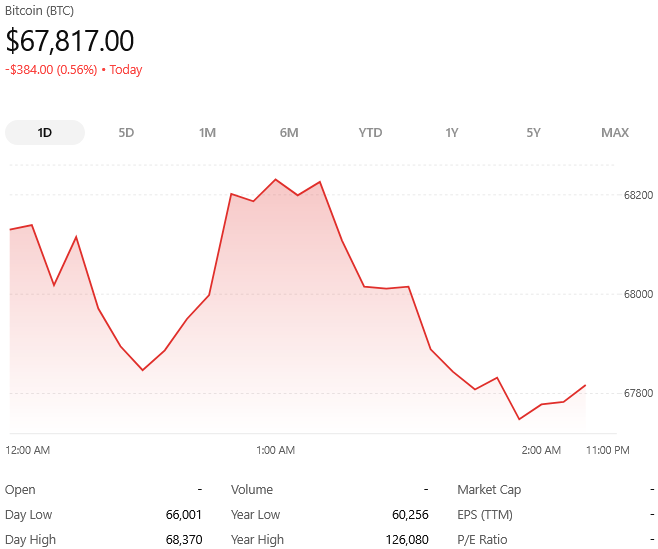
Bitcoin’s price history remains one of the most significant challenges in using it as collateral. The article notes that Bitcoin has fallen approximately 50% from its October 2025 peak of ~$126,000.
This volatility directly impacts:
- Collateral valuation
- Liquidation probability
- Investor confidence
Bitcoin Price Volatility (2025–2026)
To mitigate these risks, the bond employs:
- Conservative LTV thresholds
- Rapid liquidation mechanisms
- Institutional custody
These safeguards resemble margin lending practices in both traditional finance and crypto-native lending platforms.
Comparisons to Traditional Financial Instruments
This bond structure closely resembles Collateralized Loan Obligations (CLOs), a well-established financial instrument.
Moody’s applied its mark-to-market CLO methodology, indicating that:
- The bond is evaluated dynamically
- Collateral value is continuously reassessed
However, unlike CLOs:
- The collateral is a single volatile asset (Bitcoin)
- There is no diversification benefit
This introduces both simplicity and risk.
Market Implications: A New Asset Class?
If successful, Bitcoin-backed municipal bonds could evolve into a new hybrid asset class, combining:
- Fixed income characteristics
- Crypto exposure
This could attract:
- Hedge funds seeking yield
- Crypto-native investors entering traditional markets
- Sovereign wealth funds exploring alternative assets
Additionally, such structures may:
- Reduce borrowing costs for issuers
- Unlock dormant crypto capital
- Bridge liquidity between TradFi and DeFi
Broader Trends: Crypto Meets Institutional Finance
This development aligns with several ongoing trends:
- Increasing adoption of Bitcoin ETFs
- Expansion of crypto custody services
- Regulatory clarity in digital asset markets
Major institutions are already:
- Holding Bitcoin on balance sheets
- Offering crypto trading services
- Integrating blockchain into settlement systems
This bond can be seen as the next logical step in that evolution.
Risks and Open Questions
Despite its innovation, several risks remain:
- Price volatility risk
- Liquidity stress during market crashes
- Operational risk in liquidation execution
- Regulatory uncertainty
Additionally, questions remain about:
- Investor appetite
- Secondary market liquidity
- Replicability across jurisdictions
Conclusion: A Turning Point for Financial Innovation
The Bitcoin-backed municipal bond proposed by New Hampshire represents more than a novel financial instrument—it is a proof of concept for the integration of decentralized assets into sovereign finance.
While risks remain, the structure demonstrates that:
- Bitcoin can function as institutional-grade collateral
- Traditional finance is increasingly open to crypto integration
- New funding models are emerging for governments
If successful, this could mark the beginning of a new era where crypto assets are embedded into the core architecture of global finance.
