
Main Takeaways :
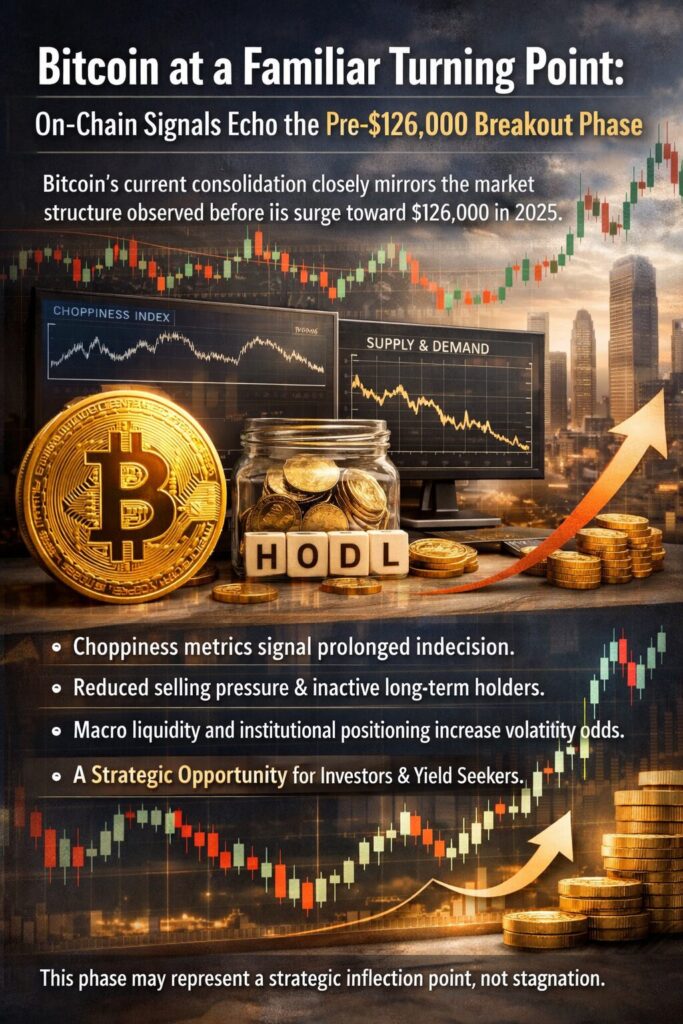
- Bitcoin’s current consolidation closely mirrors the market structure observed before its surge toward $126,000 in 2025.
- On-chain indicators, particularly choppiness metrics, suggest prolonged indecision that historically precedes sharp directional moves.
- Supply-side behavior shows reduced selling pressure, while long-term holders remain largely inactive.
- Macro liquidity conditions and institutional positioning reinforce the probability of a volatility expansion.
- For investors seeking new crypto assets, yield opportunities, or practical blockchain exposure, this phase may represent a strategic inflection point rather than stagnation.
1. Déjà Vu in Bitcoin’s Market Structure
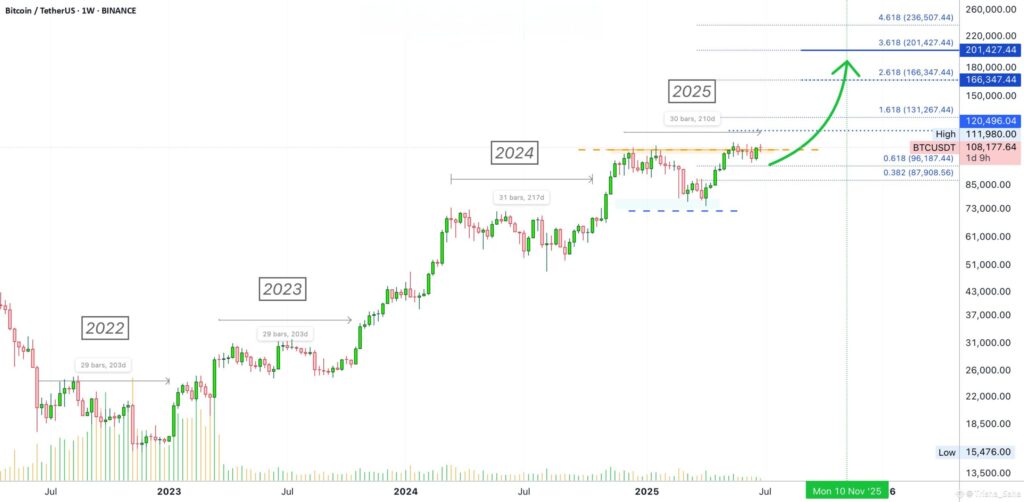
Bitcoin markets have an uncanny tendency to repeat psychological and structural patterns, even if the catalysts differ. The current trading range—defined by compressed volatility, shallow pullbacks, and persistent indecision—strongly resembles the consolidation phase observed in April–June 2025, just before Bitcoin accelerated toward $126,000.
In that earlier cycle, the market experienced an initial sharp downside move marked by a long lower wick, often described as a capitulation wick. This event flushed out weak hands and established a temporary price floor. What followed was approximately 50 days of sideways price action, characterized by low directional conviction and declining volume.
Today’s market is approaching a similar temporal threshold. Price action remains range-bound, yet the underlying on-chain dynamics suggest accumulation rather than distribution.
2. Understanding Choppiness: When Nothing Happens Before Everything Happens
One of the most telling signals in the current environment is the choppiness index, tracked by on-chain analytics providers such as Checkonchain.
The choppiness metric is designed to measure whether a market is trending or moving sideways. High values indicate directionless price movement, while low values suggest strong trends.
As of early January 2026, Bitcoin’s choppiness has risen to approximately 53, a level historically associated with prolonged consolidation phases.
Crucially, prior Bitcoin cycles show that:
- Elevated choppiness often precedes violent breakouts
- The longer the consolidation persists, the more explosive the subsequent move tends to be
- Breakouts from high-choppiness regimes frequently catch both bulls and bears off guard
This reinforces the idea that the current calm should not be mistaken for weakness.
【Bitcoin Choppiness Index vs Major Price Breakouts】
<A time-series chart showing Bitcoin price overlaid with the choppiness index, highlighting past breakout zones after extended high-choppiness periods.>
3. On-Chain Supply Signals: The Quiet Conviction of Long-Term Holders
Beyond price structure, on-chain supply metrics provide deeper insight into investor behavior.
Current data indicates:
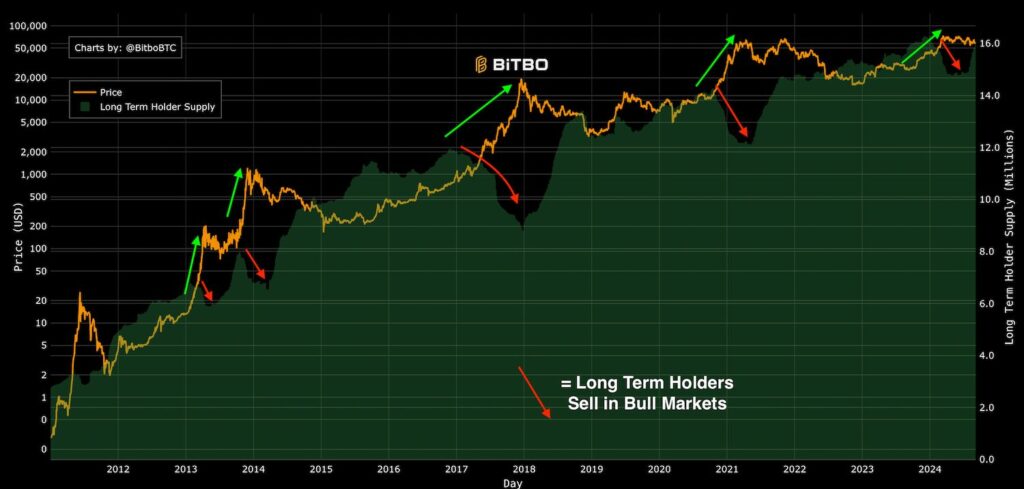
- Long-term holders (LTHs) are largely inactive, with minimal distribution
- Coins aged over 6–12 months remain dormant
- Exchange balances continue a gradual structural decline
This pattern suggests that market participants with strong conviction are unwilling to sell at current prices. Historically, such behavior tends to constrain downside risk while increasing upside sensitivity to new demand.
In contrast to late-cycle euphoria phases—where profit-taking accelerates—today’s environment more closely resembles early-to-mid expansion conditions.
4. The Role of Liquidity and Institutional Positioning
While on-chain metrics reflect internal blockchain dynamics, external macro forces also matter.
Several liquidity-related factors are aligning:
- Stablecoin supply growth has resumed, indicating renewed deployable capital
- Institutional products, including spot and derivatives-based Bitcoin exposure, show steady inflows
- Funding rates remain relatively neutral, suggesting leverage is not excessively skewed
Unlike speculative blow-off tops driven by retail frenzy, the current phase appears structurally supported by capital that is patient and risk-managed.
This matters for professional investors and operators evaluating Bitcoin not merely as a trade, but as infrastructure collateral, treasury reserve, or yield-generating base asset.
【Bitcoin Supply Dynamics and Exchange Balances】
<Visualization of long-term holder supply versus exchange-held Bitcoin, illustrating reduced sell-side pressure during consolidation.>
5. Why This Phase Matters for Crypto Builders and Yield Seekers
For readers interested in new crypto assets, revenue opportunities, and practical blockchain use, this phase carries implications beyond price speculation.
Periods of low volatility historically coincide with:
- Infrastructure development and protocol upgrades
- Capital rotation into higher-beta altcoins
- The emergence of yield strategies built on BTC, such as collateralized lending, derivatives carry trades, and structured products
Bitcoin consolidation often acts as a liquidity anchor, enabling experimentation elsewhere in the ecosystem while preserving systemic stability.
6. Risk Considerations: Similar Does Not Mean Identical
While historical analogs are compelling, no cycle unfolds in exactly the same way.
Key risks include:
- Sudden macro shocks tightening global liquidity
- Regulatory actions impacting institutional participation
- Overconfidence in pattern repetition leading to crowded positioning
However, these risks must be weighed against the observable fact that on-chain stress indicators remain muted, and forced selling pressure appears limited.
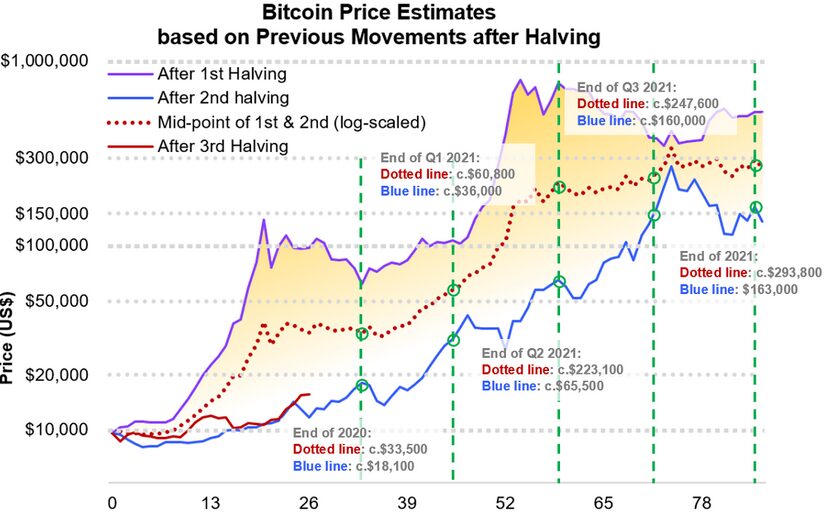
【Bitcoin Market Phases: Capitulation, Consolidation, Expansion】
<A simplified schematic illustrating recurring Bitcoin cycle phases with emphasis on consolidation as a transition zone.>
7. Conclusion: A Silent Pivot, Not a Stagnant Market
Bitcoin’s current state is not one of indecision, but of compression.
The convergence of:
- Extended range-bound trading
- Elevated choppiness metrics
- Dormant long-term supply
- Stable macro liquidity conditions
suggests that the market may be quietly preparing for its next decisive move.
For investors and operators focused on strategic positioning rather than short-term noise, this environment may represent a rare opportunity: a moment when risk is defined, participation is selective, and asymmetry is quietly rebuilding.
History does not repeat perfectly—but in Bitcoin, it often rhymes loudly after long periods of silence.
