

Main Points :
- Bitcoin’s early-January rally is unfolding amid conflicting on-chain signals, with long-term accumulation strengthening while miners resume notable selling activity.
- Accumulation addresses have increased holdings by more than 60,000 BTC in the first six days of January, signaling renewed conviction among long-term investors.
- At the same time, miners transferred approximately 33,000 BTC to exchanges, primarily Binance, suggesting risk management and profit-taking behavior.
- Market sentiment indicators, including taker flow data and composite sentiment indices, point toward stabilization rather than overheating.
- The sustainability of the rally depends on whether structural demand can continue to absorb miner supply without triggering sharp corrections.
1. Introduction: A Fragile Balance at the Start of the Year
Bitcoin entered the new year with renewed momentum, rebounding toward the $90,000 level after a volatile end to the previous quarter. Unlike euphoric rallies driven purely by leverage or speculative frenzy, this move is characterized by a complex interplay between accumulation-driven demand and supply from miners returning to the market.
On-chain data suggests that long-term investors are becoming more active precisely as prices recover, while miners—traditionally sensitive to profitability and risk—are reducing exposure after the rebound. This creates a market environment that is neither clearly bullish nor decisively bearish, but rather one that demands careful interpretation.
For investors searching for new crypto assets, alternative income sources, or practical blockchain applications, understanding this balance is critical. Bitcoin remains the liquidity anchor of the crypto ecosystem, and its behavior often sets the tone for broader market cycles.
2. Accumulation Addresses Signal a Structural Shift in Demand
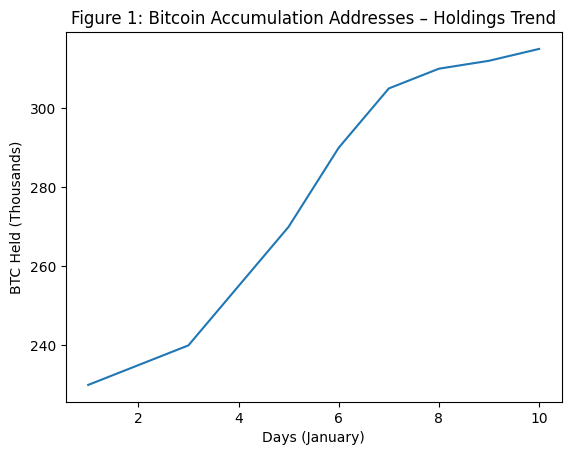
According to data from CryptoQuant, Bitcoin accumulation addresses increased their holdings from approximately 249,000 BTC to 310,000 BTC within the first six days of January. This represents a sharp departure from the relatively flat accumulation trend observed between September and December, when holdings hovered between 200,000 and 230,000 BTC.
This shift is significant not only in magnitude but also in timing. Accumulation accelerated in parallel with Bitcoin’s price recovery toward $90,000, indicating that long-term holders are not waiting for deeper pullbacks. Instead, they appear willing to absorb circulating supply as it becomes available.
This behavior contrasts with previous corrective phases, where accumulation often lagged price recovery. The current pattern suggests that investors with longer time horizons perceive the recent correction as a consolidation rather than the start of a prolonged downturn.
[Insert Figure 1 here: “Bitcoin Accumulation Addresses – Holdings Trend (BTC)”]
(A line or area chart showing accumulation address balances rising sharply in early January.)
3. Why Accumulation Matters for Long-Term Market Structure
Accumulation addresses are typically associated with entities that have minimal outbound transactions, often interpreted as long-term holders, institutional custodians, or strategic investors. When these addresses increase holdings during price rebounds, it implies confidence in higher future valuations.
From a structural perspective, strong accumulation can act as a liquidity sink, reducing the amount of BTC available for short-term trading. This can dampen volatility and provide a foundation for sustained price appreciation—provided that incoming supply does not overwhelm demand.
For blockchain practitioners, this dynamic also highlights Bitcoin’s evolving role as a store-of-value asset with increasingly institutional characteristics, rather than purely a speculative instrument.
4. Miner Selling Resumes: Risk Management, Not Panic
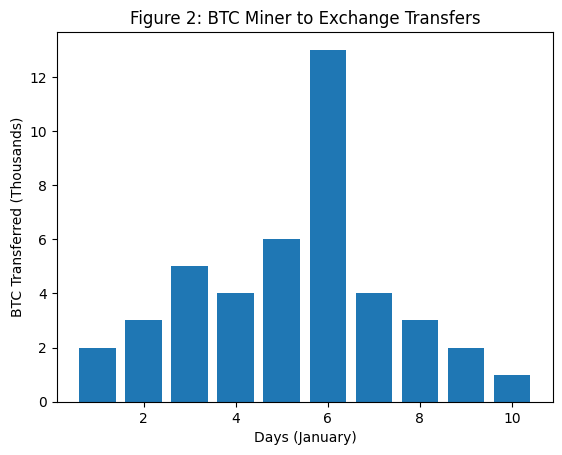
On the supply side, miners have begun transferring significant amounts of BTC to exchanges. During the first six days of the year, approximately 33,000 BTC moved from miner wallets to Binance, a level notably higher than typical baseline flows.
Historically, miner selling tends to increase following price rallies, as higher prices improve margins and allow miners to cover operational costs, service debt, or hedge future risks. CryptoQuant analysts interpret the recent flows as exposure reduction, rather than outright capitulation.
Importantly, miner selling alone does not necessarily trigger sharp corrections. Its impact depends on whether the market can absorb this supply without significant price disruption.
[Insert Figure 2 here: “BTC Miner to Exchange Flows (Daily BTC)”]
(A bar chart illustrating spikes in miner-to-exchange transfers in early January.)
5. The Absorption Question: Can Demand Offset Supply?
The critical issue for Bitcoin’s near-term trajectory is not whether miners are selling, but whether accumulation demand remains strong enough to offset that selling. So far, price action suggests that the market has been able to digest miner flows without severe downside pressure.
This balance reflects a healthier market structure compared to periods where miner selling coincided with declining demand and rising fear. In such cases, even moderate supply increases led to outsized price drops.
For investors, this environment favors measured positioning rather than aggressive leverage, as the market appears to be searching for equilibrium rather than embarking on a parabolic move.
6. Taker Flow Data Points to Sentiment Stabilization
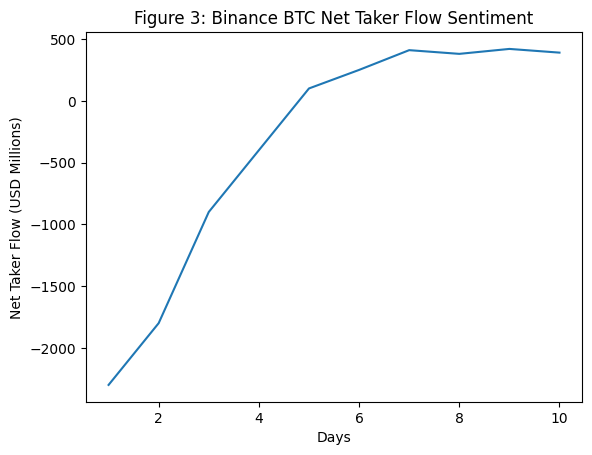
Additional insight comes from Binance’s 7-day net taker flow data. In November, Bitcoin experienced heavy net selling, averaging $2.3 billion per day, coinciding with a drop toward the $84,000 level. December marked a transition period, with selling pressure gradually easing into year-end.
Since the start of January, the market has recorded seven consecutive days of modest net buying, averaging approximately $410 million per day. While this buying pressure is not aggressive, it represents a meaningful shift from the prior sell-dominated regime.
[Insert Figure 3 here: “Binance BTC Net Taker Flow (USD)”]
(A line or histogram chart showing a transition from negative to slightly positive net taker flows.)
7. Composite Sentiment: From Fear to Neutral
Sentiment indicators further support the stabilization narrative. The Bitcoin Composite Sentiment Index, tracked by analyst Axel Adler Jr., has returned to the neutral zone for the first time since November.
According to Adler, bullish enthusiasm remains restrained, but fear has clearly subsided. This combination is often observed during early-stage recoveries, where markets rebuild confidence without excessive speculation.
From a cyclical standpoint, such conditions are generally more sustainable than rallies fueled by extreme optimism, as they leave room for incremental demand to build.
8. Broader Context: Institutional Flows and Macro Backdrop
Beyond on-chain data, broader market forces are also shaping Bitcoin’s outlook. Institutional interest, particularly via spot Bitcoin ETFs and structured products, continues to provide a steady baseline of demand. At the same time, macroeconomic uncertainty—ranging from interest rate expectations to currency volatility—reinforces Bitcoin’s appeal as a non-sovereign asset.
For those exploring blockchain’s practical use cases, this environment underscores Bitcoin’s dual identity: a financial hedge and a settlement layer that underpins liquidity across the crypto ecosystem.
9. Implications for Investors and Builders
For investors seeking new opportunities, the current phase suggests focusing on risk-adjusted exposure rather than chasing short-term momentum. Accumulation trends favor long-term positioning, while miner selling argues against complacency.
For builders and operators, Bitcoin’s relative stability is constructive. A market that avoids extreme volatility creates better conditions for deploying payment rails, treasury strategies, and yield-generating applications built on top of crypto infrastructure.
10. Conclusion: A Rally Tested by Fundamentals
Bitcoin’s early-year rally is being tested not by speculative excess, but by real economic forces within its own ecosystem. Accumulation demand and miner selling are locked in a delicate contest, with sentiment indicators suggesting balance rather than fragility.
If accumulation continues at current levels, the market may absorb ongoing miner supply without significant disruption, laying the groundwork for a more durable advance. Conversely, a slowdown in demand could quickly expose the downside risks associated with renewed selling pressure.
For now, Bitcoin appears to be navigating a constructive but cautious recovery, one that rewards patience, data-driven analysis, and a clear understanding of on-chain dynamics.
