

Main Points :
- Bitcoin is trading near its year-to-date highs as geopolitical developments surrounding Venezuela trigger reactions across traditional financial markets.
- Liquidity conditions around $88,000 on the downside and $92,000 on the upside suggest a classic “fakeout” environment before a larger directional move.
- While gold faces renewed pressure amid macro uncertainty, Bitcoin shows signs of relative strength, reinforcing its emerging role as a macro-responsive digital asset.
- Cross-market dynamics—oil, gold, equities, and crypto—are increasingly synchronized, offering new opportunities for traders and long-term allocators alike.
1. Bitcoin at a Critical Weekly Close
As the weekly candle approached its close, Bitcoin hovered just below the psychologically important $92,000 level, maintaining prices near its year-to-date highs. This positioning alone would normally attract attention, but the broader context made the situation far more significant.
Over the weekend, global markets began to price in escalating geopolitical risk tied to Venezuela, including concerns about potential military actions and their ripple effects across commodities, currencies, and capital flows. Although crypto markets trade 24/7, traditional financial markets do not—creating a familiar setup where Bitcoin acts as an early indicator before equities, bonds, and commodities reopen.
From a structural perspective, Bitcoin’s price action reflected a market waiting for confirmation. Volatility remained relatively contained, yet traders closely monitored order-book liquidity and liquidation clusters, anticipating that the weekly close could trigger forced moves in either direction.
2. Liquidity, Liquidations, and the “Fakeout” Setup
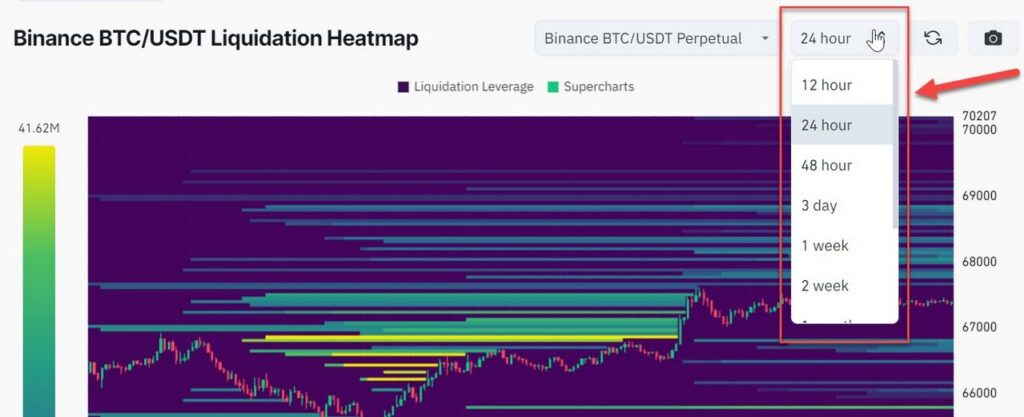
Short-term price behavior revealed a textbook liquidity-driven environment. Data from major exchanges showed that the largest concentration of downside liquidity sat near $88,000—roughly aligned with the year-opening price. On the upside, $92,000 stood out as a long-standing resistance zone and a magnet for stop-loss orders.
This configuration often leads to so-called “fakeouts,” where price briefly breaks above or below a key level only to reverse sharply. Such moves are especially common around weekly closes, when leverage is highest and traders are positioned for continuation.
Some analysts pointed out that liquidity above $95,000 appeared relatively thin. Should Bitcoin convincingly reclaim the $92,000–$93,000 range, the lack of overhead resistance could enable a rapid push toward $100,000, driven less by organic demand and more by cascading liquidations.
【BTC Liquidation Heatmap】
3. Technical Signals: Compression Before Expansion
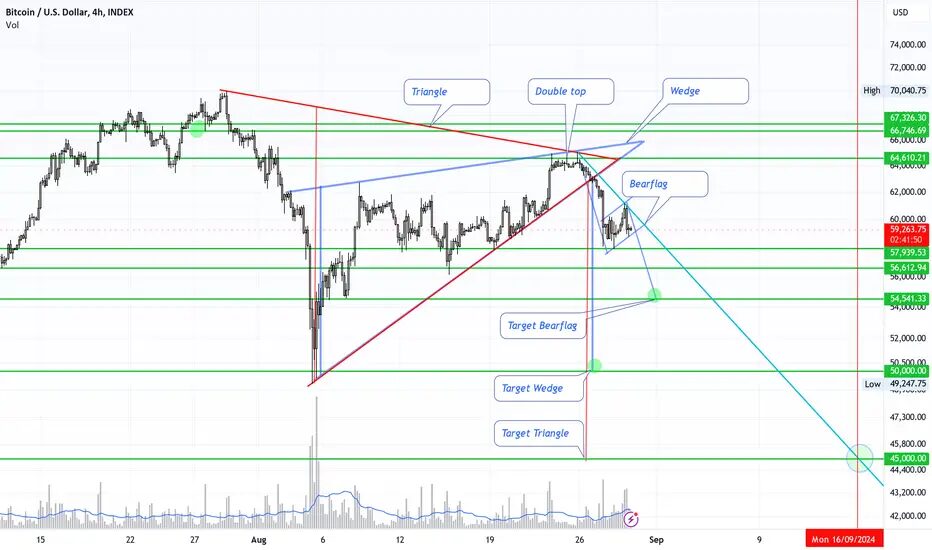
On lower timeframes, Bitcoin formed a symmetrical triangle pattern, signaling price compression. Such formations typically precede expansion, though the direction remains uncertain until a confirmed breakout occurs.
A decisive move above $90,000–$92,000 would validate bullish continuation and likely attract momentum traders. Conversely, a breakdown below $88,000 could flush leveraged longs, resetting funding rates and setting the stage for a healthier rally later.
Importantly, these technical dynamics are not unfolding in isolation. They are tightly interwoven with macro developments—particularly how traditional finance responds to geopolitical stress.
【BTC/USD 4-Hour Chart】
4. Venezuela, Oil, and the Macro Shockwave
Venezuela holds some of the world’s largest proven oil reserves and significant gold holdings, making it a critical node in the global commodity system. Any disruption tied to geopolitical escalation has immediate implications for energy prices, inflation expectations, and risk sentiment.
Market observers warned that renewed instability could push oil prices higher, reinforcing inflationary pressures at a time when central banks remain cautious about easing. In such an environment, all major asset classes—equities, bonds, commodities, and crypto—tend to move simultaneously, though not always in the same direction.
Bitcoin’s weekend strength suggested that crypto markets were front-running this adjustment, positioning ahead of traditional markets reopening.
5. Gold Falters as Bitcoin Finds Relative Strength
Gold, traditionally viewed as the ultimate safe haven, showed signs of exhaustion after underperforming toward the end of the previous year. Despite heightened geopolitical risk, gold struggled to regain momentum, raising questions about its role in the current macro cycle.
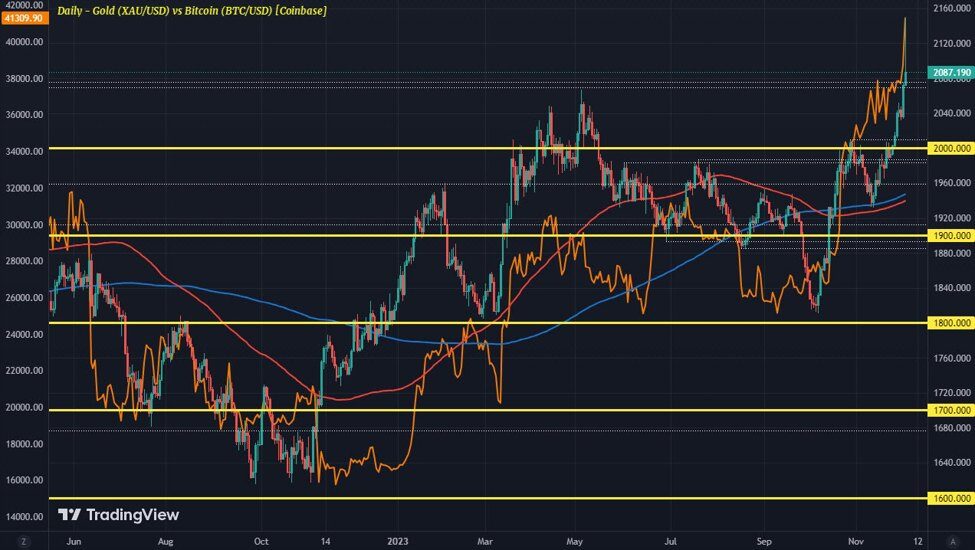
Bitcoin, by contrast, appeared to be gaining relative strength against gold. Analysts tracking the BTC/XAU ratio noted early indications of an uptrend—an important signal for investors who view Bitcoin as “digital gold.”
If confirmed, this shift would mark another step in Bitcoin’s evolution from a speculative asset to a macro-sensitive store of value that competes directly with precious metals.
【BTC vs Gold (BTC/XAU) Chart】
6. Momentum Indicators and Long-Term Context
From a momentum standpoint, Bitcoin’s weekly Relative Strength Index (RSI) recently dipped to levels not seen since the latter stages of the 2022 bear market. Historically, such conditions have preceded strong medium- to long-term rallies, particularly when fundamentals remain intact.
This does not imply a straight-line move upward. Volatility, pullbacks, and shakeouts are likely. However, the broader structure suggests that Bitcoin is building a base for its next major trend.
7. Implications for Investors and Builders
For traders, the current environment offers opportunities in volatility, breakout strategies, and relative-value trades between Bitcoin and traditional assets like gold or oil-linked equities.
For long-term investors, the convergence of geopolitics, macro uncertainty, and crypto liquidity reinforces Bitcoin’s role as a strategic asset rather than a niche speculation.
For builders and operators in the blockchain space, these dynamics highlight a deeper truth: crypto markets no longer move independently. They are embedded within the global financial system, reacting to the same forces—but often faster.
Conclusion: A Market on the Edge of Decision
Bitcoin’s approach toward $92,000 is not merely a technical milestone. It reflects a broader transition in how digital assets interact with global macro forces. Venezuela’s geopolitical situation served as a catalyst, but the underlying story is one of maturation: crypto is now a first-responder asset in times of uncertainty.
Whether the next move is a brief fakeout or a decisive breakout, the message is clear. Bitcoin is no longer on the sidelines of global finance—it is increasingly at the center of it.
