

Key Points :
- The number of Bitcoin wallets holding over 100 BTC is approaching 20,000, indicating strong accumulation.
- Whale distribution is becoming broader rather than concentrated, suggesting structural market strength.
- Historical cycles show that similar patterns often precede market bottoms and long-term rallies.
- Weak price performance despite accumulation suggests redistribution from retail to institutional players.
- Macro and institutional trends support a medium- to long-term bullish outlook.
1. The Emergence of a Critical Accumulation Signal
Recent on-chain data from Santiment highlights a critical structural development in the Bitcoin market: the number of wallets holding more than 100 BTC is approaching 20,000. This milestone is not merely symbolic—it represents a shift in ownership dynamics that historically aligns with accumulation phases preceding major bullish cycles.
In USD terms, a 100 BTC holding represents approximately $6 million (assuming $60,000 per BTC), meaning these wallets belong to high-net-worth individuals, funds, or institutions. The steady increase in such wallets during periods of price weakness is particularly significant. It suggests that large players are actively accumulating Bitcoin while retail sentiment remains cautious or bearish.
This divergence between price action and accumulation is one of the most important signals in crypto markets. Unlike retail-driven rallies, institutional accumulation tends to be gradual, strategic, and less visible in short-term price movements.
2. Distribution Over Concentration: A Healthier Market Structure
One of the most notable aspects of the current trend is that the increase in whale wallets does not appear to be driven by a small number of entities consolidating supply. Instead, the growth suggests a broader distribution among multiple large holders.
This distinction is crucial.
If supply were becoming concentrated in fewer hands, it could indicate manipulation risks or fragility. However, a distributed whale base implies:
- Increased market resilience
- Reduced systemic risk
- More stable long-term price support
Santiment’s data suggests that Bitcoin is transitioning toward a more decentralized form of large-scale ownership. This aligns with the maturation of the asset class, where participation is expanding beyond early adopters into institutional and sovereign-level players.
3. The Redistribution Phase: Retail to Institutional Transfer
Despite strong accumulation signals, Bitcoin’s price has not shown immediate upward momentum. This apparent contradiction can be explained by a redistribution phase.
During this phase:
- Retail investors sell due to fear, fatigue, or liquidity needs
- Institutional investors absorb supply gradually
- Price remains suppressed due to ongoing selling pressure
This pattern has been observed in previous cycles, particularly during the late bear market stages.
[Whale Wallet Growth]
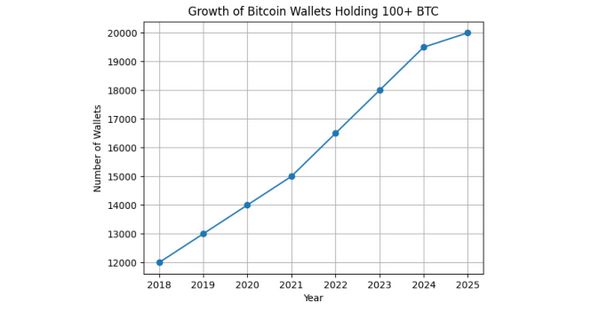
The increase in whale wallets suggests that coins are being redistributed rather than newly created. Retail participants are effectively transferring Bitcoin to stronger hands.
This is a foundational mechanism in financial markets: weak hands exit, strong hands accumulate.
4. Historical Cycles: A Precursor to Bull Markets
Looking at previous Bitcoin cycles, similar patterns have consistently emerged before major price expansions.
- 2015–2016: Whale accumulation before the 2017 bull run
- 2018–2019: Redistribution before the 2020–2021 rally
- 2022–2023: Institutional re-entry following macro tightening
[Price vs Accumulation]
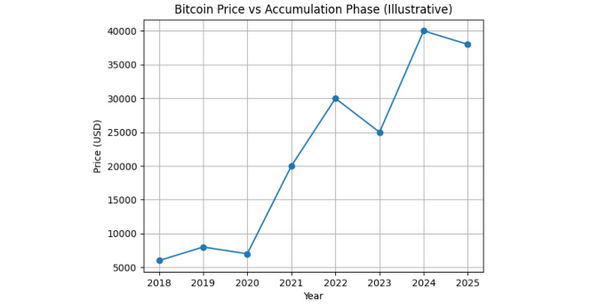
In each case, accumulation occurred during periods of weak or sideways price action. The market often appeared stagnant before transitioning into explosive growth phases.
This reinforces a key principle: price lags behind accumulation.
Therefore, the current environment may represent a late-stage accumulation phase rather than a failed recovery.
5. Macro Trends Reinforcing the Bullish Narrative
Beyond on-chain data, macroeconomic and institutional trends further support a bullish outlook.
5.1 Institutional Adoption
- Spot Bitcoin ETFs have increased accessibility to traditional investors
- Asset managers are allocating Bitcoin as a hedge against inflation
- Custodial infrastructure has matured significantly
5.2 Monetary Policy Environment
- Expectations of interest rate stabilization or cuts
- Increasing global debt levels
- Continued currency debasement
Bitcoin’s fixed supply makes it increasingly attractive as a hedge against macro instability.
5.3 Financialization of Bitcoin
Bitcoin is no longer just a speculative asset—it is evolving into:
- Collateral for lending
- Treasury reserve asset
- Settlement layer for digital finance
These developments increase structural demand beyond retail speculation.
6. Structural Implications for Investors and Builders
For readers seeking new crypto opportunities and revenue models, this trend carries several implications.
6.1 Early Positioning Advantage
Accumulation phases offer asymmetric risk-reward opportunities. Entering before price expansion allows for maximum upside exposure.
6.2 Infrastructure Opportunities
As institutional participation grows, demand increases for:
- Custody solutions
- Compliance frameworks
- Liquidity infrastructure
- Cross-chain interoperability
These are key areas for builders and entrepreneurs.
6.3 Shift Toward Yield and Utility
The market is moving beyond simple price speculation. Investors are increasingly focused on:
- Yield generation
- Real-world applications
- Integration with traditional finance
Bitcoin itself may play a central role as base collateral in these systems.
7. Supply Redistribution Dynamics
[Supply Redistribution]
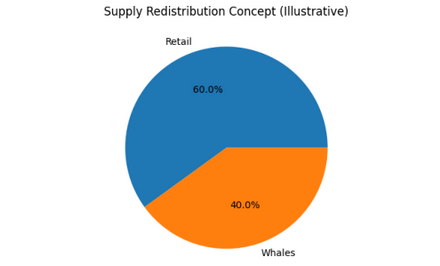
The redistribution process reflects a transition from fragmented retail ownership to structured institutional control.
This transition typically results in:
- Lower volatility over time
- Stronger support levels
- Higher price floors
However, it also introduces new dynamics, including:
- Increased correlation with traditional markets
- Greater sensitivity to macroeconomic events
8. Risks and Limitations
While the accumulation signal is strong, it is not a guarantee of immediate price appreciation.
Key risks include:
- Prolonged macroeconomic tightening
- Regulatory uncertainty
- Liquidity shocks in global markets
Additionally, accumulation phases can last longer than expected, testing investor patience.
9. Conclusion: A Market Quietly Preparing for Expansion
The approach toward 20,000 whale wallets holding over 100 BTC represents more than a numerical milestone—it signals a structural transformation in the Bitcoin market.
The combination of:
- Increasing whale participation
- Distributed ownership
- Historical precedent
- Supportive macro trends
suggests that Bitcoin may be entering the final stages of an accumulation phase.
While short-term price action remains uncertain, the underlying structure appears increasingly bullish.
For investors, this is a period of positioning.
For builders, this is a period of preparation.
For the market, this may be the calm before the next expansion cycle.
