
Main Points :
- BIP-110 proposes a temporary soft fork to restrict non-financial data on the Bitcoin blockchain.
- Supporters argue it protects Bitcoin as a healthy financial infrastructure.
- Opponents claim it undermines Bitcoin’s neutrality and store-of-value credibility.
- The debate intensified after Bitcoin Core v30.0 effectively removed OP_RETURN limits.
- A technical counter-demonstration suggests BIP-110 may not effectively prevent data inscriptions.
- The conflict raises deeper questions: What is Bitcoin for—and who decides?
1. Introduction: A Technical Proposal with Philosophical Consequences
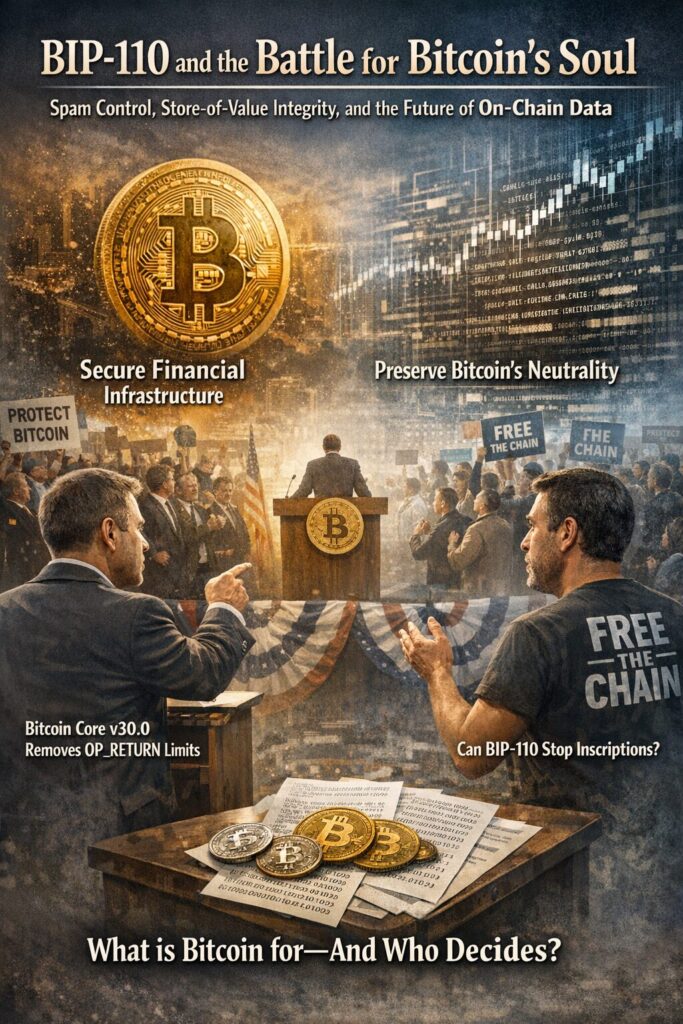
In early 2026, the Bitcoin ecosystem once again found itself at a crossroads. At the center of controversy is BIP-110, a Bitcoin Improvement Proposal that aims to limit non-financial data embedded in Bitcoin transactions.
On the surface, this may appear to be a technical discussion about byte limits and script opcodes. But beneath that surface lies a fundamental dispute about Bitcoin’s identity: Is it purely a monetary network designed for sound financial settlement? Or is it a neutral, permissionless ledger where any data—financial or otherwise—can be recorded as long as it pays the fee?
For investors seeking the next wave of crypto opportunity—and for builders exploring practical blockchain applications—this debate matters deeply. It affects transaction fees, miner incentives, node operating costs, network decentralization, and the long-term narrative of Bitcoin itself.
2. What BIP-110 Proposes
BIP-110 was introduced by developer Dathon Ohm as a time-limited soft fork (approximately one year) designed to restrict arbitrary non-financial data embedded in the Bitcoin blockchain.
Specifically, BIP-110 proposes:
- Restoring strict OP_RETURN limits
- Restricting individual data pushes to 256 bytes
- Limiting the size of new output scripts
The proposal emerged after Bitcoin Core v30.0 significantly increased the effective OP_RETURN size limit—from 80 bytes to 100,000 bytes.
Bitcoin Core
OP_RETURN is an opcode in Bitcoin’s scripting language that allows users to embed arbitrary data into a transaction output while rendering that output unspendable. It has historically been used for timestamps, metadata, asset protocols, and more recently, inscriptions and NFT-like experiments.
Supporters of BIP-110 argue that expanding OP_RETURN limits opens the door to large-scale data embedding—images, videos, and text—turning Bitcoin into a data storage network rather than a financial settlement layer.
3. The Supporters’ Argument: Protecting Financial Infrastructure
A group of developers and miners argue that Bitcoin must prioritize its role as a robust financial infrastructure.
Their concerns include:
- Increased blockchain bloat
- Higher storage costs for node operators
- Reduced decentralization due to heavier hardware requirements
- Degradation of Bitcoin’s monetary focus
Alternative node software such as Bitcoin Knots has been adopted by those who want stricter data policies.
Bitcoin Knots
Luke Dashjr
Luke Dashjr, maintainer of Bitcoin Knots and CTO of Ocean Mining Pool, has long described inscription-style data as “spam.” Ocean Pool recently mined the first block signaling support for BIP-110, reigniting community tensions.
Ocean Mining Pool
Reports suggest roughly 3–9% of nodes currently signal support.
Supporters frame their position not as censorship—but as preservation. In their view, Bitcoin must resist becoming a generalized data platform and instead remain optimized for financial sovereignty.
4. The Opponents’ Argument: Neutrality and Store-of-Value Trust
Opponents—including Adam Back, CEO of Blockstream—strongly reject BIP-110.
Adam Back
Blockstream
Back argues that pushing through restrictive changes without broad consensus damages Bitcoin’s credibility as a neutral, rules-based monetary system.
From this perspective:
- “Spam” is subjective
- As long as transactions pay fees and fit within block size limits, they are valid
- Selectively restricting data types introduces governance risk
Critics warn that such intervention could harm Bitcoin’s reputation as censorship-resistant digital gold—a critical pillar for institutional capital and sovereign adoption.
5. The Habovštiak Demonstration: Technical Limits of BIP-110
The debate escalated when Slovak developer Martin Habovštiak embedded a 66KB TIFF image into the Bitcoin blockchain in a single transaction—without using OP_RETURN, Taproot, or OP_IF.
Martin Habovštiak
He claimed this proved BIP-110’s restrictions could be bypassed.
When Dashjr argued the method was non-continuous, Habovštiak released a compliant version adhering to BIP-110 constraints—ironically increasing the total data footprint.
He concluded that BIP-110 might paradoxically increase blockchain data rather than reduce it.
Importantly, he withheld the source code to avoid encouraging NFT-style spam. He stated that while he opposes spam, he opposes “false claims” even more.
This episode highlights a key reality: Bitcoin script flexibility makes data restriction extremely difficult without deeper architectural changes.
6. Economic and Market Implications
For investors, this is not just philosophy—it is economics.
If non-financial data demand continues:
- Transaction fees may rise
- Miner revenue diversification improves
- Bitcoin becomes a hybrid financial-data settlement layer
If restrictions are enforced:
- Bitcoin’s narrative as digital gold strengthens
- Node requirements stabilize
- Competing chains absorb NFT/data demand
We’ve already seen inscription activity drive fee spikes in prior cycles. The question is whether that activity represents durable demand or transient experimentation.
7. The Broader Trend: Bitcoin’s Expanding Utility
Recent developments show Bitcoin increasingly used for:
- Ordinals and inscriptions
- Layer-2 protocols
- Tokenization experiments
- Cross-chain bridging
While Ethereum remains dominant in programmability, Bitcoin’s brand and liquidity give it gravitational pull.
If data embedding persists, Bitcoin may unintentionally evolve into a layered ecosystem similar to Ethereum—but without native smart contracts.
8. Visual Analysis
[Blockchain Data Growth Comparison]
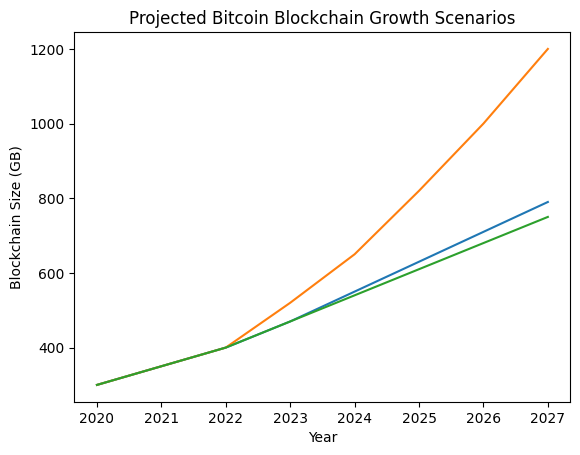
Graph comparing:
- Historical Bitcoin blockchain growth (GB/year)
- Growth after inscription adoption
- Projected growth under unrestricted OP_RETURN
[Node Cost Impact Projection]
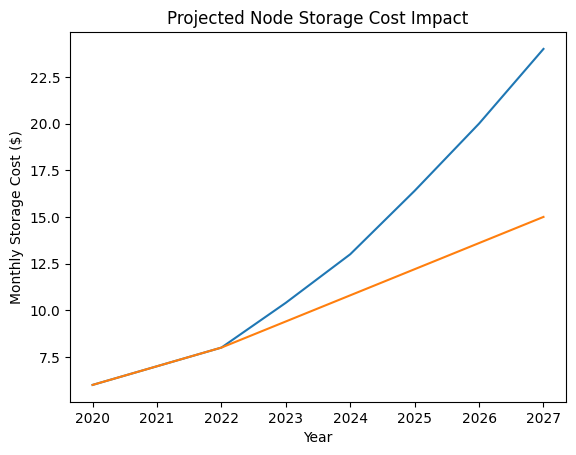
Projection model:
- Storage cost under strict BIP-110
- Storage cost under current policy
- Impact on decentralization threshold
9. What This Means for Builders and Investors
For those searching for the next revenue source or emerging crypto niche:
- If Bitcoin restricts data → NFT/metadata demand may migrate to alternative chains.
- If Bitcoin remains permissive → Bitcoin-native data protocols may gain momentum.
- Miner strategies will increasingly depend on fee market evolution.
This creates opportunity in:
- Infrastructure services
- Data compression tooling
- Layer-2 scalability
- Fee optimization products
10. Conclusion: More Than Spam
BIP-110 is not merely about byte limits.
It is about:
- Bitcoin’s identity
- Governance boundaries
- Neutrality versus optimization
- Long-term decentralization economics
Whether BIP-110 succeeds or fails, the debate itself reveals something critical: Bitcoin’s future is no longer solely about price cycles. It is about architectural direction.
For forward-looking investors and builders, the real question is not whether spam exists—but how economic incentives shape protocol evolution.
Bitcoin’s soul is not being attacked by data. It is being tested by governance.
And that may be the most valuable signal of all.
