
Main Points :
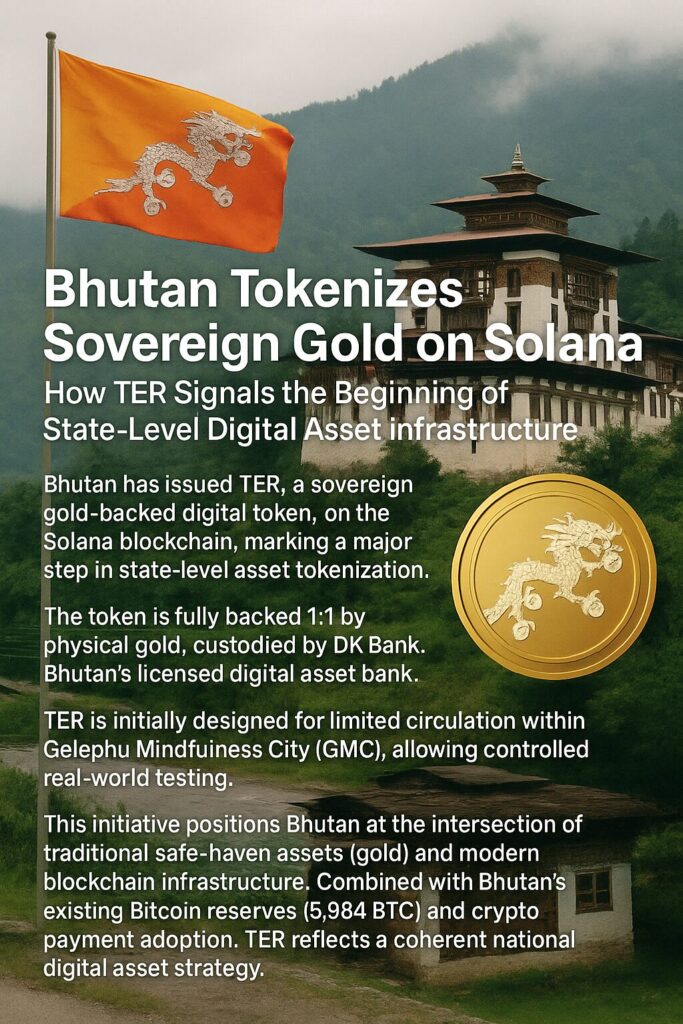
- Bhutan has issued TER, a sovereign gold-backed digital token, on the Solana blockchain, marking a major step in state-level asset tokenization.
- The token is fully backed 1:1 by physical gold, custodied by DK Bank, Bhutan’s licensed digital asset bank.
- TER is initially designed for limited circulation within Gelephu Mindfulness City (GMC), allowing controlled real-world testing.
- This initiative positions Bhutan at the intersection of traditional safe-haven assets (gold) and modern blockchain infrastructure.
- Combined with Bhutan’s existing Bitcoin reserves (5,984 BTC) and crypto payment adoption, TER reflects a coherent national digital asset strategy.
1. Introduction: When Sovereign Assets Go On-Chain
The global conversation around blockchain has long been dominated by private-sector innovation: cryptocurrencies, decentralized finance (DeFi), and tokenized securities issued by corporations or financial institutions. Bhutan’s issuance of TER, a sovereign gold-backed digital token, marks a decisive shift in this narrative.
Rather than experimenting with unbacked digital currencies or purely speculative tokens, Bhutan has chosen a conservative yet forward-looking approach: placing state-owned physical gold directly onto a public blockchain. By doing so, the country bridges centuries-old monetary tradition with next-generation digital infrastructure.
This move is not merely symbolic. It represents the beginning of state-level digital asset infrastructure, where national reserves, monetary policy tools, and public trust converge on-chain.
2. What Is TER? A Sovereign Gold-Backed Token Explained
TER is a digital token issued on the Solana blockchain, fully backed 1:1 by physical gold held in custody. Each TER token corresponds to a specific amount of sovereign gold, ensuring intrinsic value rather than algorithmic or purely market-driven pricing.
Key structural features include:
- Issuer: Gelephu Mindfulness City (GMC), Bhutan’s Special Administrative Region
- Custodian & Exclusive Distributor: DK Bank, Bhutan’s first licensed digital asset bank
- Blockchain: Solana (chosen for high throughput and low transaction costs)
- Tokenization Infrastructure: Matrixdock, a regulated real-world asset (RWA) platform
Unlike stablecoins backed by cash equivalents or short-term treasuries, TER relies on a universally recognized store of value: gold.
3. Why Solana? Infrastructure Choices Behind TER
The decision to build TER on Solana is strategic rather than ideological.
Solana offers:
- High transaction throughput suitable for retail-scale usage
- Low transaction fees, essential for daily payments and micro-settlements
- A growing RWA ecosystem, increasingly favored for asset-backed tokens
For a token intended to circulate in real economic activity—rather than remain a passive reserve asset—performance and cost efficiency matter more than maximal decentralization.
By choosing Solana, Bhutan signals that usability and scalability are central to its digital strategy.
4. Custody, Trust, and Regulation: The Role of DK Bank
One of the most critical aspects of TER is custody.
The physical gold backing TER is stored under the supervision of Bhutan’s monetary authorities and held by DK Bank, which operates under the Royal Monetary Authority’s regulatory framework. DK Bank serves three roles simultaneously:
- Custodian of physical gold
- Issuer interface for TER
- Exclusive distributor and settlement agent
This structure mirrors traditional bullion banking, translated into a digital-native format. For users, this means familiarity: acquisition, holding, and redemption of TER resemble conventional gold ownership, but with blockchain-based transparency.
5. Transparency Through Tokenization: On-Chain Proof of Reserves
A key promise of TER is radical transparency.
Unlike opaque sovereign reserve reporting, TER enables:
- On-chain visibility of circulating supply
- Verifiable linkage between tokens and custodied assets
- Auditability through blockchain explorers
While full public proof-of-reserves frameworks are still evolving, the architecture allows Bhutan to move toward real-time reserve transparency, something few nations currently offer.
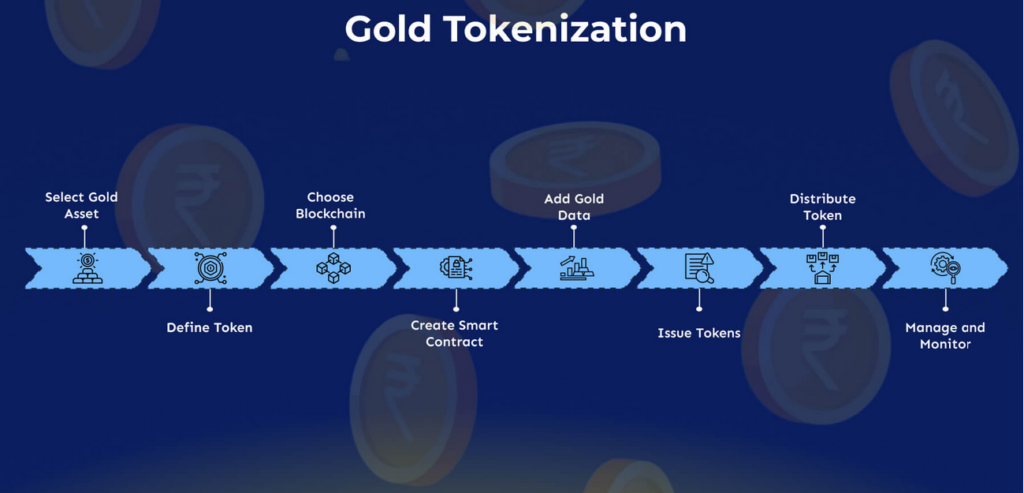
[Structure of TER Tokenization and Custody Flow]
6. Limited Rollout by Design: Testing Value Stability in the Real World
TER is not intended for immediate global circulation.
Instead, it is designed for controlled deployment within Gelephu Mindfulness City (GMC). This approach allows Bhutan to:
- Observe real-world usage patterns
- Test price stability against fiat currencies
- Assess user behavior in payments and savings
By limiting scale, Bhutan avoids systemic risk while gathering invaluable empirical data on how gold-backed digital money behaves in a modern economy.
7. TER as an Inflation-Resilient Digital Instrument
In an era of persistent inflation and expanding monetary bases worldwide, gold has re-emerged as a hedge against currency debasement. TER extends this function into the digital realm.
Unlike fiat-pegged stablecoins, TER:
- Is not directly exposed to sovereign debt risk
- Derives value from a scarce physical commodity
- Maintains purchasing power over long horizons
For users, TER functions as both a medium of exchange and a digital store of value, particularly appealing in cross-border and long-term savings contexts.
8. Bhutan’s Broader Crypto Strategy: Payments, Mining, and Reserves
TER does not exist in isolation.
Bhutan has systematically built crypto infrastructure over several years:
- Bitcoin mining since 2019, powered by renewable hydroelectric energy
- 5,984 BTC held as national reserves, valued in the hundreds of millions USD
- Crypto payments adoption, with DK Bank and Binance Pay enabling over 1,000 merchants
This ecosystem demonstrates strategic coherence: Bitcoin as a reserve asset, crypto as a payment rail, and now gold as a tokenized sovereign asset.
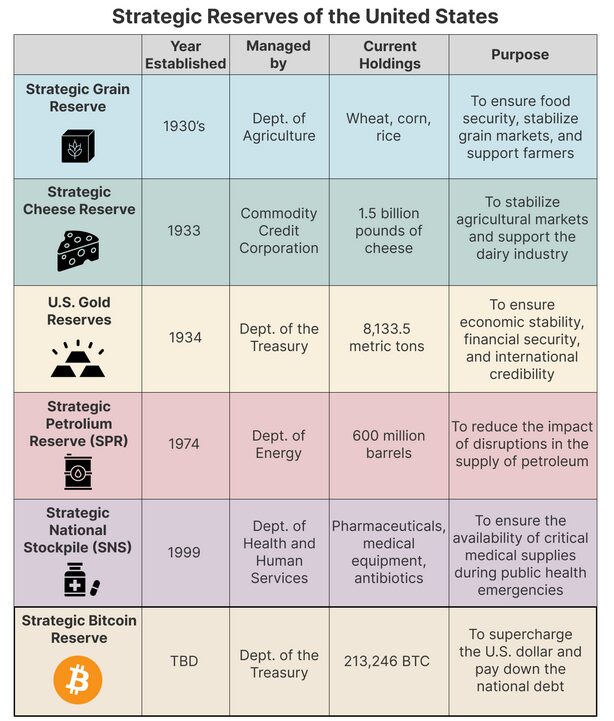
[Bhutan’s Digital Asset Ecosystem Overview]
9. Global Context: Bhutan, Kyrgyzstan, and the Rise of Sovereign RWAs
Bhutan is not alone.
Countries such as Kyrgyzstan have experimented with gold-backed digital tokens, and several emerging economies are exploring tokenized commodities as alternatives to dollar-centric systems.
However, Bhutan stands out for:
- Using a public blockchain rather than a closed system
- Integrating tokens into real economic zones, not just financial pilots
- Aligning digital assets with national values of sustainability and transparency
This positions TER as a potential reference model for other small and mid-sized nations.
10. Implications for Investors and Blockchain Practitioners
For investors seeking new asset classes, TER represents:
- Exposure to tokenized sovereign gold
- Reduced custody complexity compared to physical bullion
- A bridge between traditional commodities and Web3
For builders and institutions, TER offers a live case study in:
- Regulatory-compliant RWA tokenization
- Public-sector blockchain adoption
- Designing trust-minimized financial infrastructure
11. Risks and Open Questions
Despite its promise, TER raises important questions:
- How scalable is sovereign gold tokenization beyond limited zones?
- What governance mechanisms apply during market stress?
- Will secondary markets emerge, and under what regulation?
These uncertainties are not flaws, but inevitable challenges in pioneering systems.
12. Conclusion: TER as the Beginning, Not the End
Bhutan’s TER is not a speculative experiment. It is a deliberate, values-driven integration of gold, blockchain, and state governance.
By tokenizing sovereign assets on a public blockchain, Bhutan demonstrates that the future of finance may not lie at either extreme—pure decentralization or rigid traditionalism—but in carefully engineered hybrids.
TER signals a future where national wealth is not only stored, but programmatically verifiable, transparently managed, and digitally accessible.
