
Key Takeaways :
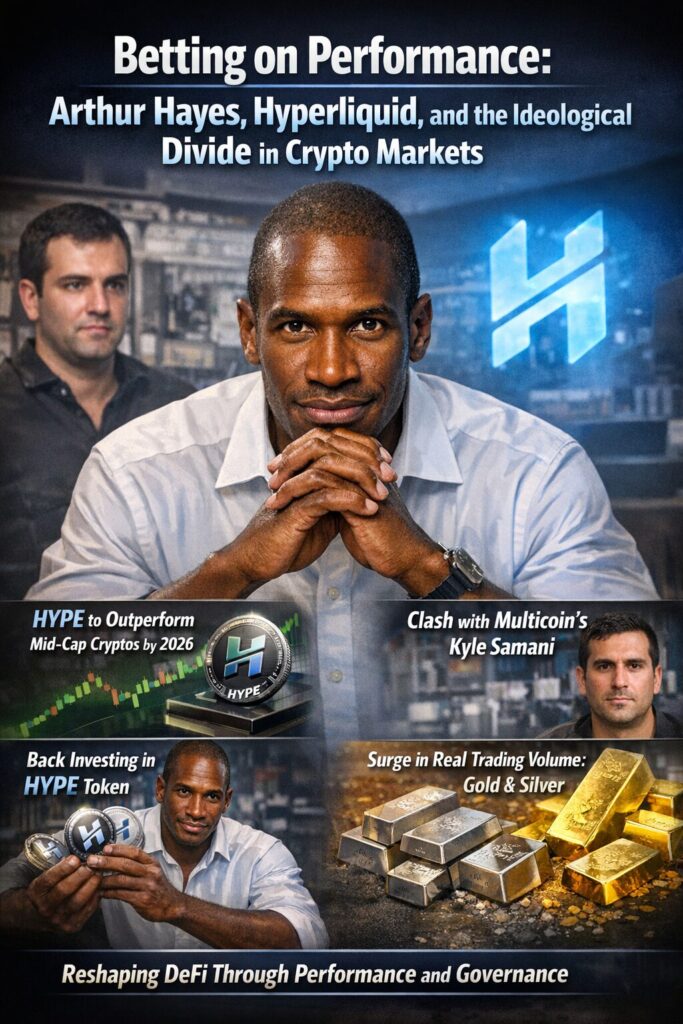
- Arthur Hayes predicts that Hyperliquid’s native token, HYPE, will outperform most mid-cap and minor crypto assets through mid-2026.
- The prediction directly challenges criticism from Multicoin Capital’s Kyle Samani, highlighting a deeper ideological split in crypto.
- Hayes has materially reallocated his portfolio back into HYPE after previously exiting due to risk concerns.
- Hyperliquid’s growth is increasingly driven by real trading volume, including commodities such as gold and silver.
- The case of HYPE illustrates how performance, governance design, and revenue integration are reshaping decentralized finance.
1. A Public Bet That Signals More Than Price Action
In early February 2026, Arthur Hayes, co-founder of BitMEX, reignited debate within the cryptocurrency industry by publicly staking his reputation—and $100,000—on the future performance of Hyperliquid’s native token, HYPE.
Hayes declared that from February 10 through July 31, 2026, HYPE would outperform any cryptocurrency with a market capitalization above $1 billion, as tracked by CoinGecko, when measured in USD terms. The wager was directed at Kyle Samani, managing partner of Multicoin Capital, who had criticized Hyperliquid as emblematic of what he views as crypto’s “wrong direction.”
The terms were simple but symbolic: the loser would donate $100,000 to a charity chosen by the winner. At the time of writing, Samani has not formally accepted the bet. Yet the exchange itself matters more than the outcome—it highlights a philosophical rift about what defines legitimacy and value in crypto markets today.
2. The Criticism: Open Source Ideals Versus Market Reality
Samani’s critique centered on three points:
- Hyperliquid’s founders built the project outside their home country.
- The protocol’s source code is not fully open.
- The system operates with permissioned elements rather than radical openness.
From a traditional crypto-ideology standpoint, these are serious allegations. Since Bitcoin’s inception, open-source transparency and censorship resistance have been treated as non-negotiable virtues.
Hayes, however, responded from a different angle—one shaped by years of operating exchanges under real market stress. His position is pragmatic: markets reward performance, liquidity, and execution, not ideological purity alone.
In other words, if users trade, liquidity providers earn, and the protocol scales reliably, capital will follow.
3. Hyperliquid’s Core Proposition and Why HYPE Matters
Hyperliquid is not merely another decentralized exchange token. It is the native asset of Hyperliquid, a high-performance decentralized derivatives platform that has rapidly captured market share.
HYPE serves three intertwined functions:
- Governance: Token holders participate in protocol-level decisions.
- Staking: Users stake HYPE to secure the system and align incentives.
- Revenue linkage: Exchange activity feeds back into token value through protocol mechanics.
This design ties HYPE directly to real usage, rather than speculative narratives alone.
4. Portfolio Rotation: Hayes’ Exit, Re-Entry, and Conviction
Hayes’ conviction is notable precisely because it has not been linear.
In August 2025, he described HYPE as a potential 100x asset over several years, citing its architecture and trading momentum. Yet in September, he fully exited his HYPE position, warning of near-term stress factors such as:
- Large token unlock schedules
- Rising competition from other derivatives platforms, including Aster
This exit demonstrated discipline rather than contradiction.
By early 2026, however, Hayes reversed course. In January, he purchased 19,227 HYPE, marking his first re-entry in three months. Shortly thereafter, he sold positions in PENDLE, ENA, and LDO, consolidating exposure into HYPE.
According to market disclosures, Hayes subsequently acquired an additional 57,881 HYPE, bringing his total holdings to 131,807 HYPE, valued at approximately $4.6 million at early-February prices.
This is not a casual trade—it is a concentrated thesis.
5. Real Volume, Real Markets: Beyond Crypto-Only Trading
One of Hyperliquid’s most underappreciated strengths is its expansion beyond crypto-native derivatives.
As of January 2026:
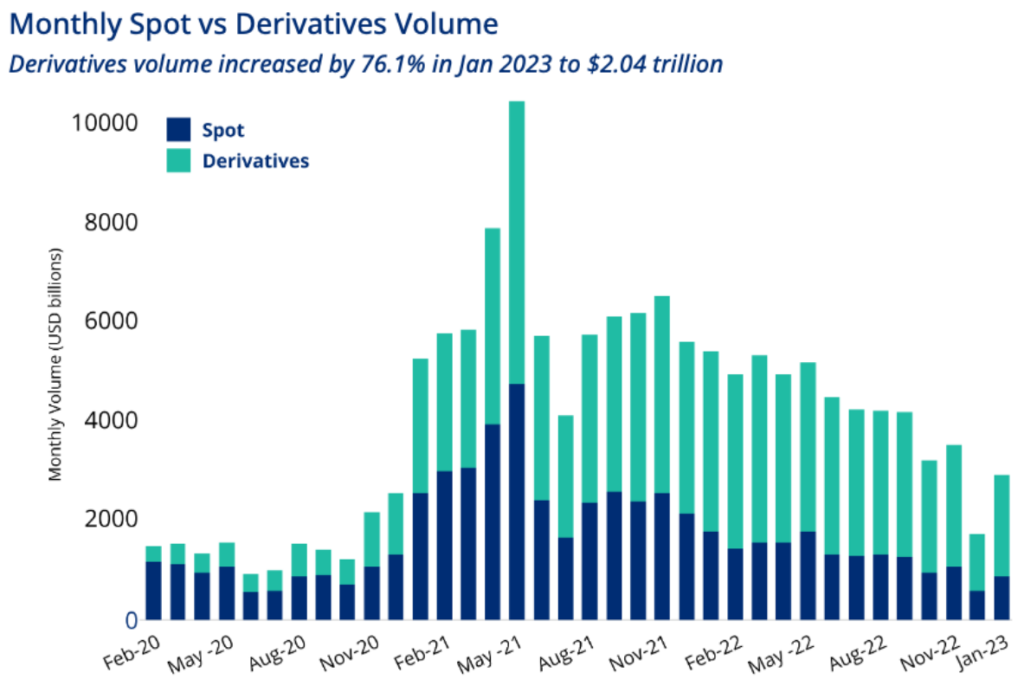
- 31% of trading volume comes from traditional assets such as gold and silver futures.
- The platform supports cross-market speculation and hedging that appeals to TradFi-trained traders.
At the end of January, Hyperliquid reported open interest reaching an all-time high of $790 million, driven largely by increased commodities trading following the rollout of the HIP-3 upgrade.
[Hyperliquid Trading Volume Breakdown (Crypto vs. Commodities)]
[Hyperliquid Open Interest Growth (USD)]
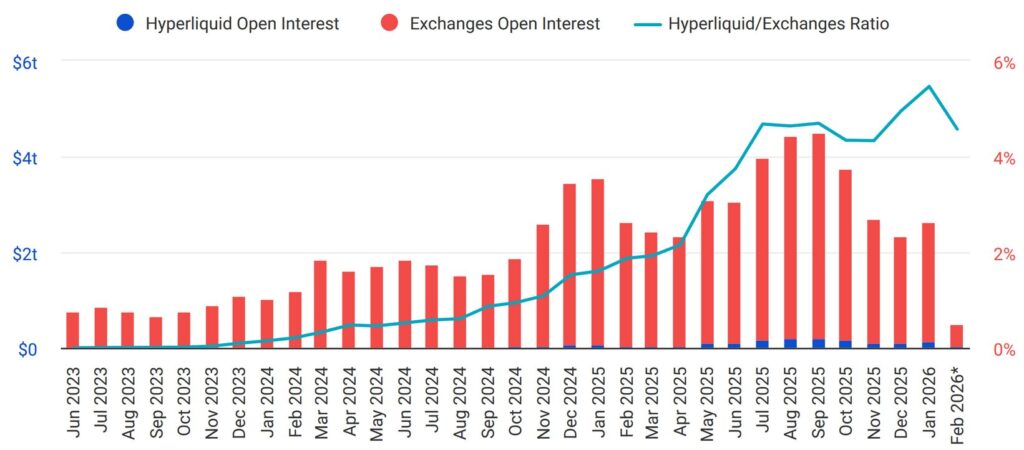
These figures are significant because they signal non-speculative demand—users employing the platform for hedging and structured exposure, not just directional bets.
6. The Meaning of “Outperformance” in 2026
When Hayes says HYPE will outperform “any $1B+ token,” he is not arguing that it is ideologically superior. He is asserting that:
- Revenue-linked tokens with active fee generation will outperform narrative-driven assets.
- Platforms with deep liquidity and fast execution will attract both crypto-native and TradFi capital.
- Governance tokens embedded in cash-flow systems behave more like equity than memes.
This framing aligns with a broader 2026 trend: DeFi maturing into infrastructure, not just experimentation.
7. Implications for Investors and Builders
For investors seeking new crypto assets, HYPE represents a category shift—from speculative governance tokens to operational exchange equity analogs.
For builders, Hyperliquid’s trajectory raises uncomfortable but necessary questions:
- Is partial centralization acceptable if it enables scale and reliability?
- Should permissioned elements be viewed as transitional, not heretical?
- Can performance legitimacy precede ideological purity?
Hayes’ bet suggests that markets have already answered.
8. Conclusion: A Bet on Markets Over Morality
Arthur Hayes’ wager is less about winning $100,000 and more about validating a worldview. In his assessment, crypto’s next phase will not be led by the loudest ideals, but by systems that work under pressure, generate revenue, and integrate with global markets.
Hyperliquid—and by extension HYPE—sits at that intersection.
Whether or not Kyle Samani accepts the bet, the market itself will cast the deciding vote by mid-2026.
