
Key Points :
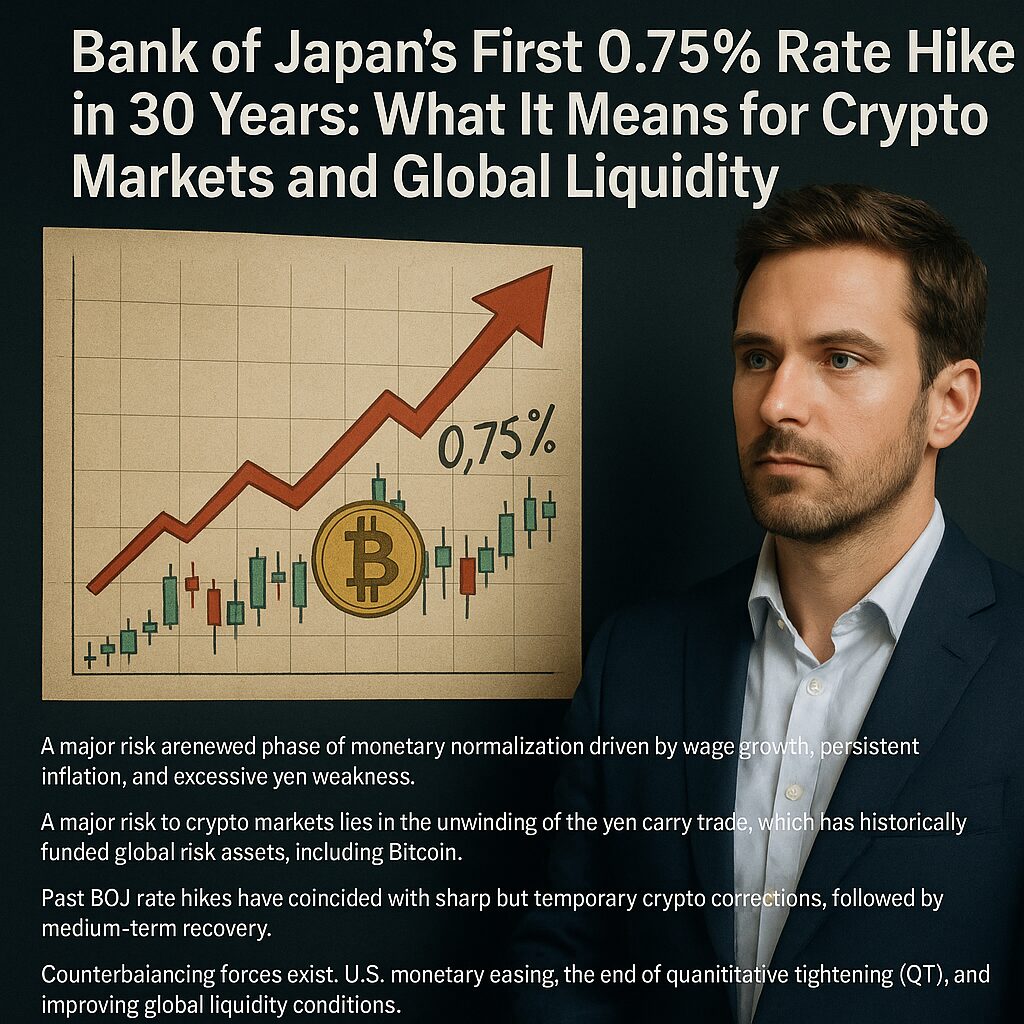
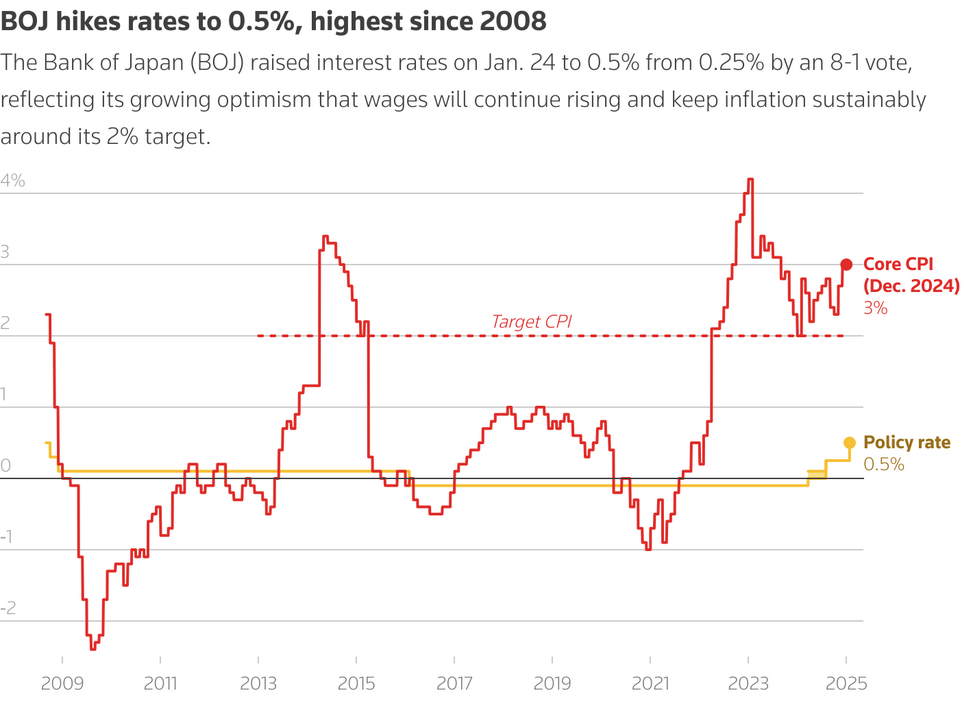
- The Bank of Japan (BOJ) is expected to raise its policy rate from 0.5% to 0.75%, the highest level in roughly 30 years.
- This marks a renewed phase of monetary normalization driven by wage growth, persistent inflation, and excessive yen weakness.
- A major risk to crypto markets lies in the unwinding of the yen carry trade, which has historically funded global risk assets, including Bitcoin.
- Past BOJ rate hikes have coincided with sharp but temporary crypto corrections, followed by medium-term recovery.
- Counterbalancing forces exist: U.S. monetary easing, the end of quantitative tightening (QT), and improving global liquidity conditions.
- For crypto investors and blockchain practitioners, this environment favors risk management, selective accumulation, and yield-neutral strategies rather than blind leverage.
1. A Historic Shift: BOJ Moves Toward 0.75%
According to reports from Nikkei Crypto Information (Dec 15, 2025), the Bank of Japan is set to raise its policy interest rate from 0.5% to 0.75% at its December 18–19 Monetary Policy Meeting. If implemented, this would represent the highest policy rate since 1995, marking a symbolic and practical end to Japan’s era of ultra-loose monetary policy.
Governor Kazuo Ueda and the BOJ executive board reportedly support the proposal, with expectations that a majority of the nine-member policy committee will vote in favor. The central rationale is increasingly clear:
- Sustained wage increases supported by strong corporate earnings
- Persistent inflation pressures, no longer viewed as “temporary”
- Excessive yen depreciation, with USD/JPY previously trading near ¥155 (≈ $1 = ¥155)
Earlier in 2025, the BOJ already raised rates from 0.25% to 0.5%, then held steady for seven consecutive meetings. This upcoming move would bring the total annual tightening to 0.5%, the largest yearly increase in approximately 35 years.
Some economists now openly discuss the possibility that Japan’s policy rate could eventually reach 2.0%, should wage inflation and price pressures remain entrenched. While such a level remains speculative, the direction of travel is no longer in doubt.
2. Interest Rate Path and Global Context
[“BOJ Policy Rate History (1990–2025)”]
The BOJ’s move must be understood in a global context. Japan is the last major economy to normalize rates after decades of deflationary pressure. By contrast:
- The U.S. Federal Reserve has already completed its tightening cycle and ended quantitative tightening (QT) on December 1, 2025.
- Europe remains cautious but largely stable.
- Emerging markets are selectively easing to support growth.
This divergence creates cross-border capital flows, which directly affect speculative assets like cryptocurrencies.
3. The Yen Carry Trade: The Hidden Engine Behind Risk Assets
What Is the Yen Carry Trade?
The yen carry trade involves borrowing Japanese yen at extremely low interest rates, converting it into higher-yielding currencies (typically USD), and investing in assets with superior returns.
For years, this strategy has funded:
- U.S. equities
- Emerging market bonds
- High-growth technology stocks
- Cryptocurrencies, including Bitcoin and altcoins
Example (simplified):
- Borrow yen at 0.5%
- Convert to USD
- Invest in Bitcoin or crypto strategies targeting 10–20%+ annual returns
As long as the yen remains weak and funding costs remain low, this trade is highly attractive.
Arthur Hayes, co-founder of BitMEX, has repeatedly emphasized that the scale of yen carry trades is “immeasurable”, involving:
- Japanese pension funds
- Commercial banks
- Hedge funds
- Global macro traders
- Crypto-native funds
4. Why a Rate Hike Threatens Crypto Markets
[“Mechanics of the Yen Carry Trade”]
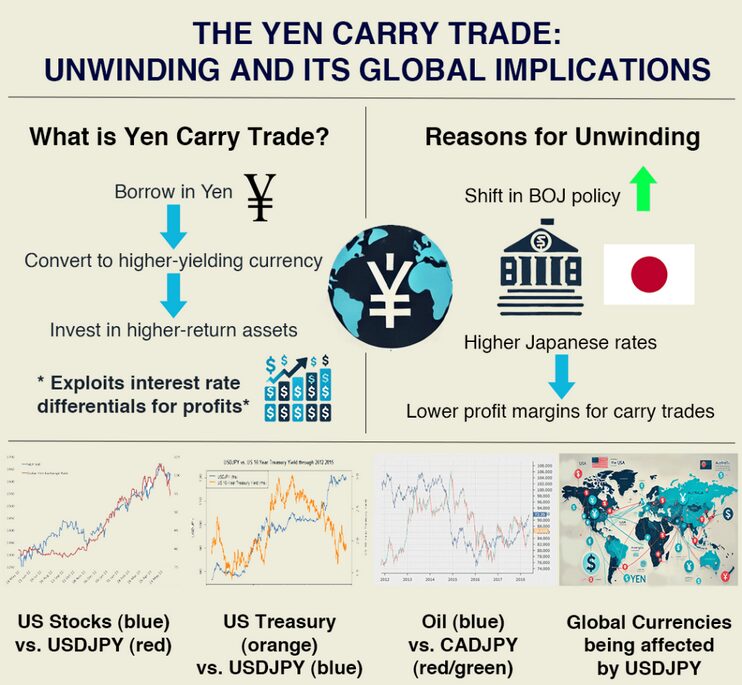
When BOJ rates rise:
- Funding costs increase
- The yen may strengthen, creating FX losses
- Investors are forced to close leveraged positions
This creates a double squeeze:
- Higher borrowing costs
- Currency appreciation against USD
Historical precedent matters. On July 31, 2024, when the BOJ raised rates to 0.25%, a rapid unwinding occurred. In early August, Bitcoin fell approximately 20% week-on-week, triggering liquidations across derivatives markets.
Many analysts warn that a similar pattern could repeat—especially if USD/JPY strengthens rapidly.
5. Not All Doom: The Case for a Balanced View
Despite these risks, not all experts are bearish.
Several mitigating factors deserve attention:
5.1 U.S. Liquidity Is Improving
The Federal Reserve officially ended QT on December 1, 2025, after 3.5 years of balance sheet contraction. This shift:
- Improves global dollar liquidity
- Reduces stress in funding markets
- Historically supports risk assets, including crypto
5.2 Gradualism Matters
The BOJ’s approach remains incremental, not aggressive. Markets have partially priced in the move to 0.75%, reducing the shock factor.
5.3 Long-Term Crypto Demand Remains Intact
Structural drivers persist:
- Bitcoin ETF adoption
- Sovereign and quasi-sovereign accumulation
- Stablecoin usage in cross-border payments
- Tokenization of real-world assets (RWA)
In this view, BOJ tightening may cause short-term volatility, but not a sustained bear market.
6. Implications for Crypto Investors and Builders
For readers seeking new crypto assets, revenue opportunities, and practical blockchain use cases, the implications are nuanced:
- Avoid excessive leverage, especially yen-funded positions
- Monitor USD/JPY movements, not just crypto charts
- Focus on assets with cash flow, staking yield, or real-world adoption
- Consider market-neutral or hedged strategies, including delta-neutral yield farming
- Infrastructure projects linked to payments, compliance, and settlement may outperform speculative tokens
This is not a cycle-ending event—but it is a regime shift.
7. Conclusion: A New Macro Era for Crypto
The Bank of Japan’s anticipated move to 0.75% marks more than a rate hike—it symbolizes the end of an era that quietly fueled global risk-taking for decades. For crypto markets, the key risk lies in the unwinding of the yen carry trade, which could trigger volatility and sharp corrections.
However, history suggests that such shocks are often transitional rather than terminal. With U.S. liquidity improving and crypto adoption deepening at the institutional level, the medium- to long-term outlook remains constructive.
For serious investors and blockchain practitioners, this moment calls not for fear, but for discipline, macro awareness, and strategic positioning.
