
Main Points :
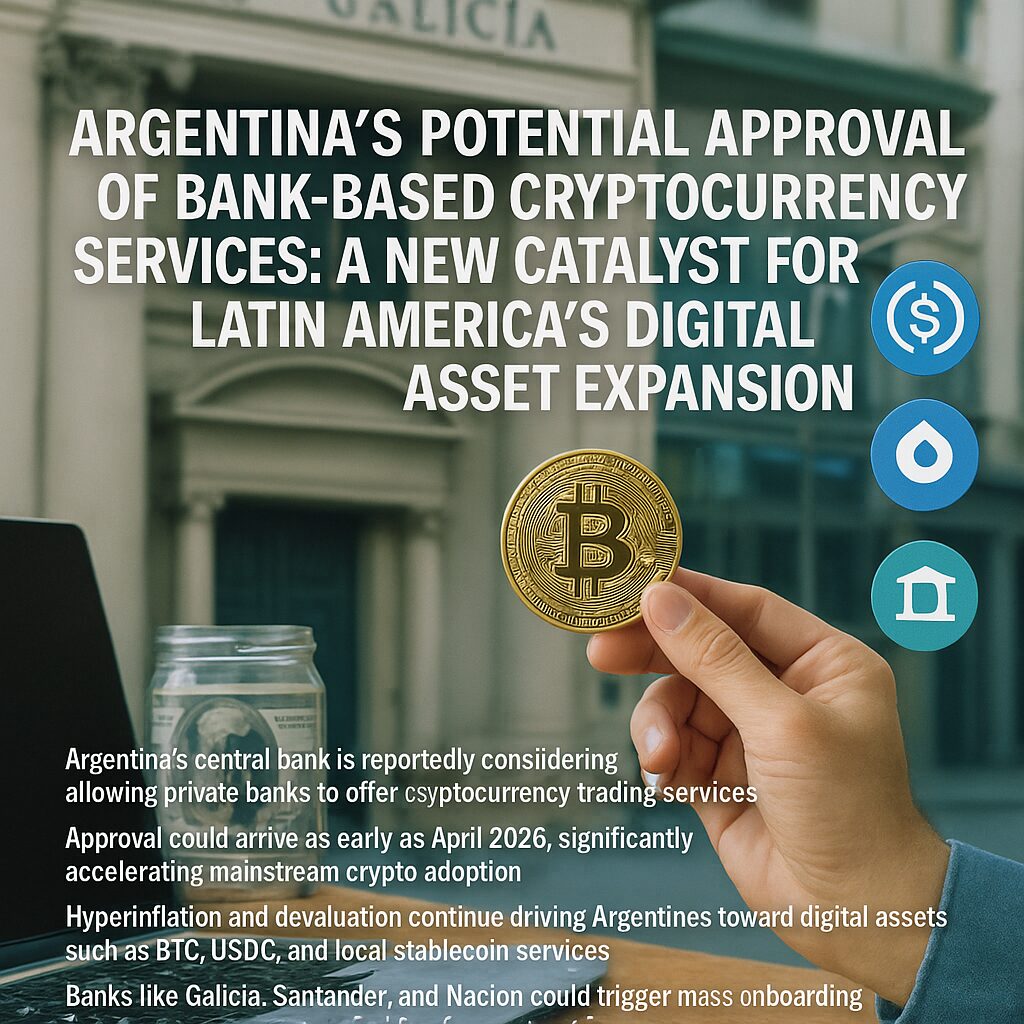
- Argentina’s central bank is reportedly considering allowing private banks to offer cryptocurrency trading services.
- Approval could arrive as early as April 2026, significantly accelerating mainstream crypto adoption.
- Hyperinflation and devaluation continue driving Argentines toward digital assets such as BTC, USDC, and local stablecoin services.
- Banks like Galicia, Santander, and Nación could trigger mass onboarding by integrating crypto into familiar financial platforms.
- Recent global movements — BPCE (France), Openbank (Germany), and U.S. ETF developments — show that traditional banks worldwide are entering the crypto sector.
- Expanded bank participation could strengthen Argentina’s competitiveness in fintech and digital asset innovation.
1. Introduction: Why Argentina’s Shift Matters Now
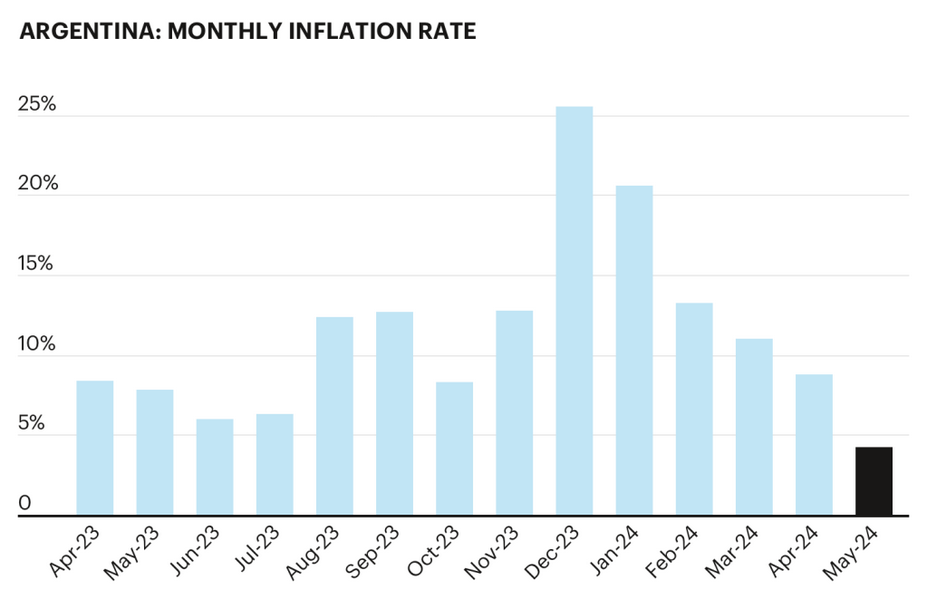
Argentina has long been one of the world’s most important real-world laboratories for cryptocurrency adoption. With annual inflation surpassing triple digits in recent years and the Argentine peso repeatedly collapsing against the U.S. dollar, digital assets became a practical alternative for both savings and day-to-day transactions.
According to user activity from the Argentine exchange Lemon, crypto usage in the country is six times higher per day than an average Latin American nation. This powerful demand now intersects with a new development: The Central Bank of Argentina (BCRA) is reportedly drafting regulations to allow traditional banks to offer crypto trading services directly.
If enacted, this change represents a structural shift — not merely another adoption headline but a turning point that may define how digital assets integrate into mainstream finance across Latin America.
2. Background: Political and Economic Drivers Behind the Policy Shift
Argentina’s current administration under President Javier Milei, inaugurated in 2023, came to power with a strong message of radical economic reform. Although Bitcoin maximalists had initially hoped Milei would center national policy on BTC itself, his priority became full dollarization of the Argentine economy to halt hyperinflation.
Still, his administration implemented several crypto-positive measures, such as allowing Bitcoin to be used in contract settlements, and encouraging private innovation in blockchain solutions.
The central bank’s new consideration of bank-based crypto trading fits broader trends:
- The government seeks financial stability.
- The population demands inflation-resistant assets.
- Fintech and crypto innovation remain among Argentina’s strongest export industries.
Traditional banks previously attempted to offer crypto services in 2022, but the BCRA blocked the initiative. The new regulatory proposal indicates a major reversal and signals that Argentina may now align with Europe and parts of Asia, where regulated banking institutions integrate digital asset services.
3. What Banks Could Offer — And Why It Changes Adoption Dynamics
If banks such as Galicia, Santander Río, and Banco Nación gain approval to provide crypto services, adoption will likely accelerate dramatically.
Why bank integration is a powerful catalyst:
- Trust and familiarity
Many Argentines still rely on banks for savings accounts and payroll management. For these users, accessing BTC or USDC inside their bank’s mobile app removes psychological friction. - Regulated custody options
Banks can offer secure, insured custody solutions for users who are not comfortable managing private keys. - Capital inflow from conservative demographics
Older individuals, corporations, and institutional clients may prefer banks over crypto-native exchanges. - Gateway to diversification
Access to multiple digital assets — BTC, ETH, SOL, USDC — may transition users from speculative trading to real utility, such as stablecoin remittances or blockchain-based payments.
Expert Opinions
Manuel Ferrari, co-founder of Money On Chain, stated that even limited bank involvement would create a new wave of mass adoption.
Juan Pablo Frieden of Lemon highlighted that regulatory openness would drive financial inclusion, innovation, and national competitiveness.
4. International Context: Banks Worldwide Are Entering Crypto
Argentina is not alone. Recent movements indicate a global convergence:
France — BPCE Group
The second-largest banking group in France announced plans to let users buy BTC, ETH, SOL, and USDC directly in its banking app. This marks one of Europe’s most significant institutional crypto integrations.
Germany — Santander’s Openbank
Openbank now allows crypto trading of five major assets, including Bitcoin. Germany’s regulatory environment (BaFin) has become one of the most mature for digital asset services.
United States — Bitcoin ETFs (2024 onward)
Although Argentina excludes U.S.-style ETFs for now, the introduction of spot BTC and ETH ETFs by major financial institutions (BlackRock, Fidelity) created global pressure for countries to modernize crypto frameworks.
Latin America — Brazil’s leadership
Brazil’s central bank has advanced regulatory frameworks for stablecoins, tokenized assets, and CBDC pilots. Argentina, seeking regional competitiveness, is increasingly aware of the need to keep pace.
5. Macroeconomic Factors: Why Crypto Demand Remains Strong in Argentina
Argentina faces a persistent combination of:
- Hyperinflation
- Peso volatility
- Limited access to U.S. dollars
- High remittance usage
- Growing freelancer and global payment economy
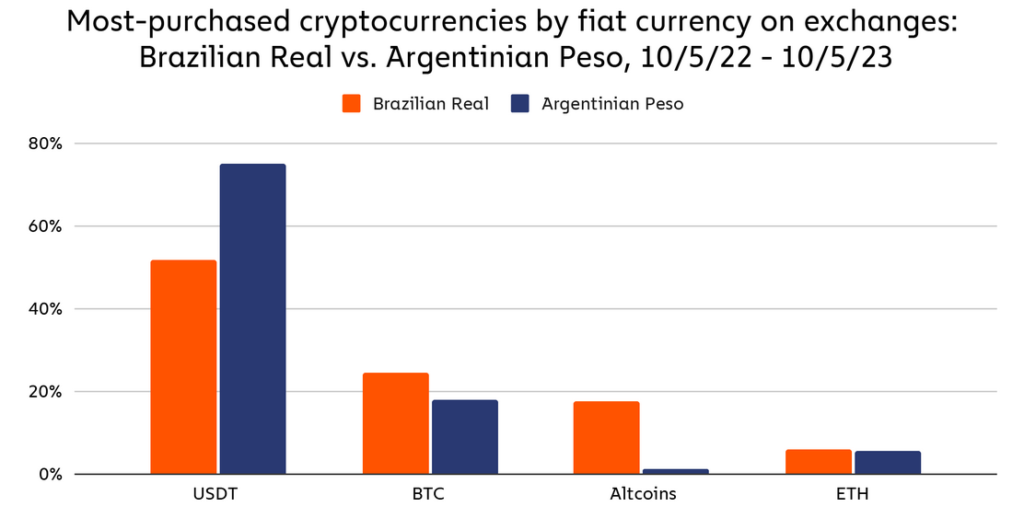
These conditions naturally drive cryptocurrency adoption. According to multiple market surveys, USDC and USDT are among the top methods used by Argentines to preserve value, while Bitcoin is increasingly seen as a strategic long-term savings asset.
6. Data Visualization
Title: “Argentina vs Latin America: Average Daily Crypto Usage (Relative Index)”
Title: “Inflation vs BTC Adoption Correlation (Argentina, 2020–2025)”
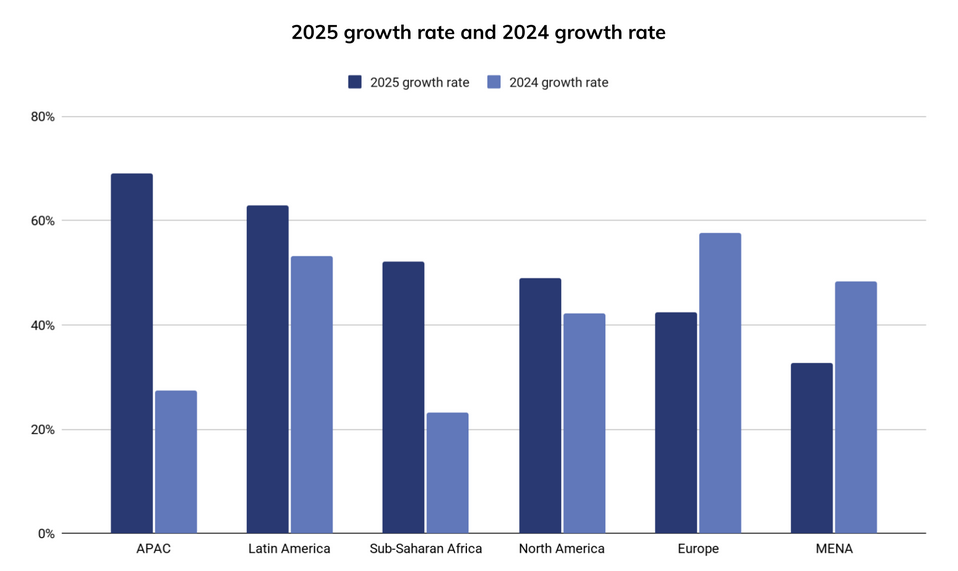
Title: “Global Banks Entering Crypto (Timeline 2022–2025)”
Timeline chart listing:
- 2022: Santander Brazil pilot
- 2023: German banks expand custody
- 2024: U.S. BTC/ETH ETFs
- 2025: BPCE France announcement
- 2026: Expected Argentina approval (projected)
7. Potential Market Implications
1. Increased stablecoin demand
If banks allow users to purchase USDC directly, stablecoin penetration could surge. For exchanges, remittance apps, and merchants, this may create new liquidity channels.
2. New retail funnels for global crypto projects
Argentina’s user base becomes attractive for emerging altcoins seeking real-world traction.
3. Institutional-grade infrastructure growth
Banks would require:
- Custody partners
- Compliance automation
- Blockchain analytics
- On-chain settlement tools
This opens opportunities for B2B crypto providers.
1. Compliance requirements
Banks must implement Travel Rule, AML, and sanctions screening — costly and complex.
2. Market volatility risks
Banks must manage liquidity to ensure customer withdrawals of BTC and stablecoins.
3. Political reversals
Future administrations may adjust crypto policy again.
9. Conclusion
Argentina stands on the threshold of a major evolution in its financial system. Allowing banks to directly offer cryptocurrency services would create a new adoption wave, bringing millions of hesitant users into the digital asset ecosystem.
Combined with global banking trends and Argentina’s unique macroeconomic pressures, this potential regulatory shift could transform the country into a leading crypto-financial hub in Latin America.
The next 12–18 months will be critical — not only for Argentina but for the global digital asset landscape.
