
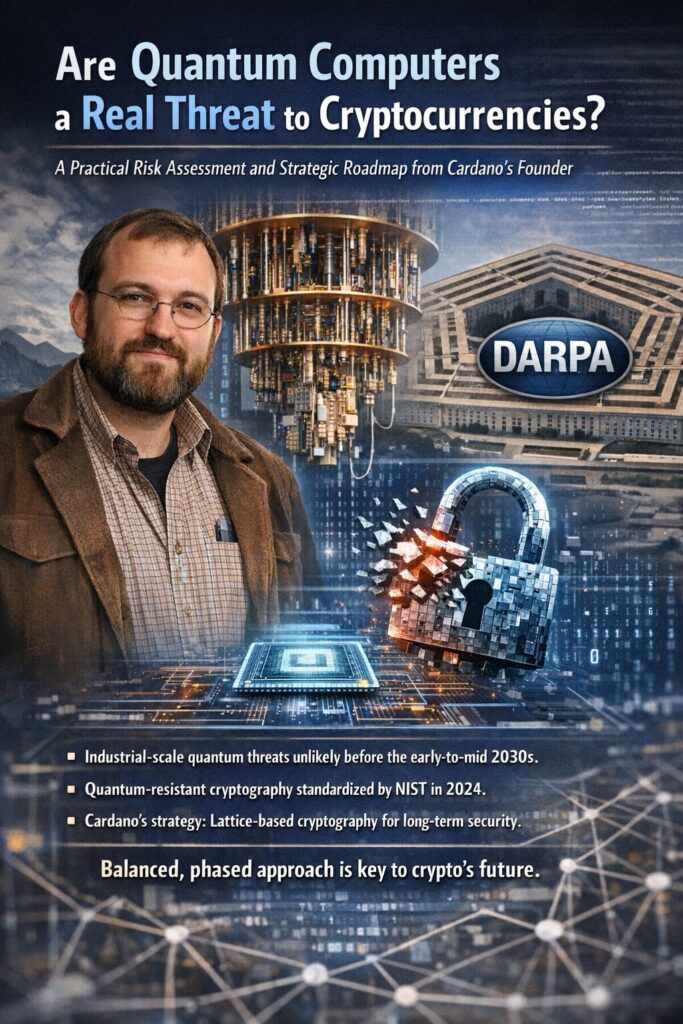
Main Points :
- Quantum computing is ofte :n portrayed as an imminent existential threat to cryptocurrencies, but objective benchmarks suggest the risk horizon is much longer than sensational headlines imply.
- Charles Hoskinson, founder of Cardano, points to the DARPA-led Quantum Benchmarking Initiative (QBI) as the first credible, independent yardstick for assessing real-world quantum risk.
- According to QBI’s structure and timeline, industrial-scale quantum computers capable of breaking modern cryptography are unlikely before the early-to-mid 2030s.
- Quantum-resistant cryptography already exists, standardized by NIST in 2024, but premature deployment would dramatically reduce blockchain performance and raise operational costs.
- Different blockchains are taking different strategic paths: Ethereum favors hash-based approaches, while Cardano is betting on lattice-based cryptography with broader long-term applicability.
- A phased mitigation strategy—rather than rushed protocol overhauls—may offer the best balance between security, scalability, and economic viability.
Introduction: Fear, Hype, and the Need for Objective Truth
The idea that quantum computers could one day break the cryptographic foundations of cryptocurrencies has circulated for years. Social media posts, sensational headlines, and speculative timelines often suggest that Bitcoin, Ethereum, and other blockchains could become obsolete “overnight” once a sufficiently powerful quantum computer is switched on.
Yet for builders, investors, and operators in the blockchain industry, decisions cannot be based on fear alone. Capital allocation, protocol upgrades, and infrastructure planning require something far more sober: objective, independently verifiable benchmarks.
This is precisely where Charles Hoskinson’s argument enters the discussion. Rather than relying on vendor promises or alarmist narratives, Hoskinson highlights the importance of DARPA’s Quantum Benchmarking Initiative (QBI) as a neutral, government-led framework to evaluate whether industrially useful quantum computers are actually feasible within a defined timeframe.
The DARPA Quantum Benchmarking Initiative (QBI)
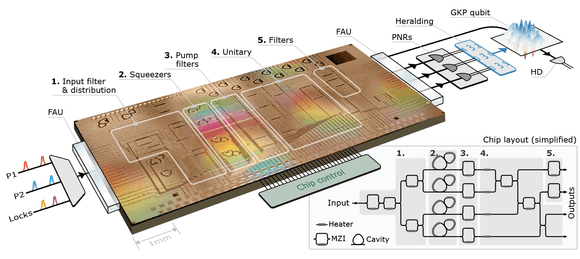
The Quantum Benchmarking Initiative is led by the U.S. Defense Advanced Research Projects Agency (DARPA). Unlike academic demonstrations or corporate press releases, QBI is designed to answer a very specific question:
Can a quantum computer be built that is industrially useful, scalable, and reliable under real-world conditions?
QBI is structured in three stages:
- Stage A (Conceptualization – 6 months):
Companies propose theoretical designs for large-scale quantum systems. - Stage B (Planning and Validation – 1 year):
Selected participants must demonstrate credible engineering plans, error correction strategies, and operational feasibility. - Stage C (Government Verification):
Independent verification teams evaluate whether the proposed systems can actually be built and operated as designed.
In November, DARPA selected 11 companies to advance from Stage A to Stage B. The program is explicitly designed to test whether practical quantum computing is achievable by 2033—not in theory, but in deployable reality.
Hoskinson describes QBI as a historic inflection point: for the first time, the industry has an external “ground truth” instead of speculation.
When Does Quantum Risk Become Real?
One of Hoskinson’s most important contributions to the debate is reframing timing. Quantum risk is not binary—it does not suddenly appear out of nowhere. Instead, it evolves along a long and expensive research curve.
Based on QBI’s design and scope, the emergence of quantum machines capable of breaking elliptic curve cryptography (ECC)—which underpins Bitcoin and Ethereum today—would require:
- Fault-tolerant qubits at massive scale
- Error correction overhead orders of magnitude beyond current systems
- Sustained, stable operation over long computation windows
These are not incremental improvements; they represent breakthroughs that remain unproven.
This aligns with views from other cryptography experts, including Bitcoin pioneers, who argue that realistic quantum threats are still decades away, not years.
Quantum-Resistant Cryptography Already Exists
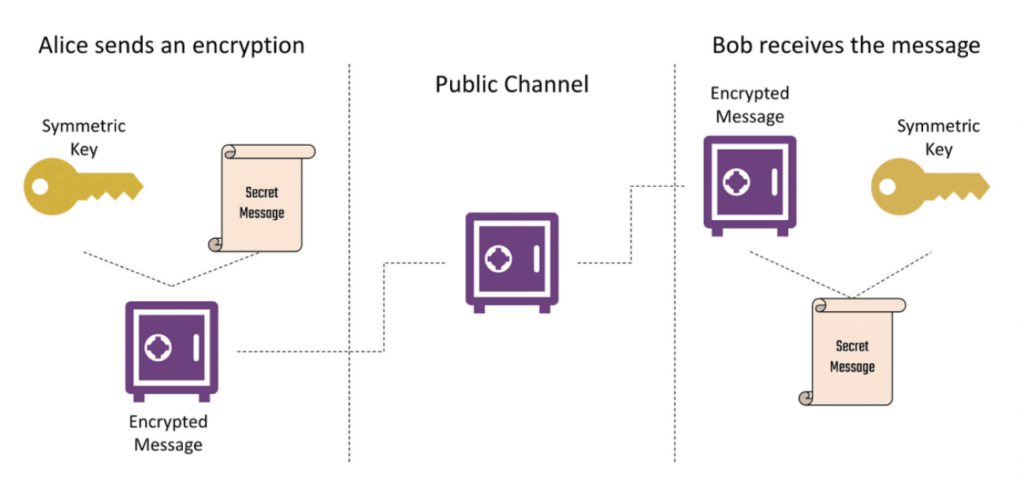
Another frequently misunderstood point is that the blockchain industry is not “unarmed.” In 2024, NIST finalized several post-quantum cryptography (PQC) standards after years of global review and testing.
In other words, the tools needed to defend against future quantum attacks already exist.
However, Hoskinson emphasizes that availability does not equal readiness. The cost of deploying PQC across a live blockchain is enormous:
- Transaction processing speed: ~10× slower
- Signature and proof sizes: ~10× larger
- Overall efficiency: ~10× reduction
For a high-throughput blockchain, this would translate into higher fees, lower scalability, and degraded user experience—effectively sacrificing today’s usability for tomorrow’s hypothetical threat.
The Real Risk: Premature Upgrades
From an operational perspective, Hoskinson argues that the greatest danger is not quantum computers themselves, but misaligned incentives.
If miners, validators, or node operators are forced to adopt quantum-resistant protocols before the ecosystem is ready, the result could be:
- Network fragmentation
- Validator attrition due to hardware costs
- Reduced decentralization
- Loss of competitiveness versus faster chains
Security is meaningless if a network becomes economically unviable.
Two Competing Approaches: Hash-Based vs Lattice-Based Cryptography
The crypto industry is currently debating two main PQC approaches.
1. Hash-Based Cryptography (Ethereum’s Direction)
Hash-based signatures rely on well-understood cryptographic hash functions. Their advantages include:
- Strong security assumptions
- Relatively simple structure
- Fast verification for signatures
However, they are largely limited to signature use cases and are not ideal for more advanced cryptographic constructions.
2. Lattice-Based Cryptography (Cardano’s Bet)
Cardano has opted for lattice-based cryptography, which is based on mathematical problems believed to remain hard even for quantum computers.
Key advantages include:
- Support for advanced cryptographic primitives beyond signatures
- Flexibility for future privacy and smart contract use cases
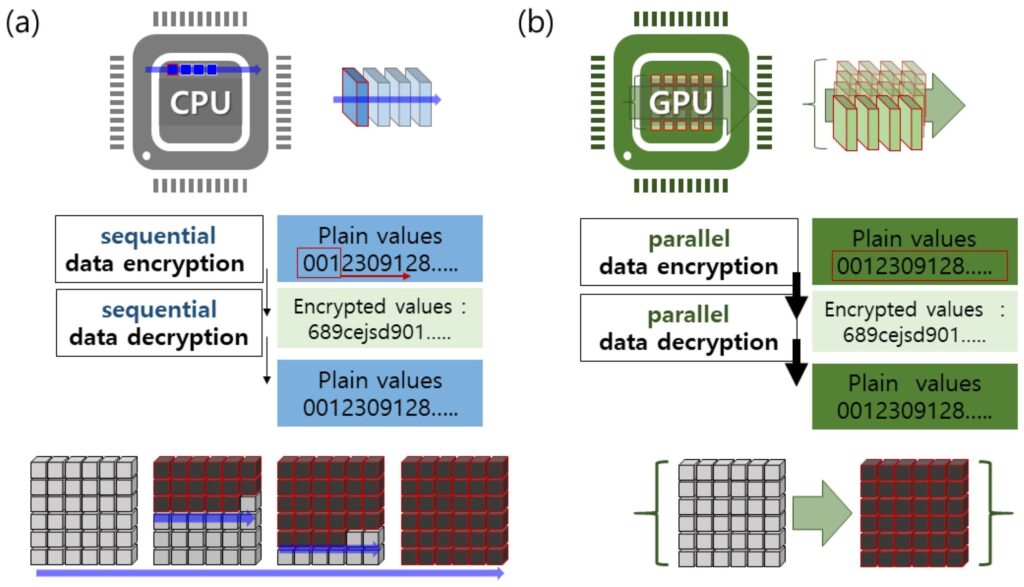
- Compatibility with GPU-based computation
Hoskinson highlights a crucial economic point: lattice-based cryptography can run efficiently on existing AI-class GPUs, avoiding the need for expensive, specialized ASICs.
A Phased Mitigation Strategy: Cardano’s Roadmap
Rather than rushing into a full protocol replacement, Cardano is pursuing a layered defense strategy.
This includes:
- Mithril:
A system that provides cryptographically secure checkpoints of the ledger. - Midnight Sidechain:
A privacy-focused chain capable of generating quantum-resistant checkpoints.
These checkpoints can be anchored into Cardano’s history, providing forward security without disrupting day-to-day operations.
In the long term, Hoskinson envisions Midnight serving not only Cardano, but also Bitcoin and other blockchains, as a shared quantum-resilient checkpoint layer.
Implications for Investors and Builders
For investors searching for the “next opportunity,” the quantum debate offers several insights:
- Projects with measured, evidence-based security planning are more likely to survive long-term.
- Overreaction to speculative threats can destroy value faster than the threat itself.
- Infrastructure plays—GPUs, cryptography tooling, interoperability layers—may benefit regardless of which chain “wins.”
For builders, the lesson is clear: design for adaptability, not panic-driven overhauls.
Conclusion: Rational Preparedness Over Fear
Quantum computing is neither a myth nor an imminent apocalypse for cryptocurrencies. It is a long-term technological trajectory with real implications—but also with real timelines, costs, and trade-offs.
By anchoring risk assessment to objective frameworks like DARPA’s QBI, and by adopting phased, economically rational mitigation strategies, the blockchain industry can prepare without sacrificing its present utility.
In that sense, Hoskinson’s message is less about Cardano—and more about maturity. The future of crypto will belong not to those who panic first, but to those who plan best.
