
Main Points :
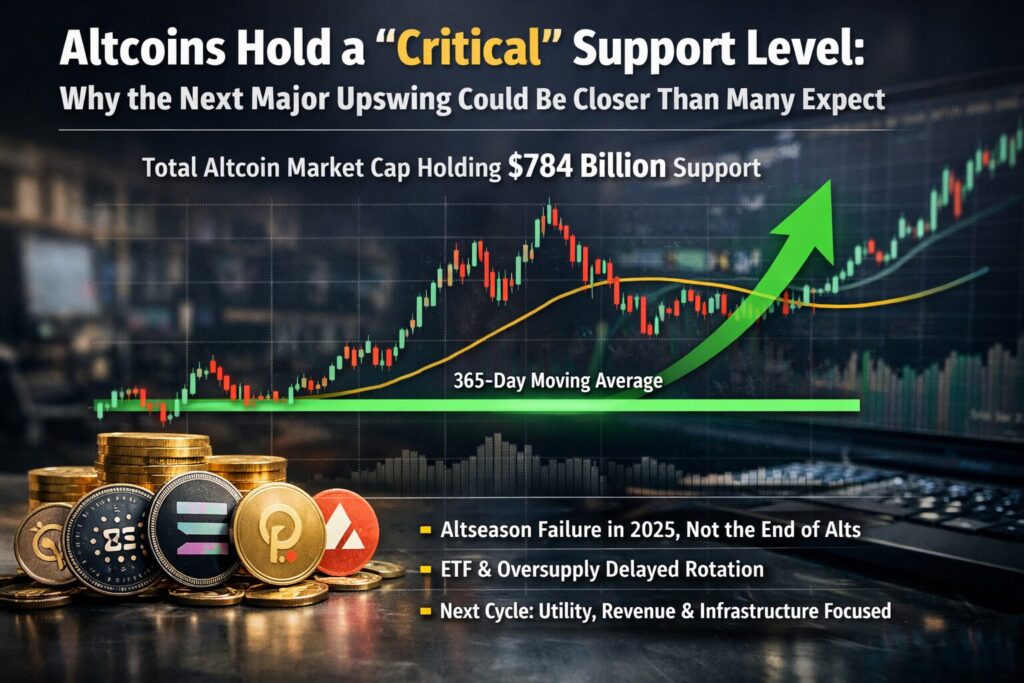
- The total market capitalization of altcoins (excluding Bitcoin and Ethereum) is holding a historically significant support level around $784 billion.
- Analysts argue that this level, combined with the 365-day moving average, could mark the foundation for the next major altcoin expansion.
- The failure of a traditional “altseason” in 2025 reflects structural changes in the crypto market, not the death of altcoins.
- ETF-driven capital concentration and token oversupply have delayed capital rotation—but may also set the stage for a sharper, more selective rally.
- The next altcoin cycle is likely to favor utility-driven, revenue-linked, and infrastructure-focused projects, not broad speculation.
1. The Altcoin Market at a Crossroads
At the time of writing, the total market capitalization of altcoins—defined as all crypto assets excluding Bitcoin (BTC) and Ethereum (ETH)—stands above $879 billion. This figure places the market within striking distance of its historical peak near $1.2 trillion, a level last seen during the previous euphoric phase of the crypto cycle.
According to crypto trader and analyst Michaël van de Poppe, the altcoin market is currently defending what he describes as a “critical” support zone near $784 billion. Historically, this level has functioned as a structural pivot point—when it holds, prolonged expansion phases often follow.
This observation is not merely technical. It reflects deeper shifts in how capital moves through the crypto ecosystem, how risk is priced, and how investors allocate attention in an increasingly crowded digital asset landscape.
2. Understanding TOTAL3: Why This Metric Matters
The TOTAL3 index, which tracks the combined market capitalization of all cryptocurrencies excluding BTC and ETH, has become a key benchmark for assessing altcoin health. Unlike individual token charts, TOTAL3 strips away single-project noise and highlights macro-level capital behavior.
TradingView data shows that TOTAL3 is hovering just above its 365-day moving average, a long-term indicator often associated with trend reversals. In previous cycles, reclaiming and holding this moving average has preceded extended altcoin rallies lasting several quarters.
[TOTAL3 market capitalization with 365-day moving average]
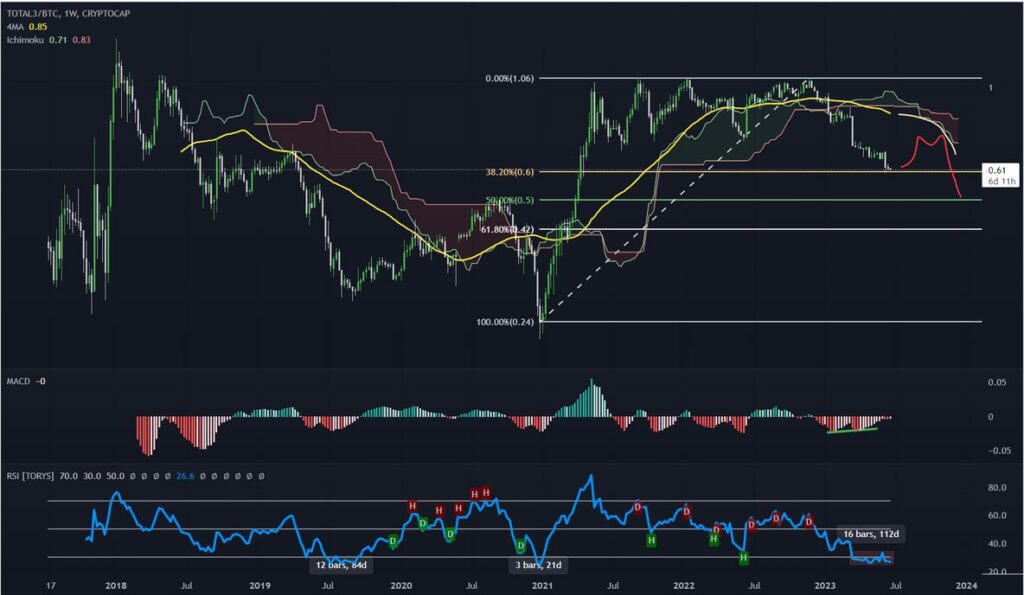
The implication is clear: while short-term sentiment remains cautious, the structural foundation for expansion is still intact.
3. Lessons from the 2024–2025 Market Shock
In October of the previous cycle, TOTAL3 briefly touched $1.2 trillion, marking an all-time high for the altcoin market. What followed, however, was one of the sharpest drawdowns in crypto history. In a single day, altcoin market capitalization fell by roughly 33%, triggered by cascading liquidations, macro tightening, and risk-off sentiment across global markets.
This crash fundamentally altered investor psychology. Many participants entered 2025 expecting a traditional post-halving “altseason,” only to encounter prolonged stagnation.
The disappointment was not irrational—it was structural.
4. Why Altseason Failed to Arrive in 2025
4.1 The Breakdown of the Four-Year Cycle Theory
For over a decade, crypto markets loosely followed a four-year rhythm anchored around Bitcoin halvings. Typically, Bitcoin would rally first, followed by Ethereum, and eventually capital would rotate into higher-risk altcoins.
In 2025, this pattern broke down. Bitcoin recorded its first negative annual close in a post-halving year, calling the reliability of the four-year cycle into question.
This shift suggests that crypto has matured beyond a single, predictable rhythm. Institutional participation, derivatives markets, and macro correlations now exert stronger influence than simple supply-shock narratives.
4.2 Token Proliferation and Capital Dilution
One of the most underappreciated forces suppressing altcoin performance is sheer scale. CoinMarketCap now tracks over 29 million tokens—a staggering increase compared to previous cycles.
[Growth in number of tracked crypto tokens]
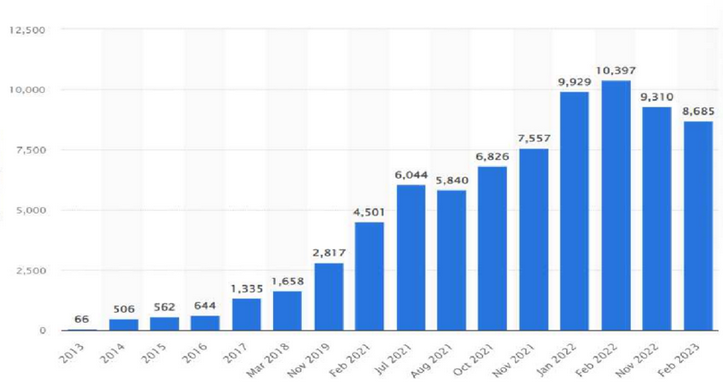
This explosion has diluted investor attention and capital. Unlike earlier cycles, where funds rotated among a few hundred assets, today’s market disperses liquidity across millions of competing narratives.
As a result, “everything pumping” seasons have become mathematically harder to sustain.
4.3 ETFs and the Fragmentation of Liquidity
The approval and rapid adoption of crypto ETFs introduced a structural shift. Capital flowing into Bitcoin and Ethereum ETFs often remains trapped within those instruments, rather than circulating through on-chain markets.
This phenomenon—sometimes described as liquidity fragmentation—means that gains in BTC or ETH do not automatically spill over into altcoins, breaking a key assumption of past market cycles.
5. Why This Setup Still Favors a Future Altcoin Rally
Despite these headwinds, several factors suggest that the altcoin market may be approaching a renewed expansion phase.
First, structural support levels are holding. Second, speculative excess has been largely flushed out. Third, market participants are shifting from narrative-driven speculation toward cash-flow, utility, and infrastructure-based valuation.
This creates a healthier foundation for growth—albeit one that will be more selective.
6. The Shape of the Next Altcoin Cycle: What Will Be Different
The next major altcoin rally is unlikely to resemble the indiscriminate surges of the past. Instead, it may be defined by:
- Revenue-generating protocols (fees, MEV capture, staking yield)
- Infrastructure layers (L2s, interoperability, data availability)
- Tokenized real-world assets (RWA) bridging traditional finance and crypto
- Payment and settlement networks with regulatory clarity
Speculative meme-driven pumps may still occur, but they are unlikely to define the cycle as a whole.
7. Practical Implications for Investors and Builders
For investors, this environment rewards selectivity and patience. Broad altcoin exposure may underperform targeted strategies focused on fundamentals.
For builders and operators, especially those working on regulated or semi-regulated infrastructure, the message is encouraging: markets are beginning to value real utility over hype.
Projects that align with compliance, payments, custody, settlement, and enterprise use cases are increasingly well-positioned.
8. Conclusion: A Different, But Not Weaker, Altcoin Era
The altcoin market is not dead—it is evolving.
Holding above critical support levels near $784 billion, TOTAL3 suggests that the market is consolidating rather than collapsing. The absence of a 2025 altseason reflects structural transformation, not terminal decline.
When the next major upswing arrives, it is likely to be sharper, more selective, and more sustainable than previous cycles—rewarding those who understand not just charts, but the changing architecture of the crypto economy.
