
Main Points :
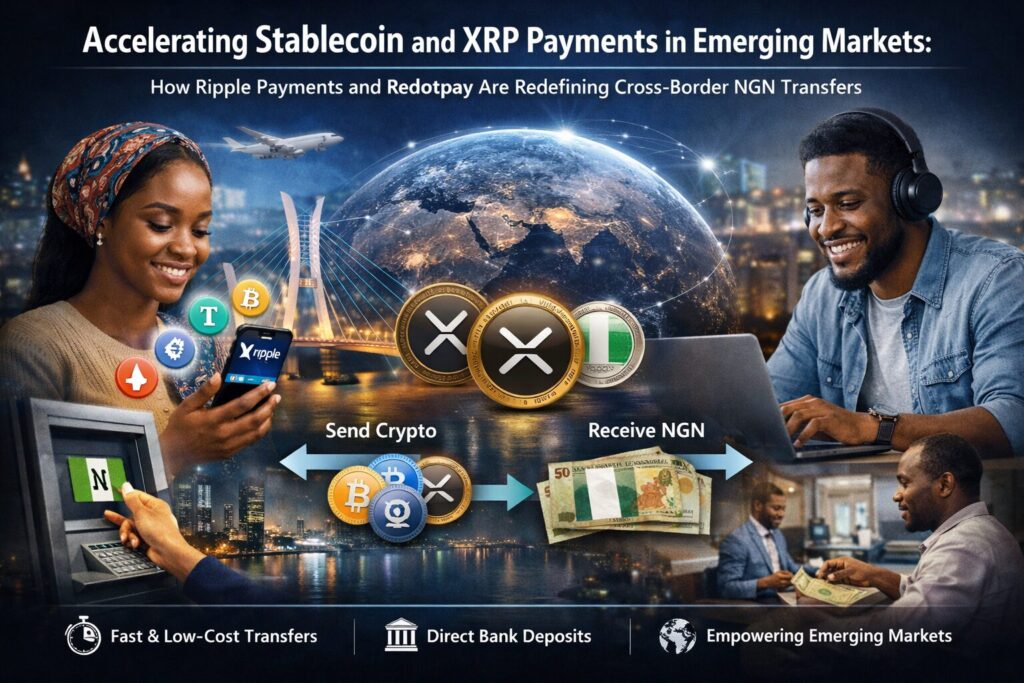
- Ripple Payments has been integrated by Redotpay to enable a new “Send Crypto, Receive NGN” payment lane, allowing users to send XRP and stablecoins and receive Nigerian naira (NGN) directly into local bank accounts.
- The service significantly reduces settlement time and cost compared with traditional correspondent banking, with most transactions completing within minutes.
- Supported assets include major stablecoins and cryptocurrencies such as USDC, USDT, BTC, ETH, SOL, TRX, BNB, and XRP, with Ripple’s RLUSD expected to be added in the future.
- The expansion reflects a broader trend: stablecoins and blockchain-based payment rails are increasingly used as practical financial infrastructure in emerging markets.
- Freelancers, digital nomads, and overseas workers are among the main beneficiaries, gaining faster access to local liquidity without relying on slow and costly remittance channels.
1. Ripple Payments and the Evolution of Blockchain-Based Remittances
Ripple has long positioned itself as an infrastructure provider for cross-border payments rather than a retail-facing crypto project. Through Ripple Payments, the company offers financial institutions and payment providers a way to move value globally using blockchain rails, with XRP acting as a bridge asset in many corridors.
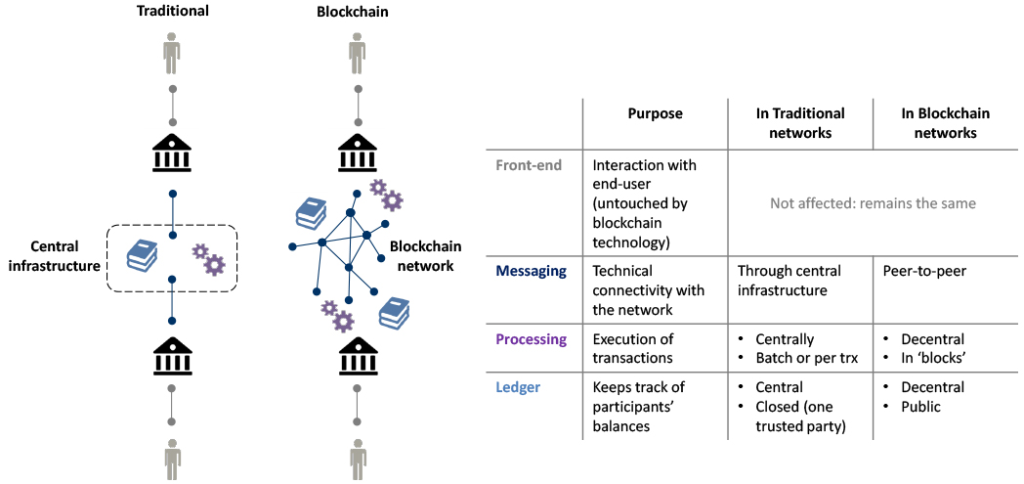
Historically, international remittances have relied on correspondent banking networks that are slow, opaque, and expensive. Transfers can take several days, involve multiple intermediaries, and incur high foreign exchange and processing fees. For users in emerging markets, these inefficiencies are more than an inconvenience—they directly affect cash flow, household income, and business sustainability.
Blockchain-based payment systems, especially those using stablecoins, have emerged as a compelling alternative. They offer near-instant settlement, transparent fees, and global accessibility. Ripple Payments sits squarely in this trend, providing enterprise-grade compliance, liquidity sourcing, and settlement infrastructure that payment providers can integrate into their own services.
2. Redotpay’s NGN Lane: “Send Crypto, Receive Naira”
Redotpay announced on December 2 that it has integrated Ripple Payments to expand its stablecoin-powered payment network. The headline feature is a new NGN payout lane that enables users to send digital assets and receive Nigerian naira directly into local bank accounts.
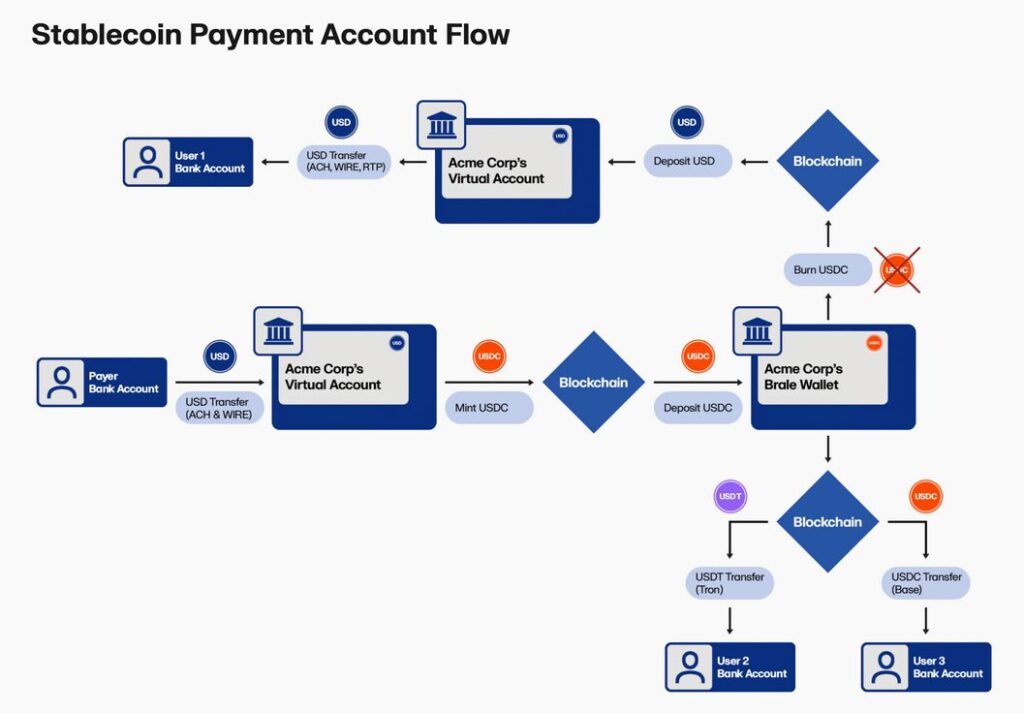
Under this model, verified users can send XRP or supported cryptocurrencies through Redotpay, and the recipient receives NGN via domestic banking rails. According to the company, most transactions settle within minutes. This is a stark contrast to traditional remittance methods, which often take several business days.
Redotpay’s co-founder and CEO, Michael Gao, emphasized that the company’s goal is to make digital assets as easy to use as local currency. By abstracting away blockchain complexity and focusing on user experience, Redotpay positions itself not as a speculative crypto service, but as a practical payments platform.
3. Supported Assets and the Role of Stablecoins
At launch, the NGN payment lane supports a wide range of assets:
- USDC
- USDT
- BTC
- ETH
- SOL
- TON
- TRX
- BNB
- XRP
Ripple has also indicated that RLUSD, its forthcoming U.S. dollar–denominated stablecoin, is expected to be supported in the future.
Stablecoins play a critical role here. Pegged to the U.S. dollar, they provide price stability while retaining the speed and programmability of blockchain assets. For users sending money to Nigeria, this means avoiding both crypto volatility and local currency liquidity constraints until the final conversion to NGN.
4. Why Nigeria Matters in the Global Crypto Payment Landscape
Nigeria is one of the most active crypto markets in the world. Factors driving adoption include:
- A large diaspora sending remittances home.
- Currency volatility and capital controls.
- A young, mobile-first population comfortable with digital finance.
According to various industry reports, Nigeria consistently ranks among the top countries for crypto usage by volume. For payment providers, this makes NGN corridors strategically important. However, regulatory complexity and banking frictions have historically limited efficient on- and off-ramps.
By enabling direct NGN payouts through local bank accounts, Redotpay and Ripple Payments address a critical bottleneck. Users no longer need to rely on informal channels or multi-step conversions to access local currency.
5. Cost, Speed, and Transparency: A Structural Advantage
Traditional remittance channels often involve:
- Fees ranging from 5% to 10% or more.
- Settlement times of 2–5 business days.
- Limited visibility into exchange rates and intermediary charges.
By contrast, blockchain-based payment lanes offer:
- Near-instant settlement (often minutes).
- Lower and more transparent fees.
- Clear audit trails on-chain.
These advantages are particularly meaningful for freelancers and overseas workers who depend on timely access to funds. A delay of several days can disrupt daily expenses, loan repayments, or business operations.
6. Expansion Beyond NGN: A Multi-Corridor Strategy
The NGN lane builds on Redotpay’s existing payout routes for BRL (Brazilian real) and MXN (Mexican peso). Together, these corridors signal a broader strategy: targeting high-demand emerging markets where traditional banking infrastructure struggles to meet user needs.
For digital nomads, remote workers, and global SMEs, this approach enables faster cross-border liquidity without maintaining multiple foreign bank accounts. Payments can be received in local currency while being funded in crypto or stablecoins from anywhere in the world.
7. Practical Use Cases Beyond Remittances
While remittances are the most obvious application, the implications extend further:
- B2B Payments: Small exporters and service providers can receive international payments faster.
- Gig Economy: Freelancers can invoice globally and settle locally.
- Treasury Management: Businesses can hold stablecoins and convert to fiat only when needed.
In this sense, Ripple Payments and Redotpay are not just improving remittances—they are contributing to a new financial stack where blockchain acts as a neutral settlement layer.
8. Market Trends: Stablecoins as Financial Infrastructure
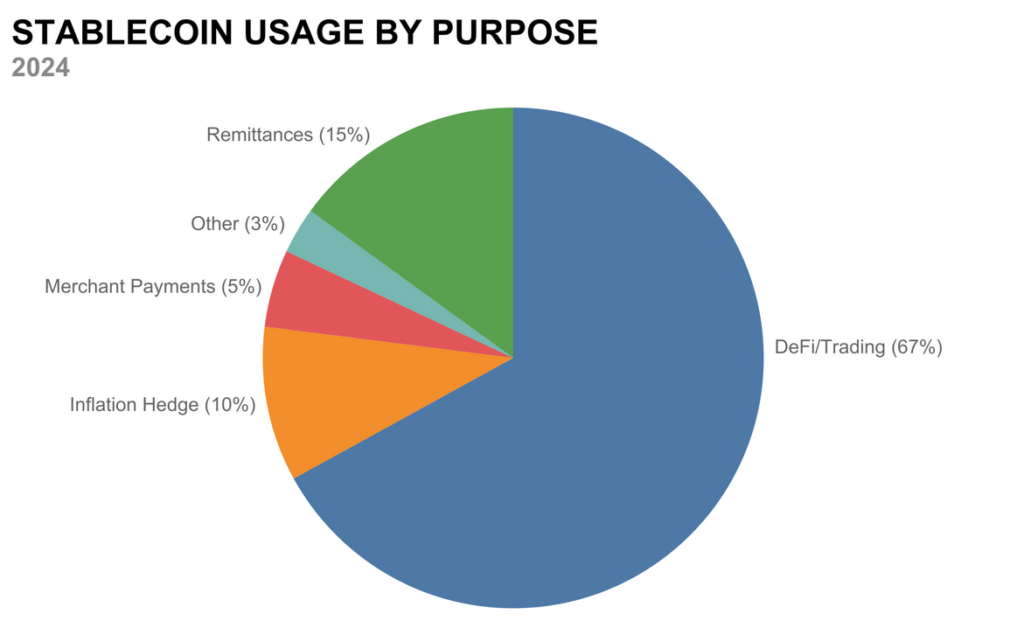
The Redotpay–Ripple integration aligns with a broader industry shift. Stablecoins are increasingly viewed not as speculative instruments, but as digital cash equivalents. Major payment companies, banks, and fintechs are exploring stablecoin-based settlement to reduce costs and improve efficiency.
In emerging markets, this trend is even more pronounced. Where banking access is limited or unreliable, stablecoins provide an alternative that is globally interoperable yet locally adaptable.
9. Risks and Considerations
Despite the advantages, challenges remain:
- Regulatory uncertainty around crypto and stablecoins.
- Dependency on local banking partners for fiat payouts.
- FX liquidity management during large-volume flows.
Providers like Ripple and Redotpay mitigate these risks through compliance frameworks, liquidity partnerships, and gradual corridor expansion. Still, users and investors should understand that infrastructure-level adoption takes time and careful regulatory alignment.
10. Conclusion: A Meaningful Step Toward Borderless Payments
The launch of Redotpay’s NGN payout lane via Ripple Payments is more than a feature update—it is a practical demonstration of how blockchain can solve real-world financial problems. By enabling users to send XRP and stablecoins and receive NGN quickly and affordably, the partnership addresses long-standing inefficiencies in cross-border payments.
For readers interested in new crypto assets, revenue opportunities, and practical blockchain use cases, this development highlights where the industry is heading: away from speculation and toward infrastructure. Stablecoins and payment-focused blockchains are increasingly becoming the rails of global finance, especially in emerging markets where the need is greatest.
