
Main Points :
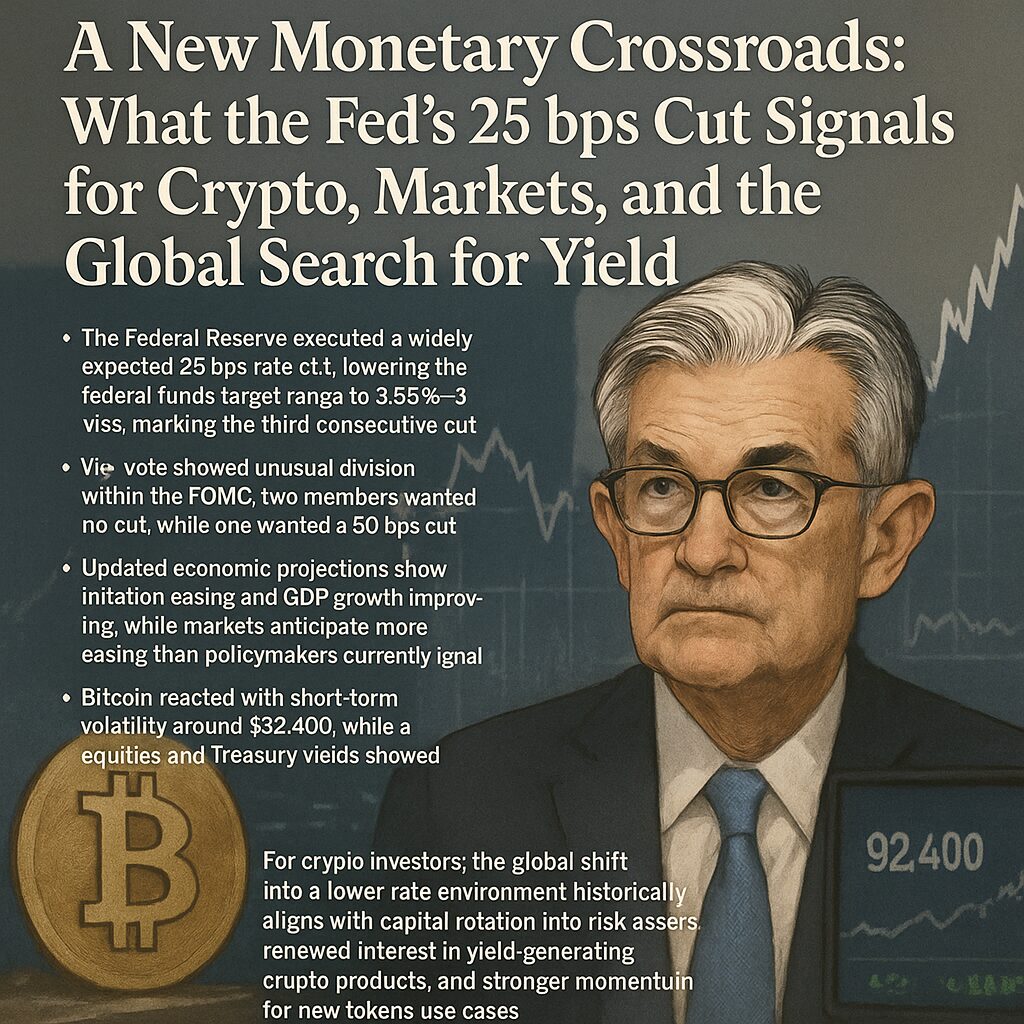
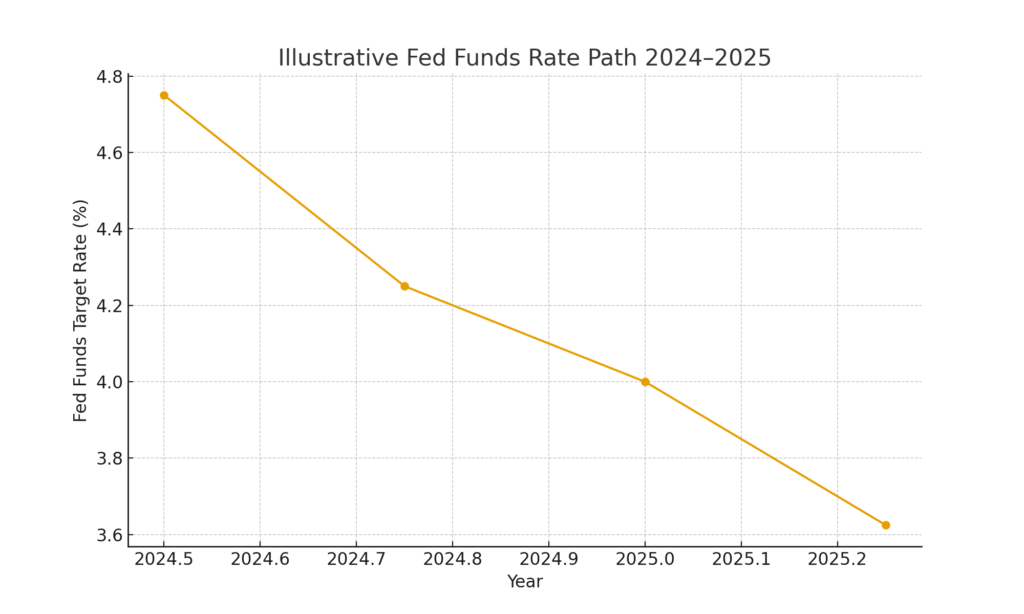
- The Federal Reserve executed a widely expected 25 bps rate cut, lowering the federal funds target range to 3.50%–3.75%, marking the third consecutive cut.
- The vote showed unusual division within the FOMC: two members wanted no cut, while one wanted a 50 bps cut.
- Updated economic projections show inflation easing and GDP growth improving, while markets anticipate more easing than policymakers currently signal.
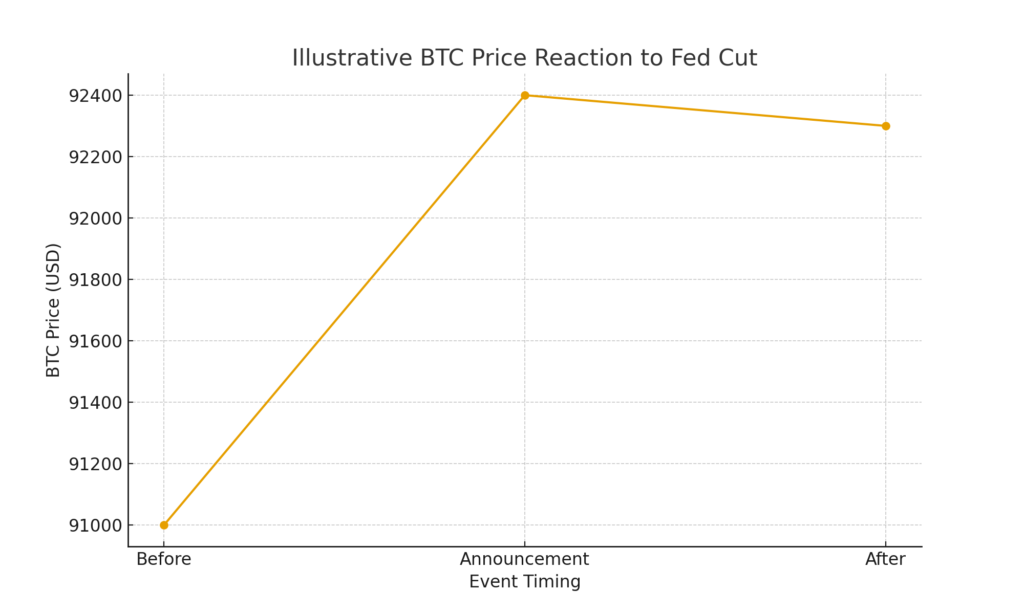
- Bitcoin reacted with short-term volatility around $92,400, while equities and Treasury yields showed mild positive movement.
- For crypto investors, the global shift into a lower-rate environment historically aligns with capital rotation into risk assets, renewed interest in yield-generating crypto products, and stronger momentum for new tokens and blockchain use cases.
- Structural uncertainty remains: data disruptions from the U.S. government shutdown, political pressure on Chair Powell, and continuing questions around 2026 rate expectations.
Introduction: A Critical Inflection Point for Monetary Policy and Digital Assets
The U.S. Federal Reserve has once again taken center stage in global financial markets by cutting its policy rate by 25 basis points. While the move was widely anticipated, the internal dissent and the broader macroeconomic context make this decision far more consequential than a typical incremental adjustment.
For investors in cryptocurrencies, emerging blockchain ecosystems, tokenized assets, and digital-yield strategies, the Fed’s rate path remains one of the strongest macro catalysts. Lower rates typically compress yields in traditional markets, pushing capital toward alternative assets—including high-growth digital asset sectors.
This article summarizes the Fed decision, integrates insights from broader economic developments across major financial data sources, and explains the implications for crypto investors seeking new opportunities in 2025 and beyond.
1. The Fed’s Decision: A Third Consecutive 25 bps Cut
The Federal Open Market Committee (FOMC) reduced the federal funds rate target to 3.50%–3.75%, the lowest since 2022. While the cut itself was expected, the tone of the meeting and the composition of the vote were far from routine.
The Fed emphasized the following:
- Economic uncertainty remains high.
- Downside risk in employment has increased.
- The Fed may begin purchasing short-term Treasurys to maintain reserves.
These comments reinforce the idea that the Fed sees fragility in the U.S. economy—especially in the labor market—even as headline numbers have appeared resilient.
2. Unusual Division Inside the Federal Reserve
Three members dissented:
- Jeffrey Schmid (Kansas City Fed) – voted for no cut
- Austan Goolsbee (Chicago Fed) – voted for no cut
- Stephen Miran (new Trump-appointed governor) – voted for a 50 bps cut
This level of public disagreement is uncommon for the Fed.
It signals two competing narratives:
- The economy is still too strong; inflation risks remain.
- The economy is weakening quickly; more stimulus is needed.
For crypto markets—highly sensitive to macro signals—this division suggests the road ahead will be volatile, but the directional trend still points toward easing liquidity.
3. Updated Economic Outlook: Inflation Slows, Growth Improves
The Fed’s updated projections include:
| Metric | 2025 Forecast | 2026 Forecast | Change vs Previous |
|---|---|---|---|
| Core Inflation | 3.0% | 2.5% | ↓ 0.1% |
| GDP Growth | 1.7% | 2.3% | ↑ from 1.6% / 1.8% |
The Fed now expects slightly faster growth and slightly lower inflation—a rare combination.
For investors, this environment historically corresponds with:
- Rising equity valuations
- Increased adoption of riskier assets
- Early-cycle expansions in the crypto market
This aligns with previous cycles where Bitcoin and altcoins outperformed following the transition from tightening to easing.
4. Market Reactions: Bitcoin Stabilizes, Equities Tick Up
Immediately after the announcement:
- BTC fluctuated but stabilized near $92,400
- U.S. equities rose slightly
- 10-year Treasury yields fell by 2 bps to 4.15%
These movements reflect a familiar market dynamic: crypto reacts first with volatility, followed by a return to a directional trend over days or weeks.
5. Why This Matters for Crypto: Liquidity Cycles and Token Performance
The crypto market is fundamentally tied to global liquidity, not just U.S. monetary policy. Across 2013, 2017, 2021, and 2024–2025, major bull runs coincide with periods of:
- Lower interest rates
- Rising balance sheets
- Increased institutional inflows
- Expansion of stablecoin supply
- Increased leverage availability
A sustained lower-rate environment tends to accelerate:
1. Capital Rotation Into High-Growth Altcoins
Especially early-stage networks offering staking, subsidies, or novel mechanisms.
2. Expansion of Yield-Bearing Crypto Products
Lower Treasury yields make tokenized yield products comparatively attractive.
This includes:
- Liquid staking
- Staking-derivative tokens
- Real-world-asset (RWA) token yields
- Stablecoin lending markets
3. Increased Risk Appetite in Venture Capital and Token Launches
Lower rates reduce discount rates used to value future cash flows, improving valuations for both equity and token projects.
4. Stronger Narrative Momentum for Bitcoin
As a macro hedge, digital gold asset, and liquidity beneficiary.
6. Structural Risks: Missing Data and Political Pressure
The Fed continues to operate despite delayed or missing economic data due to the U.S. government shutdown.
Additional uncertainty comes from:
- President Trump’s criticism of Chair Powell
- Powell’s term ending next year
- Discussions about Fed leadership transition
- Market uncertainty about 2026 rate cuts (Fed projects only one cut)
If political pressure generates policy shifts, markets—including crypto—could experience a more aggressive easing cycle, typically bullish for asset prices.
7. What Crypto Investors Should Watch Next
1. January FOMC Rate Expectations
Current market probability of another cut: 24% (CME FedWatch).
2. Stablecoin Supply Growth
Historically a leading indicator of Bitcoin rallies.
3. Liquidity Conditions in Asia and Europe
Asian liquidity, especially from Japan and South Korea, often drives early-stage altcoin cycles.
4. U.S. regulatory posture toward exchanges and stablecoins
Shifts in enforcement or approvals can redirect momentum across markets.
5. Bitcoin ETF inflows
ETF flows are strongly correlated with near-term BTC price performance.
Conclusion: Lower Rates Are Re-Opening the Risk-Asset Cycle
The Fed’s 25 bps cut is more than a routine policy adjustment—it is a signal that the U.S. has entered the early phase of a renewed easing cycle, even if internal disagreements remain.
For cryptocurrency investors:
- Liquidity is slowly returning.
- Yield differentials favor digital assets.
- Institutional participation continues rising.
- Bitcoin appears well-positioned as macro uncertainty increases.
- Altcoins and new blockchain projects may benefit from stronger risk appetite.
As global markets re-price interest rates, 2025 could mark the beginning of a new multi-year cycle of innovation, speculation, and capital rotation into the digital asset ecosystem.
