
Crypto infrastructure can look convincing in a product demo and still fail a much harder test: recurring use by people willing to pay. This edition examines three established but comparatively under-the-radar tokens whose networks are changing how work is assigned, rewarded or sold. Their recent announcements create observable milestones, not promises of investment returns. The research cutoff is November 14, 2026 (JST); scheduled events after that date are described as plans.
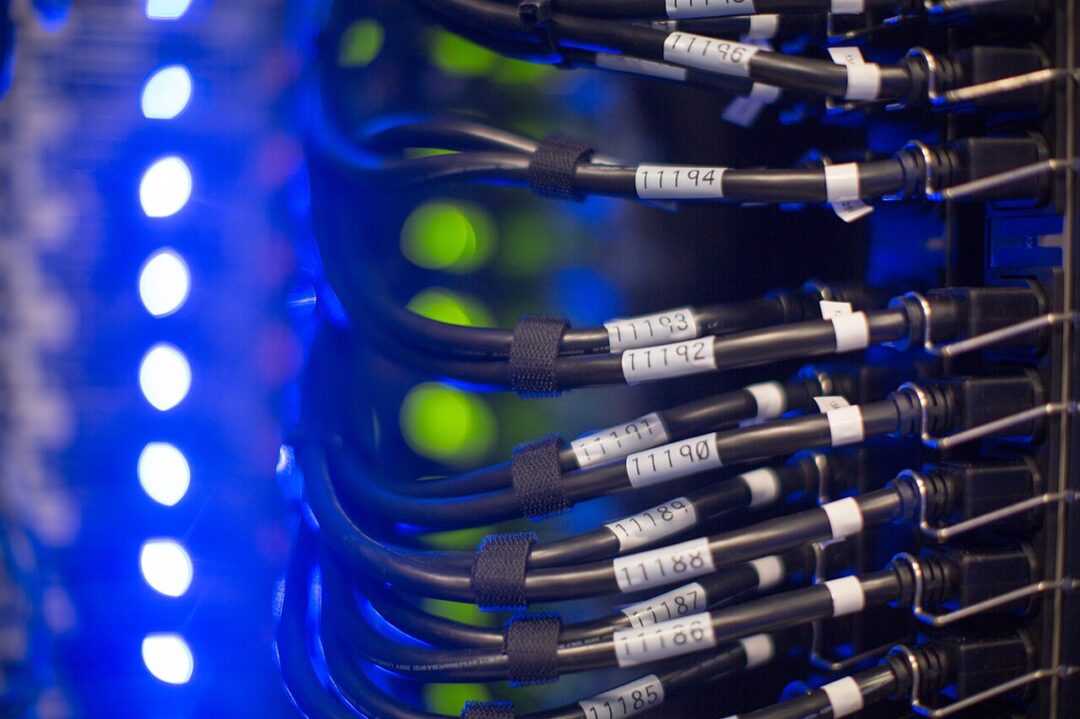
Featured photograph: Victor Grigas, Wikimedia Foundation server facility, CC BY-SA 3.0. Generic infrastructure imagery, not equipment operated by the projects discussed.
Three Projects at a Glance

SQD Network (SQD) distributes access to indexed blockchain data. Its November 12 announcement would move workers to six-month unbonding terms, an operational trade-off intended to make data capacity more predictable. The key question is whether stability improves customer retention without excluding smaller operators.

The Graph (GRT) delivers indexed on-chain information to applications. A November 17 rewards-rule change is scheduled to connect large Indexers’ eligibility more closely to actual query-serving work. Results will depend on whether operators can adapt while preserving service diversity.

Livepeer (LPT) coordinates decentralized media computation, increasingly oriented toward AI-video applications. A November 3 community proposal would fund a builder programme and test whether developers continue to pay as introductory credits taper. It remains a proposal, not an implemented growth result.
Why These Projects
The three networks serve distinct customers: data consumers and node operators, developers requiring indexed blockchain state, and video or AI application builders. Yet their incentives raise the same fundamental issue. A blockchain token can coordinate independent contributors, but token rewards may persist even when genuine customer revenue is insufficient. The strongest evidence is not a headline partnership or token listing; it is recurring work, reproducible service quality, and fee economics that survive lower subsidies.
This is therefore an operational comparison, not a ranking by potential price appreciation. Project disclosures are starting points and may emphasize favorable metrics. We distinguish changes already implemented from governance proposals and forthcoming activation dates. Reported enterprise relationships are not automatically evidence of contract economics, customer concentration or profit. Token liquidity can also deteriorate independently of technical progress, so neither product adoption nor token utility establishes a liquid market.
SQD Network (SQD)
What it does
SQD, historically known as Subsquid, provides blockchain data infrastructure through a decentralized data lake, worker nodes and developer tools. Applications need indexed historical and near-real-time chain data without operating every archive and custom pipeline themselves. The project’s token-economics documentation assigns SQD roles in rewarding node operators, delegation, governance and access-rate limits. These are functional token uses, not a guarantee that every enterprise API bill translates into equivalent token demand.
Recent development
In its November 12, 2026 network announcement, the team set out a change effective November 17 at 13:00 CET: worker-node unbonding extends to six months, with a one-hour unbonding exit window running from November 13 until activation. New delegations would also take six-month terms; existing delegations retain their earlier 14-day arrangement. The project says longer commitments support enterprise service-level expectations, naming major industry relationships. These are management claims, not independent confirmation of customer spending or reliability.
Potential
A more stable capacity base could reduce the risk that heavily used archival or query infrastructure loses operators abruptly. For businesses relying on uninterrupted data feeds, continuity has a commercial value separate from the token’s quoted price. The test is whether customers pay for that continuity, whether service-level incidents decline, and whether new workers still join when their exit flexibility is reduced. Published portal availability and transparent workforce participation would provide more persuasive evidence than a lockup announcement alone.
Risks and what to monitor
Longer lockups transfer more market and operational risk to workers and new delegators. They can favor large, well-capitalized operators and make capital less responsive to changing network economics. Existing delegations keeping shorter terms may also produce uneven incentives. Monitor actual worker counts after November 17, customer usage, chain coverage, price and depth of SQD markets, unlocked supply and the relationship between service revenue and token incentives. A reduction in diversity or abrupt exits during the window would weaken the stability thesis.
The Graph (GRT)
What it does
The Graph turns blockchain events into structured, queryable subgraphs that applications can use without rebuilding their own indexing backends. Indexers stake GRT, serve queries and receive query fees and protocol rewards. Curators and Delegators help direct resources and capital. The official Indexing Overview describes these roles. Importantly, gross indexing rewards are not the same as fee revenue paid by data customers; inflation or protocol issuance can subsidize supply.
Recent development
The Foundation’s November 10 Office Hours record schedules the next Rewards Eligibility Oracle step for November 17. For Indexers with more than 40 million GRT in total stake, the qualifying-subgraph minimum becomes the greater of ten or stake divided by four million GRT, rounded up. A qualifying query has specified responsiveness and chain-freshness requirements. The Foundation explicitly says total issuance does not change; the rule reallocates eligibility for rewards toward nodes demonstrating service. It has not yet completed this step as of the article’s cutoff.
Potential
This follows a more directly observable change. The Foundation’s November 3 review of October activity states that BNB Smart Chain and Polygon staging queries moved from Subgraph Studio to network Indexers starting October 8. That migration potentially converts formerly centrally served work into protocol activity and exposes Indexers to more real queries. Combining demand migration with stricter eligibility could bring token incentives closer to useful performance. The next challenge is to show that developers keep paying and receiving dependable service when incentives change.
Risks and what to monitor
A higher performance bar may concentrate rewards among already large, efficient Indexers, undermining the resilience expected from a decentralized market. Smaller operators may face higher synchronization and bandwidth costs without guaranteed query volumes. Observe eligibility by stake tier, query success rates, concentration of fee receipts, customer-paid fees versus rewards issuance and changes in delegations. GRT holders also face token-market liquidity and supply risks distinct from whether any particular subgraph works. An apparent improvement in fee routing should not be interpreted as proof that end-user demand is growing without supporting consumption data.
Livepeer (LPT)
What it does
Livepeer coordinates independent computing providers for video transformation, transcoding and AI-media workflows. Its opportunity is differentiated from generic AI compute because video often requires repeated processing, predictable latency and tight integration with editing or real-time applications. LPT is used in protocol staking and reward allocation, but a successful end-user interface is not automatically economic value for token holders. The proposed Livepeer 2.0 architecture would revise the link between fees and LPT emissions.
Recent development
A November 3, 2026 Foundation community proposal describes a December-to-March builder pilot with a working budget ceiling of $145,000. It targets 30 teams onboarded and five generating more than $1,000 each in fees and credits by March, supported by proposed usage credits and a retroactive grants pool. These are targets and financing requests, not completed sales, active commitments or proof of adoption. A separate October 12 protocol design sets out prospective fee-linked rewards and validator mechanisms; it should not be described as fully deployed today.
Potential
The pilot’s emphasis on an easier API, self-hostable developer infrastructure and payment abstraction addresses a genuine friction: application developers generally want compute services, not a complex token workflow. If third-party teams use the network after credits decline, Livepeer could demonstrate repeatable demand outside foundation-supported demonstrations. The strongest evidence would be production customers renewing work, low-latency service under load, repeatable per-job pricing and fees paid from customer budgets rather than subsidy pools.
Risks and what to monitor
An onboarding target can be met while sustainable revenue remains weak. Free or discounted credits may flatter transaction counts, and a small number of enthusiastic builders may not become an enduring market. The protocol-reform roadmap also introduces governance, timing and validation risks; proposed burn mechanisms cannot be treated as present token cash flows. Watch which proposals actually pass, whether developer integrations reach production, independent fee generation, node economics, LPT issuance and dilution, and whether liquid trading markets can support exits in stressed conditions.
What to Watch Next
The clearest near-term checkpoint is November 17: SQD’s planned worker-lockup change and The Graph’s scheduled eligibility step both have public dates and measurable consequences. Compare SQD worker participation before and after the exit window with its service continuity, and compare The Graph’s eligibility distribution with actual delivered queries. Both networks could improve performance while reducing the number of viable independent suppliers; the effect needs to be measured, not assumed.
Livepeer has a slower test window. A credible next update would clarify the builder pilot’s approval, the developer onboarding path and the distinction between paid fees and promotional credits. Evidence from new external customers matters more than a larger announcement budget. Across all three tokens, track exchange depth and circulating supply alongside product use; operational progress can coexist with severe price volatility or poor liquidity.
Final Assessment
SQD is testing whether supply-side commitment buys enterprise reliability. The Graph is testing whether indexing rewards can require more demonstrable work without undermining decentralization. Livepeer is testing whether independent builders will purchase decentralized video compute when subsidized experimentation gives way to ordinary bills. Those are materially different experiments, but each can be judged against published milestones and future fee data.
The constructive case depends on observable, repeatable demand and incentives that do not require perpetual token issuance. The adverse case is equally plausible: longer lockups deter operators, service rewards favor a narrow supplier base, or subsidized developer trials fail to convert. None of the announcements establishes an investable return, and available source material is insufficient to quantify comparable trading liquidity or future token performance reliably. Treat these as infrastructure projects under examination, not as forecasts.


