
Main Points :
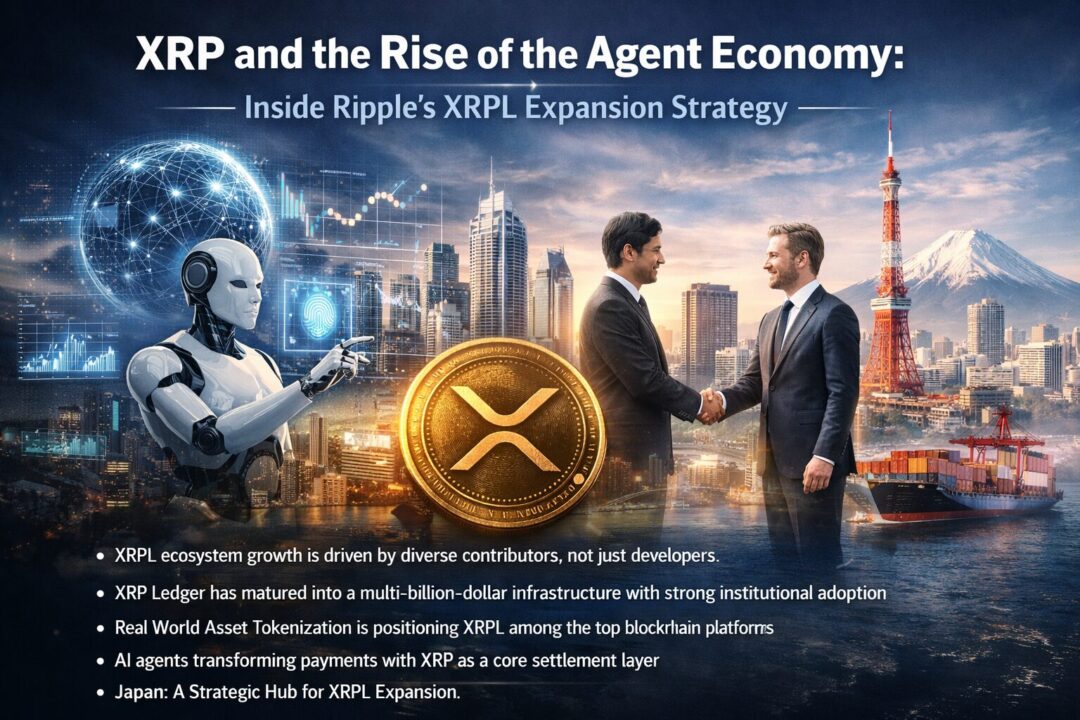
- XRPL ecosystem growth is driven by diverse contributors, not just developers
- XRP Ledger has matured into a multi-billion-dollar infrastructure with strong institutional adoption
- Real World Asset (RWA) tokenization is positioning XRPL among the top blockchain platforms
- AI agents are expected to transform payments, with XRP as a core settlement layer
- Ripple is expanding global ecosystem funding, education, and institutional partnerships
- Japan is emerging as a strategic hub for XRPL expansion through financial collaborations
1. Beyond Developers: The True Drivers of Ecosystem Growth
At the TEAMZ SUMMIT 2026 in Tokyo, Christina Chan, Senior Director at Ripple, delivered a keynote that reframed how blockchain ecosystems should be understood.
Rather than focusing solely on developers, Chan emphasized that a thriving ecosystem is built on a broad spectrum of contributors. These include founders, educators, investors, creators, token holders, and institutions. This perspective reflects a shift in blockchain maturity—from technical experimentation to economic infrastructure.
The XRP Ledger (XRPL) is not just a protocol but a network of interconnected participants. The strength of this network lies in its interdependence: each participant adds value to the others. This mirrors the evolution seen in successful internet ecosystems, where collaboration and layered contributions drive exponential growth.
For investors and builders, this signals a key insight: opportunities are no longer limited to coding or token speculation. Value creation now spans education, liquidity provision, compliance, and real-world integration.
2. XRPL Today: A Mature Financial Infrastructure
Over its 13-year history, XRPL has consistently pursued a single mission: building a sustainable and scalable financial ecosystem.
Today, the network supports over 200 projects and has processed transaction volumes reaching into the billions of dollars. Unlike many newer chains, XRPL was designed from the outset with institutional use in mind. It includes built-in features such as token issuance and a decentralized exchange (DEX), eliminating the need for complex smart contract layers.
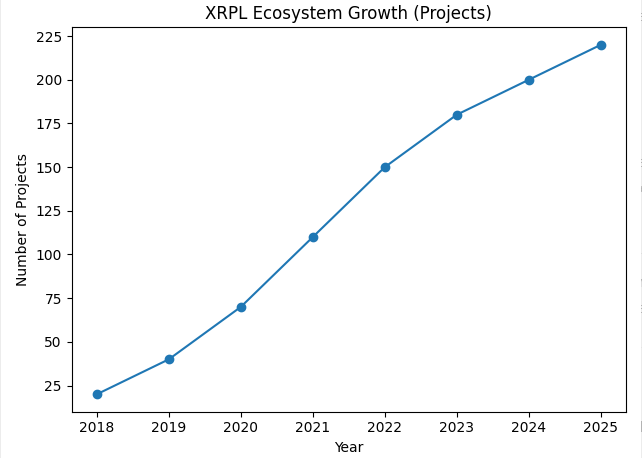
This growth trajectory reflects a steady increase in adoption rather than speculative spikes. For institutional players, this stability is critical. It reduces operational risk and provides a predictable environment for deploying capital.
Another important factor is XRP itself, which serves as the native asset powering the network. It acts as a bridge currency, enabling efficient cross-border transactions and liquidity management. As more institutions tokenize assets and require seamless settlement, XRP’s role becomes increasingly central.
3. RWA Tokenization: A Strategic Positioning
One of the most significant developments highlighted in the keynote is XRPL’s position in the Real World Asset (RWA) tokenization space.
RWA tokenization involves bringing traditional assets—such as bonds, real estate, and commodities—onto the blockchain. This sector has gained rapid momentum as institutions seek to improve efficiency, transparency, and liquidity.
XRPL ranks among the top blockchain platforms in this domain, with approximately $1.9 billion in tokenized assets. This places it within the global top tier, competing with ecosystems like Ethereum and emerging institutional chains.
The implications are profound:
- Tokenized assets enable fractional ownership, opening markets to a wider range of investors
- Settlement times are drastically reduced compared to traditional systems
- Compliance and reporting can be automated through on-chain transparency
For readers seeking new revenue opportunities, RWA represents one of the most promising sectors. It bridges traditional finance and blockchain, creating use cases that are both practical and scalable.
4. The Agent Economy: XRP as a Payment Backbone
Perhaps the most forward-looking aspect of Chan’s keynote was her discussion of artificial intelligence.
Following the rise of tools like ChatGPT, the industry has moved from passive AI systems to autonomous agents capable of executing tasks. The next phase, according to Chan, is enabling these agents to transact economically.
This concept—often referred to as the “agent economy”—envisions a world where AI systems interact, negotiate, and pay each other without human intervention.
At the center of this vision is XRP.
XRPL is positioned as a compliant and efficient infrastructure for agent-to-agent payments. Its open payment standard, X402, enables AI agents to handle microtransactions such as:
- API usage fees
- Data processing costs
- Content access payments
- Compute resource allocation
These transactions require low fees, high speed, and reliability—areas where XRPL has a competitive advantage.
From an investment perspective, this represents a paradigm shift. Instead of human-driven demand, future transaction volume may be driven by machines. This could exponentially increase network usage and create entirely new revenue streams.
5. Ecosystem Funding and Global Expansion
Ripple is actively accelerating ecosystem growth through multiple funding and support programs.
The XRPL Grants initiative focuses on financial use cases, providing capital to projects building on the ledger. Meanwhile, programs like “Glow,” operated by XRPL Commons, support open-source development.
However, funding is only part of the strategy. Ripple is also investing in:
- Startup mentorship programs
- University partnerships and student initiatives
- Government collaborations
- Global networking opportunities
This multi-layered approach ensures that projects receive not only capital but also guidance and access to markets.
For entrepreneurs, this reduces the barrier to entry. For investors, it increases the likelihood of high-quality projects emerging within the ecosystem.
6. Japan: A Strategic Growth Market
Japan is becoming a focal point in Ripple’s expansion strategy.
Through the Japan Financial Infrastructure Innovation Program (JFIIP), Ripple is working with major institutions such as SMBC to drive innovation.
The program connects startups with financial institutions, enabling real-world testing and implementation of XRPL-based solutions. This model is particularly effective because it aligns technological development with actual market needs.
Chan also hinted at the possibility of establishing a local XRPL Commons hub in Japan, similar to the existing base in Paris. Such a hub would serve as a center for developers, investors, and institutions, further accelerating ecosystem growth.
Japan’s regulatory clarity and strong financial sector make it an ideal environment for blockchain innovation. For global participants, this creates opportunities to collaborate with established institutions in a highly structured market.
7. Strategic Implications for Investors and Builders
The themes presented in the keynote highlight several key trends:
First, blockchain ecosystems are evolving into full economic networks. Participation is no longer limited to technical roles, opening new avenues for value creation.
Second, institutional adoption is driving stability and long-term growth. This reduces volatility risks and enhances credibility.
Third, the convergence of AI and blockchain is creating entirely new markets. The agent economy could become a major driver of transaction volume and revenue.
Finally, regional strategies—such as Ripple’s focus on Japan—demonstrate the importance of localized partnerships in achieving global scale.
Conclusion: XRP’s Role in the Next Financial Era
Ripple’s vision for XRPL extends far beyond payments.
By positioning XRP as the backbone of both institutional finance and the emerging agent economy, the company is targeting two of the most transformative trends in technology.
The combination of RWA tokenization, AI-driven transactions, and global ecosystem expansion creates a powerful growth narrative. For those seeking new crypto assets, revenue streams, or practical blockchain applications, XRPL represents a compelling case study.
As the industry moves toward a more integrated and automated financial system, the question is no longer whether blockchain will be adopted—but which networks will become the foundation.
XRPL is making a strong case to be one of them.




